6 Ways Maine Coon Paws Are Different!

Maine Coon paws are crazily adorable because they are so LARGE and FLUFFY! Take a look at these 9 pictures of big Maine Coon paws, and do your best not to say ‘aw’!!
Keep reading to find out how much bigger the Maine Coon cat’s paws are versus a normal cat’s. Do Maine Coons have big paws? Let’s find out!
Maine Coon paws are typically larger than those of other cat breeds. On average, their paw size ranges from 1.5 to 2 inches (3.8 to 5.1 cm) in width and 2 to 2.5 inches (5.1 to 6.4 cm) in length. This is notably larger than the paws of most other cat breeds, contributing to their impressive size and agility.
To get you buzzing for more information, here are some Maine Coon paw pictures, that you’re certain to LOVE!
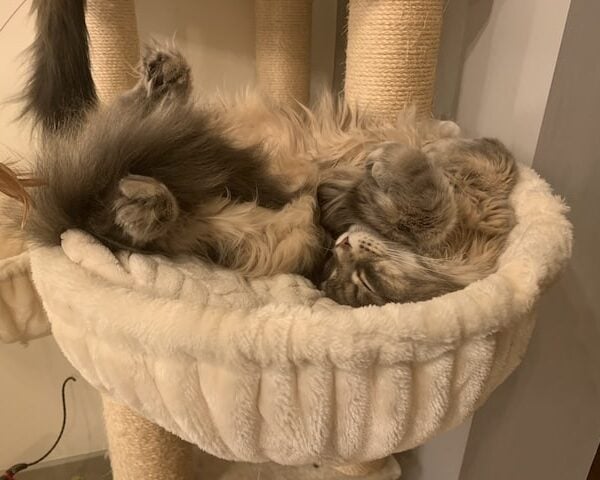

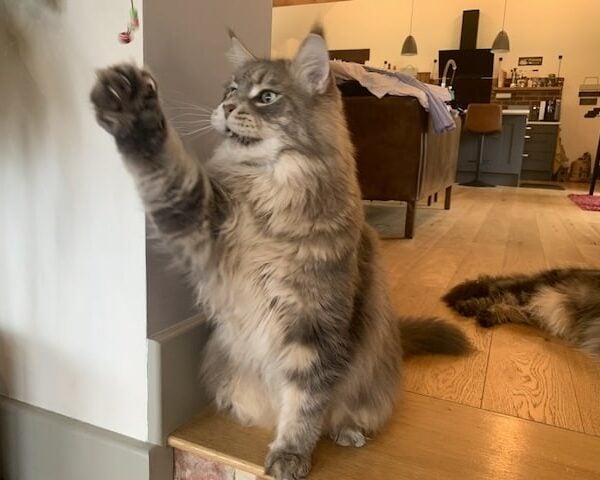
1. Maine Coon Paw Size Compared To A Normal Cat
Maine Coon paw size is one of the distinctive features of this large cat breed and contributes to this cat popular cat breed’s reputation as a large and powerful cat.
Their paw pads are wide and strong, providing stability and balance, which is essential for their agility and ability to navigate various terrains.
Additionally, Maine Coon cats often have tufts of fur protruding from between their toes, adding to their unique appearance and providing protection from the elements.
The table below compares the average Maine Coon paw size to that of normal cats:
| Cat Type | Kitten Paw Length | Kitten Paw Width | Adult Paw Length | Adult Paw Width |
|---|---|---|---|---|
| Maine Coon | 1.0 – 1.5 inches / 2.5 to 3.8 cm | 0.5 – 0.75 inches / 1.3 to 1.9 cm | 2.5 – 3.0 inches / 5.1 to 6.4 cm | 1.5 – 2.0 inches / 3.8 to 5.1 cm |
| Normal Cat | 0.75 – 1.0 inches / 1.9 to 2.5 cm | 0.5 – 0.75 inches / 1.3 to 1.9 cm | 1.5 – 2.0 inches / 3.8 to 5.1 cm | 1.0 – 1.5 inches / 2.5 to 3.8 cm |
Please note paw sizes vary among individual cats, and precise measurements may differ based on various factors such as:
- Genetics
- Age
- Overall Health
Maine Coon kittens typically have larger paws compared to those of normal kittens. Their paw lengths generally range from 1 to 1.5 inches (2.5 to 3.8 cm), while their width typically measures around 0.5 to 0.75 inches (1.3 to 1.9 cm).
As they mature, their paws grow substantially, reaching widths of 1.5 to 2 inches (3.8 to 5.1 cm) in adulthood. And, 2.5 – 3.0 inches (5.1 to 6.4 cm) in length.
By comparison, a normal kitten’s paw length is usually around 0.75 to 1 inch (1.9 to 2.5 cm) and its width is approximately 0.5 to 0.75 inch (1.3 to 1.9 cm).
As a normal domestic kitten grows into adulthood, their paws typically increase to around 1.5 to 2 inches (3.8 to 5.1 cm) in length and 1 to 1.5 inches (2.5 to 3.8 cm) in width.
2. Maine Coon Paw Fur Vs Normal Cats
Maine Coon paws often feature tufts of fur between the toes, which serve as natural insulation and protection against cold weather conditions.
This fur may be more prominent and dense compared to the fur on the paws of normal domestic cats.
Since Maine Coons have tufted paws, their paw fur may accumulate more debris and may need occasional grooming to prevent matting or discomfort.
3. Maine Coons Have A Different Paw Shape!
The shape of Maine Coon paws may appear more elongated or squared-off compared to the typically rounded shape of ordinary cat paws.
This difference in shape enhances the Maine Coon’s ability to grip and climb, making them excellent climbers and hunters.
4. Maine Coon Cats Have Toe Tufts!
Maine Coon cats often have tufts of fur emerging from between their toes, which can give their paws a more substantial and rugged appearance.
These tufts serve various purposes, including providing better traction and protecting against cold weather.
If you need to Trim A Maine Coons Paw Tufts, read this guide.
5. Maine Coons Have Bigger Claws!
Maine Coon cats tend to have larger claws compared to ordinary domestic cats.
These claws are sturdy and well-suited for climbing and hunting, reflecting the breed’s history as skilled outdoor cats.
6. Some Maine Coons Are Polydactyl!
Maine Coons are not inherently more prone to being polydactyl, but they are one of the breeds where polydactylism, or extra toes, can occur.
Polydactylism is a genetic trait that can occur in any breed of cat, including Maine Coons.
Learn more about the Polydactyl Maine Coon Cat!
Why Maine Coon Paws Are Bigger
On average, the Maine Coon Cats paw size is noticeably larger than normal cats, with wider and more substantial pads.
This difference can be attributed to several factors:
- Breed Characteristics: Maine Coons are known for their large overall size, including their paws, which are proportionate to their body.
- Adaptation to Environment: Their large paws aid in traversing various terrains, including snowy landscapes, as they act like natural snowshoes, distributing the cat’s weight more evenly.
- Climbing Ability: Maine Coons are exceptional climbers, and their big paws provide better grip and stability, allowing them to scale trees and navigate vertical surfaces with ease.
- Hunting Skills: The increased surface area of their paws allows for better hunting capabilities, facilitating activities like catching prey and grasping objects.
Advantages Of Big Paws
The Maine Coons larger-than-average paws offer several advantages:
- Improved Balance and Stability: The larger surface area provides enhanced balance and stability, especially when walking on uneven surfaces or climbing.
- Enhanced Dexterity: Big paws allow for better manipulation of objects and finer movements, aiding in activities like hunting and playing.
- Increased Traction: The wider pads offer better traction, enabling Maine Coons to move swiftly and confidently across different surfaces.
- Cold Weather Adaptation: In colder climates, the larger paws act as effective insulators, preventing heat loss and keeping the cat’s feet warm and comfortable.
Conclusion
In conclusion, Maine Coons do indeed have larger paws compared to other cat breeds, which is attributed to their larger body size and outdoor heritage.
Their impressive paw size reflects their unique characteristics and contributes to their ability to thrive in various environments.