Can Maine Coons Eat Raw Meat? Risks, Benefits, And Safety

Maine Coons can physically eat raw meat, and many will happily accept it. However, this does not mean that raw meat is necessary, uniquely beneficial, or the safest way to feed them.
Maine Coons are obligate carnivores, so they need nutrients normally obtained from animal ingredients. They do not, however, require those ingredients to remain uncooked. A nutritionally complete cooked wet food, dry food, or properly formulated homemade diet can provide everything a Maine Coon needs.
Raw feeding also carries genuine risks. These include bacterial contamination, nutritional deficiencies, damaged teeth, intestinal obstruction, and the spread of pathogens to people within the home. More recently, raw animal products have also been associated with cases of H5N1 avian influenza in cats.
The best diet is therefore not automatically the one that appears most natural. It is the diet that is complete, safe, appropriate for your cat’s health, and sustainable to feed correctly every day.
Quick Answer
Maine Coons can eat raw meat, but they do not need it. There is currently no strong evidence that a raw diet provides health advantages over a nutritionally complete commercial diet or a properly balanced cooked diet.
Raw meat can contain bacteria such as Salmonella, Campylobacter, and harmful strains of E. coli. Homemade raw diets may also contain too much or too little of essential nutrients.
A small piece of raw meat is not the same as a complete raw diet, and neither should it be confused with a professionally formulated veterinary food.
Current public-health advice is more cautious than many older raw-feeding guides. The CDC advises owners not to feed pets raw pet food or unpasteurised milk, while UK government guidance warns that feeding raw meat can create potentially serious animal and public-health risks. This is particularly relevant because raw pet food and other uncooked animal products have been linked to cases of H5N1 avian influenza in cats.
| Question | Evidence-Based Answer |
|---|---|
| Can Maine Coons eat raw meat? | They can, but raw meat carries infection and nutritional risks. |
| Do Maine Coons need raw meat? | No. They need animal-derived nutrients, not necessarily uncooked meat. |
| Is raw food healthier than dry or wet food? | No clear health advantage has been demonstrated over complete, balanced diets. |
| Can Maine Coons eat raw bones? | They are not recommended because they can fracture teeth or obstruct and perforate the digestive tract. |
| Is commercial raw food safer than homemade raw food? | It may provide better nutritional consistency, but it remains raw and can still contain pathogens. |
| Is plain cooked meat suitable? | Yes, as a small unseasoned treat, but meat alone is not a complete diet. |
Mainecooncentral.com
Do Maine Coons Need Raw Meat?
No breed-specific evidence shows that Maine Coons need a raw diet.
Their large build, muscular appearance, and history as capable hunters do not create a special requirement for uncooked food. They need the same essential feline nutrients as other domestic cats, including suitable protein, taurine, essential fatty acids, vitamins, and minerals.
Their size may affect how many calories they require, but food portions should still be based on:
- Age and life stage
- Body condition
- Activity level
- Neutering status
- Existing health conditions
- The energy content of the food
My complete Maine Coon diet and nutrition guide explains these requirements in more detail.
The British Veterinary Association advises owners to select food labelled “complete”, meaning that it is designed to provide all the nutrients a cat needs when fed according to the instructions. Complete dry food is also considered perfectly suitable, provided that the cat drinks enough water.
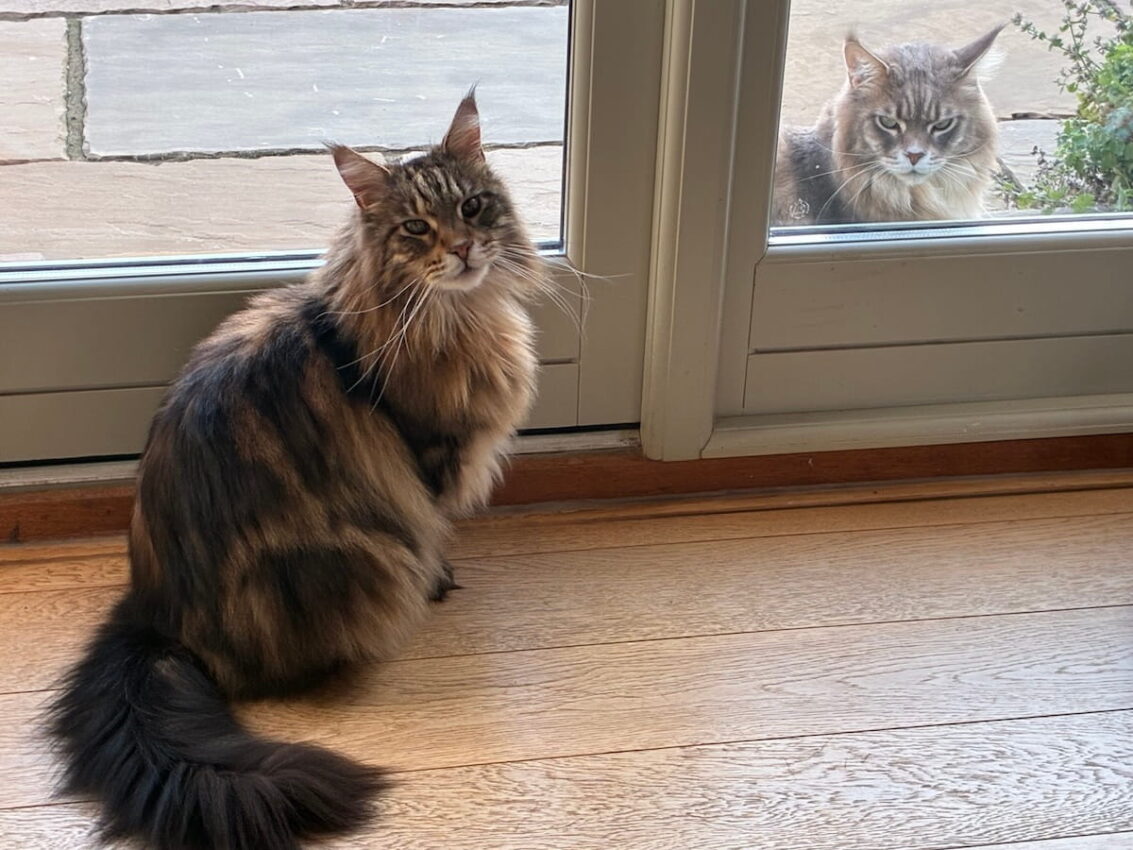
What My Three Maine Coons Have Eaten
My experiences with Pippin, Mika, and Bali show how individual feline food preferences can be.
Pippin was raised in our home from kittenhood and happily ate Royal Canin dry food. However, he also developed a definite interest in whatever we humans were eating. If we were not paying attention, he would happily try to sneak a piece of cod from our fish and chips! This did not mean that battered, salty takeaway food was suitable for him; it simply showed how determined and opportunistic he could be when he liked the smell of something.
Pippin also enjoyed both raw and cooked meat. When we trimmed meat before cooking, he loved being offered a small piece. We never gave him raw bones, though, because we were concerned about splintering, choking, and internal injuries.
Our concern was justified. Cooked bones are particularly prone to splintering, but raw bones are not risk-free. The World Small Animal Veterinary Association warns that hard bones can fracture teeth and that swallowed bones or shards can cause gastrointestinal obstruction or perforation.
Pippin was also a highly capable hunter. He caught mice and, sadly, even killed a rabbit. Yet hunting prey did not mean that he required a homemade raw diet. A cat occasionally catching wild prey and an owner serving supermarket meat every day are two very different situations, and neither is free from parasites, bacteria, or disease risk.
When we adopted Bali, we were told that he loved mackerel. We tried to treat him to it on several occasions, but he refused to eat it! This was a reminder that cats do not always retain the preferences their previous owners describe, and they certainly do not all crave fish or raw meat.
Bali and Mika generally stick to Royal Canin Urinary S/O dry food. Because this is a therapeutic veterinary diet, I would not replace it or regularly add raw food without veterinary guidance. All three of our Maine Coons have experienced urinary problems, so I am particularly cautious about changing a diet prescribed for urinary support. That is our personal experience rather than proof that one particular food can prevent every urinary condition.
Adding treats, raw meat or alternative meals may reduce the intended benefit of a therapeutic veterinary diet by altering the cat’s overall nutritional balance.


What Counts As A Raw Diet?
Raw feeding can describe several quite different approaches:
Raw Meat As An Occasional Extra
This means offering a small amount of uncooked chicken, beef, lamb, fish or another meat alongside the cat’s normal diet.
Although the quantity may be small, the microbiological risk is still present. Raw toppers, freeze-dried raw treats, and dehydrated raw products are also classified as raw unless they have undergone a process proven to destroy pathogens.
Homemade Raw Diet
A homemade raw diet commonly contains muscle meat, organs, eggs, and sometimes bones or supplements.
Older raw-feeding advice often recommends an 80% muscle meat, 10% organ, and 10% bone model. However, this simple ratio does not prove that the finished diet contains an appropriate amount of every essential nutrient.
A bowl can satisfy an 80/10/10 ratio while still containing unsuitable levels of taurine, calcium, phosphorus, iodine, vitamin D, vitamin E, fatty acids, or calories. Following a ratio is not the same as professionally formulating a complete feline diet.
Commercial Raw Food
Commercial raw food may be frozen, freeze-dried, or dehydrated. In the UK, these products can be labelled either:
- Complete: Intended to provide all required nutrients when fed as directed.
- Complementary: Must be combined with other foods because it is not nutritionally complete alone.
The word “raw” does not tell you whether a product is balanced. Check the label rather than assuming every commercial raw food is suitable as a cat’s entire diet. UK Pet Food explains the distinction between complete and complementary food.
Claimed Benefits Of Raw Feeding
Owners often choose raw diets because they want ingredient control, fewer additives, more moisture, or a diet that resembles feline prey. These motivations are understandable, but the claimed benefits must be separated from what has actually been demonstrated.
More Natural Ingredients
A raw diet may contain recognisable ingredients such as meat, heart, liver, and fish.
However, recognisable does not automatically mean nutritionally complete or safer. Commercial foods may contain less visually appealing organs and animal by-products because these ingredients provide valuable amino acids, vitamins, and minerals.
Improved Coat And Energy
Some owners report a shinier coat, smaller stools, or increased energy after changing food. These changes may result from differences in fat, fibre, calorie density, or ingredient digestibility rather than from the food being raw.
The WSAVA guidance on raw meat-based diets states that there is no evidence that raw diets provide health benefits over commercial diets or balanced homemade cooked diets.
Better Hydration
Raw food contains considerably more water than kibble, which can increase overall moisture intake.
However, raw feeding is not the only way to increase hydration. Complete wet food, additional water bowls, water fountains, or adding water to an appropriate food may achieve the same objective without introducing raw-meat pathogens.
Fewer Allergies
Raw feeding is sometimes promoted as a solution for allergies because owners can restrict the number of ingredients. However, simply switching to raw meat does not diagnose an allergy. Cross-contamination and the use of several animal proteins can make the cause harder to identify.
A veterinary elimination diet is a more controlled approach. Owners concerned about itching, diarrhoea or recurrent vomiting should read my guide to Maine Coon food allergies and speak to their vet.
Cleaner Teeth
Chewing bones may remove some visible tartar, but this does not prove that bones prevent periodontal disease.
Raw bones can break teeth, become lodged in the oesophagus, block the intestines, or perforate the digestive tract. Ordinary kibble is not automatically a dental treatment either; effective dental care normally involves brushing, veterinary checks, and products specifically designed to improve oral health.
Risks Of Feeding Raw Meat
1. Bacterial Contamination
Raw meat has not undergone the heat treatment that would normally destroy dangerous bacteria.
The UK Food Standards Agency’s assessment of raw pet food identified risks involving:
- Salmonella
- Campylobacter
- Shiga toxin-producing E. coli
- Other E. coli strains
- Antimicrobial-resistant bacteria
- MRSA
The FSA found a high prevalence of pathogens in sampled raw dog and cat foods sold in the UK. It assessed the risk of Salmonella infection in cats consuming contaminated raw pet food as medium, while also recognising risks to people through preparation, contaminated surfaces and contact with infected pets.ct with infected pets.
Freezing does not reliably destroy all harmful bacteria. Once frozen meat is defrosted, bacteria can multiply, particularly when food is left at room temperature.
2. H5N1 Avian Influenza
Raw poultry and other uncooked animal products now carry an additional concern.
Investigations have linked cases of H5N1 avian influenza in domestic cats to raw meat, raw milk, and commercial raw pet food. The FDA has warned that H5N1 can be deadly to cats and has identified contaminated commercial raw cat-food products linked to feline illness and death.
In a 2026 report, the US Centers for Disease Control and Prevention described domestic cats infected after consuming raw animal products and found serological evidence of transmission from an infected cat to a veterinary professional. The CDC consequently advises owners not to feed pets raw pet food or unpasteurised milk.
For UK readers, government guidance advises against feeding pets non-commercial raw poultry, gamebird, wildfowl, or other wild-bird meat. It states that raw meat can present potentially serious risks to both animal and public health. If your cat becomes unwell after eating raw meat, raw treats or wild prey, tell your veterinary practice about the exposure before attending.
This does not mean that every packet of raw food contains avian influenza. It means that raw feeding now presents a hazard that older articles and recipes may not have considered.
3. Nutritional Imbalance
Meat contains valuable protein and nutrients, but meat alone is not a complete feline diet. For example, boneless muscle meat can contain too little calcium relative to phosphorus. Excessive liver may result in too much vitamin A, while an inadequately formulated diet may be deficient in taurine, iodine, vitamin D, vitamin E, or essential fatty acids.
Kittens are particularly vulnerable because nutritional errors can affect growth and skeletal development.
The BVA advises that homemade recipes should be developed by a properly qualified veterinary nutrition specialist rather than copied from general websites or books.
4. Risk To People
Cats do not need to appear ill to carry and shed organisms acquired from food.
Pathogens may spread through:
- Hands used to prepare food
- Kitchen counters and utensils
- Food bowls
- Floors surrounding the feeding area
- Saliva around the cat’s mouth
- Faeces and litter trays
- Contact with storage containers
The CDC does not recommend raw pet food because it can make both pets and people ill. It advises particular caution around young children, older people, pregnant people, and anyone with a weakened immune system.
5. Bones And Physical Injury
The statement that “raw bones are safe but cooked bones are dangerous” is an oversimplification.
Cooked bones should never be given, because cooking makes them more brittle and likely to splinter. Raw bones, however, can still:
- Fracture teeth
- Become stuck in the mouth or throat
- Cause choking
- Block the oesophagus or intestines
- Perforate the stomach or intestines
- Introduce harmful bacteria
Our decision not to give Pippin raw bones was not overcautious. The potential harm outweighed any proposed dental benefit.
Raw Meat Vs Plain Cooked Meat
Owners who want to offer meat as a treat can reduce the microbial risk by cooking it thoroughly.
Suitable occasional options may include small amounts of:
- Plain chicken
- Turkey
- Beef
- Lamb
- Boneless cooked fish
Remove all bones and avoid seasoning, gravy, butter, sauces, onion, garlic, and excessive fat.
Treats and human foods should form only a small proportion of the overall diet. Read what human foods Maine Coons can eat and the foods that can harm Maine Coons before sharing food.
Pippin might have loved trying to steal our takeaway cod, but that does not make fish-and-chip-shop food an appropriate cat meal. The plain interior of the fish was less concerning than the salty, fatty batter and possible seasonings surrounding it. Thankfully, he was never interested in munching on the fish batter!
What Should I Do If My Maine Coon Ate Raw Meat?
A single accidental mouthful does not mean that your cat will definitely become ill, so do not panic. Remove the remaining food and make a note of what was eaten, how much was consumed, and when it happened. Also record whether it was raw poultry, game, wild prey, raw milk, spoiled meat, or a recalled commercial raw product.
Do not try to make your cat vomit unless a veterinarian specifically instructs you to do so.
Monitor your Maine Coon closely over the following days. Contact your vet promptly if your cat develops:
- Vomiting or diarrhoea
- Marked tiredness or weakness
- Loss of appetite
- Fever
- Red or inflamed eyes
- Discharge from the eyes or nose
- Coughing or breathing difficulties
- Tremors, seizures, or poor coordination
- Sudden problems with vision
The CDC lists fever, fatigue, reduced appetite, inflamed eyes, discharge, breathing difficulties, and neurological problems as possible signs of H5N1 infection in pets. Respiratory or neurological symptoms following raw-food or wild-bird exposure require urgent veterinary advice.
Tell the veterinary practice about the exposure before arriving so that staff can advise you and take any necessary infection-control precautions.
Seek veterinary advice sooner if your cat is a kitten, elderly, pregnant, immunocompromised, or already unwell, or if they consumed raw poultry, wild-bird meat, spoiled meat, a large quantity, or a recalled raw product.
What If You Still Choose To Feed Raw?
Some owners will decide to feed raw food despite the risks. In that situation, risk reduction matters.
- Speak to your veterinarian first, particularly for kittens, senior cats, pregnant cats, and cats with urinary, kidney, digestive, or immune problems.
- Choose a commercial product labelled complete, rather than complementary.
- Use a registered manufacturer with clear batch identification, traceability, and hygiene instructions.
- Do not rely on an internet recipe or an 80/10/10 ratio as proof of nutritional balance.
- Do not feed raw milk, raw eggs, or raw bones.
- Store raw food separately in sealed, leak-proof packaging.
- Defrost it in the refrigerator rather than on the worktop.
- Use separate utensils and preparation surfaces.
- Wash hands, bowls, and equipment thoroughly after every meal.
- Dispose of uneaten food promptly.
- Do not allow the cat to lick faces or broken skin immediately after eating.
- Monitor weight, stools, appetite, coat condition, and general health.
The Food Standards Agency’s raw-pet-food guidance provides further handling and storage precautions.
Even perfect kitchen hygiene cannot guarantee that raw food is pathogen-free, but poor handling increases the risk further.
Frequently Asked Questions
Can Maine Coon Kittens Eat Raw Meat?
Kittens can physically consume raw meat, but they are more vulnerable to infection and nutritional imbalance. Growth diets must contain nutrients in precise proportions.
A kitten should not be raised on a homemade raw recipe unless it has been formulated specifically for that kitten by a qualified veterinary nutritionist.
Is Raw Chicken Safe For Maine Coons?
Raw chicken can contain Salmonella, Campylobacter, and other pathogens. Uncooked poultry has also become a concern because of H5N1 avian influenza.
Plain, thoroughly cooked, boneless chicken is the safer treat.
Can Maine Coons Eat Raw Beef?
Raw beef can contain harmful bacteria and parasites, so it is not sterile or risk-free. Beef alone is also not a nutritionally complete diet for a cat.
A small piece of thoroughly cooked, unseasoned beef is the safer choice.
Can Maine Coons Eat Mackerel?
Plain cooked mackerel can be offered occasionally, provided that every bone has been removed. It should not replace a complete cat food.
Bali’s repeated refusal of mackerel also demonstrates that not every Maine Coon likes oily fish, even when a previous owner insists that they do!
Do Maine Coons Live Longer On A Raw Diet?
There is no reliable evidence that raw-fed cats live longer than cats eating nutritionally complete cooked food. Longevity depends on genetics, body condition, veterinary care, environment, disease prevention, and the overall quality and suitability of the diet.
Does Raw Food Prevent Urinary Problems?
Raw diets contain moisture, but there is insufficient evidence that raw food itself prevents urinary disease.
Cats with previous urinary problems may require a particular mineral balance or a veterinary diet. Do not replace a therapeutic food such as the one eaten by Mika and Bali without discussing the change with a vet.
If Cats Hunt, Why Is Raw Feeding Risky?
Hunting behaviour proves that cats are predators; it does not prove that every uncooked food is safe or complete.
Wild prey may contain parasites, bacteria, or disease. Supermarket and commercial raw meats also pass through slaughter, processing, storage, transport, and defrosting before they reach the cat. Furthermore, a piece of muscle meat does not replicate the nutritional composition of an entire prey animal.
Conclusion
Maine Coons can eat raw meat, but they do not need it, and raw feeding is not automatically healthier or more natural.
Pippin enjoyed raw meat and successfully hunted prey, yet he also thrived on complete dry food. Bali supposedly loved mackerel but consistently refused it, while Mika and Bali now prefer their usual veterinary dry diet. Their experiences show that Maine Coons are individuals, not animals that must all follow one fashionable feeding approach.
The safest general option is a complete food appropriate for your cat’s age, health and body condition. Plain cooked meat can be offered as an occasional treat.
Raw feeding adds bacterial, viral, nutritional and physical risks that owners should understand fully before changing their cat’s diet.