Maine Coon Lynx Mix: Are Maine Coons Part Lynx?
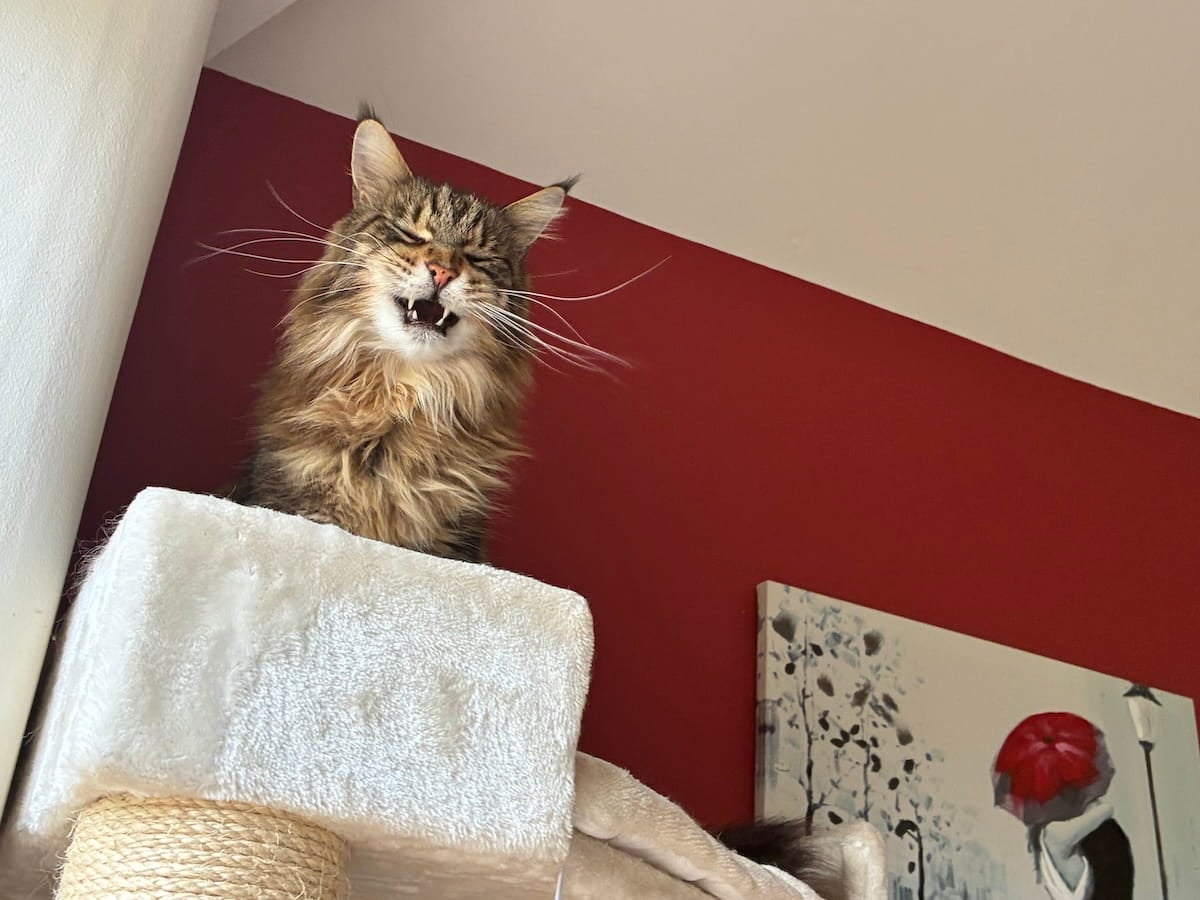
The idea of a Maine Coon lynx mix sounds surprisingly believable. Maine Coons can have pointed ears topped with wispy lynx tips, enormous furry paws, shaggy coats, strong facial features, and bodies considerably larger than the average domestic cat. Put one beside a photograph of a lynx and the resemblance can be striking. But appearance and ancestry are very different things.
There is no established breed called a Maine Coon lynx mix, and no reliable evidence that modern lynxes contributed to the ancestry of the Maine Coon breed.
Maine Coons are domestic cats. Lynxes are wild cats from a separate branch of the cat family. So why do Maine Coons look so much like lynxes? Could the two produce offspring, and where did this persistent theory come from?
Quick Answer
Maine Coons are not part lynx. The Maine Coon is a domestic cat breed, while lynxes are wild cats belonging to the genus Lynx.
There is no recognized Maine Coon × lynx breed and no established scientific evidence showing that Maine Coons descend from lynxes.
Their similarities, including tufted ears, thick coats, large paws, and substantial builds, help explain why the theory developed. However, physical resemblance is not evidence of recent shared ancestry. Genetic research places Maine Coons firmly among domestic-cat populations.
Maine Coon Lynx Mix At A Glance
| Question | Answer |
|---|---|
| Does a Maine Coon lynx mix breed exist? | No recognized breed exists |
| Are Maine Coons part lynx? | No evidence supports this |
| Is a Maine Coon a domestic cat? | Yes |
| Is a lynx a domestic cat? | No |
| Why do they look similar? | Tufted ears, large paws, thick fur, substantial build |
| Do lynx tips prove wild ancestry? | No |
| Can appearance prove a cat is part lynx? | No |
| Does genetic research support lynx ancestry? | No |
| Likely Maine Coon origins | Domestic cat populations associated with Europe and North America |
Does A Maine Coon Lynx Mix Really Exist?
There is no recognized domestic breed called a Maine Coon lynx mix. I have also found no reliable scientific evidence establishing a population of hybrids produced by crossing Maine Coons with lynxes. That is different from saying domestic cats have never been crossed with wild feline species.
Some recognized domestic breeds genuinely do have wild-cat ancestry. For example, TICA’s Savannah breed information explains that the Savannah originated from crosses involving the African serval and domestic cats.
TICA’s Bengal breed history also traces the breed to crosses involving domestic cats and the Asian leopard cat. This means the mere concept of a domestic/wild-cat hybrid is not impossible in every situation.
What matters is the evidence for the particular cross being claimed. For a Maine Coon × lynx, there is no established breed or convincing body of evidence demonstrating such a hybrid population.
Are Maine Coons Part Lynx?
No evidence shows that modern lynxes contributed to Maine Coon ancestry. The Maine Coon is a breed of domestic cat, Felis catus. Lynxes belong to the separate genus Lynx, which includes the Canada lynx, Eurasian lynx, Iberian lynx, and bobcat. Of course, Maine Coons and lynxes are related in the broad evolutionary sense that they are both members of the cat family. That is very different from claiming Maine Coons are part lynx.
Genetic research provides much stronger evidence about Maine Coon ancestry than physical resemblance does. A major study examining worldwide domestic cat populations found that the two breeds originating in the United States, the Maine Coon and American Shorthair, clustered genetically with Western European cat breeds and populations.
You can read the research through the National Library of Medicine. In other words, the available genetic evidence fits a domestic-cat origin far better than a theory involving North American lynxes.
Can A Maine Coon And A Lynx Breed?
There is no verified Maine Coon × lynx breed or established hybrid population. One argument sometimes made online is that domestic cats and certain lynx species have the same number of chromosomes, so they must be capable of breeding. That conclusion does not follow. Having the same chromosome count does not, by itself, establish reproductive compatibility between two species.
Claims involving bobcat-domestic cat hybrids have even been investigated genetically. In one published case, an animal’s owner claimed that it was a bobcat-domestic cat hybrid. Researchers developed a genetic test to examine the claim and found no domestic-cat contribution in the animal tested. The study is available through the National Library of Medicine.
That does not prove that every conceivable wild-cat hybrid is biologically impossible. It does demonstrate why extraordinary hybrid claims need genetic evidence rather than visual resemblance.
At present, there is no comparable evidence establishing a genuine Maine Coon × lynx breed.
Why Do Maine Coons Look Like Lynxes?
This is where the myth becomes much easier to understand. Maine Coons and lynxes share several obvious visual characteristics.
1. Lynx Tips
Perhaps the strongest resemblance comes from the wispy hairs extending from the tops of their ears. On Maine Coons these are commonly called lynx tips precisely because they resemble the characteristic ear tufts seen on lynxes. The name describes their appearance, though, not their ancestry.
Lynx tips also vary enormously between Maine Coons. Some cats have dramatic tufts while others have short, proportional ones.
My guide to Maine Coon lynx tips and ear furnishings explains the difference between the hair growing from the top of the ears and the much fluffier furnishings growing inside them.
2. Large, Furry Paws
Maine Coons are famous for substantial paws, often with long tufts of fur growing between their toes. Lynxes also have large, heavily furred paws. This makes the two animals look particularly similar in photographs taken in winter. But similar-looking adaptations and physical features do not prove recent hybrid ancestry.
3. Thick Coats
Maine Coons developed into hardy cats capable of coping with the cold winters of northeastern North America. Their shaggy coat, substantial body, furry paws, and long tail all contribute to their rugged appearance.
The International Cat Association’s Maine Coon profile describes the breed as a large, rectangular working cat with a shaggy coat, large tufted feet, substantial bone structure, and a long flowing tail. Cold-climate lynxes also have dense fur, creating another obvious visual similarity.
4. Large Bodies And Wild-Looking Faces
Maine Coons are among the larger domestic cat breeds. Their long bodies, broad chests, substantial paws, large ears, heavy facial furnishings, and strong muzzles can give them a distinctly wild appearance. Some breeding lines emphasize these features more dramatically than others. None requires a lynx ancestor to explain it.
For a closer look at how Maine Coon proportions actually develop, see my Maine Coon size and growth guide.
Maine Coon vs Lynx
Once you look beyond the ears and paws, the differences become substantial.
| Feature | Maine Coon | Lynx |
|---|---|---|
| Type | Domestic cat breed | Wild cat genus |
| Scientific classification | Felis catus | Lynx species |
| Relationship with humans | Domesticated companion cat | Wild animal |
| Tail | Long and flowing | Characteristically short |
| Ear tufts | Common but variable | Characteristic |
| Paws | Large and often tufted | Large paws adapted to wild environments |
| Coat | Many colors and patterns | Species-specific wild coloration |
| Lifestyle | Domestic companion | Wild predator |
| Breed standard | Yes | Not a domestic breed |
| Evidence of Maine Coon/lynx hybrid ancestry | None established | None established |
The tail is one of the clearest differences. A Maine Coon’s long, flowing tail is one of the breed’s defining characteristics. Lynxes have short tails. It is a significant physical difference between two animals that otherwise appear surprisingly similar from certain angles.
Because the bobcat belongs to the genus Lynx, many claims about a supposed Maine Coon “lynx mix” are actually referring to bobcats. I’ve compared the two animals directly in Maine Coon vs Bobcat.
Where Did The Maine Coon Lynx Myth Come From?
Nobody can pinpoint when the theory began. The most likely explanation is that Maine Coons looked unusual, and their early development wasn’t documented with modern pedigrees.
Over the years, this created fertile ground for origin stories. Maine Coons have been claimed to descend from:
- Raccoons
- Bobcats or lynxes
- Marie Antoinette’s cats
- Cats transported by Vikings
- Long-haired ship cats brought to North America
The raccoon story is biologically impossible. The lynx theory lacks genetic evidence. Other romantic stories remain interesting possibilities or legends rather than firmly documented breed history.
The Cat Fanciers’ Association Maine Coon history places the breed’s roots firmly in New England and describes shorthaired ship cats arriving with early settlers as part of its likely background. TICA similarly describes the Maine Coon as one of North America’s oldest natural breeds while acknowledging the many legends surrounding its origin.
The genetics add another piece to the puzzle: Maine Coons align with Western European domestic-cat populations. That does not tell us the identity of every cat that contributed to the original Maine Coon population. But uncertainty about those early domestic cats is not evidence that lynxes were involved.
For the full story, including which theories have evidence behind them and which remain folklore, see Where Do Maine Coon Cats Originate From?.
Does Having Lynx Tips Mean My Cat Is Part Lynx?
Lynx-like ear tufts occur in domestic cats. They are strongly associated with the Maine Coon appearance, but they are not a genetic marker of wild lynx ancestry.
Neither are:
- Large paws
- Long fur
- A heavy neck ruff
- A strong muzzle
- A bushy coat
- Large body size
Those features do not even prove that an unknown domestic cat is a Maine Coon.
If you are trying to work out whether a large, fluffy cat has Maine Coon ancestry, look at the entire combination of characteristics rather than concentrating on the ears.
My guide to how to tell if your cat is part Maine Coon explains which traits can provide useful clues and where appearance-based identification reaches its limits.
Can DNA Testing Prove Lynx Ancestry?
Genetic testing is much more useful than guessing from appearance, but ordinary consumer cat DNA results also need to be interpreted cautiously. Research has shown that genetic markers can distinguish many domestic-cat populations and established breeds. However, domestic cat breeds are relatively recent populations that developed from much older regional populations of ordinary domestic cats.
A consumer test suggesting that a cat shares genetic characteristics with Maine Coons therefore does not automatically prove a particular Maine Coon parent or pedigree. Likewise, a vague breed-estimate result is not sufficient evidence that an animal has wild lynx ancestry.
A genuine claim of recent wild-cat hybridization would require appropriate genetic analysis designed to distinguish the relevant species.
Are Maine Coon Lynx Mix Kittens For Sale Real?
I would be very cautious if you see kittens advertised specifically as “Maine Coon lynx mixes”. There is no established breed with that name. A seller using the description may actually be referring to:
- A Maine Coon with prominent lynx tips
- A domestic Maine Coon mix with a wild appearance
- A large domestic longhair
- A kitten with undocumented ancestry
- A cat marketed using an exotic-sounding description
Ask exactly what the seller means by lynx mix. If they are claiming that an actual lynx or bobcat appears in the kitten’s recent ancestry, ask for independently verifiable evidence. A photograph of a large kitten with pointed ears is not proof. Nor is an unusual coat, enormous paws, or spectacular lynx tips.
FAQ
Is A Maine Coon Half Lynx?
There is no evidence that Maine Coons are half lynx or descended from an established population of lynx hybrids. They are domestic cats.
Can A Maine Coon And A Lynx Breed?
There is no scientifically established Maine Coon × lynx breed or verified breeding population. Claims should not be accepted on appearance alone.
Why Do Maine Coons Look Like Lynxes?
Their large ears, lynx tips, substantial furry paws, thick coats, strong facial features, and large bodies create a superficial resemblance. Those similarities do not demonstrate lynx ancestry.
Do Lynx Tips Mean My Cat Is Part Lynx?
Lynx tips are hairs extending from the tops of the ears. Domestic cats, including Maine Coons, can have them without any recent wild-cat ancestry.
Is The Maine Coon Related To The Norwegian Forest Cat?
Both are longhaired domestic cat breeds, and genetic research places both among Western domestic-cat populations. However, the popular idea that Norwegian Forest Cats directly created the Maine Coon has not been established as fact.
Conclusion
The Maine Coon lynx mix is a compelling idea, but there is no good evidence that it exists as an established hybrid breed. Maine Coons are domestic cats, not domesticated lynxes. Their tufted ears, enormous furry paws, shaggy coats, substantial bodies, and rugged faces make the comparison understandable. But modern genetic research tells a much more convincing story.
Maine Coons group with domestic-cat populations, particularly those associated with Western Europe, and there is no credible evidence that modern lynxes contributed to the breed. So if a Maine Coon looks remarkably like a miniature lynx, enjoy the resemblance. There is no need to invent a wild ancestor to explain it. The Maine Coon is extraordinary enough on its own.