What Human Foods Can Maine Coons Eat? Safe Foods And Toxic Foods

Maine Coons can eat some human foods, but they should not live on table scraps. Like all cats, Maine Coons are obligate carnivores, which means they rely on animal-based nutrients and need a complete, balanced cat food as their main diet. International Cat Care explains that cats need specific amino acids, including taurine and arginine, which must be supplied properly in their food.
Small pieces of plain cooked chicken, cooked egg, cooked salmon, or a little plain rice can be safe for many Maine Coons as an occasional treat. Some fruits and vegetables, such as bananas, pumpkins, peas, carrots, broccoli, and blueberries, are also non-toxic in small amounts, but they are not essential to a cat’s diet.
The important rule is this: human food should be plain, unseasoned, fully cooked where needed, and offered in tiny amounts. Avoid salt, butter, oil, sauces, garlic, onion, spices, bones, and anything sugary or processed.
Quick Answer
Maine Coons can eat small amounts of plain cooked chicken, cooked eggs, cooked salmon, plain cooked rice, pumpkin, banana, peas, carrots, broccoli, oatmeal, and blueberries. These foods should be occasional extras, not meal replacements.
Maine Coons should not eat chocolate, onion, garlic, alcohol, caffeine, grapes, raisins, raw eggs, raw meat, raw salmon, cooked bones, fried foods, pizza, sugary foods, or heavily salted foods.
Milk and cheese are not usually toxic, but many adult cats are lactose intolerant, so dairy can cause digestive upset. Cats Protection notes that most cats are lactose intolerant, meaning milk and dairy products can cause digestive problems.
Source: Cats Protection
Safe Human Foods For Maine Coons
Use this table as a quick guide:
| Human Food | Can Maine Coons Eat It? | Best Served As |
|---|---|---|
| Cooked chicken | Yes | Plain, boneless, skinless, unseasoned |
| Cooked eggs | Yes | Plain scrambled or boiled egg, no salt or butter |
| Plain rice | Yes, in small amounts | Fully cooked, plain white or brown rice |
| Cooked salmon | Yes, occasionally | Plain, boneless, fully cooked |
| Raw salmon | No | Avoid due to bacteria/parasite risk |
| Milk | Usually not recommended | Most adult cats struggle with lactose |
| Cheese | Tiny amounts only | Occasional treat, not regular food |
| Banana | Yes, tiny amounts | Small soft pieces |
| Pumpkin | Yes | Plain cooked or canned pumpkin, not pie filling |
| Tuna | Occasionally | Plain cooked tuna or tuna in spring water, only occasionally |
| Carrots | Yes | Cooked and finely chopped |
| Peas | Yes | Plain cooked peas |
| Broccoli | Yes | Small pieces of plain steamed broccoli |
| Oatmeal | Small amounts | Plain, cooked, no sugar or milk |
| Blueberries | Yes | A few washed berries |
Mainecooncentral.com
How Much Human Food Can A Maine Coon Have?
Human food should only make up a small part of your Maine Coon’s diet. Most cats should get nearly all their daily nutrition from a complete cat food because homemade snacks rarely contain the correct balance of taurine, calcium, phosphorus, fatty acids, vitamins, and minerals.
As a simple rule, treats should stay below 10% of your cat’s daily calories. This matters even more for Maine Coons because they are large cats, and owners often assume their size means they can tolerate bigger portions. In reality, too many extras can still cause weight gain, diarrhoea, vomiting, fussy eating, or nutritional imbalance.
Give new foods slowly and watch for:
- Vomiting
- Diarrhoea
- Gas
- Itching
- Lip licking
- Appetite changes
- Lethargy
- Refusing normal food
If your Maine Coon has kidney disease, diabetes, pancreatitis, food allergies, inflammatory bowel disease, obesity, or a sensitive stomach, ask your vet before offering human foods.
1. Can Maine Coons Eat Cooked Chicken?
Yes, Maine Coons can eat plain cooked chicken.
Chicken is one of the safest human foods for cats when it is served correctly. It provides animal protein and is usually easy for cats to digest. Many Maine Coons enjoy the smell and texture, and it can be useful as a small training reward, appetite topper, or occasional treat.
Serve chicken:
- Plain
- Fully cooked
- Boneless
- Skinless if fatty
- Cut into small pieces
- Without salt, garlic, onion, oil, butter, gravy, herbs, or seasoning
Do not feed cooked chicken bones. Cooked bones can splinter and may damage the mouth, throat, stomach, or intestines.
Chicken should not replace your Maine Coon’s complete cat food. Plain chicken contains protein, but it does not contain everything a cat needs in the correct balance. A Maine Coon fed mostly chicken could become deficient in important nutrients over time.
2. Can Maine Coons Eat Cooked Eggs?
Yes, Maine Coons can eat small amounts of plain cooked egg.
Cooked egg can be a safe occasional treat because it contains animal protein and fat. Some cats enjoy scrambled eggs or boiled eggs, but they should always be served plain.
Safe egg options include:
- Boiled egg
- Plain scrambled egg
- Plain omelette with no added ingredients
Avoid:
- Raw egg
- Salt
- Butter
- Milk
- Cheese
- Onion
- Garlic
- Pepper
- Cooking oil
- Seasonings
Raw eggs are not worth the risk. ASPCA warns that raw eggs may contain Salmonella or E. coli, and raw egg also contains an enzyme that can interfere with absorption of certain vitamins.
Offer only a small piece at a time. Eggs are calorie-dense, so too much can upset the stomach or contribute to weight gain.
3. Can Maine Coons Eat Rice?
Yes, Maine Coons can eat plain cooked rice in small amounts, but they do not need rice in their normal diet.
Rice is not toxic to cats, and plain cooked rice is sometimes used as part of a bland diet under veterinary guidance. VCA notes that therapeutic gastrointestinal diets are often preferred for pets with digestive upset, because the best diet depends on the cause of the problem.
Rice should be:
- Fully cooked
- Plain
- Soft
- Served in tiny amounts
- Free from oil, butter, salt, garlic, onion, stock, soy sauce, or seasoning
White rice and brown rice can both be safe if plain and cooked, but rice is mostly a carbohydrate. Since cats are obligate carnivores, rice should never become a major part of a Maine Coon’s diet.
Do not feed fried rice, seasoned rice, rice cooked with onions or garlic, or uncooked rice.
4. Can Maine Coons Drink Milk?
Most Maine Coons should not drink normal cow’s milk.
Milk is strongly associated with cats in cartoons, but many adult cats lose the ability to digest lactose properly after kittenhood. Cats Protection explains that most cats are lactose intolerant, and milk or dairy products can cause digestive issues.
Milk may cause:
- Diarrhoea
- Gas
- Stomach cramps
- Vomiting
- Loose stools
- Discomfort
A tiny lick may not harm every cat, but milk should not be offered as a regular drink. Fresh water is the best drink for Maine Coons.
If you want to offer a “cat milk” product, choose one made specifically for cats and still use it as an occasional treat, not a nutritional necessity.
5. Can Maine Coons Eat Cheese?
Maine Coons can eat a tiny amount of cheese occasionally, but it is not an ideal treat.
Cheese is high in fat, salt, and calories, and many cats struggle with lactose. Vets Now notes that cats are carnivores and commonly lactose intolerant, so cheese should not be a regular part of their diet.
If you offer cheese, keep it:
- Very small
- Occasional
- Plain
- Free from herbs, onion, garlic, chilli, or mould
Avoid:
- Blue cheese
- Garlic cheese
- Onion cheese
- Cream cheese with flavourings
- Cheese sauces
- Pizza cheese
- Large portions
Cheese is best treated as a rare taste, not a healthy snack.
6. Can Maine Coons Eat Bananas?
Yes, Maine Coons can eat a tiny amount of banana, but most do not need it.
Banana is not toxic to cats, but it is sugary and high in carbohydrates compared with a cat’s natural diet. Cats also cannot taste sweetness in the same way humans do, so a Maine Coon may be more interested in the texture than the flavour.
If your Maine Coon wants to try a banana, offer:
- A tiny soft piece
- No peel
- No dried banana chips
- No banana bread
- No banana yoghurt
- No banana desserts
Bananas should be avoided or only given with veterinary advice if your cat has diabetes, obesity, digestive problems, or needs a strict diet.
7. Can Maine Coons Eat Salmon?
Maine Coons can eat small amounts of plain cooked salmon, but they should not eat raw salmon.
Cooked salmon can provide animal protein and omega-3 fatty acids, but it should be a treat, not the main diet. Serve it plain, fully cooked, boneless, and without salt, butter, oil, garlic, onion, lemon, sauces, or seasoning.
Avoid:
- Raw salmon
- Smoked salmon
- Salmon with bones
- Salmon cooked in butter or oil
- Salmon with garlic, onion, spices, or sauce
- Large portions
Raw salmon can carry bacteria or parasites. ASPCA includes raw meat and raw eggs among foods to avoid because of bacteria such as Salmonella and E. coli.
Smoked salmon is also unsuitable because it is usually very salty.
8. Can Maine Coons Eat Tuna?
Maine Coons can eat a small amount of plain tuna occasionally, but tuna should not become a regular food.
Tuna is appealing to many cats because it smells strong, but too much tuna can create problems. It may encourage fussy eating, add too much sodium if canned in brine, and does not provide complete, balanced nutrition on its own.
If offering tuna, choose:
- Plain cooked tuna
- Tuna in spring water, if canned
- No brine
- No oil
- No seasoning
- No garlic or onion
Tuna should be an occasional treat, not a daily meal.
9. Can Maine Coons Eat Pumpkin?
Yes, Maine Coons can eat small amounts of plain pumpkin.
Plain cooked pumpkin or plain canned pumpkin can be safe for cats. It contains fibre and may sometimes be used to support stool consistency, but it should not be treated as a cure for digestive disease.
Use:
- Plain cooked pumpkin
- Plain canned pumpkin
- A small spoonful only
Avoid:
- Pumpkin pie filling
- Pumpkin with sugar
- Pumpkin with spices
- Pumpkin desserts
If your Maine Coon has ongoing constipation, diarrhoea, vomiting, appetite loss, or pain, ask your vet rather than relying on pumpkin.
10. Can Maine Coons Eat Carrots?
Yes, Maine Coons can eat small amounts of cooked carrots.
Carrots are not toxic to cats, but they do not provide essential feline nutrition. If offered, they should be soft, plain, and chopped into tiny pieces to reduce the risk of choking.
Avoid raw chunks, buttered carrots, honey-glazed carrots, seasoned carrots, or carrots cooked with onion or garlic.
11. Can Maine Coons Eat Peas?
Yes, Maine Coons can eat a few plain peas.
Peas are found in some commercial cat foods and are generally safe in small amounts. However, they are plant-based and should not replace animal protein.
Serve peas:
- Plain
- Cooked
- Unsalted
- In small quantities
Avoid peas in butter, gravy, soup, seasoned dishes, or mixed meals containing onion or garlic.
12. Can Maine Coons Eat Broccoli?
Yes, Maine Coons can eat a tiny amount of plain cooked broccoli.
Broccoli is non-toxic, but many cats are not interested in it. If your Maine Coon does want to try it, offer a very small piece of plain steamed broccoli.
Avoid large pieces because they can be hard to chew. Do not add salt, butter, oil, cheese sauce, garlic, or seasoning.
13. Can Maine Coons Eat Oatmeal?
Maine Coons can eat a small amount of plain cooked oatmeal, but it is not an important food for cats.
Oats appear in some commercial pet foods, but a bowl of human oatmeal is often unsuitable because it may contain milk, sugar, syrup, raisins, chocolate, artificial sweeteners, or flavourings.
If offering oatmeal, keep it:
- Plain
- Cooked
- Unsweetened
- Made with water
- Given in a tiny amount
Never feed oatmeal containing raisins, chocolate, xylitol, or added sugar.
14. Can Maine Coons Eat Blueberries?
Yes, Maine Coons can eat a few blueberries.
Blueberries are not toxic to cats, but they are not necessary. Some cats enjoy batting them around more than eating them.
If offering blueberries:
- Wash them first
- Offer one or two
- Cut them if large
- Avoid blueberry muffins, jams, yoghurts, and desserts
Should Maine Coons Eat Raw Meat?
I would be very careful with raw meat.
Although cats are carnivores, household raw feeding is not automatically safe. Raw meat can carry bacteria such as Salmonella and E. coli, which can affect both pets and humans. ASPCA warns against raw or undercooked meat, eggs, and bones for this reason.
A properly formulated raw diet is different from giving random pieces of raw supermarket meat. If an owner wants to feed raw, they should work with a vet or board-certified veterinary nutritionist to make sure the diet is complete, balanced, and safely handled.
Avoid casual raw feeding if there are children, elderly people, pregnant people, immunocompromised people, or other vulnerable pets in the home.
Human Foods That Can Harm Maine Coons
Some human foods are unsafe or toxic to cats. Keep these away from your Maine Coon.
1. Chocolate
Chocolate is toxic to cats.
It contains methylxanthines, including theobromine and caffeine, which can affect the heart, nervous system, and digestive system. ASPCA lists chocolate, coffee, and caffeine among people foods to avoid feeding pets.
Chocolate poisoning may cause:
- Vomiting
- Diarrhoea
- Restlessness
- Tremors
- Increased heart rate
- Seizures
- Collapse
Dark chocolate and baking chocolate are especially dangerous, but no chocolate should be considered safe.
In a Maine Coon Central YouTube community poll, 95% of 189 respondents knew chocolate was harmful to Maine Coon cats, but 5% did not. That small percentage matters because chocolate can be dangerous even if a cat only eats it once.
2. Onion, Garlic, Chives, And Leeks
Onion, garlic, chives, and leeks are dangerous for cats.
They can damage red blood cells and may lead to anaemia. The risk applies to raw, cooked, powdered, dried, and concentrated forms, so be careful with soups, gravies, sauces, stuffing, crisps, pizza, baby food, marinades, and leftovers.
ASPCA lists onions, garlic, and chives among people foods to avoid feeding pets.
3. Grapes And Raisins
Do not feed grapes, raisins, sultanas, or currants to Maine Coons.
These foods are well known for causing kidney failure in dogs, and many veterinary poison resources advise avoiding them for cats, too, because the risk is not worth taking. Vets Now lists grapes, raisins, sultanas, and currants among foods cats should not eat.
4. Alcohol
Alcohol is dangerous for cats, even in small amounts.
Keep wine, beer, spirits, cocktails, liqueurs, alcohol-based desserts, and fermenting dough away from your Maine Coon. Alcohol exposure can cause vomiting, disorientation, low body temperature, breathing problems, coma, or death.
5. Caffeine
Maine Coons should not have caffeine.
Avoid coffee, tea, energy drinks, cola, caffeine tablets, coffee grounds, and chocolate-coated foods. ASPCA includes coffee and caffeine among foods to avoid feeding pets.
6. Raw Eggs, Raw Meat, And Raw Fish
Raw eggs, raw meat, and raw fish can carry harmful bacteria. Raw eggs may also interfere with vitamin absorption. ASPCA warns against raw or undercooked meat and eggs because of bacteria such as Salmonella and E. coli.
This is why cooked egg, cooked chicken, and cooked salmon are safer options than raw versions.
7. Cooked Bones
Cooked bones are unsafe.
They can splinter and may cause choking, mouth injuries, broken teeth, constipation, gut blockage, or internal damage.
Avoid cooked chicken bones, turkey bones, fish bones, pork bones, lamb bones, and bones from leftovers.
8. Fried Foods
Fried foods are not suitable for Maine Coons.
They are often high in fat, salt, calories, and seasoning. They may also contain onion, garlic, batter, sauces, or other unsafe ingredients.
Avoid:
- Chips
- Fried chicken
- Bacon
- Sausages
- Burgers
- Takeaway leftovers
- Crisps
- Greasy scraps
9. Pizza
Maine Coons should not eat pizza.
Pizza can contain cheese, salt, fat, oil, garlic, onion, processed meat, herbs, and sauces. Even if a plain piece does not contain a highly toxic topping, it is still not a healthy food for cats.
The biggest risks are:
- Onion
- Garlic
- Salt
- Fat
- Cheese
- Processed meat
- Chilli or seasoning
10. Sugary Foods And Artificial Sweeteners
Sugary foods are not healthy for Maine Coons and can contribute to weight gain, dental issues, and digestive upset.
Avoid cakes, biscuits, sweets, desserts, syrup, ice cream, chocolate, sweetened yoghurt, and sugary cereals.
Also, avoid anything containing xylitol or other artificial sweeteners unless your vet confirms it is safe.
11. Salty Foods
Too much salt is unhealthy for cats.
Avoid crisps, salted meat, smoked fish, ham, bacon, salty cheese, gravy, stock, processed foods, and takeaway leftovers.
My Experience Feeding Human Foods To Maine Coons
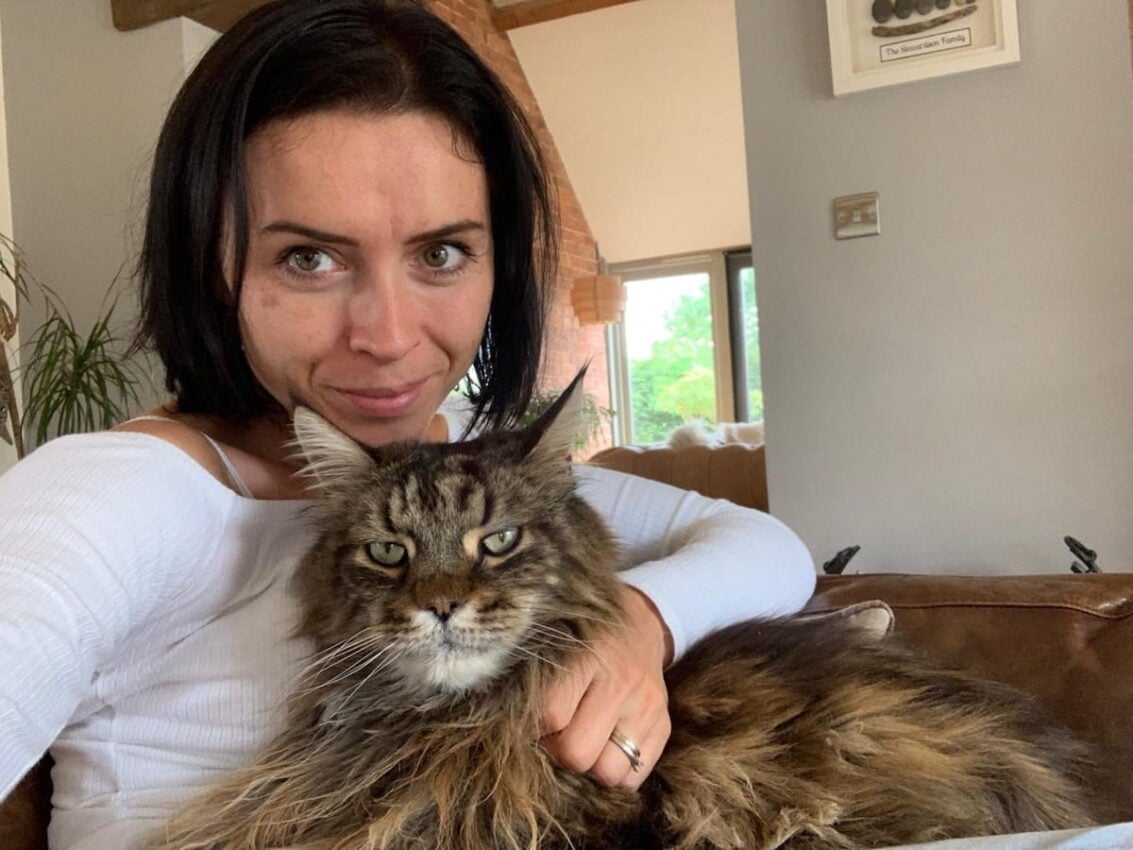
With Pippin, Mika, and Bali, I’ve found that human food interest varies a lot between cats.
Some Maine Coons are curious about everything on your plate, while others are only interested in strong-smelling meat or fish. The important thing is not to assume that “cat-safe” means “good as a regular food.”
In our house, plain cooked chicken is the sort of human food I would be far more comfortable offering than dairy, salty fish, or anything processed. I am much more cautious with foods like cheese and milk because they are not necessary and can upset a cat’s stomach.
Maine Coons are large cats, but they are still cats. Their size does not mean they should eat human-sized portions or rich leftovers. Small, plain, boring pieces are usually the safest option.


Best Human Food Treats For Maine Coons
If you want the safest options, choose simple animal-based foods.
The best occasional treats are usually:
- Plain cooked chicken
- Plain cooked turkey
- Plain cooked egg
- Plain cooked salmon
- A tiny amount of plain tuna
- A small spoonful of pumpkin if tolerated
The safest plant-based extras are usually:
- A tiny piece of a banana
- A few peas
- A tiny piece of cooked carrot
- A little plain cooked rice
- A few blueberries
- A small piece of steamed broccoli
But remember: these are extras. A complete cat food should still provide the real nutrition.
What To Do If Your Maine Coon Eats Something Unsafe
If your Maine Coon eats chocolate, onion, garlic, grapes, raisins, alcohol, caffeine, raw dough, cooked bones, or anything you are unsure about, contact your vet quickly.
Do not wait for symptoms if the food is known to be toxic.
Try to tell the vet:
- What your cat ate
- How much they ate
- When they ate it
- Your cat’s weight
- Whether they have symptoms
- Whether the food contained garlic, onion, chocolate, alcohol, caffeine, grapes, raisins, bones, or artificial sweeteners
If possible, keep the packaging or ingredient list.
Related Maine Coon Feeding Guides
For more help with feeding your Maine Coon safely, read these related guides:
Maine Coon Diet And Nutrition
Learn what Maine Coons need from their daily diet, including protein, fat, taurine, hydration, calories, and how to choose a complete cat food.
How Much To Feed My Maine Coon Cat
Use this guide to understand portion sizes, feeding frequency, calories, body condition, and why Maine Coons should not simply be fed more because they are large cats.
Foods That Harm A Maine Coon Cat
Read this before offering table scraps, leftovers, or new treats. It explains which human foods are toxic or risky for Maine Coons, including chocolate, garlic, onion, alcohol, caffeine, grapes, raisins, cooked bones, and salty foods.
Maine Coon Food Allergies
If your Maine Coon vomits, has diarrhoea, itchy skin, ear problems, or repeated digestive upset after eating certain foods, this guide explains possible food allergy signs and when to speak to your vet.
Do Maine Coons Have Sensitive Stomachs?
Some Maine Coons are more prone to vomiting, loose stools, food intolerance, or digestive upset. This guide explains possible causes and how to introduce new foods more carefully.
FAQs About Human Foods For Maine Coons
Can Maine Coons Eat Human Food?
Yes, Maine Coons can eat some human foods in small amounts, but human food should not replace complete cat food. Safe options include plain cooked chicken, cooked egg, cooked salmon, and tiny amounts of some fruits or vegetables.
What Is The Safest Human Food For Maine Coons?
Plain cooked chicken is one of the safest human food treats for most Maine Coons. It should be boneless, skinless, fully cooked, and free from salt, oil, butter, garlic, onion, sauces, or seasoning.
Can Maine Coons Eat Rice?
Yes, Maine Coons can eat small amounts of plain cooked rice. It should be fully cooked and unseasoned. Rice is not toxic, but it is mostly carbohydrate and should not replace meat-based cat food.
Can Maine Coons Eat Cooked Eggs?
Yes, Maine Coons can eat small amounts of plain cooked egg. A boiled or plain scrambled egg is safest. Do not feed raw eggs because of bacterial risk and possible interference with vitamin absorption.
Can Maine Coons Drink Milk?
Most Maine Coons should not drink cow’s milk. Many adult cats are lactose intolerant, so milk can cause diarrhoea, gas, vomiting, or stomach discomfort.
Can Maine Coons Eat Cheese?
Maine Coons can eat a tiny amount of plain cheese occasionally, but cheese is not ideal. Many cats struggle with lactose, and cheese is high in fat, salt, and calories.
Can Maine Coons Eat Bananas?
Yes, Maine Coons can eat a tiny piece of a banana, but bananas are not necessary. They are sugary and should only be offered occasionally.
Can Maine Coons Eat Cooked Chicken?
Yes, plain cooked chicken is safe for most Maine Coons. It should be boneless, fully cooked, and unseasoned. Do not feed cooked chicken bones.
Can Maine Coons Eat Raw Salmon?
No, Maine Coons should not eat raw salmon. Raw fish can carry bacteria or parasites, and cooked salmon is the safer option.
What Human Foods Are Toxic To Maine Coons?
Toxic or dangerous foods include chocolate, onion, garlic, chives, leeks, grapes, raisins, alcohol, caffeine, xylitol, raw eggs, raw meat, raw fish, cooked bones, and heavily salted or seasoned foods.
Conclusion: What Human Foods Can Maine Coons Eat?
Maine Coons can eat some human foods, but the safest options are plain, simple, and occasional.
Plain cooked chicken, cooked egg, cooked salmon, and small amounts of plain rice are usually safer choices than dairy, processed food, raw fish, or leftovers. Some fruits and vegetables, such as bananas, pumpkins, peas, carrots, broccoli, and blueberries, can be offered in tiny amounts, but they are not essential.
Avoid chocolate, onion, garlic, grapes, raisins, alcohol, caffeine, xylitol or artificial sweeteners, raw eggs, raw meat, raw salmon, cooked bones, fried foods, pizza, sugary foods, and salty leftovers.
The simplest rule is this:
If the food is plain, cooked, unseasoned, non-toxic, and offered in a tiny amount, it may be safe as an occasional treat. If it is raw, salty, sugary, seasoned, processed, dairy-heavy, or contains onion, garlic, chocolate, grapes, raisins, alcohol, or caffeine, keep it away from your Maine Coon.