11 Cat Breeds That Act Like Dogs: Most Dog-Like Cats
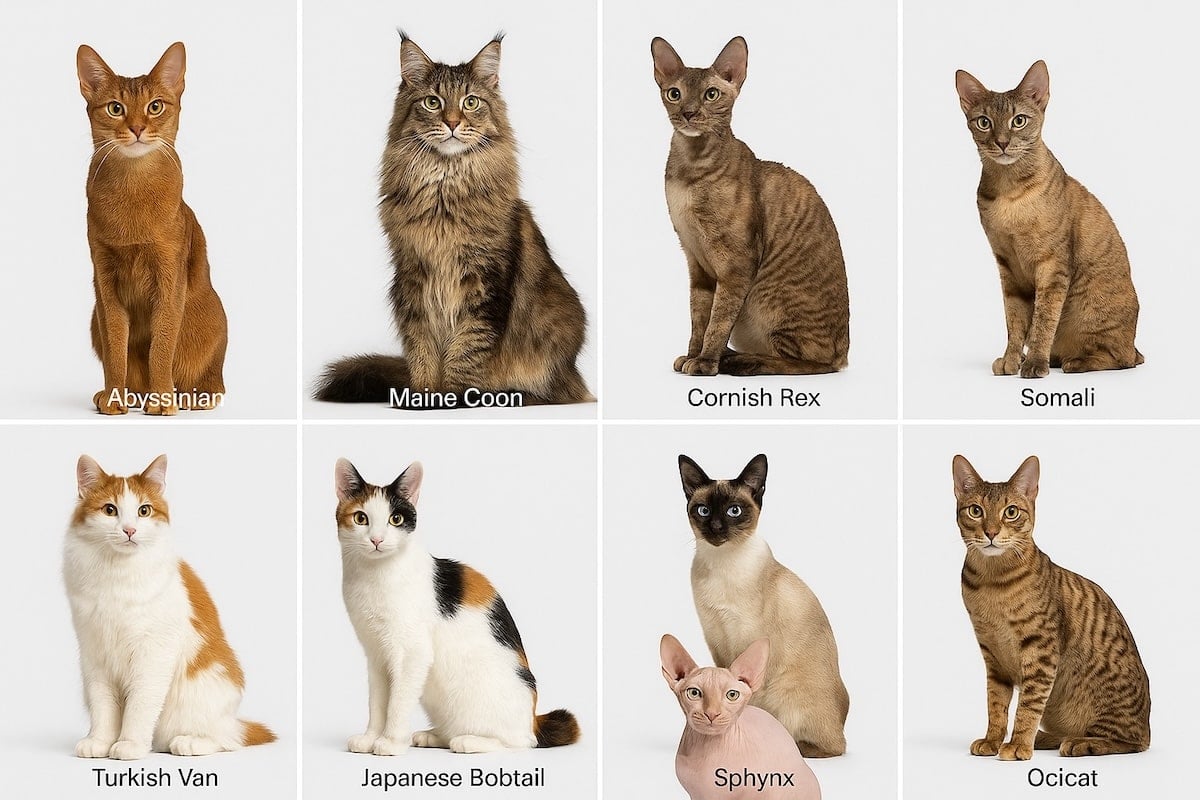
Some cats are surprisingly dog-like. They follow their owners from room to room, greet family members at the door, learn household routines, play fetch, respond to training, and want to be involved in whatever their humans are doing. That does not mean these cats behave exactly like dogs. They remain cats, with feline instincts, boundaries, and independence.
But if you love the companionship and interactive nature associated with dogs, certain cat breeds are more likely to display the qualities people commonly describe as “dog-like.”
Research has found genuine behavioral differences between cat breeds, including differences in activity, sociability, and other personality traits. However, breed is never a guarantee of an individual cat’s personality.
Quick Answer
The most dog-like cat breeds include:
Maine Coon
Abyssinian
Oriental Shorthair
Siamese
Bengal
Burmese
Sphynx
Cornish Rex
Ragdoll
Turkish Van
Selkirk Rex
These breeds are often considered dog-like because they tend to be highly social, playful, people-oriented, interactive, or receptive to training.
Some are energetic cats that enjoy games and exploration, while others resemble dogs more through their strong attachment to their families.
Dog-Like Cat Breeds At A Glance
| Cat Breed | Particularly Dog-Like For | Activity Level | Human Interaction |
|---|---|---|---|
| Maine Coon | Following, fetch, routines, training | Moderate-high | High |
| Abyssinian | Activity, loyalty, involvement | Very high | High |
| Oriental Shorthair | Fetch, play, social interaction | High | Very high |
| Siamese | Communication, attachment, involvement | High | Very high |
| Bengal | Exploration, water, interactive play | Very high | High |
| Burmese | Companionship, play, lap time | Moderate-high | Very high |
| Sphynx | Shadowing, cuddling, greeting people | High | Very high |
| Cornish Rex | Games, activity, attention | Very high | Very high |
| Ragdoll | Calm companionship, affection | Moderate | High |
| Turkish Van | Water, exploration, intelligence | High | High |
| Selkirk Rex | Family devotion, leash potential | Moderate | High |
What Does “Dog-Like Cat” Actually Mean?
Calling a cat dog-like can be misleading if it is taken too literally. Cats are not small dogs, and they should not be expected to obey, tolerate unwanted handling, or behave like another species. When people describe a cat as dog-like, they usually mean the cat displays several behaviors such as:
- Following family members around
- Greeting people when they arrive home
- Playing fetch
- Learning routines
- Responding to training
- Carrying toys
- Enjoying interactive games
- Walking on a harness
- Seeking frequent human companionship
- Communicating directly with their owners
- Wanting to participate in family life
Not every dog-like cat does all of these things. A Ragdoll may seem dog-like because it wants to stay close to its family, whereas a Bengal might earn the description through adventurous behavior, intelligence, and interactive play. The important question is therefore not simply “Which cat is most like a dog?” – It is “Which type of dog-like behavior do I actually want?”
1. Maine Coon: Best All-Around Dog-Like Cat
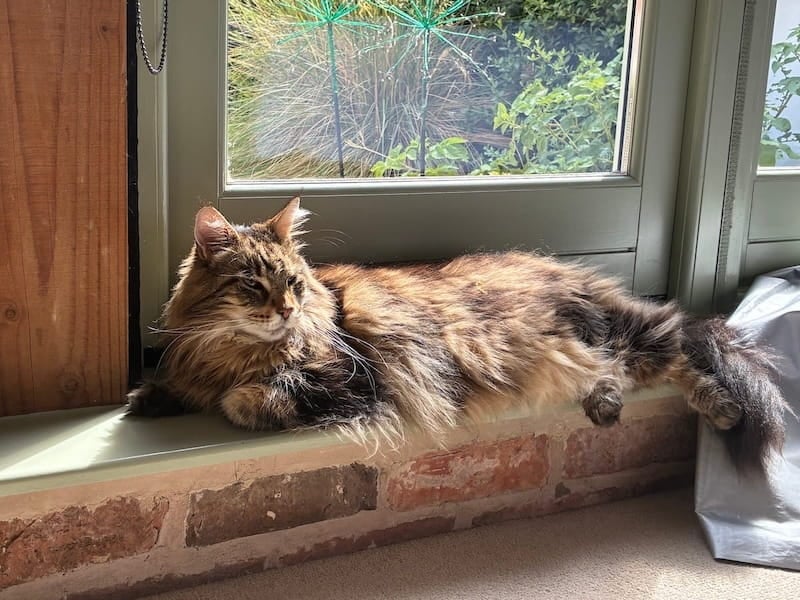
If I had to choose one breed that combines the widest range of dog-like qualities, I would choose the Maine Coon. I have lived with Maine Coons for more than 14 years, and the comparison with dogs makes sense to me, but only up to a point. Maine Coons are still independent cats. What makes them feel dog-like is their tendency to become deeply involved in family life.
TICA describes Maine Coons as gentle, friendly cats with clown-like personalities that like to be involved with their owners. In my own home, each of my Maine Coons has shown this differently:
- Mika follows me everywhere, often walking toward me while chatting.
- Bali plays fetch with his favorite mouse toy, retrieving it so I can throw it again.
- Pippin used to wait at the front door, greeting me enthusiastically when I came home.
- Pippin also learned simple cues, including placing his paw in my hand.
- Mika can solve a difficult dog treat puzzle by manipulating the different parts until the food drops out.
These behaviors make Maine Coons feel less like cats that simply happen to live in your house and more like companions actively participating in your daily routine.
Why Maine Coons Act Like Dogs
Maine Coons may:
- Follow you from room to room
- Play fetch
- Learn tricks and routines
- Respond to their names
- Greet people at the door
- Enjoy puzzle toys
- Learn to wear a harness
- Seek out family activity
- Communicate through chirps and trills
- Remain playful into adulthood
Not every Maine Coon will do all of these things. For a detailed look at my experience with Pippin, Mika, and Bali, read Are Maine Coons Like Dogs? 13 Dog-Like Traits Explained.
2. Abyssinian: The Athletic Sidekick

The Abyssinian is one of the strongest contenders for people who want a highly active, involved cat. TICA describes Abyssinians as intensely curious, athletic, loyal, and highly people-oriented, even referring to them as the “cat of the dog world.”
This is not a cat that typically wants to watch life from a quiet corner. Abyssinians usually want to investigate what is happening, climb, play, and interact with the people around them.
Why Abyssinians Are Dog-Like
They are known for being:
- Highly people-oriented
- Loyal
- Extremely curious
- Interactive
- Athletic
- Intelligent
- Interested in family activity
This breed is better suited to someone who wants an active companion than a quiet lap cat. If your idea of a dog-like pet is one that follows the action and constantly wants something to do, the Abyssinian deserves serious consideration.
3. Oriental Shorthair: The Fetch-Loving Entertainer

The Oriental Shorthair is one of the most convincing choices for owners specifically interested in interactive play. TICA describes Orientals as lively, intelligent, sociable cats that retain their playful nature into adulthood and notes that many will repeatedly retrieve favorite toys for their owners. That naturally earns them a place high on this list.
Why Oriental Shorthairs Are Dog-Like
Many are:
- Very playful
- People-oriented
- Highly interactive
- Intelligent
- Enthusiastic about toys
- Known to retrieve objects
- Interested in what their owners are doing
They are not ideal for someone looking for a cat that quietly entertains itself all day. Their dog-like quality comes from interaction. They often want the game to involve you.
4. Siamese: The Cat That Talks Back
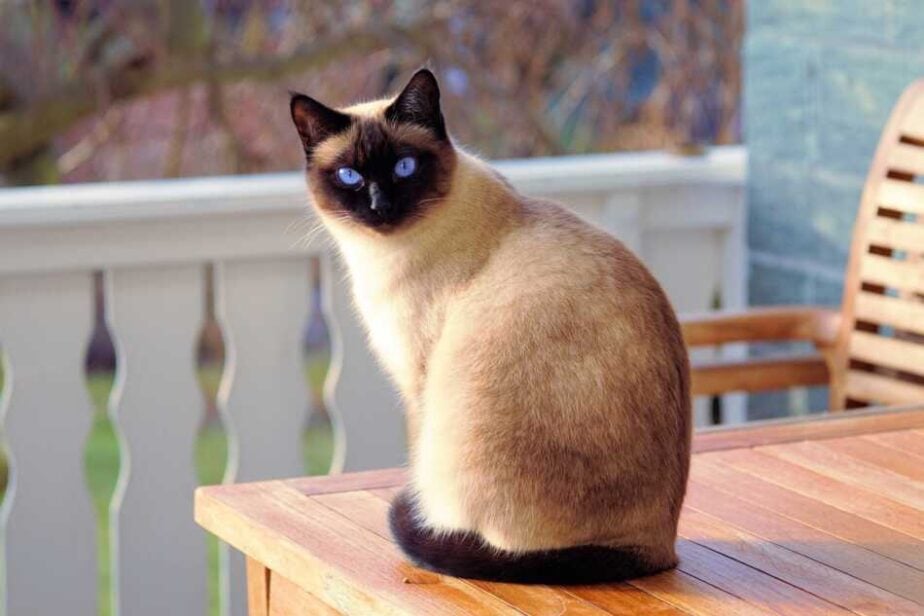
Some dogs seem to hold entire conversations with their owners. The Siamese is the feline equivalent. TICA describes Siamese cats as lively, intelligent, very social, people-oriented, and famously talkative. They tend to thrive on human company rather than treating their owners as background furniture.
Why Siamese Cats Are Dog-Like
They often:
- Seek frequent human interaction
- Follow their owners
- Communicate vocally
- Learn routines quickly
- Want to participate in household life
- Form strong attachments
- Enjoy active play
The Siamese is particularly suitable for someone who wants a cat with a big emotional and communicative presence. However, that same sociability means this breed may be a poor match for someone who wants an exceptionally independent pet.
5. Bengal: The Adventure Cat

If your ideal dog is the energetic kind that wants to explore everything, the Bengal may be your feline equivalent. TICA describes Bengals as social, people-oriented, confident, curious, and highly active. Many enjoy water, and they have a strong tendency to investigate whatever their owners are doing. They are not simply decorative spotted cats.
Bengals generally need considerable opportunities to climb, chase, investigate, solve problems, and interact.
Why Bengals Are Dog-Like
They may:
- Follow family members around
- Seek interactive play
- Explore enthusiastically
- Enjoy water
- Learn household rules
- Investigate everything
- Form close relationships with trusted people
This is one of the highest-energy breeds on the list. For someone wanting a calm companion, there are easier choices. For someone wanting an intelligent, energetic cat that wants to be where the action is, Bengals can be extraordinary.
6. Burmese: The People-Loving Companion

The Burmese is dog-like for a different reason. These cats are strongly people-oriented. TICA describes Burmese cats as sweet-natured, playful, highly social, and particularly fond of human company. They often enjoy lap time as much as games.
Why Burmese Cats Are Dog-Like
They commonly:
- Seek human companionship
- Enjoy interactive play
- Form strong family bonds
- Want to be included
- Enjoy physical affection
- Remain playful as they mature
If you want a cat that feels emotionally present without the extreme activity level of an Abyssinian or Bengal, a Burmese may be a better match. Their biggest dog-like trait is not adventure. It is companionship.
7. Sphynx: The Velcro Cat
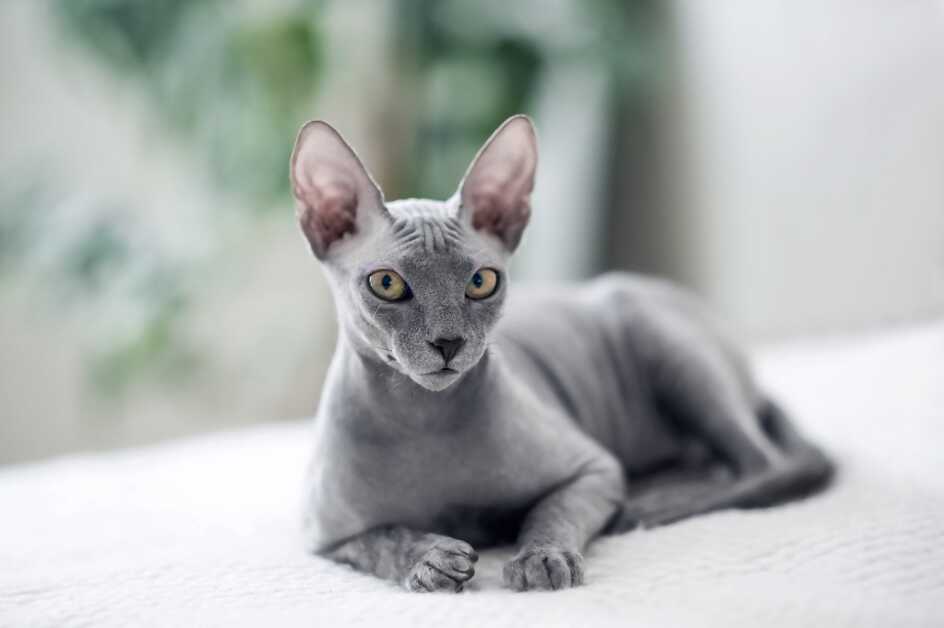
If by “dog-like” you mean a cat that wants to be with you constantly, the Sphynx has one of the strongest claims. TICA describes Sphynx cats as extremely friendly, intelligent, affectionate, loyal, and highly attached to their owners. They are sometimes nicknamed “Velcro cats” because of their desire to stay physically close to people. TICA also notes that some play fetch.
Why Sphynx Cats Are Dog-Like
They may:
- Follow their owners
- Greet visitors
- Seek frequent contact
- Sleep close to people
- Play fetch
- Enjoy active games
- Crave family involvement
However, their appearance comes with specialist care requirements. A dog-like personality should never be the only consideration when choosing a breed; prospective Sphynx owners also need to understand the breed’s skin, temperature, and general care needs.
8. Cornish Rex: The Perpetual Performer
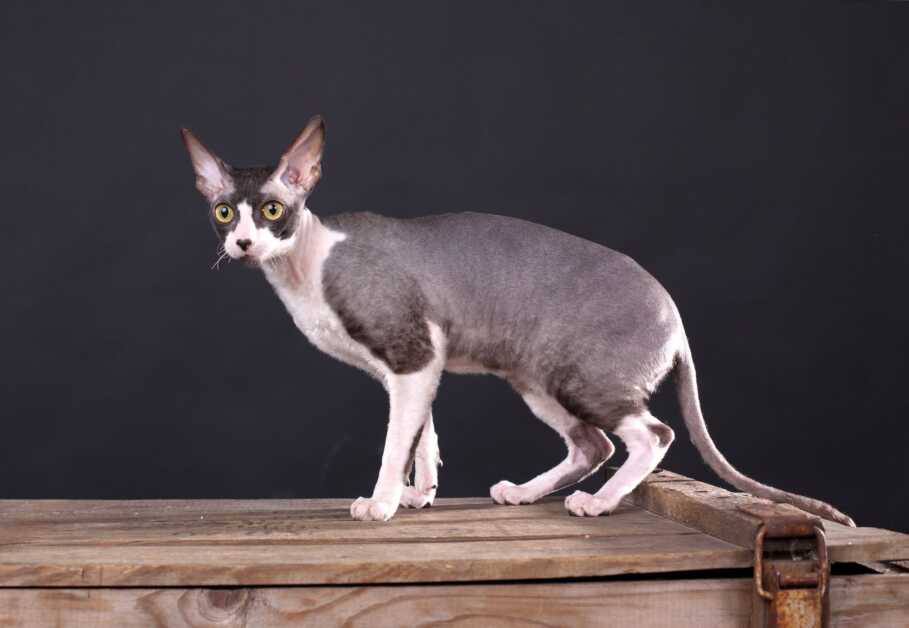
The Cornish Rex behaves like the class clown that never quite grows up. TICA describes the breed as highly social, intelligent, energetic, acrobatic, and attention-loving, with a playful personality that frequently continues well into adulthood.
Why Cornish Rex Cats Are Dog-Like
They tend to be:
- Energetic
- Interactive
- Highly social
- Intelligent
- Playful
- Attention-seeking
- Interested in family activity
The Cornish Rex suits people who want to play with their cat, rather than simply own one. They need enrichment and opportunities to use their brains and bodies. A home that finds a busy, inquisitive cat exhausting is unlikely to be the ideal match.
9. Ragdoll: The Laid-Back Companion
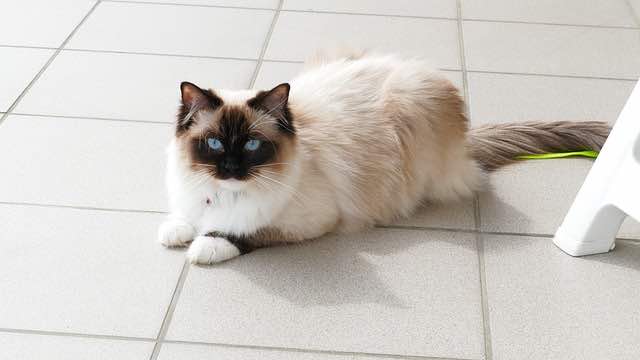
Not every dog-like cat needs to race around the house carrying toys. Some earn the comparison simply because they are unusually companion-focused. The Ragdoll is generally a quieter, more relaxed breed. TICA describes Ragdolls as loving, laid-back cats that enjoy companionship and affection, while still retaining a playful side.
Why Ragdolls Are Dog-Like
Their dog-like qualities can include:
- Staying close to family members
- Seeking affection
- Relaxed companionship
- Interest in play
- Strong attachment to familiar people
I would not choose a Ragdoll over an Oriental Shorthair if your main goal were fetch and constant activity. But if what you love about dogs is simply having a calm companion nearby, a Ragdoll may suit you far better.
10. Turkish Van: The Water-Loving Explorer
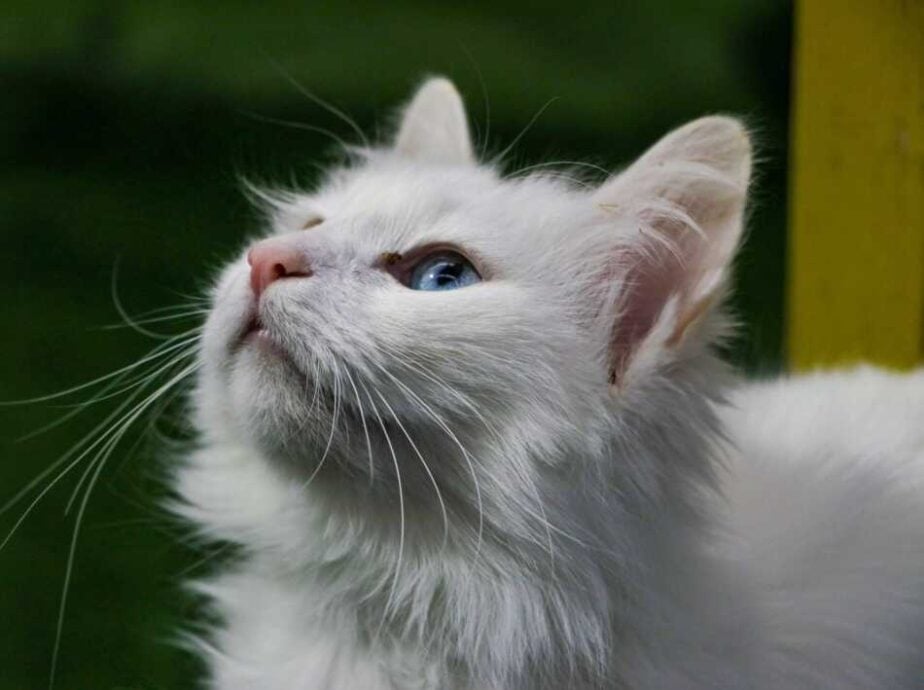
The Turkish Van is famous for one particularly unusual feline characteristic: its relationship with water. TICA describes the breed as active, robust, intelligent, loyal, loving, and interested in water games and swimming.
Why Turkish Vans Are Dog-Like
They may be:
- Adventurous
- Active
- Intelligent
- Playful
- Family-oriented
- Interested in water
- Confident explorers
This is another breed where the dog comparison comes primarily from activity and engagement, rather than lap-cat behavior. Do not assume every Turkish Van will want to jump into a bathtub, however. Breed tendencies are not guarantees.
11. Selkirk Rex: The “Dog In Disguise”
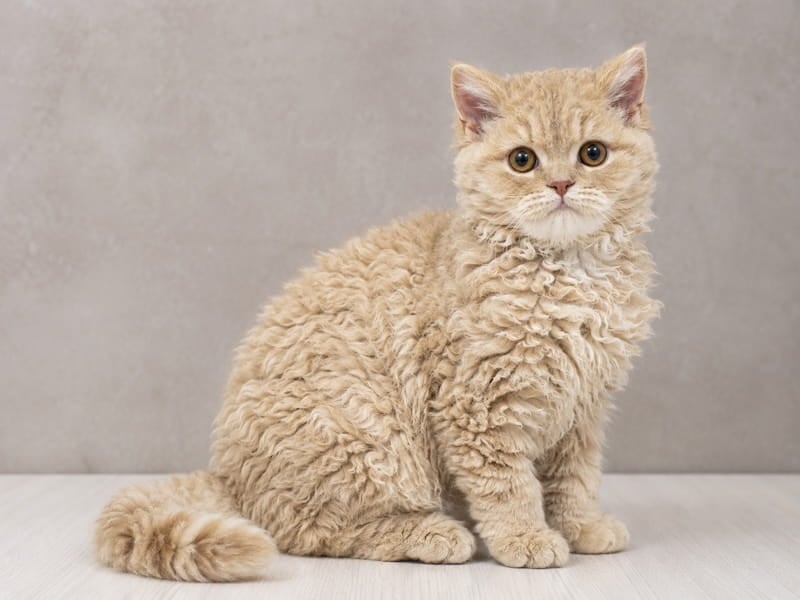
The curly-coated Selkirk Rex is a less obvious addition to this list, but an especially interesting one. TICA says the breed is sometimes described as a dog in disguise because of its family devotion and ability to learn to walk on a leash. Selkirk Rex cats are also described as social, affectionate, playful, and unhappy when isolated for long periods.
Why Selkirk Rex Cats Are Dog-Like
They may:
- Become strongly attached to family
- Enjoy regular interaction
- Play actively
- Learn to walk on a leash
- Seek companionship
- Combine affection with a relatively mellow temperament
For someone who wants a softer, calmer version of the dog-like-cat personality, the Selkirk Rex is worth considering.
Which Cat Breed Acts Most Like A Dog?
There is no scientifically established “most dog-like cat breed” because dog-like is not a formal behavioral category. Different breeds resemble dogs in different ways. If I were matching breeds according to the behavior an owner actually wants, I would break them down like this:
| You Want A Cat That… | Breeds To Consider |
| Follows and participates in family life | Maine Coon, Siamese, Sphynx |
| Enjoys fetch and interactive games | Oriental Shorthair, Maine Coon, Sphynx |
| Is highly active and adventurous | Abyssinian, Bengal, Turkish Van |
| Is strongly people-oriented | Burmese, Siamese, Sphynx |
| Feels like a calm companion | Ragdoll, Selkirk Rex |
| Enjoys training and problem-solving | Maine Coon, Abyssinian, Bengal, Oriental Shorthair |
| Has a fascination with water | Turkish Van, Bengal |
| Stays playful into adulthood | Cornish Rex, Oriental Shorthair, Maine Coon |
For my own lifestyle, Maine Coons offer the most complete combination because I have experienced fetching, greeting, following, problem-solving, training, communication, and routine awareness across my own cats. But that does not make them automatically right for everyone.
Does Breed Really Predict Personality?
Breed can influence behavioral tendencies, but it should never be treated as a personality guarantee. Research involving thousands of cats has found measurable behavioral differences among breeds and evidence that some behavioral traits have a heritable component. At the same time, there is substantial variation between individual cats.
A kitten’s eventual behavior can also be affected by:
- Early socialization
- Experiences with people
- Environment
- Health
- Confidence
- Training
- Enrichment
- Previous negative experiences
- Individual personality
This is especially important if you are adopting from a rescue. A friendly adult domestic cat whose personality is already known may be far more reliably dog-like than a pedigree kitten purchased solely because its breed appears on a list like this. Breed gives you tendencies. The individual cat gives you the actual personality.
Can You Train A Cat Like A Dog?
Cats can learn behaviors, routines, and cues, but training should be approached on feline terms. Positive, reward-based training can be used for skills such as:
- Coming when called
- Touching a target
- Entering a carrier
- Sitting on a mat
- Giving a paw
- Fetching
- Wearing a harness
- Using puzzle toys
- Cooperating with routine care
The mistake is expecting a cat to behave like an obedient dog simply because the breed is described as dog-like. Cats often cooperate because the activity is rewarding, interesting, or part of a familiar routine. That is very different from demanding compliance. For Maine Coons specifically, read How To Train A Maine Coon Cat and How To Train A Maine Coon To Walk On A Leash.
Do Dog-Like Cats Need More Attention?
Often, yes, particularly the very social or high-energy breeds. An Abyssinian, Bengal, Siamese, Sphynx, or Cornish Rex may be a poor choice for someone specifically seeking a cat that requires very little interaction. A socially demanding cat that is bored for long periods may need considerably more environmental enrichment than an owner expected.
Before choosing a breed because its dog-like personality sounds appealing, ask yourself whether you actually want:
- Daily interactive play
- Frequent companionship
- Puzzle toys
- Climbing opportunities
- Training sessions
- A cat following you around
- Regular vocal interaction
- A pet that wants to participate rather than observe
For some owners, this is exactly what makes these breeds wonderful. For others, it can become overwhelming.
Dog-Like Does Not Mean Good With Dogs
This distinction is important. A cat that acts like a dog is not automatically a cat that will enjoy living with a dog. Those are separate characteristics. Successful cat-and-dog relationships depend on the personalities and previous experiences of both animals, together with careful introductions and the cat having safe places to retreat.
If your real question is which breeds are most suited to households that already contain dogs, read my article 15 Cat Breeds That Get Along With Dogs.
How To Choose The Right Dog-Like Cat
Start with the behavior you want rather than the appearance you like.
Choose A Maine Coon If…
You want an involved, playful companion with a balance of independence and sociability.
Choose An Abyssinian Or Bengal If…
You want an athletic, high-energy cat and can provide lots of stimulation.
Choose An Oriental Shorthair Or Siamese If…
You want an interactive, expressive cat that is deeply involved in family life.
Choose A Sphynx Or Burmese If…
You want a highly people-oriented cat that seeks plenty of companionship.
Choose A Ragdoll Or Selkirk Rex If…
You prefer a calmer, affectionate companion rather than nonstop activity.
Choose A Turkish Van If…
You want an intelligent, confident explorer and are comfortable with an active cat.
Choose A Cornish Rex If…
You want a playful entertainer that stays energetic and involved. Most importantly, meet the individual cat whenever possible.
The perfect breed on paper can still produce a kitten whose personality is different from what you imagined.
FAQ
What Cat Breed Is Most Like A Dog?
Maine Coons, Abyssinians, Siamese, Oriental Shorthairs, Sphynx, and Bengals are all commonly described as dog-like, but for different reasons. Maine Coons are my choice for the strongest all-around combination of following, fetching, trainability, communication, and involvement with family.
What Cat Breed Plays Fetch Like A Dog?
Some Maine Coons, Oriental Shorthairs, Sphynx cats, and other highly playful breeds may retrieve toys. However, fetching is an individual behavior rather than something every member of a breed will perform.
What Cat Follows You Around Like A Dog?
Maine Coons, Siamese, Sphynx, Bengals, Burmese, and other people-oriented cats may follow their owners around the house. My Maine Coon Mika is a perfect example; he regularly shadows me simply because he wants to know where I am and what I am doing.
What Is The Best Cat Breed For A Dog Person?
A Maine Coon is an excellent starting point for many dog lovers because the breed combines sociability, intelligence, interactive play, and an interest in family routines while retaining normal feline independence.
Abyssinians and Bengals may appeal more to people who enjoy highly active dogs, while Ragdolls may appeal to those who prefer calmer canine companions.
Do Cats Really Act Like Dogs?
Some cats display behaviors people associate strongly with dogs, including fetching, greeting owners, following people, responding to training, and seeking frequent interaction. These remain normal feline behaviors rather than evidence that the cat somehow thinks it is a dog.
Can A Regular Mixed-Breed Cat Act Like A Dog?
Dog-like behavior is not exclusive to pedigree cats. Individual domestic cats can be extremely affectionate, trainable, social, playful, and people-focused. If personality matters more to you than appearance, adopting an adult cat whose temperament is already known can be one of the best ways to find the companion you want.
Conclusion
Some cats do far more than sleep on the sofa and appear at mealtimes. They follow their owners, learn routines, play interactive games, communicate constantly, retrieve toys, explore on harnesses, and become deeply involved in family life. That is what people usually mean when they talk about cat breeds that act like dogs.
The Maine Coon is my strongest all-around choice because I have personally seen these qualities across Pippin, Mika, and Bali. However, it is far from the only option. Abyssinians and Bengals suit owners who want energy and adventure. Oriental Shorthairs and Siamese thrive on interaction. Sphynx and Burmese cats often want close human companionship, while Ragdolls and Selkirk Rex cats can offer a calmer version of the dog-like bond.
Choose according to the type of companionship you actually want, not simply because a breed appears on a list. And remember that breed only gives you a tendency. The most dog-like cat in the world might just as easily be a mixed-breed rescue that follows you home, brings you a toy, and decides that wherever you are is exactly where they want to be.