Tabby Maine Coon Cats: Patterns, Colors, M Marking and Facts

With their dramatic stripes, enormous tails, shaggy coats, and distinctive facial markings, tabby Maine Coons have the rugged appearance many people associate with the breed. However, a tabby Maine Coon is not a separate type of Maine Coon – and “tabby” is not a cat breed.
Tabby describes the pattern within the coat. Maine Coon describes the breed.
Tabby Maine Coons may have broad swirls, narrow stripes, or subtly banded fur. They can also appear in numerous colors, including:
- Brown
- Silver
- Red
- Blue
- Cream
- Combinations with white
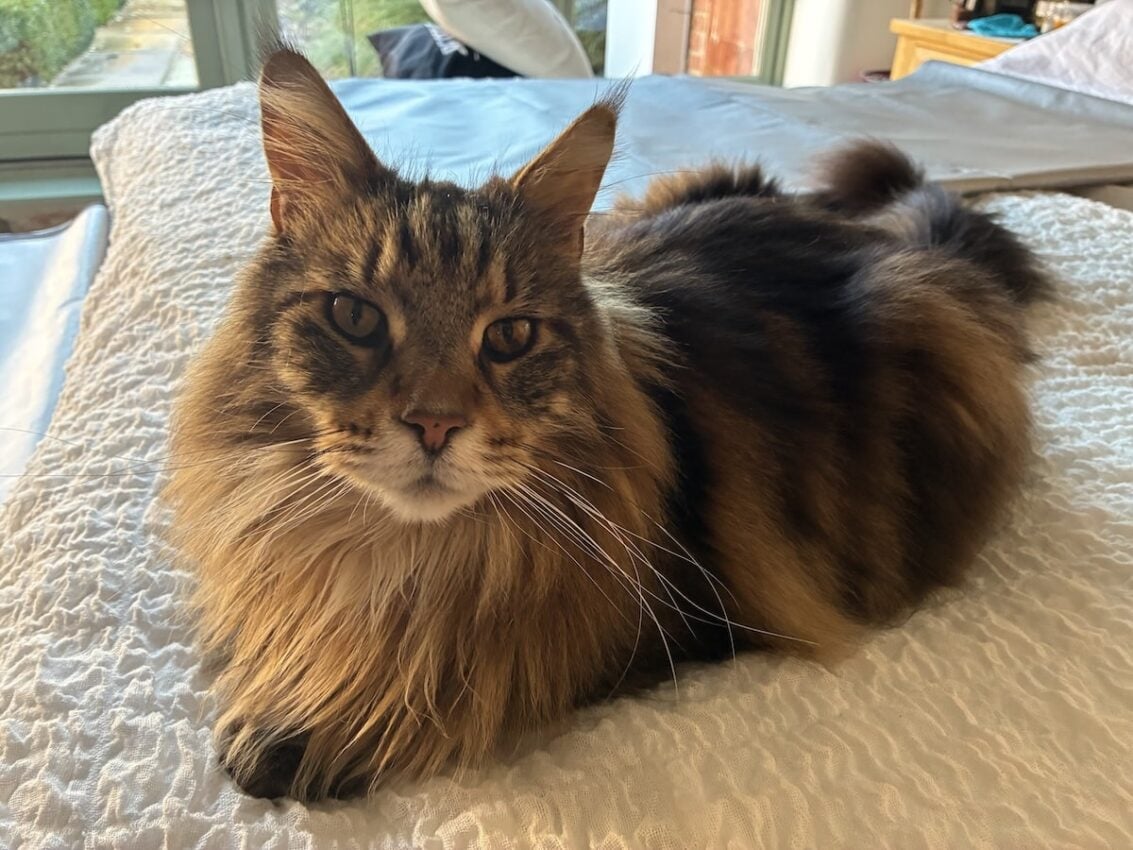
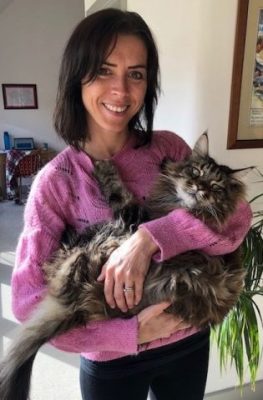
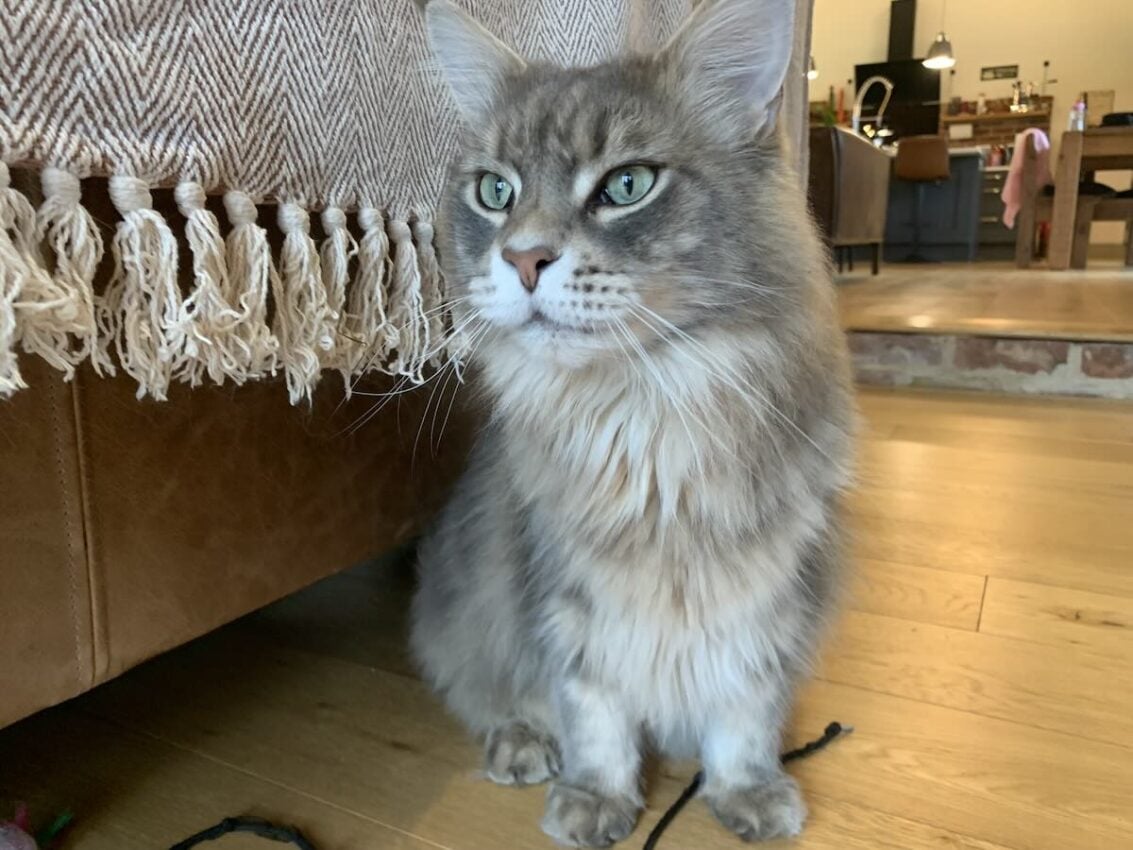
Our Maine Coons, Mika, Bali, and Pippin, are all tabbies and have the familiar M-shaped marking on their foreheads. However, that marking does not prove that a cat is a Maine Coon: it is a tabby marking found across many different cat breeds and mixed-breed cats.


Quick Answer
A tabby Maine Coon is a pedigree or part-Maine Coon cat with visible tabby markings. The three tabby patterns listed in the Cat Fanciers’ Association Maine Coon standard are:
* Classic tabby: Broad swirls and rounded blotches
* Mackerel tabby: Narrow, usually vertical stripes
* Ticked tabby: Individually banded hairs with few obvious body stripes
Brown is the color most strongly associated with the traditional Maine Coon look, but tabby Maine Coons can also be silver, red, blue, cream, patched, or combined with white.
Most have an M-shaped forehead marking, lines extending from the eyes, rings around the tail and legs, and contrasting markings on the face. The tabby pattern does not determine a Maine Coon’s size, personality, health, or pedigree status.
Tabby Maine Coon Quick Facts
| Feature | Tabby Maine Coon |
|---|---|
| Is tabby a breed? | No; it is a coat pattern |
| Main patterns | Classic, mackerel, and ticked |
| Typical colors | Brown, silver, red, blue, and cream |
| Forehead marking | Usually an M shape |
| Does the M prove Maine Coon ancestry? | No |
| Does pattern affect personality? | No evidence that it does |
| Does pattern affect size? | No |
| Can a tabby have white fur? | Yes |
| Is brown tabby rare? | No; it is a typical Maine Coon color and pattern |
| Grooming needs | The same as other Maine Coons with a comparable coat |
Our Experience With Mika And Pippin
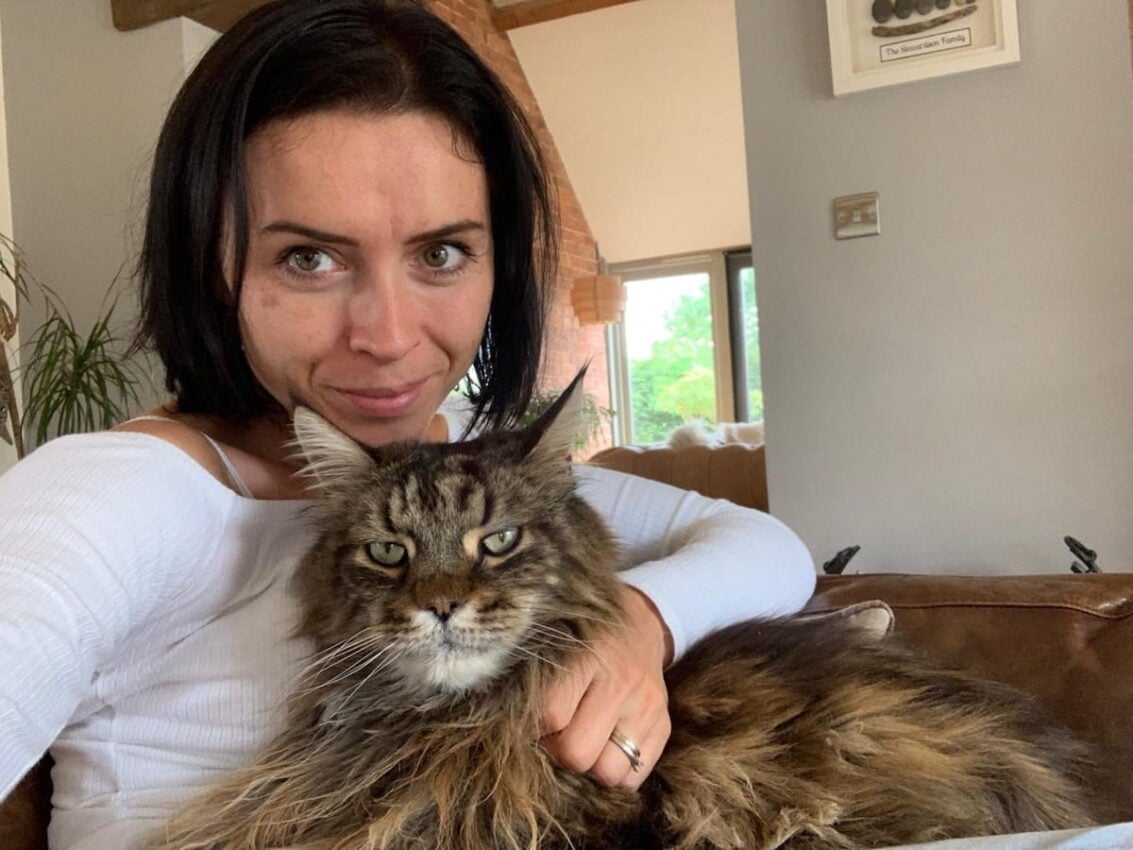
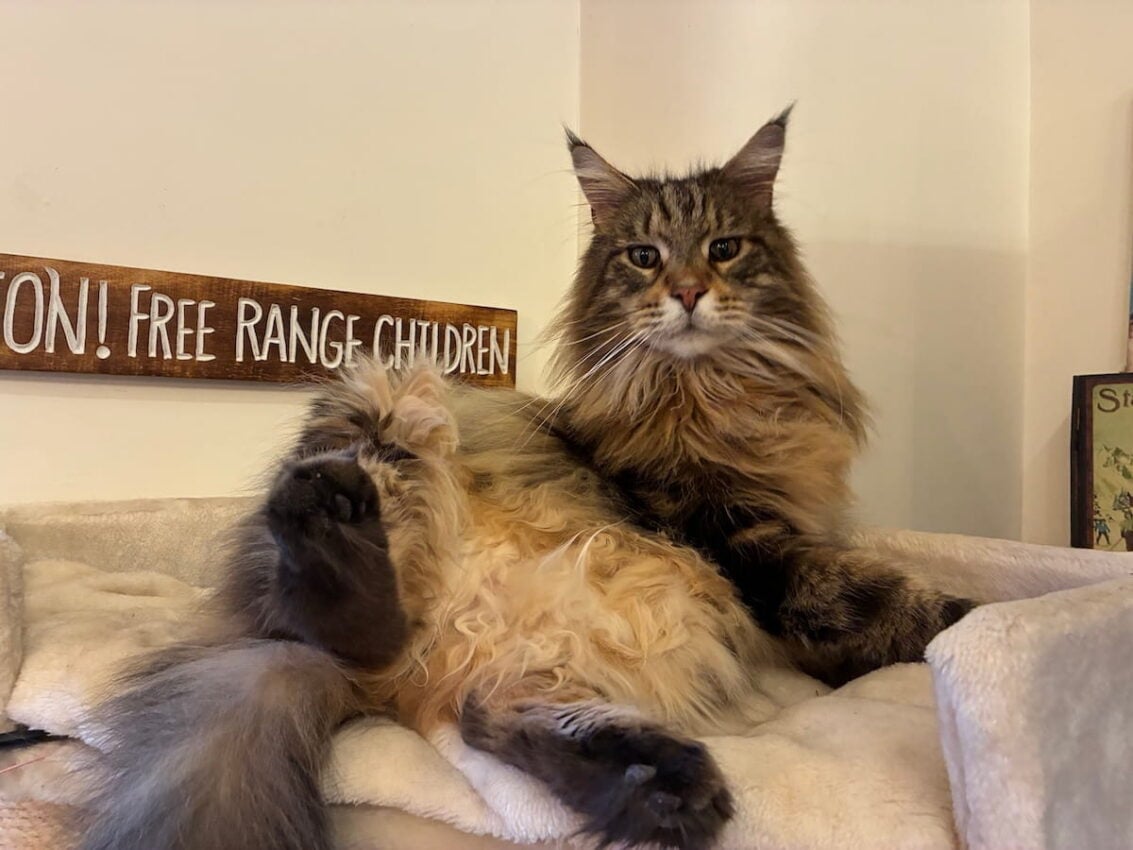
Mika, Bali and Pippin are all tabby Maine Coons, and both have a clear M-shaped marking on the forehead.
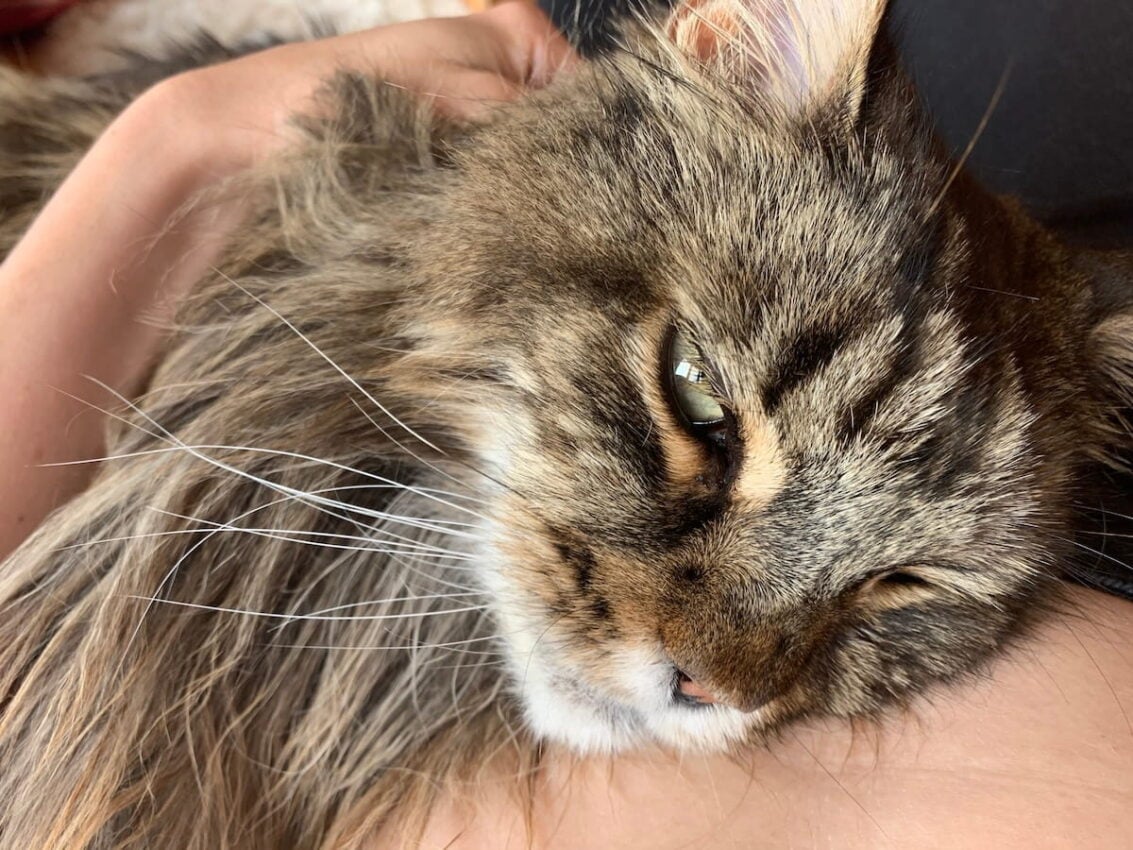
The marking is one of the first features people notice when looking closely at their faces. They also have the other facial details associated with a tabby pattern, including darker lines around the eyes and contrasting markings across the forehead and cheeks.
Despite sharing a tabby coat pattern, Mika and Pippin have always been individuals. Their tabby markings do not explain their personalities, habits, preferences, or behavior. Those differences are shaped by the individual cat, their genetics, socialization, health, life experiences, and environment – not by whether their coat has stripes or swirls.
This is important because tabbies are sometimes described online as though they share a special “tabby personality.” In reality, a tabby Maine Coon has the temperament of an individual Maine Coon, not a temperament created by its markings.


What Is a Tabby Maine Coon?
A tabby Maine Coon is a Maine Coon whose coat displays a tabby pattern.
The pattern may include:
- An M-shaped forehead marking
- Lines extending back from the eyes
- Darker cheek markings
- Necklaces across the chest
- Rings around the legs
- Rings around the tail
- Stripes or swirls across the body
- Spots or “buttons” on the abdomen
- Individual hairs containing alternating bands of color
The TICA Maine Coon breed profile identifies brown, red, and silver tabbies (with or without white) as particularly typical of the breed. It describes classic, mackerel, and ticked as the main tabby patterns seen in Maine Coons.
A tabby pattern can occur in pedigree Maine Coons, Maine Coon mixes, other recognized breeds, and ordinary domestic cats. Consequently, tabby markings alone cannot identify a cat’s breed.
For a broader look at every accepted color and pattern, see our complete Maine Coon colors and patterns guide.


The Three Main Tabby Maine Coon Patterns
1. Classic Tabby Maine Coon
The classic tabby is also known as a blotched tabby. Instead of narrow tiger-like stripes, a classic tabby has broad, curved markings that create swirls or rounded shapes across the sides of the body. Some cats have a large marking resembling a target or bullseye on each flank.
Typical classic tabby markings include:
- Broad swirls on the sides
- A butterfly-shaped marking over the shoulders
- Three dark lines extending along the back
- Rings around the legs and tail
- Several necklace-like lines around the neck
- An M marking on the forehead
- Rounded spots or buttons on the abdomen
The Cat Fanciers’ Association guide to tabby patterns describes classic tabbies as having dense, clearly defined, broad markings, including whirls on the flanks and a solid blotch surrounded by one or more rings.
A classic tabby Maine Coon’s long coat can soften the edges of these markings, but the large swirls are usually still visible when the fur is viewed from the side.
2. Mackerel Tabby Maine Coon
A mackerel tabby has narrower stripes running down the sides of the body.
The pattern is often compared to:
- Tiger stripes
- Fish bones
- Narrow pencil lines
- Vertical bands
A darker line usually runs along the spine, with narrower stripes extending down toward the abdomen. The legs and tail commonly display clear rings.
The CFA describes the mackerel pattern as having dense, narrow pencil-like markings, barred legs, tail rings, chest necklaces, and an M-shaped forehead marking.
Mackerel stripes can sometimes break into shorter sections. This may make a pet cat look spotted, but that does not automatically make “spotted” a separate recognized Maine Coon pattern.
3. Ticked Tabby Maine Coon
The ticked tabby is the most subtle of the three patterns. Rather than having strong swirls or stripes across the body, each hair contains alternating bands of lighter and darker pigment. This creates a finely flecked or salt-and-pepper appearance.
A ticked tabby may have:
- Few obvious markings across the torso
- Darker shading along the spine
- An M marking on the forehead
- Lines around the eyes
- Rings or bracelets on the legs
- Rings on the tail
- One or more necklaces across the chest
The CFA Maine Coon show standard accepts ticked tabbies and states that their bodies should be largely free from visible spots, stripes, or blotches, although full tabby markings remain on the face and legs.
Ticked Maine Coons can therefore look almost solid from a distance, especially when their long fur disguises the banding.
Can Maine Coons Have a Spotted Tabby Pattern?
A cat can certainly have markings that look spotted. Stripes may break into shorter segments, creating rows of spots along the body.
However, the current CFA Maine Coon standard lists:
- Classic
- Mackerel
- Ticked
It does not list spotted as a separate Maine Coon tabby pattern.
The CFA’s general tabby-pattern guide explains that spotted markings can sometimes resemble a broken mackerel pattern. Therefore, a Maine Coon described casually as “spotted” may have broken mackerel markings rather than a separate show-standard pattern.
Registry standards can change and may differ between organizations or countries, so breeders and exhibitors should always check the latest rules of the registry where the cat will be shown.
Tabby Maine Coon Colors
Pattern and color are separate characteristics. “Tabby” tells you how the markings are arranged. Words such as brown, silver, red, or blue describe the color of the coat and markings.
Brown Tabby Maine Coon
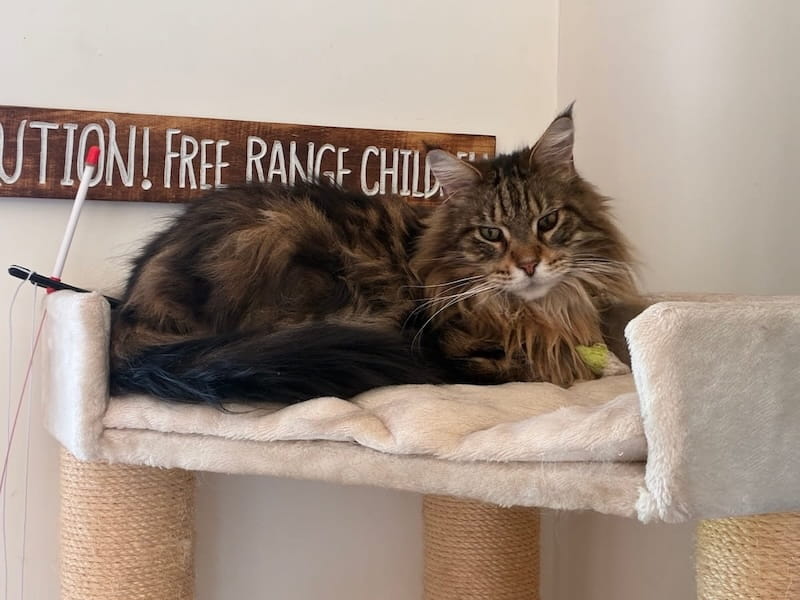
The brown tabby is the traditional Maine Coon appearance many people picture first. Despite the name, the markings are typically very dark brown or black against a warmer brown ground color.
The CFA standard describes a brown tabby as having:
- A brilliant coppery-brown ground color
- Dense black markings
- Dark coloring down the backs of the legs
- Black or brown nose leather and paw pads preferred
Brown tabbies may be classic, mackerel, or ticked. Brown tabby is not a rare Maine Coon pattern. TICA lists brown tabby among the colors most typically associated with the breed.
Silver Tabby Maine Coon
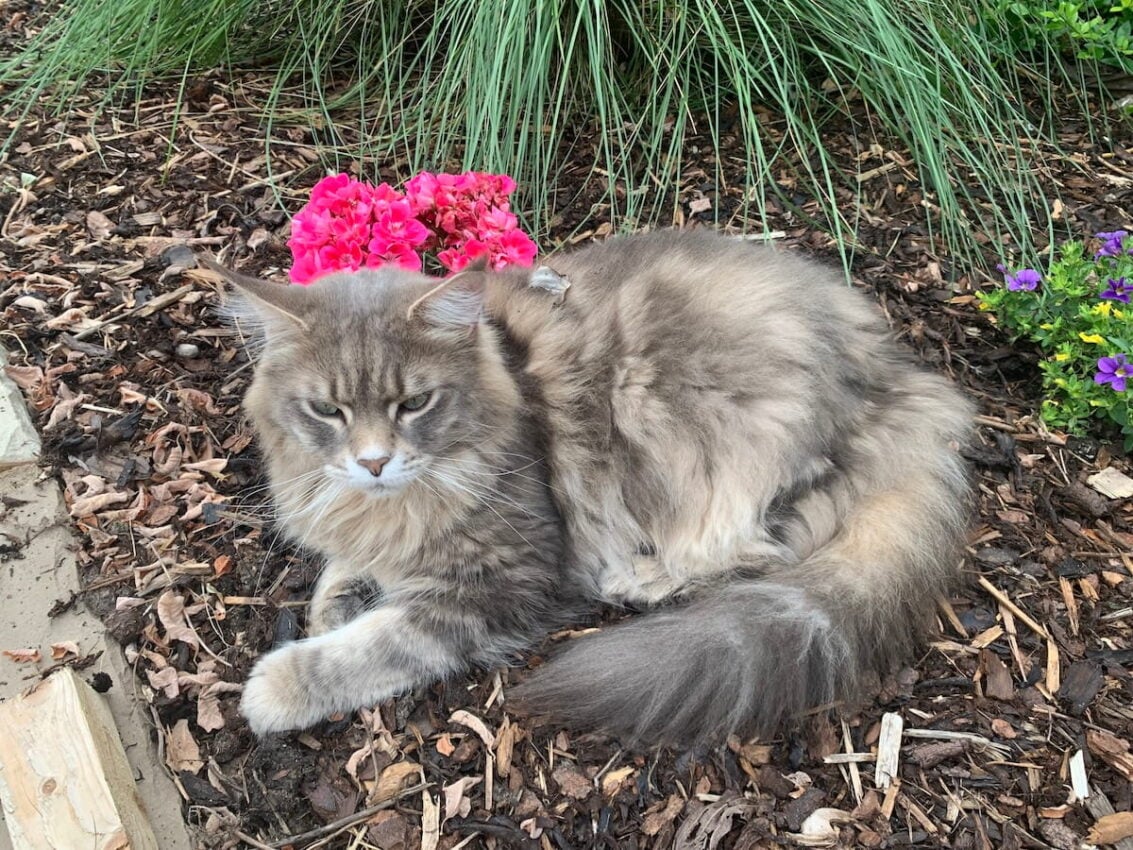
Silver tabby Maine Coons have dark markings over a pale silver ground color. Their high contrast can make the pattern look especially dramatic, particularly around the eyes, forehead, legs, and tail.
The CFA standard describes silver tabbies as having a clear, pale-silver ground color with dense black markings.
Silver tabbies may also have white fur on the:
- Face
- Chest
- Belly
- Legs
- Paws
Red Tabby Maine Coon
Red tabbies are often casually described as:
- Orange Maine Coons
- Ginger Maine Coons
- Marmalade Maine Coons
In breed standards, the formal color term is normally red.
Red tabbies have darker red markings over a lighter red ground color. Cream tabbies are the diluted, paler version of red.
The UC Davis Veterinary Genetics Laboratory notes an important genetic exception: red or orange cats display tabby patterning whether they carry the agouti or non-agouti version at that particular genetic location. This is why an apparently solid red cat will usually still show some tabby markings.
Blue Tabby Maine Coon
In cat-color terminology, blue means a diluted gray-blue color rather than bright blue. A blue tabby Maine Coon may have deep blue-gray markings over a paler bluish or warm ivory background.
A cat described informally as a “gray tabby Maine Coon” could be:
- Blue tabby
- Silver tabby
- Blue-silver tabby
Looking at the undercoat and the warmth of the ground color helps distinguish them.
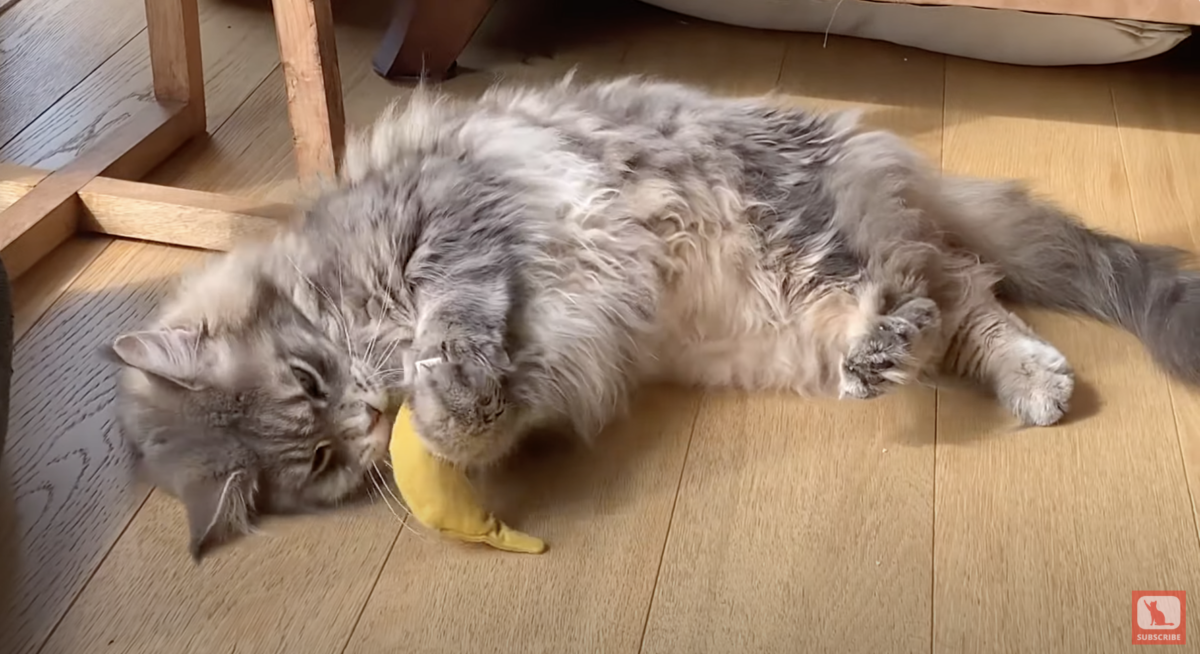
Patched Tabby Or Torbie Maine Coon
A patched tabby has areas of red or cream mixed through another tabby color.
Common names include:
- Brown patched tabby
- Silver patched tabby
- Blue patched tabby
- Torbie, meaning tortoiseshell-tabby
The CFA describes a patched tabby as a tabby pattern combined with patches of red or cream.
Tabby Maine Coon With White
Any of the main tabby colors may also appear with white.
White can occur on the:
- Chin
- Muzzle
- Chest
- Belly
- Legs
- Paws
- Face
The amount can range from a small white patch to extensive white areas across the body.
A brown tabby and white Maine Coon is still a tabby. The white spotting simply overlays part of the colored coat.
Why Do Tabby Maine Coons Have An M On Their Forehead?
The M is formed by the darker tabby lines meeting in the center of the forehead. Both Mika, Bali, and Pippin have this marking.
The CFA’s pattern descriptions identify the forehead M in classic, mackerel, and ticked tabbies. Other facial markings commonly include lines running from the outer corners of the eyes and curved stripes over the cheeks.
Several charming legends attempt to explain the M. Different stories associate it with:
- The Virgin Mary
- The prophet Muhammad
- Ancient Egyptian cats
- The word “mau,” meaning cat
These are legends rather than biological explanations. The actual M is part of the inherited tabby pattern.
Does The M stand For Maine Coon?
The M-shaped marking does not stand for Maine Coon, and it does not prove that a cat has Maine Coon ancestry. Many tabby domestic shorthairs, domestic longhairs, and other pedigree breeds display the same marking.
Read our detailed explanation of why tabby cats have an M on their forehead.
The Genetics Behind The Tabby Pattern
Tabby markings are influenced by several genes. One of the most important is the agouti signaling protein gene, commonly discussed as the agouti locus.
The UC Davis Veterinary Genetics Laboratory’s feline coat-color guidance explains that the dominant agouti version allows alternating bands of pigment to form within individual hairs. This banding permits visible tabby patterning. Cats with two copies of the recessive non-agouti variant generally appear solid because the tabby pattern is masked.
However, there are exceptions:
- Red and cream cats normally display tabby markings regardless of agouti status
- Some solid kittens show temporary “ghost” tabby markings
- Faint underlying markings may appear in certain lighting
- Long fur can make patterns look softer or less distinct
The genes responsible for whether the visible pattern is classic, mackerel, or ticked interact with the cat’s base color, dilution, silver, red, and white-spotting genes.
You do not need to understand every gene to identify a tabby pattern visually, but genetics explains why two tabby parents can produce kittens with very different colors and markings.
Are All Maine Coons Tabbies?
No. Maine Coons can also have:
- Solid coats
- Smoke coats
- Shaded coats
- Tortoiseshell coats
- Bi-color coats
- Calico or parti-color coats
TICA states that Maine Coons occur in many colors and patterns, with pointed patterns excluded from the breed. Some apparently solid Maine Coon kittens may show faint ghost markings that become less visible as the adult coat develops.
Does A Tabby Coat Affect Personality?
There is no reliable reason to expect a classic tabby, mackerel tabby, or silver tabby Maine Coon to have a particular personality simply because of its coat.
Tabby Maine Coons may be:
- Confident or cautious
- Highly affectionate or more independent
- Vocal or quiet
- Energetic or relaxed
- Food-motivated or selective
- Comfortable with strangers or initially reserved
Mika, Bali, and Pippin all have tabby coats and an M marking, but they are not identical cats.
When choosing a kitten or adult, consider:
- The individual cat’s temperament
- Early socialization
- Handling
- Health
- Breeding practices
- The behavior of the parents
- The home environment
Do not choose a color on the assumption that it guarantees a particular personality. For established breed traits, read our complete Maine Coon personality guide.
Are Tabby Maine Coons Bigger?
Tabby Maine Coons are not larger because they are tabby.
Size is influenced by factors such as:
- Sex
- Family line
- Overall genetics
- Nutrition
- Health
- Neutering or spaying
- Individual development
A brown tabby male may be larger than a silver tabby female, but the difference is not caused by the coat color or pattern. Our Maine Coon size and growth guide explains normal development, weight, length, and the breed’s gradual maturation in more detail.
Do Tabby Maine Coons Need Special Care?
A tabby pattern does not create separate care requirements. Care depends on the Maine Coon’s coat length, texture, density, lifestyle, age, and health.
Grooming
A Maine Coon’s coat can develop tangles, particularly around the:
- Armpits
- Chest
- Abdomen
- Hind legs
- Collar area
- Base of the tail
Regularly run your fingers through the coat so small knots can be found before they develop into tight mats.
Our Maine Coon grooming guide covers brushing, bathing, claws, ears, teeth, shedding, and mat prevention.
Health
Tabby Maine Coons have the same general breed-health considerations as Maine Coons with other coat patterns. Being brown, silver, red, classic, or mackerel does not protect from (or automatically increase) the breed’s main health risks.
Learn what owners should monitor in our Maine Coon health and lifespan guide.
Are Tabby Maine Coons Rare?
Tabby Maine Coons as a group are not rare. TICA describes brown, red, and silver tabbies as the most typical Maine Coon colors and patterns.
The perceived rarity of an individual cat may depend on its exact combination of:
- Color
- Pattern
- White spotting
- Sex
- Pedigree
- Geographic availability
A brown classic tabby is generally much easier to find than a very specific combination such as blue-silver patched ticked tabby with white.
Avoid paying a large premium based only on vague marketing phrases such as “rare tabby,” “wild tabby,” or “tiger Maine Coon.” Ask the breeder for the cat’s registered color description and pedigree.
How Much Does a Tabby Maine Coon Cost?
Tabby markings do not create a separate universal price. The cost of a Maine Coon kitten is more likely to reflect:
- Location
- Breeder reputation
- Pedigree
- Health screening
- Registration
- Breeding or show rights
- The kitten’s age
- Demand and availability
- What is included in the sale
A responsible breeder’s health testing and kitten care matter more than whether the pattern is classic or mackerel.
For current purchase and adoption costs, read how much Maine Coon kittens cost.
Does Tabby Mean a Cat Is Part Maine Coon?
A tabby domestic cat is not automatically a Maine Coon or Maine Coon mix.
Tabby is one of the most widespread coat patterns in domestic cats. Features such as the following may create a Maine Coon-like appearance:
- Long fur
- A bushy tail
- An M marking
- Ear tufts
- Large paws
- A neck ruff
- Brown tabby coloring
None of these features proves ancestry individually. A documented pedigree is the clearest evidence that a cat is a purebred Maine Coon. Without one, an owner may describe physical similarities, but appearance alone cannot confirm breed status.
Our guide to telling a Maine Coon from a tabby cat explains which features are useful and which are commonly misunderstood.
Frequently Asked Questions
Is a tabby Maine Coon a separate breed?
Maine Coon is the breed; tabby is the coat pattern.
Do all tabby Maine Coons have an M on the forehead?
Classic, mackerel, and ticked tabbies generally display tabby facial markings that include an M on the forehead. Its visibility varies according to color, contrast, fur, and the individual pattern.
Does an M marking mean my cat is a Maine Coon?
No. The M is a tabby marking seen in many pedigree and non-pedigree cats.
What is the most common tabby Maine Coon color?
Brown tabby is among the most typical and recognizable Maine Coon appearances. TICA also identifies red and silver tabbies as typical of the breed.
What is the difference between classic and mackerel tabby?
Classic tabbies have broad swirls and blotches. Mackerel tabbies have narrower stripes that generally run down the sides of the body.
Can a tabby Maine Coon have white paws?
Yes. Tabby Maine Coons can have varying amounts of white on the face, chest, belly, legs, and paws.
Are orange Maine Coons tabbies?
Red or orange cats normally show tabby patterning, even when it is faint. In official terminology, an orange Maine Coon is usually described as red or cream.
Are gray tabby Maine Coons real?
Yes, although “gray” is an informal description. The registered color may be blue, silver, or blue-silver tabby.
Are tabby Maine Coons more affectionate?
There is no established tabby-specific temperament. Affection varies between individual cats.
Can a solid Maine Coon have an M marking?
A solid kitten can sometimes show faint ghost tabby markings. These may become less visible as the adult coat develops. A clearly defined M and other permanent tabby markings usually indicate visible tabby patterning.
Final Thoughts
Tabby is one of the most iconic Maine Coon coat patterns, but it is often misunderstood. A tabby Maine Coon may be classic, mackerel, or ticked and can occur in colors including brown, silver, red, blue, and cream. Many also have white fur.
Mika, Bali, and Pippin are all tabby Maine Coons, and have the familiar M-shaped marking on their foreheads. That marking is part of their tabby pattern – it is not proof of the Maine Coon breed.
The best way to describe a tabby Maine Coon is to separate:
- Breed: Maine Coon
- Pattern: Classic, mackerel, or ticked tabby
- Color: Brown, silver, red, blue, cream, or another accepted color
- White spotting: With or without white
Understanding those differences makes it much easier to identify a cat’s coat accurately, read a pedigree, compare kittens, and avoid common myths.