
Average Maine Coon Weight (Male & Female) + Age Chart (lbs/kg)
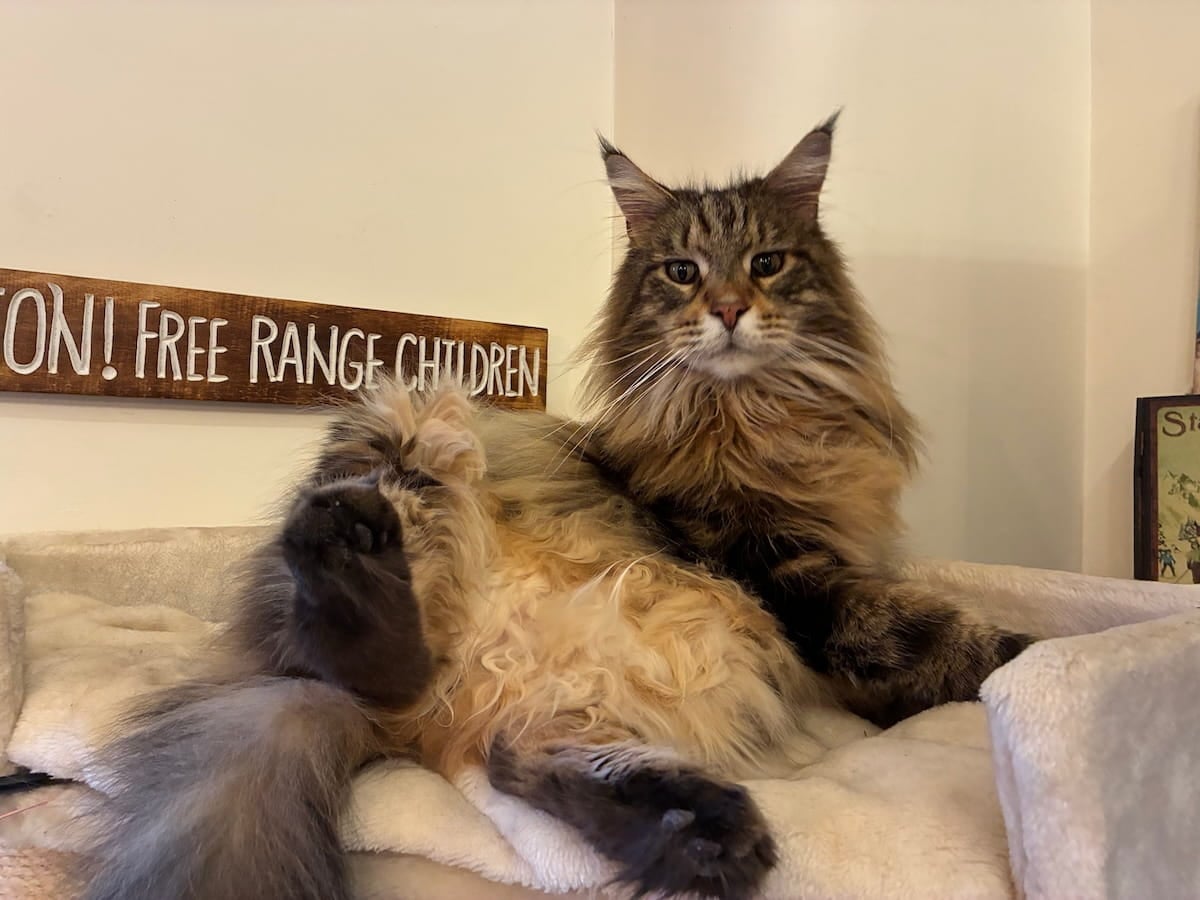
The average adult Maine Coon weight is 12-15 lbs (5.4-6.8 kg) for females and 18-21 lbs (8.2-9.5 kg) for males. Some males exceed this, but what matters most is body condition and a steady growth trend, not chasing a single number.
Maine Coons are one of the largest domestic cat breeds and mature far more slowly than the average cat. Many continue developing muscle and frame until 3-5 years of age.
According to The International Cat Association (TICA), the Maine Coon is recognised as one of the largest natural domestic breeds.
Quick Answer: What Is The Average Weight Of A Maine Coon?
| Sex | Average Adult Weight |
|---|---|
| Female | 12-15 lbs (5.4-6.8 kg) |
| Male | 18-21 lbs (8.2-9.5 kg) |
These figures reflect healthy, well-conditioned adult cats. Genetics, diet quality, neuter timing, and activity level can shift the final adult weight slightly.
How Maine Coon Weight Compares To The Average Cat
For context, many vets consider 8-12 lbs a common adult range for domestic cats, and body condition scoring is used to judge whether a cat is lean, ideal, or overweight.
This means a fully grown male Maine Coon can weigh nearly double the size of many standard domestic cats, while still being perfectly healthy.
However, size alone does not determine health. Veterinarians assess cats using a Body Condition Score (BCS) system, which evaluates fat coverage and muscle tone rather than just weight.
BCS reference chart (University of Missouri).
Average Maine Coon Weight By Age
Maine Coons grow more slowly than most breeds. Here is a typical growth progression:
| Age | Female (avg) | Male (avg) |
|---|---|---|
| 8 weeks | 2-3 lbs (0.9-1.4kg) | 3-4 lbs (1.4-1.8kg) |
| 3 months | 4-6 lbs (1.8-2.7kg) | 5-7 lbs (2.3-3.2kg) |
| 6 months | 7-10 lbs (3.2-4.5kg) | 9-12 lbs (4.1-5.4kg) |
| 12 months | 10-14 lbs (4.5-6.4kg) | 14-18 lbs (6.4-8.2kg) |
| 18 months | 11-15 lbs (5.0-6.8kg) | 16-20 lbs (7.3-9.1kg) |
| 2-3 years | 12-15 lbs (5.4-6.8kg) | 18-21 lbs (8.2-9.5kg) |
Unlike many breeds that finish growing by 12 months, Maine Coons may continue filling out in chest width and muscle mass for several years.
For a full development timeline including height and length, see our detailed Maine Coon size and growth guide.
Real-Life Maine Coon Weights: Bali, Pippin & Mika
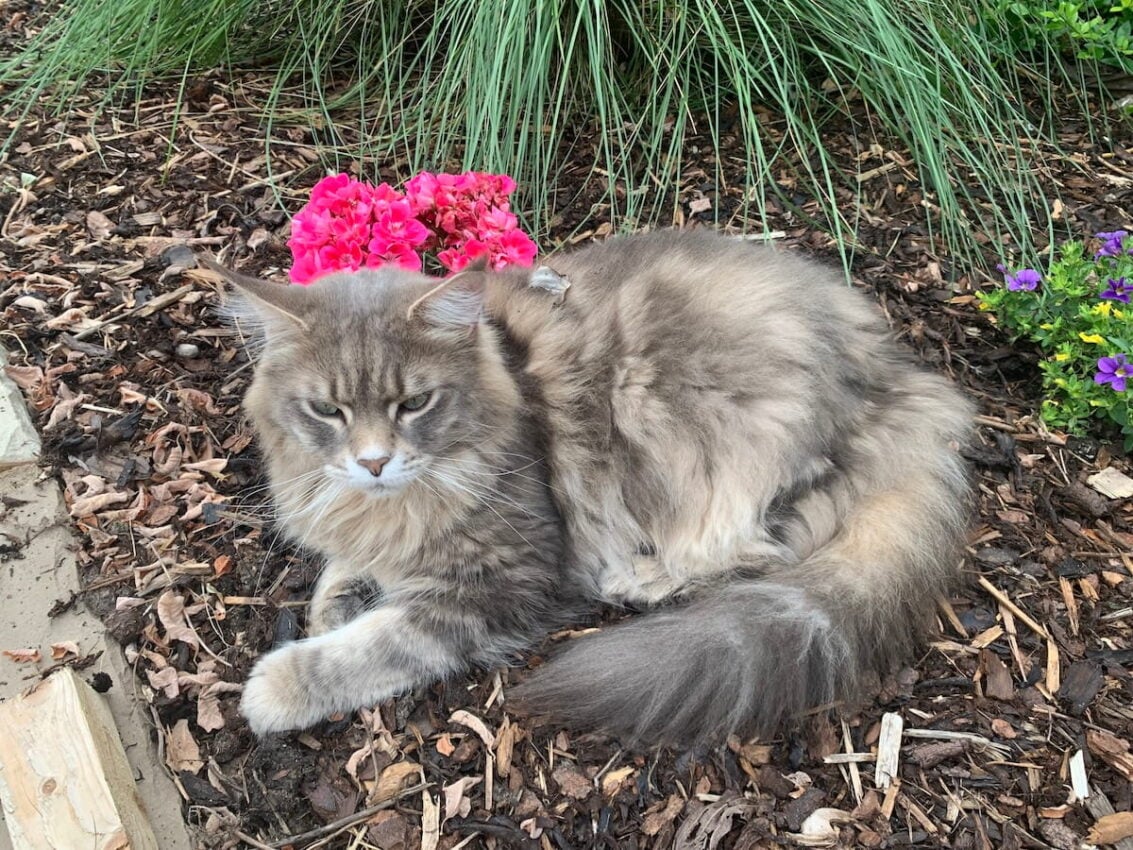
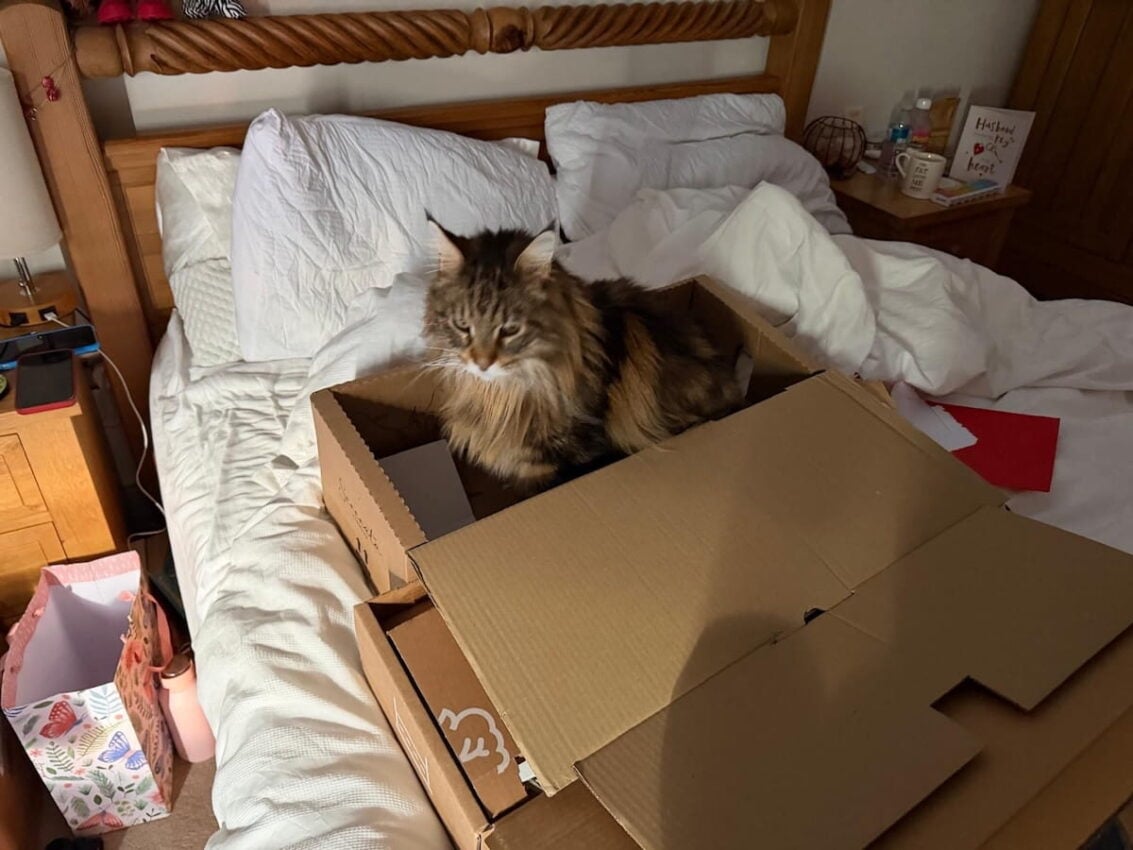
To show how real-world variation works, here are the adult weights of my three male Maine Coons:
| Cat | Adult Weight |
|---|---|
| Bali | ~18 lbs |
| Pippin | ~20 lbs |
| Mika | ~22-23 lbs |
All three were raised on high-quality diets with consistent veterinary care. Yet they stabilised at different adult weights.
Mika, for example, developed a particularly broad chest and heavier bone structure. Around age 5, his metabolism shifted slightly, and he began holding weight more easily. Rather than focusing on keeping him “under 20 lbs,” we focused on maintaining an ideal body condition.
Bali naturally remained leaner and more athletic at 18 lbs. Pippin sits comfortably at around 20 lbs with strong musculature.
This is important: healthy Maine Coons can vary by several pounds and still fall within a normal range.

Is 22 Pounds Too Heavy For A Maine Coon?
Not automatically. A 22-pound Maine Coon may be:
- Perfectly healthy (large frame, muscular build)
- Slightly overweight
- Obese
The difference depends on body condition, not just weight.
If you’re unsure whether your Maine Coon’s size is coming from muscle or excess calories, I’ve written a practical guide on how much Maine Coons should eat per day, including portion guidance and signs of overfeeding in large breeds.
You should be able to:
✔ Feel ribs under light pressure
✔ See a waist from above
✔ Notice a slight abdominal tuck from the side
If ribs are difficult to feel and the waist disappears, excess fat may be present, even in a naturally large breed.
The American Association of Feline Practitioners (AAFP) emphasises body condition scoring as a more accurate health tool than weight alone.
Why Maine Coons Are Naturally Heavier
Maine Coons weigh more because of:
- Longer body length
- Heavy bone density
- Broad chest
- Substantial musculature
- Dense coat
Maine Coons are a domestic breed. Their size comes from selective breeding and genetics, not wild ancestry.
TICA breed standard reference.
When Do Maine Coons Reach Full Weight?
Typical timeline:
- Rapid growth: birth → 12 months
- Continued structural growth: 12 → 36 months
- Muscle development: up to 5 years
Many owners worry their 1-year-old Maine Coon is “too small,” but slow maturation is normal in this breed.
When Should You Worry About Weight?
Contact your veterinarian if you notice:
- Sudden weight loss
- Persistent vomiting or diarrhoea
- Reduced appetite
- Lethargy
- Rapid unexplained weight gain
- A growth trend that drops over multiple weigh-ins
The trend matters more than a single measurement.
Frequently Asked Questions
What is a normal Maine Coon weight at 1 year old?
Females typically weigh 10-14 lbs. Males often weigh 14-18 lbs at one year and may continue gaining size beyond that.
Why is my Maine Coon smaller than average?
Genetics plays a major role. Some bloodlines are naturally lighter-framed. As long as body condition and growth trend are healthy, being slightly below the “average” is not automatically a concern.
Do Maine Coons keep growing after 2 years?
Yes. Many continue developing muscle and chest width until 3-5 years of age.
Is 25 lbs Too Heavy For A Maine Coon?
A Maine Coon weighing 25 lbs (11.3 kg) is above the typical average range for the breed, but that does not automatically mean the cat is overweight.
Large-framed males with strong bone structure and significant muscle mass can naturally exceed 21–22 lbs and still be healthy. The key factor is body condition, not the number on the scales.
Check the following:
- Can you feel the ribs with light pressure?
- Is there a visible waist when viewed from above?
- Is there a slight abdominal tuck from the side?
If the ribs are difficult to feel, the waist has disappeared, or the belly appears rounded rather than athletic, excess fat may be present.
Veterinarians use a Body Condition Score (BCS) system to assess whether a cat is lean, ideal, overweight, or obese. The American Association of Feline Practitioners (AAFP) recommends using BCS rather than weight alone to judge health.
If you’re unsure whether 25 lbs is healthy for your individual cat, ask your vet to assess body condition rather than focusing only on weight.
Final Thoughts
The average Maine Coon weight provides a helpful reference point:
- Females: 12-15 lbs (5.4-6.8 kg)
- Males: 18-21 lbs (8.2-9.5 kg)
But the healthiest Maine Coon is not the one that hits an exact number – it’s the one with a strong frame, good energy, steady growth, and an ideal body condition.
In my experience raising Bali (18 lbs), Pippin (20 lbs), and Mika (22+ lbs), focusing on overall condition rather than chasing a specific weight has always led to better long-term health outcomes.
