Are Maine Coon Cats Friendly? A Complete Guide To Their Social Temperament (Real-Life Experience Included)

Maine Coon cats are famous for their size, intelligence, and striking appearance, but what truly sets them apart is their exceptionally social temperament. Often described as gentle giants, Maine Coons have a reputation for being affectionate, people-oriented, and emotionally connected to their families.
After more than 14 years of living with the breed, and sharing my home with Pippin, Mika, and Bali, one thing has become very clear: Maine Coons are friendly cats, but they express that friendliness in very different ways.
This article combines breed-level temperament facts with real-life ownership experience, showing what Maine Coon friendliness truly looks like inside a family home.


Quick Answer
Yes, Maine Coon cats are usually very friendly. The breed is well known for being sociable, affectionate, and people-oriented, and many Maine Coons enjoy staying close to their owners, joining family routines, and interacting with visitors. However, friendliness still varies by personality, socialisation, health, and environment, so not every Maine Coon will be equally outgoing.
The True Maine Coon Temperament
Unlike many independent or aloof cat breeds, Maine Coons are naturally social animals. They were historically working cats, living alongside humans rather than avoiding them, and that history still influences their behaviour today.
Most Maine Coons:
- Prefer being in the same room as their humans
- Follow family members from room to room
- Observe daily activity closely
- Seek interaction rather than isolation
They are not decorative pets that disappear all day. Even quieter individuals usually want to stay nearby, watching, listening, and participating in household life. This strong social drive is the foundation of their friendly reputation.
If you don’t believe me that Maine Coon cats follow their owners around, watch this funny Maine Coon cat video, on the Maine Coon Central YouTube channel – Mika follows me EVERYWHERE!!!
Friendly – But Rarely Clingy
Maine Coons tend to sit in a unique emotional space between affection and independence.
Rather than demanding constant lap time, many prefer:
- Sitting beside you instead of on you
- Leaning into legs or arms
- Sleeping near your head or feet
- Touching with a paw or tail
This balance is why many owners describe them as dog-like but still distinctly feline – emotionally present without being needy. Here are 9 ways that Maine Coon cats act like dogs.
Learn more about the friendly Maine Coon temperament.
Real-Life Temperament: Living With Three Very Different Maine Coons
Although breed traits matter, personality plays a huge role. No two Maine Coons are identical, even within the same household.
Pippin – The Cat Who Forced Love Upon You
Pippin was the embodiment of confidence. If he wanted affection, you were receiving it – whether you agreed or not! There was no option for “I’m busy”.
He would:
- Use his head to physically push your hands
- Climb directly onto your chest
- Walk across keyboards and books
- Reposition himself repeatedly until stroked
He wasn’t aggressive or demanding – simply convinced that affection was his right.
This type of behaviour is common in high-confidence Maine Coons. Pippin trusted humans completely and expected closeness without hesitation. His friendliness was bold, physical, and completely unapologetic.

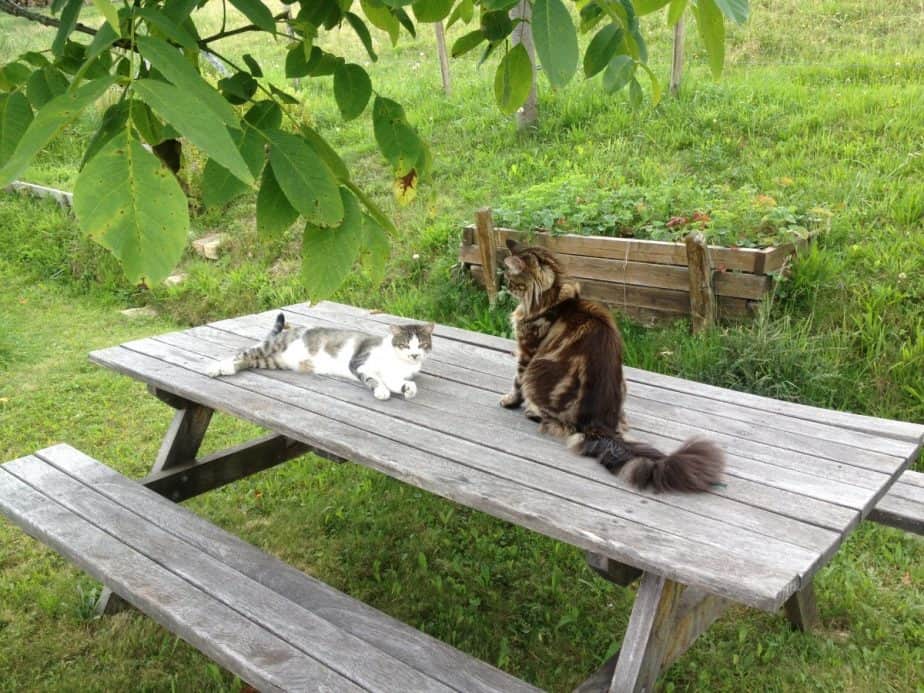

Mika – Friendly, Loving, And Emotionally Complex
Mika is affectionate – but unpredictable.
As an adopted Maine Coon who used to hide away in his first owner’s bedroom and run at the outside door whenever it was open, his emotional wiring is very different. One moment, he displays classic breed behaviour: cuddly, social, playful, and engaged. Then suddenly, without obvious warning:
- He becomes overstimulated
- Play escalates too quickly
- His tolerance drops sharply
This isn’t aggression – it’s emotional overload.
Mika appears to crave interaction while simultaneously struggling to regulate stimulation. This can happen in cats who:
- Miss early socialisation
- Experience early stress
- Have naturally high arousal levels
His friendliness exists, but it requires careful reading of body language and structured play. Mika demonstrates that not all friendly cats are emotionally uncomplicated – and that early experiences matter.
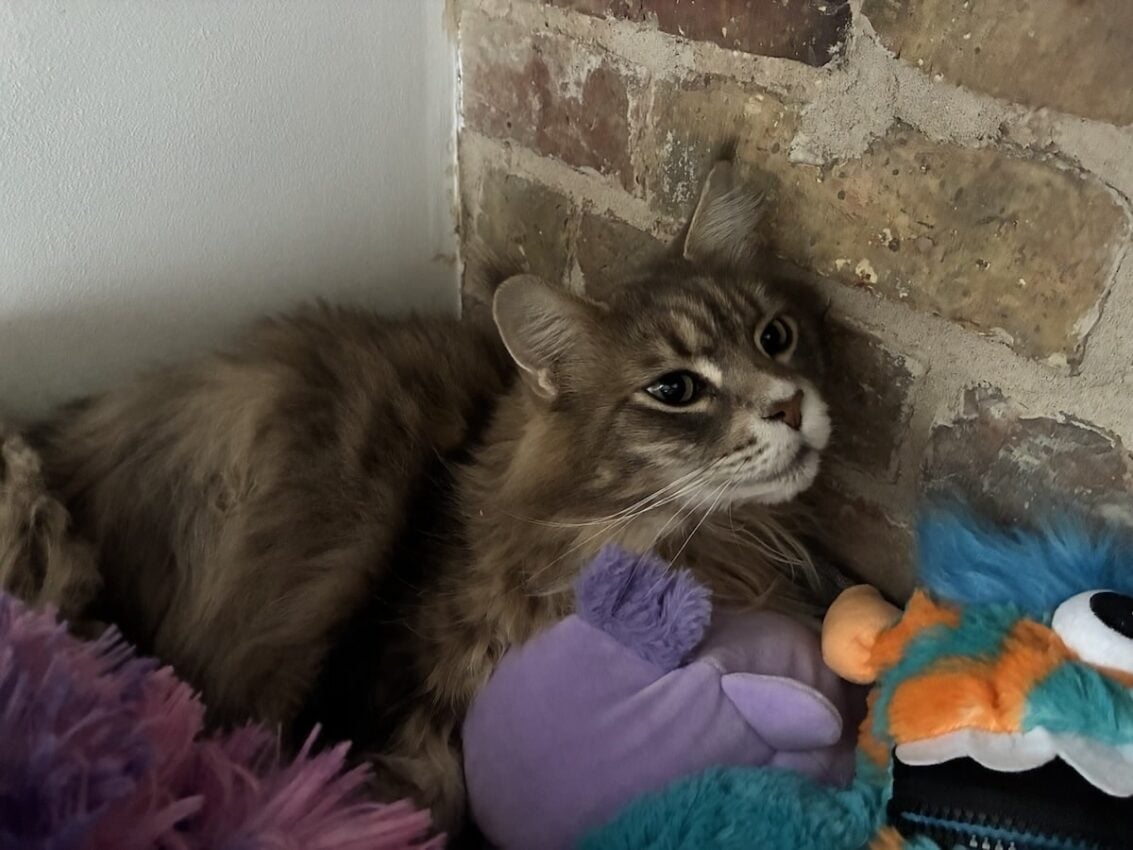
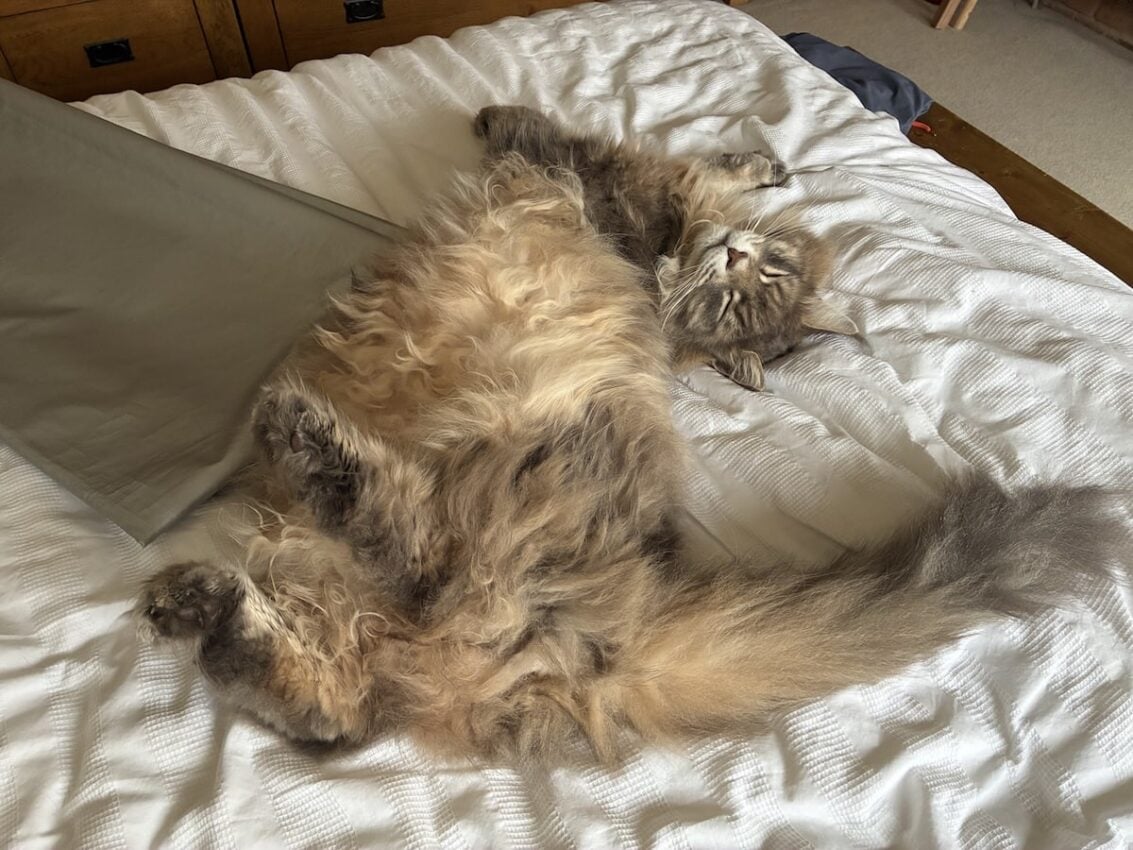
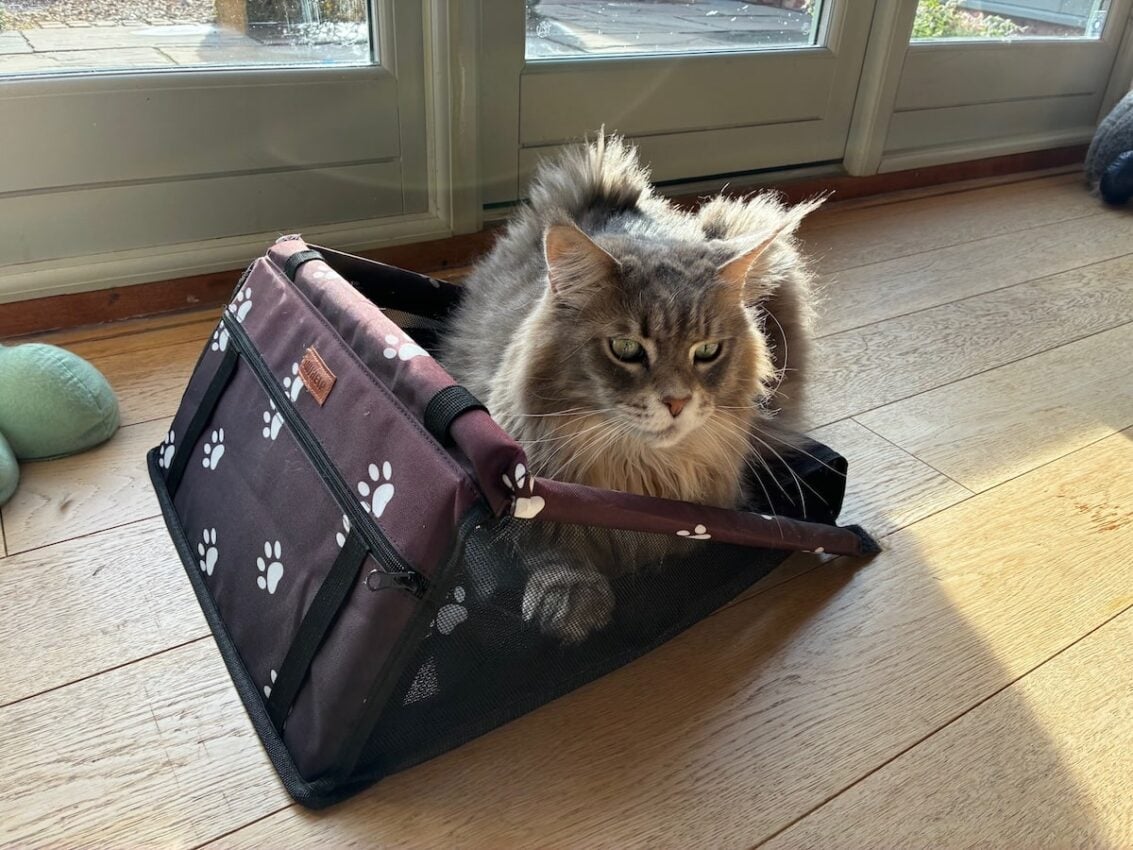
Bali – The Shy Cat Who Grew Into Affection
Bali has always been the sensitive one. A natural scaredy cat, he startles easily and dislikes me walking through the kitchen with my trainers on – there’s something about the sound of my trainers on our wooden floors that freaks him out!
While he was always affectionate from the start, his true affection has taken many months to years to show its true colors. But as he’s aged – now 8 years old – his personality has softened beautifully.
Bali is:
- More confident in familiar routines
- More relaxed around people
- Actively seeking affection
- Happier being physically close
He remains cautious, but his trust has deepened, and after 3 years of living with u,s he decided climbing all over us was fair game!!!
Many Maine Coon owners notice the same pattern: affection often increases with age as confidence grows and anxiety fades.
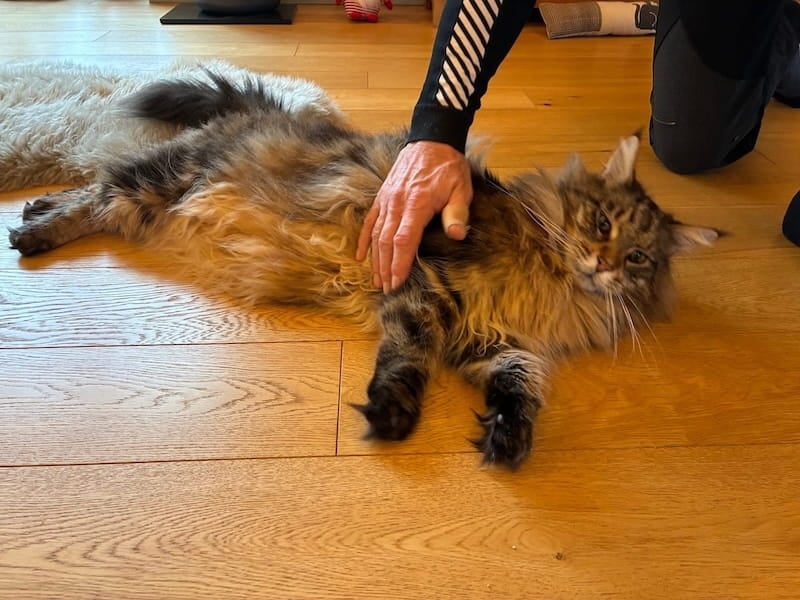

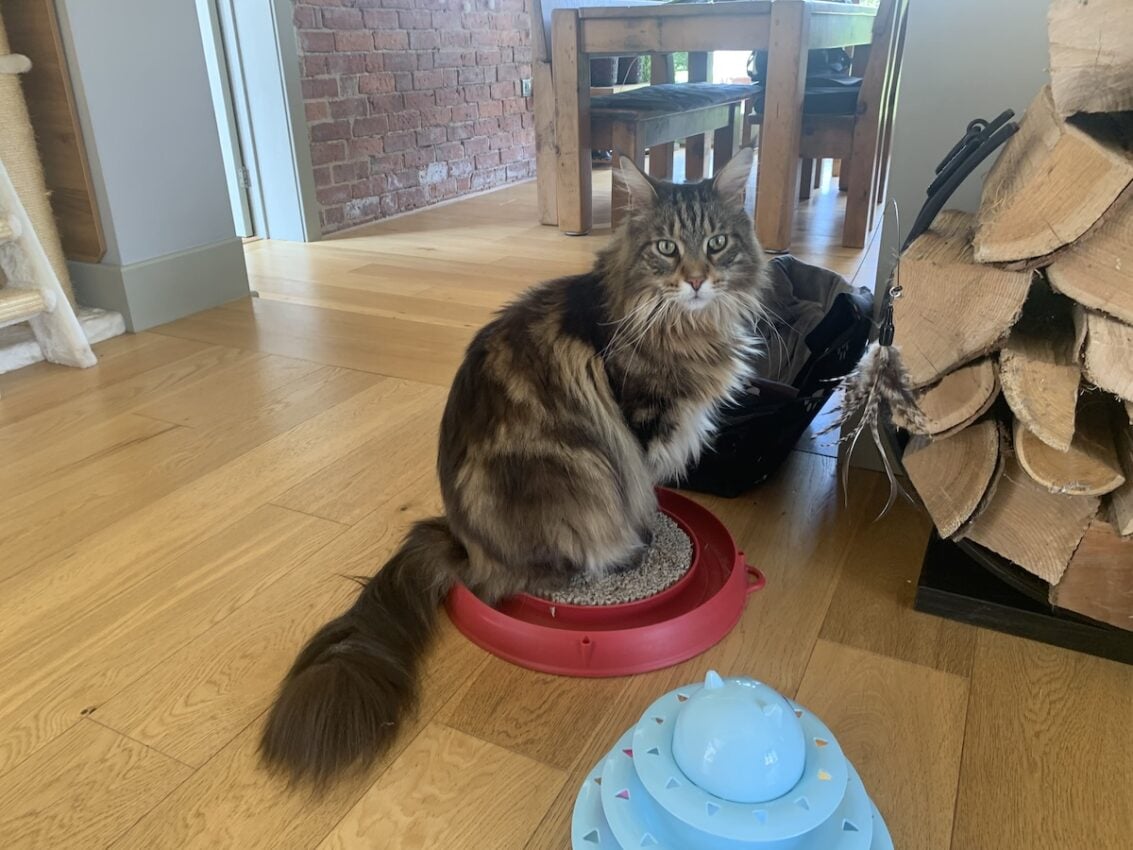
What These Three Cats Reveal About Maine Coon Friendliness
Living with Pippin, Mika, and Bali highlights an important truth: Maine Coons are socially wired, but emotionally individual.
| Maine Coon | Social Style | How Friendliness Shows |
|---|---|---|
| Pippin | Extremely confident | Forces affection, fearless |
| Mika | Sensitive, intense | Loving but easily overstimulated |
| Bali | Gentle, cautious | Quiet affection that grows with age |
All three cats seek human connection; they simply express it differently.
Are Maine Coons Good With Children And Families?
In most cases, yes. Their gentle temperament and tolerance make them excellent family cats when children are taught respectful handling.
Maine Coons tend to:
- Walk away rather than scratch
- Tolerate noise better than many breeds
- Enjoy interactive play
Their large size also means accidental bumps are less threatening compared to smaller breeds.
Do Maine Coons Get Along With Other Pets?
Generally, Maine Coons are among the most adaptable cat breeds in multi-pet homes. They are typically:
- Non-territorial
- Curious rather than confrontational
- Socialize with other cats
- Comfortable around cat-friendly dogs
Proper introductions remain essential, but their laid-back nature usually helps them integrate well.
Do Maine Coons Get Lonely?
Yes, more than many breeds.
Because of their social nature, Maine Coons can struggle if:
- Left alone for long hours
- Given little interaction
- Lacking play or mental stimulation
Signs of loneliness may include:
- Increased vocalising
- Shadowing owners constantly
- Destructive boredom behaviours
Many owners find that another cat companion or daily structured play dramatically improves wellbeing.
Why Maine Coons Are Often Called “Dog-Like”
This label isn’t about obedience; it’s about emotional engagement.
Maine Coons often:
- Greet you at the door
- Follow you between rooms
- Respond to their name
- Enjoy interactive games
- Prefer company over solitude
They don’t just coexist with humans; they bond with them.
FAQ
Are Maine Coon cats friendly?
Yes, Maine Coon cats are generally considered one of the friendliest cat breeds. They are often described as sociable, gentle, and easy to live with, especially when they are well socialised and treated respectfully.
Are Maine Coons friendly with strangers?
Many Maine Coons are friendly or at least curious around strangers. Some will greet visitors confidently, while others may stay cautious at first and warm up more slowly.
Are Maine Coons affectionate?
Yes, Maine Coons are usually affectionate cats. Many enjoy following their owners, sitting nearby, and being involved in everyday life, although not all of them are constant lap cats.
Are Maine Coons good family cats?
Yes, Maine Coons are often considered excellent family cats because they are usually patient, sociable, and adaptable. They tend to do well in active homes when they are given proper space, routine, and respectful handling.
Are Maine Coons friendly with children?
Maine Coons are often very good with children, especially when the children are calm and respectful. Like any cat, they still need boundaries and should not be expected to tolerate rough handling or constant disturbance.
Are Maine Coons friendly with other cats?
Many Maine Coons are friendly with other cats, especially if introductions are done properly. Their sociable nature often makes them more adaptable than some other breeds, but personality still matters.
Are Maine Coons friendly with dogs?
Yes, Maine Coons often do well with dogs, especially calm or cat-friendly dogs. Their confident and social personality can make them one of the easier cat breeds to integrate into multi-pet homes.
Do Maine Coons bond with one person?
Some Maine Coons do form a particularly close bond with one person, but many are friendly with the whole household. They are usually more social than one-person-only cats.
Why is my Maine Coon not friendly?
A Maine Coon may seem less friendly because of fear, poor socialisation, stress, overstimulation, pain, or illness. Even a breed known for friendliness can become withdrawn or irritable when something feels wrong.
Are male Maine Coons friendlier than females?
Not always. Some owners feel male Maine Coons are more openly affectionate, while females can be a little more independent, but personality, upbringing, and individual temperament matter far more than sex alone.
Do Maine Coons like attention?
Most Maine Coons do like attention, especially interactive, gentle attention from people they trust. Many enjoy conversation, play, and simply being near their owners, though they still appreciate having space when they want it.
Are all Maine Coons friendly?
No, not every Maine Coon is equally friendly. The breed has a strong reputation for being sociable and gentle, but individual cats can still be shy, cautious, independent, or more selective in how they show affection.
Are Maine Coon Cats Friendly? Final Verdict
Yes, overwhelmingly so. But friendliness doesn’t mean identical personalities.
Some Maine Coons:
- Demand affection boldly
- Offer love quietly
- Need emotional understanding
- Grow more affectionate with age
What unites them is their desire for companionship. Maine Coons don’t want to be background pets. They want to be part of your daily life – present, involved, and emotionally connected.
And whether they’re pushing your hands into stroking them, nervously asking for affection, or slowly learning to trust more deeply, their friendliness is always sincere.