How Much Do Maine Coon Cats Eat? Daily Calories & Portions

Maine Coons often eat more in absolute terms than smaller cats because many have a larger body frame and greater lean mass. However, breed and body weight alone do not determine the correct portion.
An adult Maine Coon’s daily food allowance depends on its current weight, body condition, muscle condition, activity, neuter status, health, and the calorie density of the food. Two Maine Coons of the same weight may therefore need very different portions.
This guide focuses on calculating and adjusting food for adult and senior Maine Coons. For growth-stage portions, meal frequency, and wet-and-dry calculations, read our dedicated guide explaining how much to feed a Maine Coon kitten.
For help choosing between wet, dry, raw, urinary, and other diets, continue to our Maine Coon diet and nutrition guide.
How Many Calories Does An Adult Maine Coon Need?
| Current weight | Indoor or neutered adult | Active adult |
|---|---|---|
| 10 lb / 4.5 kg | 142–205 kcal | About 274 kcal |
| 12 lb / 5.4 kg | 161–232 kcal | About 310 kcal |
| 15 lb / 6.8 kg | 188–271 kcal | About 361 kcal |
| 18 lb / 8.2 kg | 213–307 kcal | About 410 kcal |
| 20 lb / 9 kg | 227–327 kcal | About 436 kcal |
| 22 lb / 10 kg | 243–351 kcal | About 468 kcal |
These figures are starting estimates calculated from FEDIAF’s adult maintenance-energy ranges. Use the indoor or neutered column for most less-active house cats. The active estimate is more appropriate for a genuinely active, lean cat rather than simply a large cat. Do not select a calorie figure merely because it matches the weight you believe a Maine Coon should be. Use the cat’s actual current weight and body condition.
Maine Coons are often described as “big eaters,” but appetite isn’t the same as needing more food. Some cats are food-motivated, bored, stressed, or under-stimulated and will act hungry even when calorie needs are already met.
Feeding decisions should be based on body condition and weekly trends, not begging behavior.
How Much Should A Maine Coon Kitten Eat?
Kittens need considerably more energy relative to their body weight than adults, but their requirements change rapidly during the first year. Their portion must be calculated from current age, weight, growth, body condition, and the calorie density of a complete growth food.
Our dedicated Maine Coon kitten feeding guide explains the age-based energy multipliers, meal frequency, portion calculations, mixed wet-and-dry feeding, and how to decide whether free-feeding suits an individual kitten.
Real-Life Maine Coon Feeding Examples
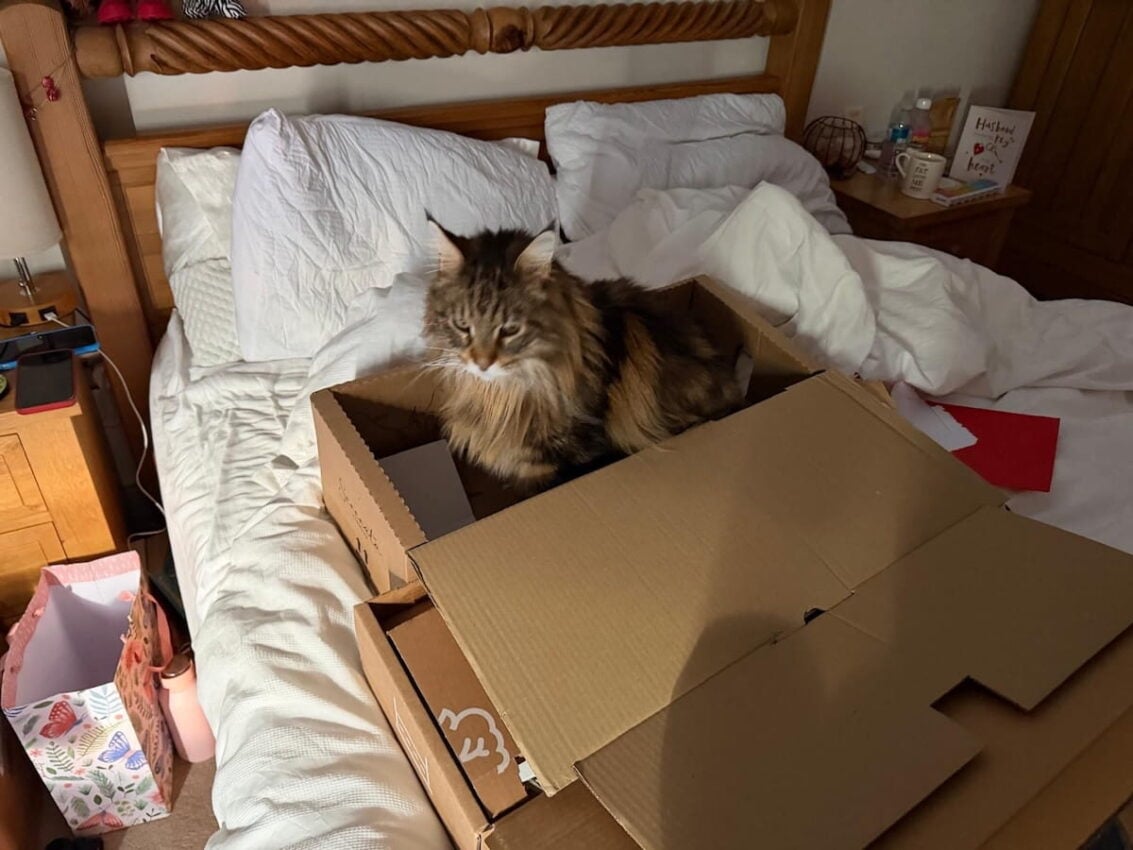
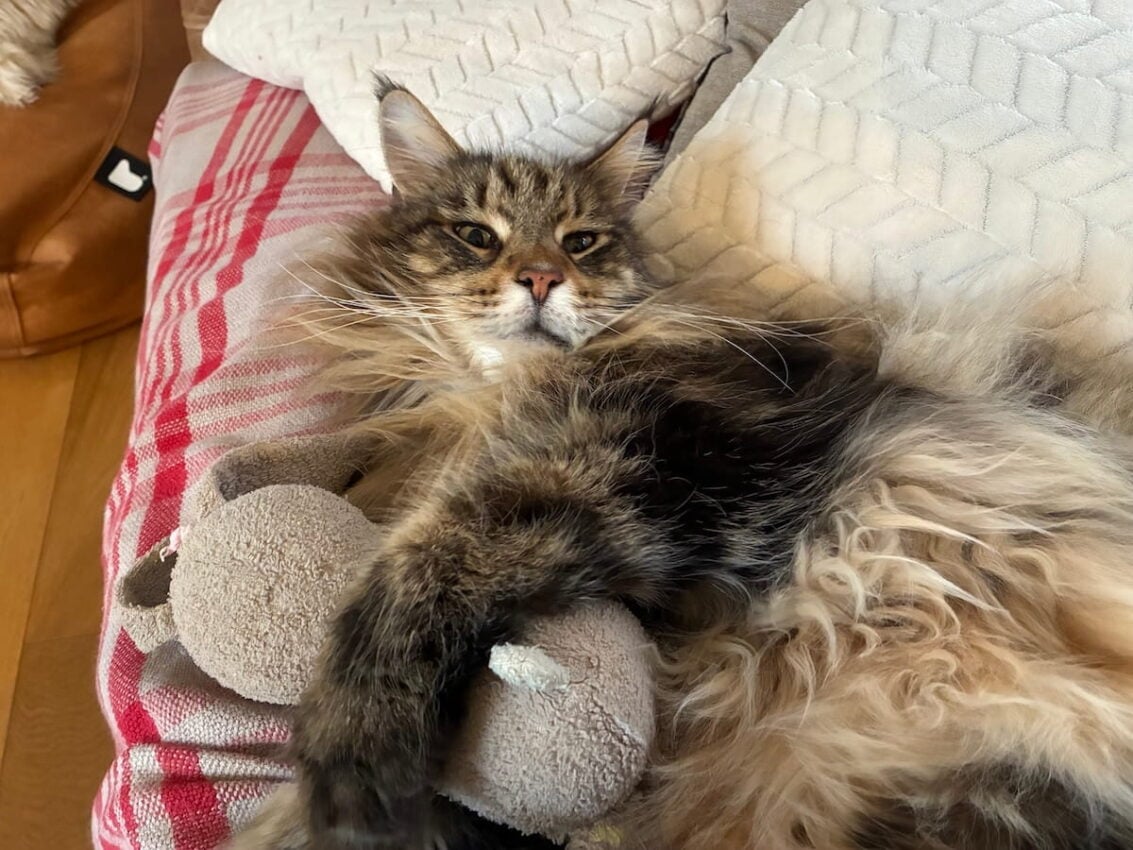
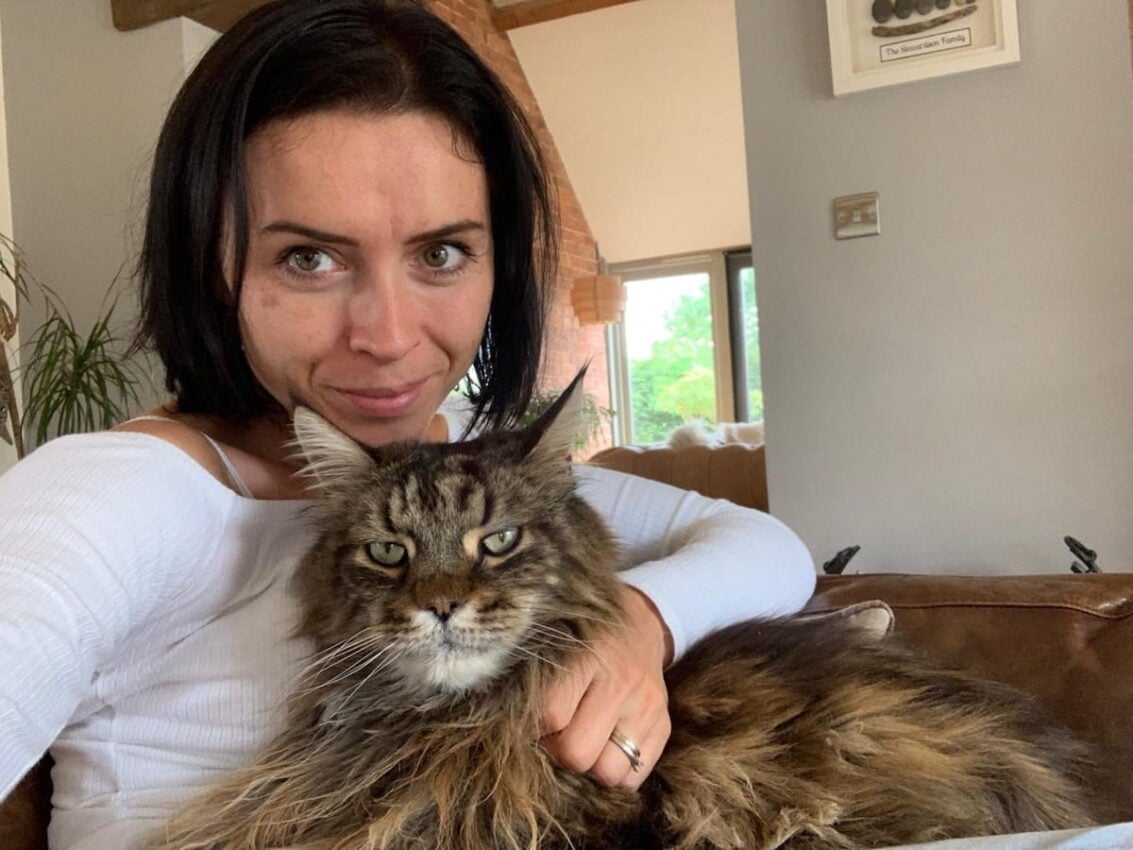
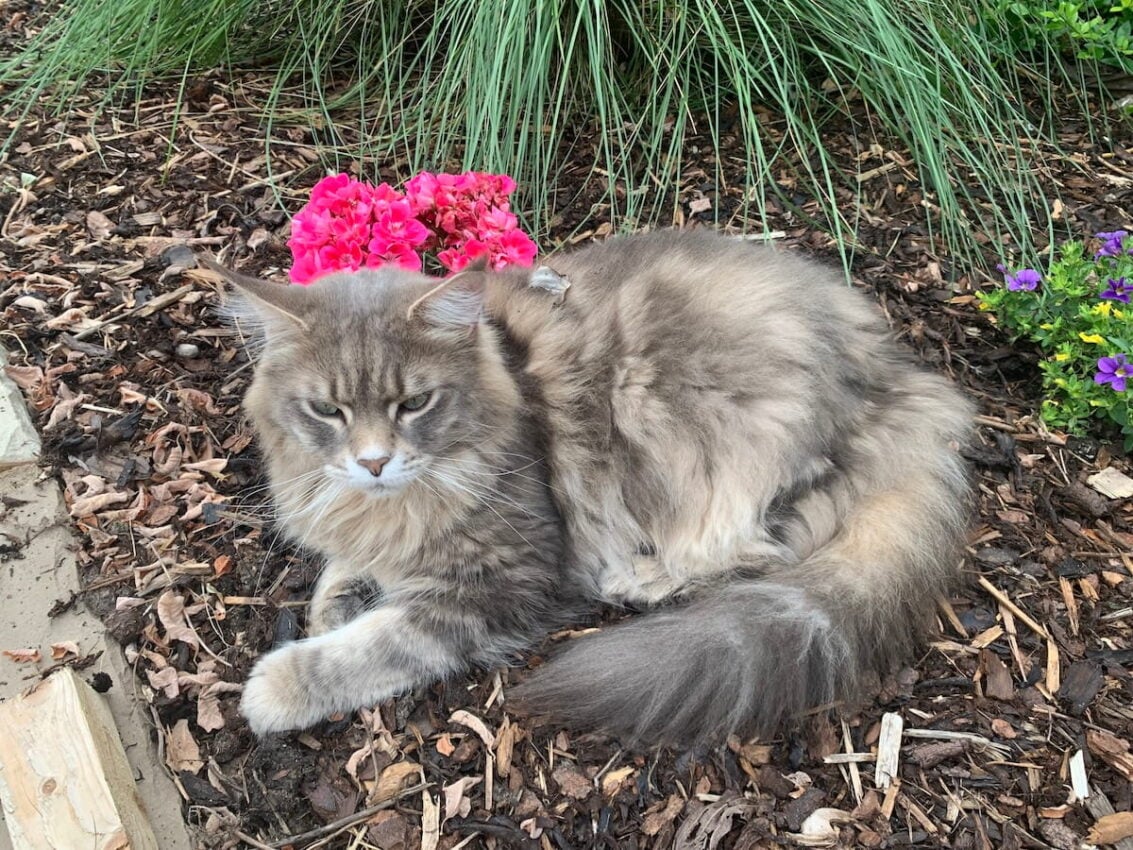
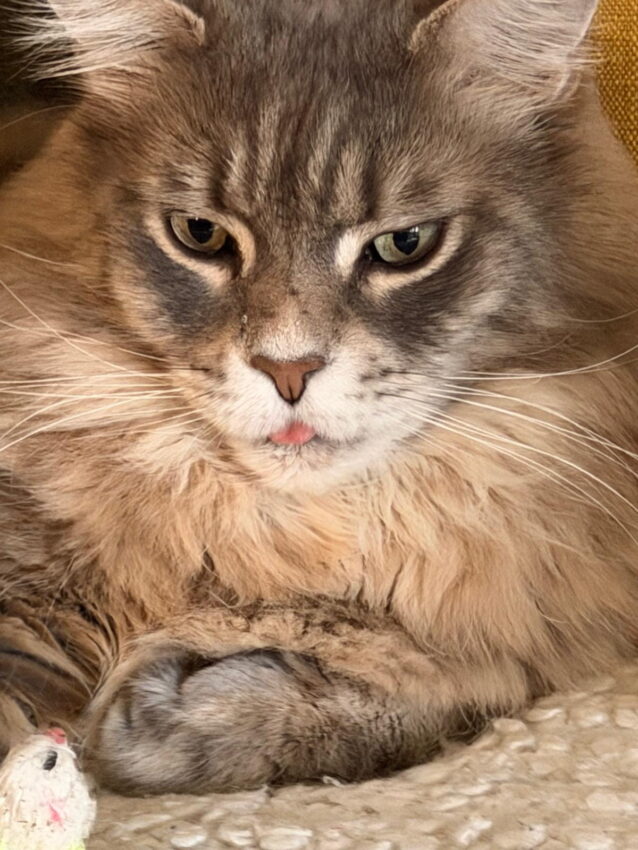
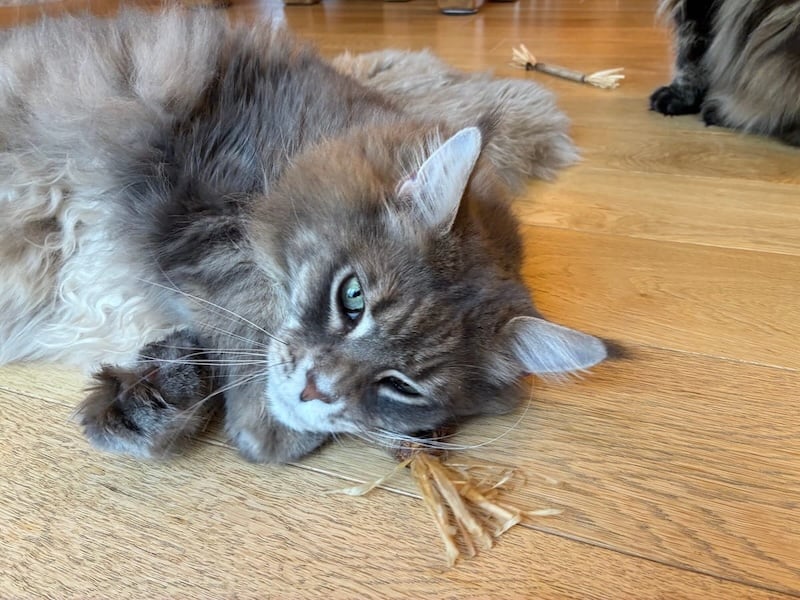
Our three Maine Coons reached different adult weights and had very different relationships with food:
- Mika reached approximately 22 pounds and is the most prone to overeating.
- Pippin weighed approximately 20 pounds and naturally regulated his cat-food intake, although he was extremely interested in human food.
- Bali has a naturally slimmer frame at approximately 18 pounds and generally eats only when hungry.
We adopted Mika and Bali when they were four years old, so we did not observe their kitten growth. Pippin was the only one we raised from kittenhood.
Their weights alone did not establish how much each cat needed. Eating behavior, body condition, activity, and weight trends were more useful than simply feeding the largest cat the largest portion.
Mika’s Fast Eating And Tendency To Overeat
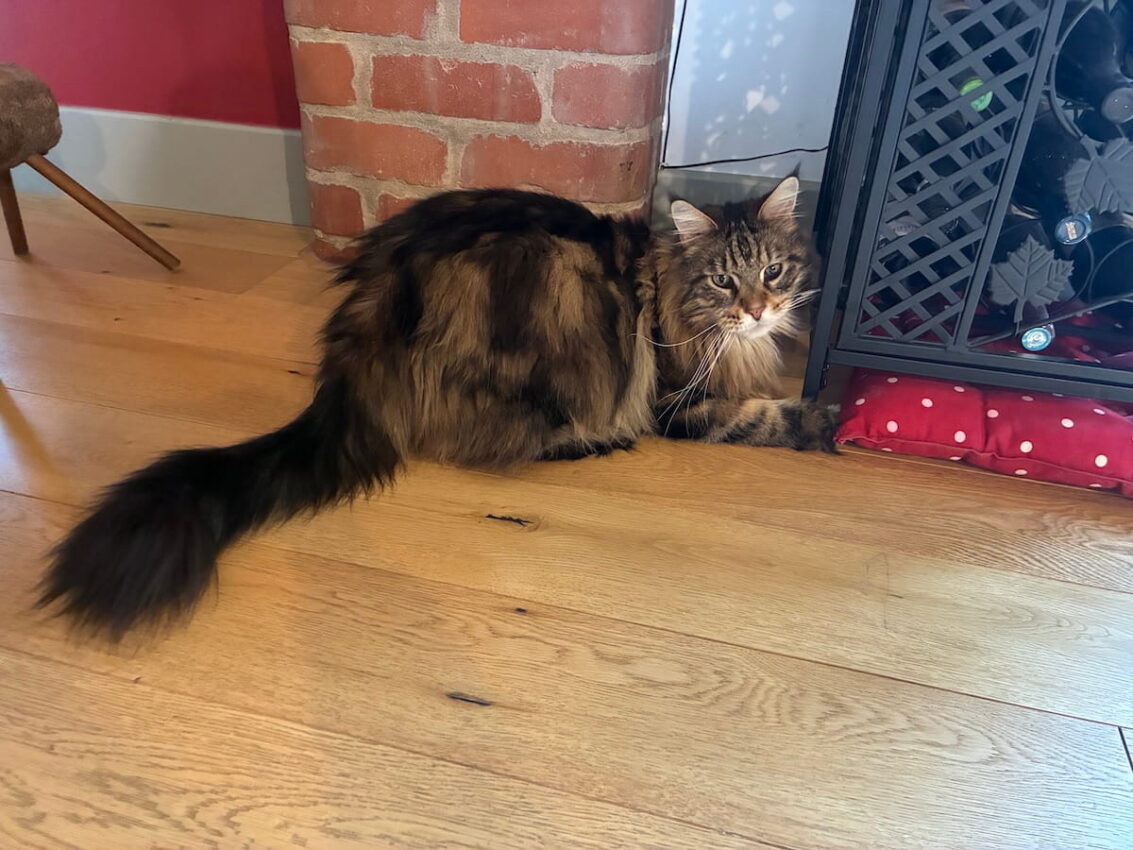
After we adopted Mika at four years old, we discovered that he ate dry food extremely quickly and would sometimes vomit the kibble back up. We have wondered whether food scarcity before his adoption contributed to this behavior, although we cannot know.
His vomiting is now less frequent, but he still cannot be free-fed. When food remained freely available, Mika naturally overate and began gaining weight.
We therefore changed our feeding routine by:
- Measuring his daily allowance
- Using timed and slow-feeding methods
- Avoiding unrestricted access to dry food
- Keeping his feeding environment calm
- Monitoring his weight and body condition
The contrast between Mika and our other cats demonstrates why appetite does not necessarily equal calorie need. A cat may continue eating because food is available even when its energy requirements have already been met.
Pippin’s Interest In Human Food
Pippin, whom we raised from a kitten, had a different feeding personality. He naturally regulated his cat-food intake but was extremely curious about human meals. We learned not to leave plates unattended after finding him happily eating my chicken madras when I briefly left the room. Mika and Bali rarely showed the same interest, although Bali has occasionally tried to lick yogurt pots left by the children.
This food-seeking behavior did not necessarily mean Pippin needed more calories. It reflected curiosity, opportunity, and his particular interest in human food.

What We Have Fed Our Maine Coons
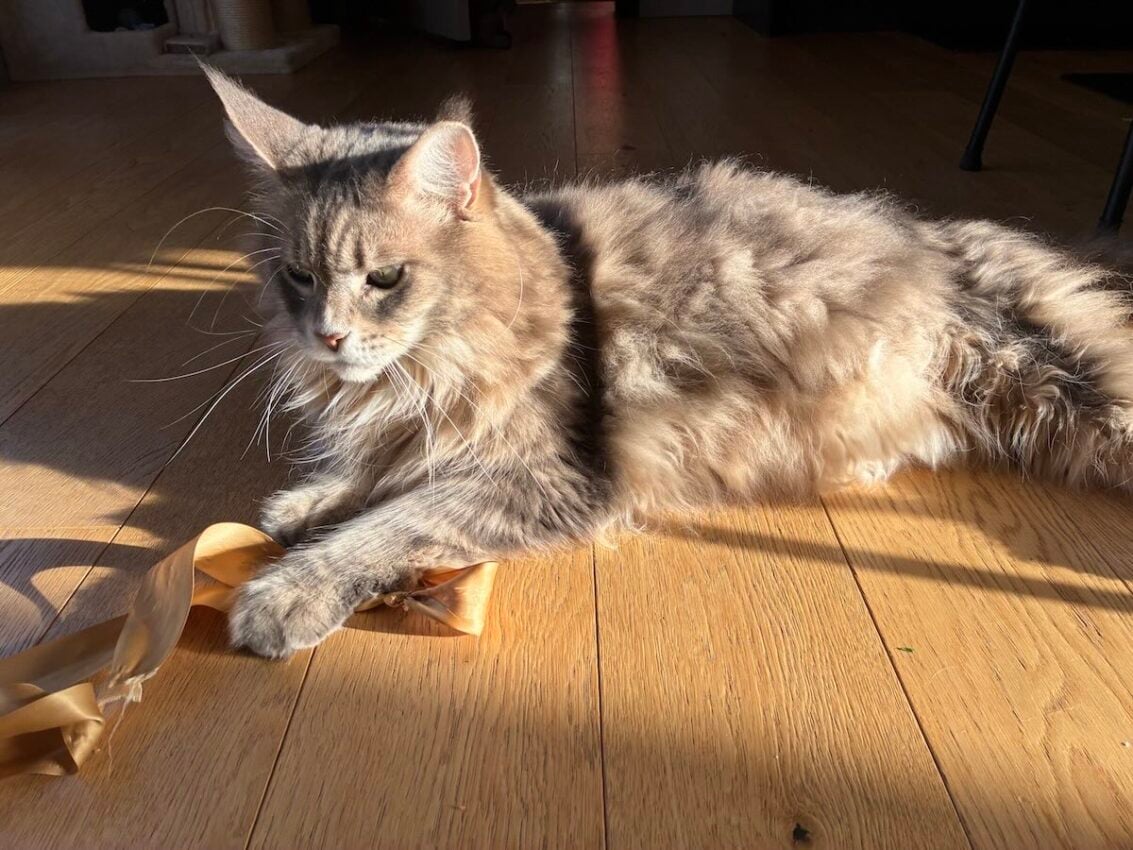
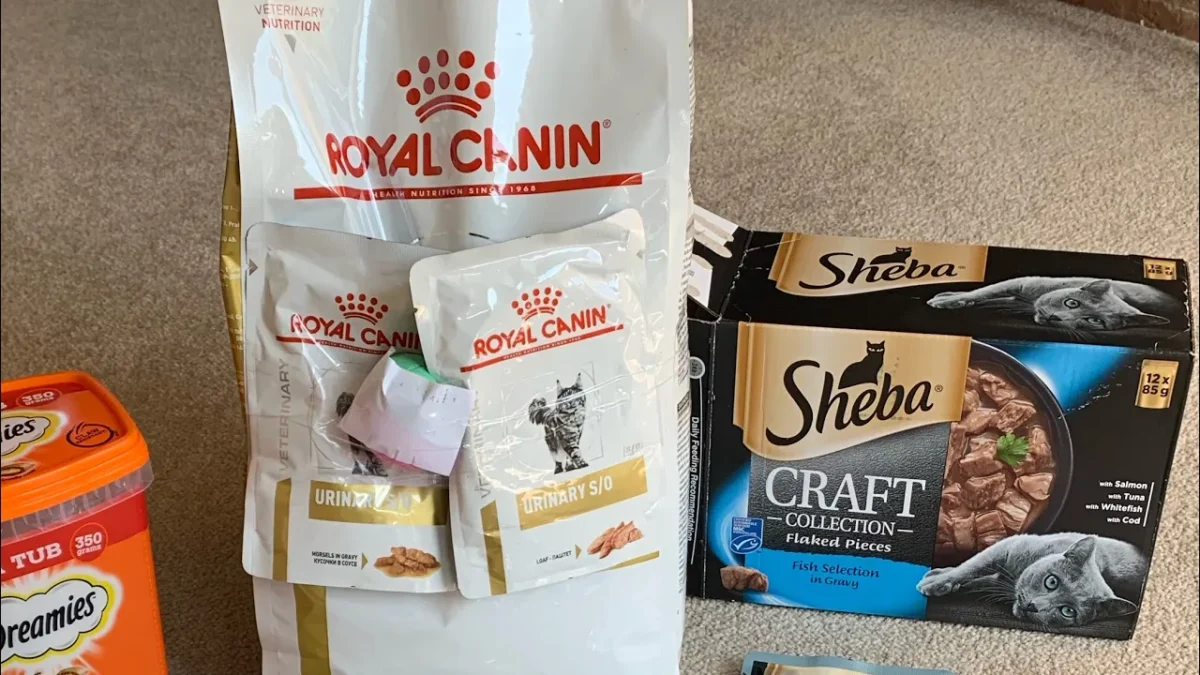
Pippin was originally fed standard Royal Canin food rather than a urinary formula. His feeding plan changed after he developed a urinary tract infection.
Mika and Bali currently eat mainly Royal Canin Urinary Moderate Calorie dry food. Between them, they also receive a couple of Royal Canin Urinary wet-food sachets each week. We tried other brands, but Mika and Bali were particularly fussy and preferred the familiar Royal Canin food.
This is our cats’ individual adult feeding routine following urinary and weight considerations. It is not a recommendation that every Maine Coon needs a urinary or moderate-calorie diet.
The food forms part of their urinary and weight-management routine, but no diet can guarantee that urinary problems will be prevented.


How Much Food Does A Maine Coon Eat Per Day?
Once you have estimated your cat’s daily calorie requirement, convert that number into the correct quantity of its actual food.
Check the packaging or manufacturer’s website for:
- Calories per kilogram
- Calories per 100 grams
- Calories per gram
- Calories per cup
- Calories per can or pouch
For dry food:
Daily calories ÷ calories per gram = grams per day
For example, an adult Maine Coon requiring 300 calories and eating food containing 3.8 calories per gram would receive:
300 ÷ 3.8 = approximately 79 grams per day
For wet food:
Daily calories ÷ calories per pouch = pouches per day
If each pouch contains 85 calories:
300 ÷ 85 = approximately 3.5 pouches per day
For mixed feeding, subtract the wet-food calories first. Two 85-calorie pouches provide 170 calories, leaving 130 calories:
130 ÷ 3.8 = approximately 34 grams of dry food
The mixed daily amount would therefore be:
- Two wet-food pouches
- Approximately 34 grams of dry food
These examples are illustrative. Always use the calorie information for the food you actually feed.
Adult And Senior Maine Coon Feeding
Adult Maine Coons
By adulthood, feeding should be based primarily on current body condition, muscle condition, activity, neuter status, and health—not on continued breed growth.
A Maine Coon may continue filling out gradually, but this does not justify unrestricted food or automatically placing the cat at the upper end of the calorie range. Use the adult calorie estimate as a starting point and adjust it according to the individual cat.
Senior Maine Coons
Senior Maine Coons do not automatically need fewer calories or a food carrying a “senior” label. Some become less active and gain weight, while others lose weight and muscle despite eating normally.
Monitor:
- Body weight
- Body condition
- Muscle condition
- Appetite
- Dental comfort
- Drinking and urination
- Stool quality
Do not assume unexplained weight loss is simply caused by age. A senior cat losing weight, muscle, or appetite should be assessed by a veterinarian.
How Often Should You Feed A Maine Coon?
Most adult Maine Coons can be fed two measured meals per day, but many cats prefer several smaller meals. The important point is that the servings together equal the cat’s full daily allowance.
A practical adult routine may include:
- Two main measured meals
- Three or four smaller measured servings
- A timed feeder dispensing premeasured portions
- Puzzle feeders using part of the daily ration
Older cats may benefit from smaller, more frequent meals when appetite, dental comfort, digestion, or medical needs change.
The Feline Veterinary Medical Association’s feeding guidance recommends frequent small meals, food-foraging opportunities, and separate feeding locations where appropriate.
Meal frequency does not increase the daily allowance. Four servings should contain one day’s food divided into four portions.
How To Know Whether The Portion Is Right
Your Maine Coon is likely eating the correct amount if:
- You can feel the ribs with gentle pressure
- There is a visible waist from above
- Weight remains stable
- Energy levels are normal
Veterinary body condition scoring systems, such as those from the World Small Animal Veterinary Association, recommend maintaining cats at a Body Condition Score of 4–5 out of 9.
Signs You’re Feeding Too Much
- Ribs becoming difficult to feel and the waist becoming less visible
- Reduced activity
- Gradual weight gain
Signs You’re Feeding Too Little
- Visible ribs or spine
- Sudden weight loss
- Persistent hunger accompanied by weight loss or loss of body condition
- Lethargy
Sudden weight changes should always be checked by a vet.
Appetite alone is not a dependable indicator of underfeeding. For other behavioral, dietary, and medical explanations, read why a Maine Coon may always seem hungry.
How To Adjust An Adult Maine Coon’s Portion
Increase or reduce the daily amount according to repeated weight and body-condition trends rather than one hungry day or one unfinished meal.
Consider a small increase when the cat:
- Is losing weight
- Is becoming too lean
- Has experienced a sustained rise in activity
- Has been assessed and found to need additional calories
Consider a small reduction when the cat:
- Is gradually gaining excess body fat
- Has become less active
- Is eating more than its measured allowance
- Has experienced a change that lowers energy requirements
Adjust the quantity in small increments, then reassess weight and body condition after approximately one to two weeks.
Changing the amount of the existing food is different from changing to a new food. When changing products, transition gradually over about 7–10 days unless your veterinarian recommends a different schedule.
Final Thoughts
There is no universal number of cups, cans, or pouches that every adult Maine Coon should eat.
Start with an evidence-based calorie estimate based on the cat’s current weight and lifestyle. Convert that figure into grams, cans, or pouches using the calorie information for the actual food, then adjust it according to weight, body condition, muscle condition, activity, and health.
A large Maine Coon does not automatically need the upper end of every feeding range. Mika, Pippin, and Bali reached different adult weights and displayed very different eating behaviors, which meant that one feeding method could not suit all three.
For growth-stage calculations, read how much to feed a Maine Coon kitten. For food types, ingredients, and medical diets, continue to the Maine Coon diet and nutrition guide.
FAQ Section: Maine Coon Feeding Questions
How much should a Maine Coon eat per day?
Calculate the amount from the cat’s current weight, lifestyle, and food calories. As a starting estimate, an indoor or neutered 9-kilogram adult may need approximately 227–327 calories per day, while a genuinely active cat of the same weight may need around 436 calories. Convert that target using the food label.
Do Maine Coons eat more than normal cats?
Maine Coons often eat more in absolute terms because many are larger than average cats. However, not every Maine Coon needs a large portion. Current weight, lean body mass, activity, neuter status, and body condition matter more than breed alone.
How often should you feed a Maine Coon?
Most adults can eat two measured meals per day, although several smaller measured meals may better reflect natural feline feeding behavior. The total daily calorie allowance should remain the same.
How much should a Maine Coon kitten eat?
Kitten requirements change rapidly with age, weight, and growth. Use our dedicated guide to calculate how much to feed a Maine Coon kitten.
Can Maine Coons free-feed?
Some Maine Coons regulate their intake, but others overeat when food remains constantly available. Pippin happened to regulate himself, while Mika gained weight when free-fed. Measured feeding is safer when a cat overeats, eats too quickly, or gains excess weight.
What is the best diet for a Maine Coon?
Choose a nutritionally complete diet appropriate for the cat’s life stage, health, calorie needs, and veterinary requirements. Wet food, dry food, or a calculated combination may all be suitable. Read the full Maine Coon diet and nutrition guide for food-selection guidance.
Why is my Maine Coon always hungry?
Persistent food-seeking may reflect learned behavior, fast eating, boredom, competition, an unsuitable feeding routine, or a medical problem. Hunger should be assessed alongside weight and body-condition trends. Read why a Maine Coon may always seem hungry for the full explanation.