How To Keep A Maine Coon Entertained: 25 Boredom Busters
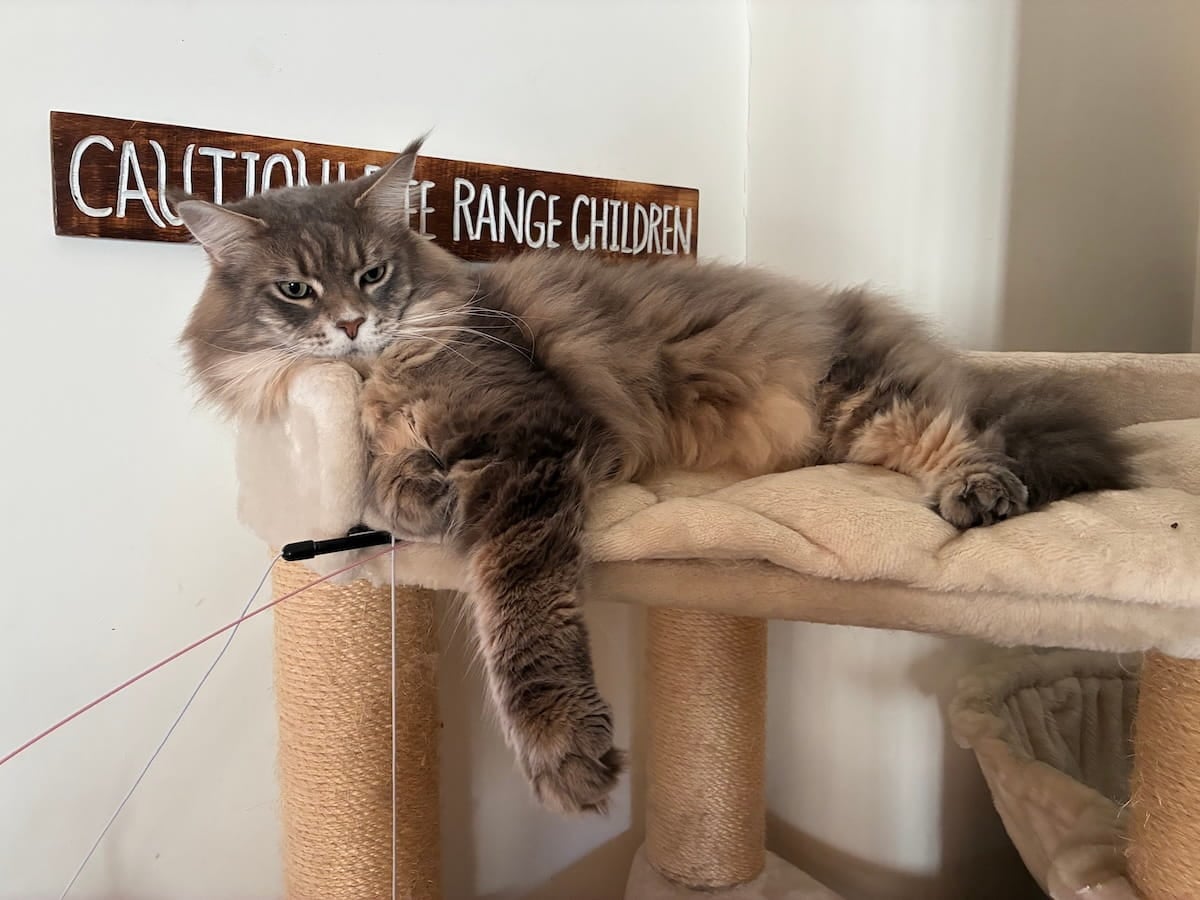
Maine Coons are intelligent, playful, and people-focused cats, so they need more entertainment than many owners expect.
A bored Maine Coon may scratch furniture, overeat, become clingy, yowl for attention, chase other pets, attack ankles, sleep too much, overgroom, or try to escape outside. This does not mean they are badly behaved. It usually means their environment is not giving them enough physical exercise, mental stimulation, social contact, or natural behaviour outlets.
The best way to keep a Maine Coon entertained is to build enrichment into daily life. This means offering interactive play, climbing space, scratching posts, puzzle feeders, window views, training games, safe solo toys, rotating activities, and enough owner interaction.
Cornell Feline Health Center explains that toys encourage exercise and cognitive enrichment by allowing cats to stalk, pounce, and problem-solve, while also helping reduce issues linked with under-stimulation, such as obesity, destructive scratching, and inappropriate elimination.
After living with Pippin, Mika, and Bali, I have learned that Maine Coons are not all entertained in the same way. Pippin was confident and people-focused, Mika is clever and highly food-motivated, while Bali loves fetch and physical play. The trick is not to buy endless toys. The trick is to learn what kind of enrichment your Maine Coon actually responds to – Bali loves running to fetch his toy mouse; Mika loves playing catch with a ribbon, and Pippin used to like his interactive toys.
For product ideas, read my separate guide to the best toys for Maine Coon cats. This article focuses on how to use play and enrichment properly.


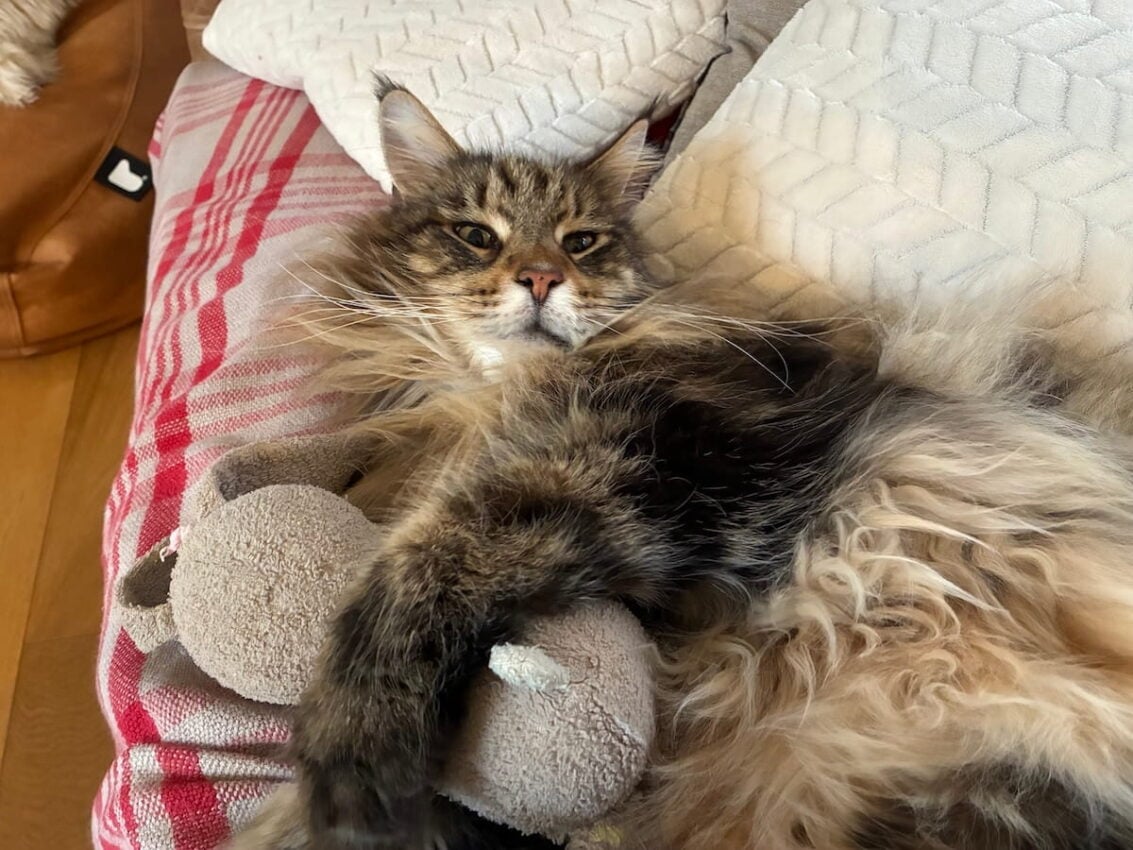
Quick Answer
To keep a Maine Coon entertained, provide daily interactive play, a large cat tree, scratching posts, window views, puzzle feeders, rotating toys, training games, safe solo activities, and social interaction. Indoor Maine Coons, apartment cats, and cats left alone during the day need extra enrichment because they have fewer natural opportunities to hunt, climb, explore, and burn energy.
Most Maine Coons do best with several short play sessions rather than one long session. Aim for play that mimics hunting: stalking, chasing, pouncing, grabbing, and catching.
International Cat Care explains that indoor cats need plenty of stimulation and play to prevent boredom, especially because they cannot access the same outdoor opportunities as roaming cats.
Why Maine Coons Need So Much Entertainment
Maine Coons are large, active, and mentally sharp cats. Many are also social and routine-aware, which means they often want to be involved in family life rather than left alone with nothing to do.
They need entertainment because it helps them:
- Burn energy
- Use their hunting instincts
- Stay mentally stimulated
- Avoid boredom
- Maintain a healthy weight
- Reduce stress
- Build confidence
- Strengthen their bond with you
- Prevent destructive behaviour
The AAFP and ISFM Feline Environmental Needs Guidelines explain that cats need access to key resources, including feeding, drinking, toileting, scratching, play, and resting areas, ideally in separate locations so they have choice and control.
This matters for Maine Coons because they are not small background pets. They need a home that lets them climb, scratch, chase, observe, rest, hide, think, and interact. For a broader temperament guide, read Maine Coon personality.
Signs Your Maine Coon Is Bored
A bored Maine Coon may show obvious or subtle signs.
Watch for:
- Excessive meowing, chirping, or yowling
- Scratching furniture
- Climbing curtains or shelves
- Knocking objects over
- Attacking feet or ankles
- Chasing other pets
- Overeating
- Weight gain
- Sleeping far more than usual
- Loss of interest in toys
- Restlessness in the evening
- Repeated escape attempts
- Chewing unsafe objects
- Overgrooming
- Toileting outside the litter tray
Cats Protection notes that bored cats may benefit from interactive play, short play sessions, window perches, outdoor access where safe, and food puzzles. However, not every behaviour change is boredom. Pain, urinary problems, stress, anxiety, dental disease, arthritis, and digestive issues can also change behaviour. If your cat suddenly changes, speak to a vet.
For related behaviour guides, read Maine Coon stress symptoms and Maine Coon separation anxiety.
25 Ways To Keep A Maine Coon Entertained
1. Use Daily Interactive Play
Interactive play is the most important form of entertainment for a Maine Coon. This means you actively move the toy so your cat can chase, stalk, pounce, and catch. Wand toys, feather teasers, soft prey toys, and strong ribbon-style toys work well because they let the cat behave like a hunter.
A good play session should include:
- Slow stalking
- Sudden movement
- Chasing
- Pouncing
- Catching
- Short pauses
- A final successful “kill”
Do not just wave the toy randomly in your cat’s face. Move it like prey. Let it disappear behind furniture, pause, twitch, run away, and hide.
2. Schedule Short Play Sessions
Many Maine Coons do better with several short sessions than one long session.
Try:
- 5-10 minutes in the morning
- 5-10 minutes before dinner
- 5-10 minutes in the evening
This is especially helpful for indoor cats, apartment cats, and Maine Coons who become hyperactive at night.
For more details, read how much exercise does a Maine Coon need?.
3. Use Large, Stable Cat Trees
A Maine Coon needs strong climbing furniture.
Cat trees provide:
- Climbing
- Scratching
- Stretching
- Resting
- Observation
- Vertical territory
- Exercise
Small cat trees often wobble under Maine Coon weight, so choose large, stable designs with wide platforms. For suitable options, read the best cat trees for Maine Coons.
4. Add Window Views
Window watching is a simple but powerful enrichment. A secure window perch lets a Maine Coon watch birds, insects, weather, people, cars, and garden movement. This gives them a changing environment, even if they live indoors. Make sure windows are secure, especially upstairs. Never rely on a normal open window or a weak screen.
For indoor setup guidance, read are Maine Coons good indoor cats?.
5. Rotate Toys
Do not leave every toy out all the time. Maine Coons can lose interest when toys become part of the furniture. Keep some toys hidden and rotate them every few days.
Rotate:
- Kicker toys
- Soft mice
- Crinkle toys
- Balls
- Tunnels
- Catnip toys
- Silvervine toys
- Puzzle toys
This makes old toys feel new again.
6. Use Puzzle Feeders
Puzzle feeders are brilliant for clever Maine Coons. They make food more interesting by encouraging problem-solving, paw use, sniffing, and persistence.
Good options include:
- Treat balls
- Puzzle boards
- Slow feeders
- Lick mats
- Hidden kibble trails
- Food-dispensing toys
Use measured portions of normal food, not endless treats. This is especially important for food-motivated cats like Mika, who is clever with treat puzzles but also needs his weight watched.
Cats Protection explains that feeding puzzles are particularly useful for indoor cats because they allow cats to perform natural behaviours they would otherwise use outdoors.

7. Hide Food Around The Home
Turn meals into a mini hunting game. Hide small portions of dry food or treats in safe places, such as:
- Cat trees
- Puzzle mats
- Cardboard boxes
- Snuffle mats
- Low shelves
- Around scratching posts
Start easy, then make it harder as your Maine Coon learns the game.
8. Teach Fetch
Some Maine Coons love fetch. Bali loves playing fetch, which is one of the easiest ways to combine exercise, play, and bonding. Not every Maine Coon will fetch naturally, but many enjoy chasing and returning soft toys if trained gradually.
Start with a favourite toy, throw it a short distance, praise interest, and reward any attempt to bring it back.
Read how to train a Maine Coon to play fetch.
Here is my YouTube video of Bali playing fetch the mouse!

9. Teach Simple Tricks
Training is enrichment. Maine Coons can learn:
- Sit
- Paw
- Come
- Touch
- Spin
- Harness acceptance
- Fetch
Keep sessions short and positive. Training should never feel like pressure. It should feel like a game.
For more help, read how to train a Maine Coon cat.
10. Use Scratching Posts Properly
Scratching is entertainment, exercise, and communication. A Maine Coon needs tall, sturdy scratching posts that allow a full-body stretch.
Use:
- Vertical posts
- Horizontal scratchers
- Angled scratchers
- Sisal surfaces
- Cardboard scratchers
- Cat tree scratching columns
Place them where your cat naturally wants to scratch: near windows, beds, doors, and social areas. If furniture is already a target, read how to stop a Maine Coon from scratching furniture.
Below is my YouTube video of the best cat scratching post.

11. Build A Cardboard Box Zone
Cardboard boxes are a cheap enrichment. Use them for:
- Hiding
- Pouncing
- Scratching
- Treat hunts
- Tunnels
- Forts
- New smells
- Play ambushes
Cut holes in a box and hide toys or treats inside. Many Maine Coons love destroying cardboard, which is far better than destroying your sofa.
12. Use Tunnels
Cat tunnels encourage chasing, hiding, ambushing, and zoomies. They are especially useful in apartments because they add play value without permanent furniture. Fold them away when not in use, then bring them back later as a “new” activity.
13. Try Supervised Ribbon Play
All three of my Maine Coons have loved thick, long ribbons. If you use a ribbon carefully, two cats can even play with the same ribbon at once, each chasing a different end. It creates movement, excitement, and shared play.
However, ribbons, string, and wool must always be supervised and put away afterwards. They can be dangerous if swallowed.
14. Use Safe Catnip Or Silvervine
Catnip and silvervine can make toys more exciting for some cats. Not all cats respond, and some become overexcited. Use small amounts and watch your Maine Coon’s reaction.
Good uses include:
- Refreshing old toys
- Encouraging scratching posts
- Making puzzle toys more interesting
- Adding variety to playtime
15. Create Climbing Routes
A single cat tree is useful, but a route is even better. Try to create safe movement paths using:
- Cat trees
- Shelves
- Sofas
- Window seats
- Sturdy furniture
- Wide platforms
This lets your Maine Coon move through the room without only using the floor.
Apartment owners should read can Maine Coons live in apartments? for more small-space ideas.
16. Provide Safe Outdoor-Style Enrichment
Some Maine Coons benefit from fresh air, outdoor smells, and natural sounds.
Options include:
- Catios
- Secure balconies
- Enclosed gardens
- Walled courtyards
- Harness walks
- Secure window screens
Mika often prefers our internal walled courtyard because it feels safe. When he goes into the open front garden, the swallows sometimes dive-bomb him, and he runs back with his tail low. That taught me that outdoor enrichment does not have to mean free roaming. For some cats, a protected courtyard or catio is better.

17. Try Harness Walks
Harness walks can be excellent for confident Maine Coons, but they are not suitable for every cat. Start slowly indoors, use treats, build confidence gradually, and never drag your cat. The aim is safe exploration, not walking like a dog.
Read how to train a Maine Coon to walk on a leash and what is the best harness for a Maine Coon cat?.
18. Use Water Enrichment
Some Maine Coons are fascinated by water.
Mika loves his water fountain. He wraps his paws around it and sticks his face into the flow, soaking his front in the process. It entertains him, encourages drinking, and gives him a sensory experience he clearly enjoys.
Water enrichment can include:
- Cat fountains
- Shallow supervised water play
- Floating toys in a tray
- Ice cubes in warm weather
- Running taps under supervision
Never force water play. Let your cat choose.

19. Change The Environment Slightly
Small changes can make a home more interesting.
Try:
- Moving a tunnel
- Opening a safe cupboard
- Adding a cardboard box
- Rotating blankets
- Moving a cat tree nearer a window
- Adding a new scratching mat
- Creating a treat trail
Novelty matters, but too much change can stress sensitive cats. Keep changes small and positive.
20. Offer Social Enrichment
Maine Coons often enjoy human interaction.
Social enrichment includes:
- Talking to your cat
- Grooming if they enjoy it
- Playing together
- Training
- Sitting nearby
- Letting them supervise routines
- Including them in family life
Maine Coons do not always want to be lap cats, but many want to be close.
For social behaviour, read are Maine Coons like dogs?.
21. Consider A Compatible Companion
Some Maine Coons benefit from another cat.
After losing Pippin, watching Bali and Mika together changed how I viewed feline companionship. They play, groom each other, sleep near each other, and provide stimulation that humans cannot fully replace.
A second cat can help with entertainment, but only if personalities match and introductions are slow.
Read, do Maine Coons get along with other cats?.
22. Give Them Jobs During Your Workday
A Maine Coon left alone during the day needs planned activity.
Before leaving, set up:
- Puzzle feeders
- Window views
- Safe toys
- A clean litter tray
- A cat tree
- A resting spot
- A treat hunt
- Background sound is helpful
For workday guidance, read can Maine Coons be left alone?.
23. Avoid Unsafe Solo Toys
Some toys are fine when supervised, but dangerous when left out.
Do not leave these unattended:
- String
- Ribbon
- Wool
- Elastic bands
- Hair ties
- Toys with loose feathers
- Small bells
- Broken toy parts
- Plastic wrappers
- Anything swallowable
Safe enrichment should not create an emergency.
24. Match Entertainment To Age
A kitten, an adult, and a senior Maine Coon do not need the same entertainment.
Kittens need short, frequent play and safe exploration. Adults need exercise, puzzle feeders, climbing, and social interaction. Seniors may need gentler play, easier climbing routes, low-impact toys, and more comfortable resting spots.
For older cats, read senior Maine Coon care.
25. Watch What Your Maine Coon Chooses
The best enrichment is the kind your cat actually uses.
Notice:
- Does your cat prefer chasing or wrestling?
- Do they like food puzzles?
- Do they enjoy heights?
- Do they want human play or solo play?
- Do they like water?
- Do they enjoy fetch?
- Do they get overstimulated quickly?
- Do they prefer quiet observation?
Maine Coons are individuals. Pippin, Mika, and Bali have all had different preferences, and that is exactly why one generic toy basket is not enough.
Here is a YouTube video of my three Maine Coon cats together. As you can see, only Bali is really interested in the feather wand at this moment in time. Pippin sits and stares, and Mika eventually joins in a little.
Best Enrichment Ideas For Different Maine Coon Needs
| Maine Coon Need | Best Entertainment Ideas |
|---|---|
| High energy | Wand toys, fetch, tunnels, chase games |
| Food motivation | Puzzle feeders, treat hunts, slow feeders |
| Indoor-only life | Window perches, cat trees, rotating toys |
| Apartment living | Vertical space, shelves, compact tunnels |
| Social needs | Training, grooming, shared routines |
| Boredom | Toy rotation, cardboard boxes, food games |
| Scratching | Tall posts, horizontal scratchers, cat trees |
| Anxiety risk | Predictable routine, safe spaces, calm enrichment |
| Senior cats | Gentle play, low platforms, soft toys |
| Clever cats | Training, puzzle boards, hidden treats |
Mainecooncentral.com
What Not To Do
Avoid these common mistakes:
- Buying toys but never playing with your cat
- Leaving unsafe string or ribbons out
- Using laser toys without a final catch
- Expecting one cat tree to solve everything
- Letting a Maine Coon become overweight through treat puzzles
- Punishing boredom behaviours
- Ignoring sudden behaviour changes
- Assuming indoor cats need less exercise
- Getting a second cat as a quick fix
- Leaving a cat alone all day with no stimulation
If your Maine Coon is destructive, anxious, or toileting outside the tray, the answer is not punishment. Look for boredom, stress, medical causes, or environmental problems.
Related Maine Coon Central Guides
Best Toys For Maine Coon Cats
Use this for toy recommendations that are strong and interesting enough for large Maine Coons.
Are Maine Coons Good Indoor Cats?
Helpful if your Maine Coon spends most or all of their life indoors.
Can Maine Coons Live In Apartments?
Small-space setup advice for Maine Coons in flats and apartments.
Can Maine Coons Be Left Alone?
Workday and alone-time guidance for kittens, adults, and senior cats.
Maine Coon Separation Anxiety
Read this if your cat becomes distressed when left alone.
Best Cat Trees For Maine Coons
Strong climbing furniture suitable for large cats.
How Much Exercise Does A Maine Coon Need?
Practical guidance on daily activity needs.
FAQs About Entertaining Maine Coons
How Do You Keep A Maine Coon Entertained?
Use daily interactive play, puzzle feeders, cat trees, scratching posts, window views, toy rotation, training, fetch, tunnels, cardboard boxes and safe outdoor-style enrichment.
Do Maine Coons Get Bored Easily?
Yes, many Maine Coons get bored if they do not have enough play, climbing, mental stimulation or social interaction. They are intelligent cats and often need more enrichment than owners expect.
What Are The Best Toys For Maine Coons?
The best toys are usually wand toys, kicker toys, puzzle feeders, tunnels, strong prey-style toys, catnip toys, silvervine toys and toys that allow chasing, pouncing, and catching.
How Much Playtime Does A Maine Coon Need?
Most Maine Coons benefit from several short play sessions each day. Indoor cats, kittens, apartment cats and highly energetic Maine Coons may need more.
Can Maine Coons Play Fetch?
Yes, some Maine Coons love fetch. Bali enjoys fetch, and many Maine Coons can learn it with short, positive sessions.
Are Puzzle Feeders Good For Maine Coons?
Yes, puzzle feeders are excellent for food-motivated Maine Coons because they add mental stimulation and slow eating. Use measured portions to avoid weight gain.
How Do I Entertain A Maine Coon While At Work?
Set up puzzle feeders, safe toys, window views, a clean litter tray, climbing space, and comfortable resting spots. Play with your cat before and after work.
Is Cat TV Good For Maine Coons?
Cat TV can entertain some Maine Coons, especially indoor cats, but it can frustrate others. Watch your cat’s reaction and balance screen time with real play.
Do Maine Coons Need Another Cat?
Not always, but some Maine Coons benefit from a compatible companion. Another cat should be chosen carefully and introduced slowly.
Final Verdict
Keeping a Maine Coon entertained is not about buying the biggest toy box. It is about meeting the breed’s natural needs for movement, hunting-style play, climbing, scratching, problem-solving, observation, social contact, and routine.
Pippin, Mika, and Bali have all shown me different sides of Maine Coon enrichment. Pippin needed people and stimulation. Mika loves food puzzles and water play. Bali loves fetch and shared games. They are not fully entertained by exactly the same things!
That is the real secret: watch your own cat. A happy Maine Coon has chances to climb, chase, scratch, think, explore, rest, watch, and bond with you. When those needs are met, indoor life, apartment life, and workday absences become much easier to manage.