Why Is My Maine Coon Pooping Outside The Box? Causes & Fixes
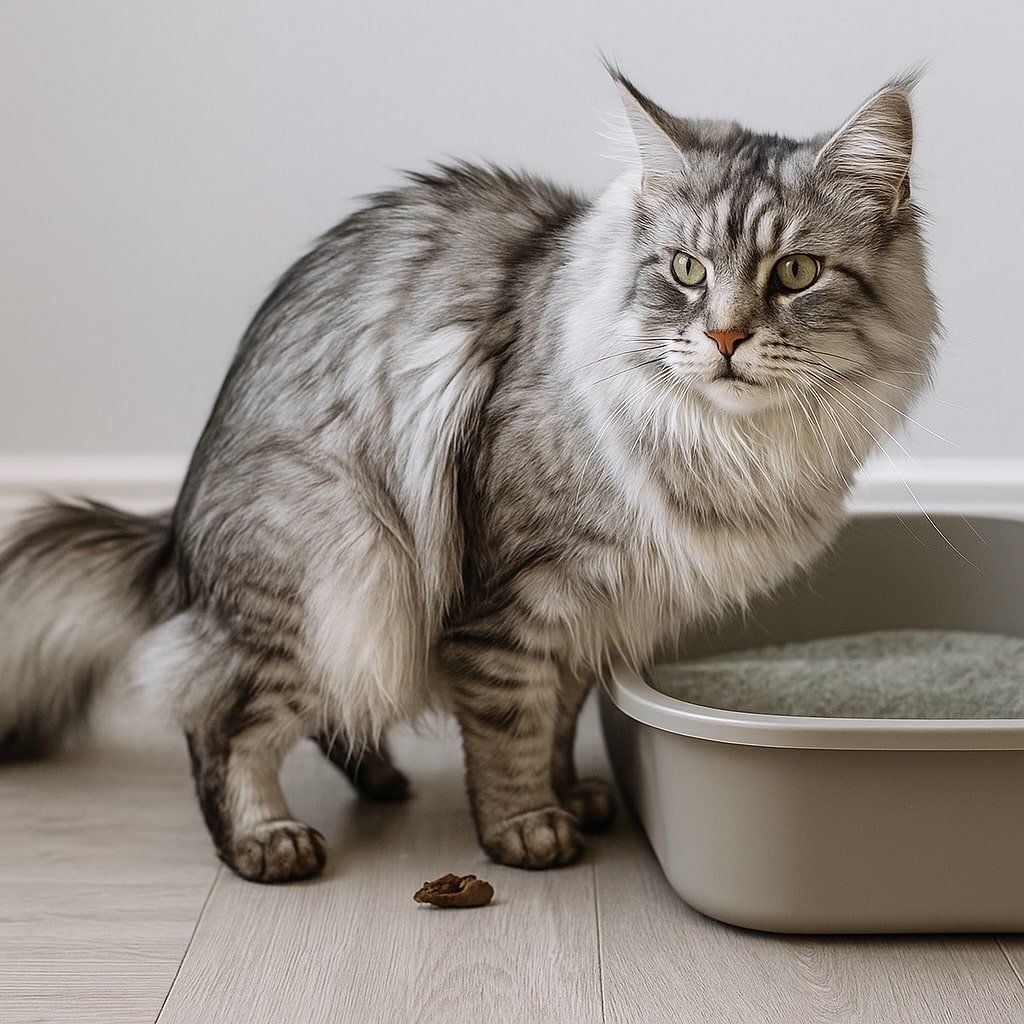
When a Maine Coon begins pooping outside the litter tray, it is almost always a sign that something has changed in their:
- Body
- Comfort levels
- Environmental confidence
Maine Coons are exceptionally large, physically expressive cats with strong instincts for cleanliness, safety, and routine. When their toileting behaviour suddenly shifts, it is a direct communication signal, not disobedience, and not a spiteful act.
These cats do not break toileting habits for no reason.
Because of their size, temperament, and sensitivity, Maine Coons require more space, more comfort, and more stability in their environment than many owners realise. This is why litter box issues are especially common in the breed.
This article explains every medical, environmental, and emotional reason for inappropriate defecation and provides a complete plan for eliminating the problem permanently.
Quick Answer
If your Maine Coon is pooping outside the box, the cause is usually either a medical problem, litter tray aversion, stress, pain, territorial insecurity, or a negative association with the tray itself. Cats do not usually start toileting outside the litter box for “no reason,” and current feline guidance says medical causes should always be ruled out first when litter tray habits suddenly change.
🔴 1. Medical Causes (Must Be Checked First)
Medical problems must always be addressed before environmental or behavioural causes because many gastrointestinal issues cause discomfort or urgency that prevents the cat from reaching the tray in time, or makes the tray feel unsafe or painful to use.
⭐ Constipation
Constipation is highly common in Maine Coons because the breed can be prone to dehydration, digestive sluggishness, and heavy shedding (which increases hairball load). When faeces become dry and difficult to pass, the cat begins to associate the litter box with discomfort.
Cats learn patterns quickly. If they strain or feel pain in the tray, they may think:
“This hurt before. If I avoid that tray, maybe it will hurt less.”
Owners typically notice:
- Small, hard pellet-like stools
- Crying or meowing when trying to defecate
- Pacing or hiding before passing stool
- Faeces deposited right outside the tray or in a hallway
When constipation progresses, cats sometimes start holding stool longer, which makes it even harder to pass. Early intervention is essential.
⭐ Diarrhoea Or Loose Stool
Diarrhoea causes urgency. A Maine Coon might simply not make it to the tray in time, or the sensation of discomfort may drive them to eliminate wherever they are standing.
Causes include:
- Sudden diet changes
- Food sensitivity
- Parasites
- Infection
- Stress
- Bacterial imbalance
- Excessive treats or human food
Diarrhoea often leads cats to choose surfaces that feel cool, absorbent, or easy to scratch on, such as tiles, carpet corners, or bathroom floors.
⭐ Inflammatory Bowel Disease (IBD)
IBD is a chronic condition where the intestines become irritated and inflamed. It causes unpredictable bowel movements and makes the act of defecation uncomfortable.
Typical IBD signs:
- Alternating diarrhoea and constipation
- Mucus or blood in stool
- Vomiting
- Weight loss
- Faeces found near but not inside the tray
Because the discomfort is unpredictable, the cat may attempt to find a “more comfortable” or safer-feeling location each time.
⭐ Arthritis Or Hip Dysplasia Pain
This is one of the most underdiagnosed causes of litter box avoidance in older or large Maine Coons.
Arthritic cats may:
- Struggle to climb into deep trays
- Find squatting painful
- Experience slipping due to low traction inside the tray
- Feel unstable in a cramped litter box
When entering the tray hurts, many cats will stop trying altogether. Maine Coons, with their heavy build and long limbs, often experience this earlier than smaller breeds.
⭐ Anal Gland Problems
Impacted or infected anal glands cause sharp, sudden pain when defecating. The cat may frantically move away from the tray when the pain occurs, leading to accidents in random locations.
⭐ Stress-Induced Gastrointestinal Distress
Maine Coons have highly sensitive digestive systems that respond strongly to mental stress. Anxiety can cause diarrhoea, urgency, or a disrupted bowel routine.
When stress is the root cause, toileting problems often appear suddenly and worsen with household changes.
👉 Take a look: Maine Coon Stress Symptoms
🩺 Medical Fix Checklist
- Immediate vet exam for sudden changes
- Faecal test to rule out parasites and infections
- Consider bloodwork if weight loss or chronic diarrhoea is present
- Increase water intake using fountains + wet food
- Introduce fibre (psyllium or pumpkin, if vet-approved)
- Add joint supplements for older cats
- Review grooming routine to reduce hairballs
🔶 2. Environmental Causes: Litter Tray Problems
Maine Coons often face litter box issues because many owners underestimate just how much space these huge cats require.
A standard litter tray is often completely unsuitable for a 15-22lb cat with long limbs and a large frame.
⭐ The Litter Tray Is Too Small (Most Common Environmental Cause)
A Maine Coon needs to:
- Step in without squeezing
- Stand fully in the tray without having to crouch sideways
- Turn around comfortably
- Dig deeply without hitting the sides
- Stretch out their tail without obstruction
Standard trays are designed for 8lb domestic shorthair cats, not giant cat breeds!
A tray that is too small will cause:
- Partial entry, leading to poop on the floor
- “Perching” with back legs outside the tray
- Avoidance because the tray feels cramped or unsafe
Many litter box problems disappear the moment owners upgrade to an oversized tray.
👉 Take a look: Best Litter Trays for Maine Coons
⭐ Tray Cleanliness And Odour Issues
Maine Coons are exceptionally clean cats. They will often refuse to use a tray if:
- Faeces from earlier haven’t been removed
- The litter smells of ammonia
- The tray was not deep-cleaned recently
- Scented litter or cleaning chemicals irritate them
When the tray is not perfectly clean, the cat will find a more acceptable location.
⭐ Litter Type Problems
Maine Coons typically prefer:
- Unscented
- Fine-to-medium clumping
- Low dust
- Soft under the paws
Some litters are too sharp, too lightweight, too perfumed, or too dusty. If the texture feels unpleasant or the smell is overwhelming, your cat may avoid the tray completely.
⭐ Tray Location Is Wrong
Cats dislike toileting in:
- High-traffic areas
- Cold rooms
- Near dogs
- Near noisy appliances
- Hallways where they feel exposed
An ideal litter box area is:
- Quiet
- Private
- Warm
- Predictable
If a Maine Coon feels unsafe or vulnerable, they will seek alternative spots.
⭐ Not Enough Litter Boxes
In multi-cat homes, litter box conflict is extremely common. Even a gentle Maine Coon may feel intimidated, blocked, or ambushed by other cats.
Use the gold standard formula:
Number of cats + 1 = number of litter boxes.
If two cats share one tray, the less confident one may be forced to eliminate elsewhere.
⭐ Hooded Or Covered Litter Boxes Can Backfire
Although many owners like how they contain mess, hooded trays trap smells and restrict visibility. A Maine Coon might feel isolated or unsafe, especially if another pet patrols the litter area.
This often leads to sudden avoidance.
🔵 3. Behavioural And Emotional Causes
Once medical and environmental causes are eliminated, behavioural factors are the next area to investigate. Maine Coons are highly intelligent, deeply bonded to their families, and sensitive to changes.
⭐ Stress, Anxiety, and Emotional Upheaval
Stress is one of the most common behavioural triggers. Maine Coons feel stress far more intensely than many people realise.
Triggers include:
- New family members
- New pets
- Changes in the owner’s routine
- Disruptions in the feeding schedule
- Loud noises or renovations
- Illness in the household
- Reduced play or stimulation
When stressed, the gut and the behaviour both change. A stressed Maine Coon may avoid the tray because they seek a place that feels safer, warmer, or closer to their favourite human.
⭐ Negative Experiences Inside The Tray
If your cat experienced pain (constipation, arthritis), fear (loud noise), or intimidation (another pet blocking the tray), they may permanently avoid the associated tray.
This can persist even after the original issue is resolved.
⭐ Territorial Behaviour Or Social Conflict
Even neutered cats sometimes scent-mark with stool, particularly if:
- A new cat has entered the home
- An outdoor cat is visible at the window
- There is competition for food, bedding, or high-value locations
Territory reinforcement sometimes occurs with faeces rather than urine.
⭐ Routine Disruption
Maine Coons thrive on predictability. Anything that shifts “their world” can destabilise toileting habits.
Examples:
- Moving furniture
- Redecorating
- New litter type
- Sudden removal of a litter tray
- Owner travelling
- Different feeding schedule
Cats feel more vulnerable when their environment changes.
⭐ Troubleshooting By Location Of Stool
| Where Your Cat Poops | What It Usually Means |
|---|---|
| Next to or in front of tray | Tray too small, arthritis, dirty tray |
| On soft items (bed, blankets, clothes) | Separation anxiety, seeking comfort |
| In hallway corners | Feeling exposed, tray location issue |
| Near doors/windows | Territorial conflict with the outside cat |
| Bathroom floor | Seeking privacy, noise avoidance |
| Everywhere / random spots | Gastrointestinal illness |
⭐ Complete Fix: Step-By-Step Protocol
✔ 1. Vet exam first
Always rule out constipation, diarrhoea, parasites, arthritis, and IBD.
✔ 2. Upgrade to a giant litter tray
Under-bed storage boxes are ideal for Maine Coons.
✔ 3. Switch to unscented clumping litter
Comfort + familiarity increases litter box reliability.
✔ 4. Scoop twice a day
Maine Coons will not tolerate dirty trays.
✔ 5. Add extra trays if needed
Especially in multi-cat households.
✔ 6. Place trays in quiet, warm, predictable areas
Avoid hallways and noisy rooms.
✔ 7. Remove scent markers with enzyme cleaner
If the stool scent remains, the behaviour often continues.
✔ 8. Reduce household stressors
Increase play, provide vertical space, and use pheromone diffusers.
✔ 9. Rebuild positive tray associations
Reward calm behaviour around the tray. Never punish accidents.
⭐ Take A Look At
- Why Is My Maine Coon Peeing Everywhere?
- Litter Care Guide For Maine Coons
- How to Stop Maine Coons Tracking Litter Everywhere
- Maine Coon Litter Care Hub
- Maine Coon Stress Symptoms
- Maine Coon Health Problems
FAQ
Why is my Maine Coon pooping outside the box?
A Maine Coon may poop outside the box because of stress, litter tray aversion, pain, constipation, diarrhoea, territorial problems, or a medical issue that makes toileting uncomfortable. Feline house-soiling guidance says both medical and behavioural causes need to be considered.
Can a medical problem make a Maine Coon poop outside the litter box?
Yes. Cornell notes that cats can develop litter box problems because of medical conditions, and discomfort during urination or defecation can cause a cat to avoid the tray. Sudden toileting changes should always prompt a vet check.
Can stress cause a Maine Coon to poop outside the box?
Yes. Stress is a well-recognized trigger for house-soiling in cats. Changes in routine, tension with other cats, outside-cat threats, noise, or an unsettled home environment can all contribute.
Can litter tray problems cause my Maine Coon to poop elsewhere?
Yes. Cats may avoid a litter tray if it is too small, dirty, covered, poorly placed, difficult to access, or shared in a way that makes them feel unsafe. Optimizing the litter tray is one of the universal recommendations in house-soiling cases.
Where should a Maine Coon’s litter tray be placed?
The tray should be in a quiet, low-disturbance area away from food, water, sleeping areas, doorways, and noisy appliances. Cats Protection specifically advises against placing trays near washing machines, corridors, or other disturbances.
How many litter trays does a Maine Coon need?
A common recommendation is one litter tray per cat plus one extra, placed in different locations rather than lined up together. This helps reduce stress, guarding, and tray avoidance, especially in multi-cat homes.
Can another cat cause my Maine Coon to poop outside the box?
Yes. A more confident or intimidating cat can make another cat feel unsafe using the tray. Multi-cat tension is a known contributor to house-soiling behaviour.
Could arthritis make a Maine Coon poop outside the litter box?
Yes, especially in older cats. Cornell notes that joint pain can make it hard for a cat to get in and out of the litter box in time, which is why low-sided trays can help senior cats.
Should I punish my Maine Coon for pooping outside the box?
No. Punishment can increase fear and stress and often makes house-soiling worse. Current feline behaviour guidance focuses on identifying the underlying cause, improving the environment, and making the litter box easier and safer to use.
How clean should a litter tray be?
Very clean. Cats Protection advises removing poo and pee from the tray at least twice a day and completely cleaning out the tray regularly, because many cats avoid soiled trays.
When should I take my Maine Coon to the vet for pooping outside the box?
You should contact a vet if the change is sudden, repeated, or linked with constipation, diarrhoea, pain, weight loss, lethargy, appetite changes, or any other health concern. Medical causes should be ruled out first when a cat’s normal litter box habits change.
Will adding more litter trays help?
Often, yes. More trays in quiet, separate areas can reduce fear, competition, and avoidance, especially in larger homes or multi-cat households.