Senior Maine Coon Care: Supporting Health, Mobility, And Comfort In Older Cats
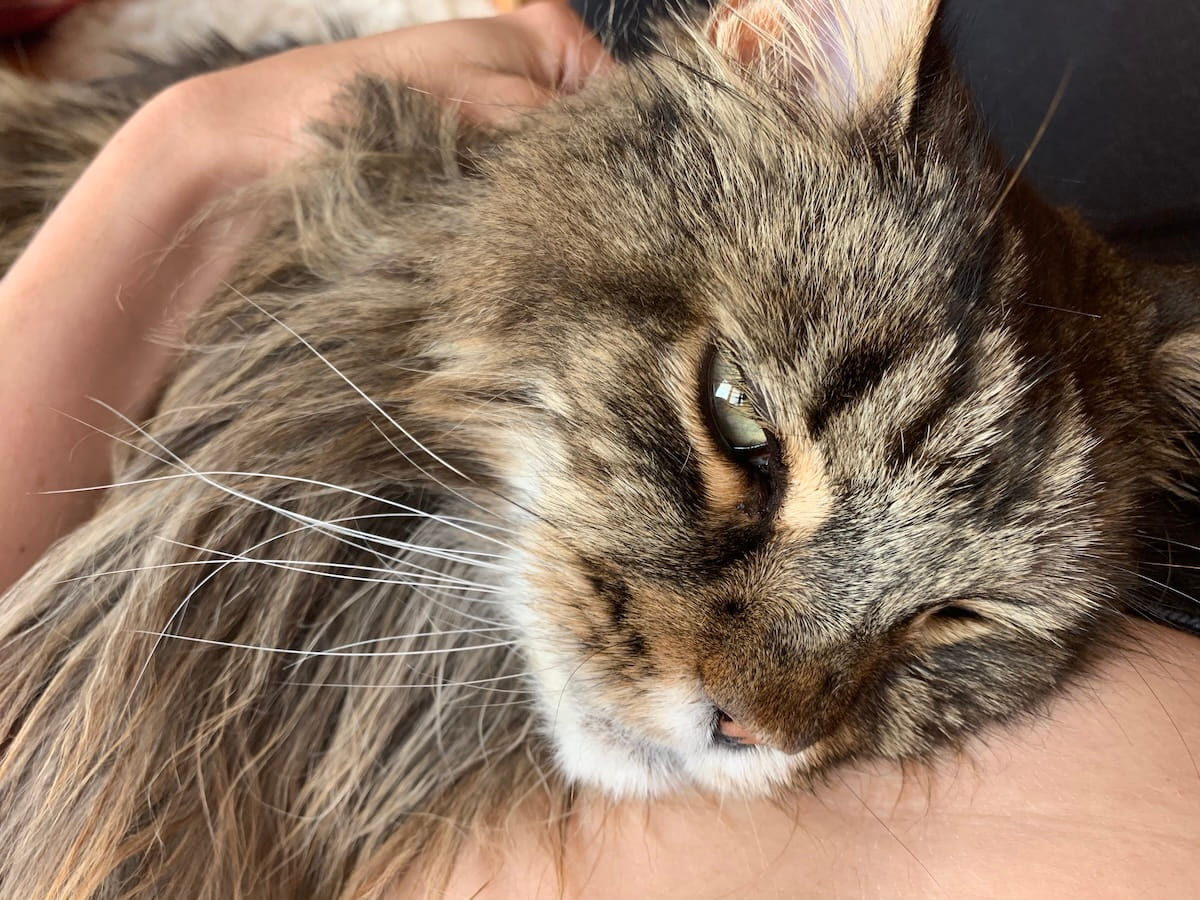
Maine Coons are not a breed that “ages quietly”. Their size, weight, and slow maturation mean that senior changes often show physically before they show emotionally. Many remain affectionate, alert, and socially engaged even while dealing with significant discomfort beneath the surface.
Senior Maine Coon care is about recognising those hidden changes early and adapting the environment, diet, and expectations accordingly.
Because senior Maine Coons are more prone to breed-specific conditions such as joint disease, urinary issues, and heart problems, all age-related symptoms should be viewed within the broader context of Maine Coon health and wellness:
👉 Maine Coon Health And Wellness Guide
Our first Maine Coon, Pippin, lived with us from kittenhood into his senior years. His later-life health challenges shaped how we now care for ageing Maine Coons, and highlighted how much difference early intervention can make.
Quick Answer
Senior Maine Coon care focuses on keeping your cat comfortable, mobile, well-fed, and closely monitored for age-related health changes. As Maine Coons get older, owners need to pay more attention to joint stiffness, weight changes, grooming ability, appetite, dental health, litter tray habits, and overall mobility. The goal is not just to extend lifespan, but to protect quality of life in the senior years.
What Age Do Maine Coons Really Become “Senior”?
While many sources place senior status at 10-12 years, Maine Coons often begin experiencing age-related mechanical strain earlier, typically around 7-9 years.
This is not because they age faster, but because:
- They are heavier than average cats
- Their joints carry more cumulative load
- Spinal flexibility declines earlier due to body length
In Pippin’s case, clear mobility changes appeared around 8 years old, even though he remained mentally bright and socially affectionate. That experience taught us how important early intervention can be, which is why we now give our other Maine Coons, Bali and Mika, joint supplements since they were six years of age – applying what we learned helped support Pippin’s comfort and mobility.
Joint Disease In Senior Maine Coons: What It Really Looks Like
Pippin was diagnosed with:
These conditions didn’t make him immobile; they made him careful.
His movements became:
- Slower to initiate
- More deliberate
- Less spring-loaded
- Increasingly ground-focused
Importantly, he did not cry, limp dramatically, or withdraw socially, which is why joint pain in cats is so often missed.
The Impact Of Joint Supplements (Real Experience)
When we raised our concerns with the vet, we were advised to trial joint-support capsules. Because capsules are rarely accepted whole, we opened them and mixed the contents into Lick-e-Lix cat yoghurt.
The effect was noticeable within days. Pippin no longer looked like an “old, stiff cat struggling to rise.” He still had arthritis, but his posture improved, transitions were smoother, and his general demeanour was less frail. We also added salmon oil to his wet food to support joint lubrication and reduce inflammation.
This experience reinforced an important point for senior Maine Coons – Joint support does not need to “fix” arthritis to significantly improve quality of life.
Why Senior Maine Coons Stop Jumping (Even If Trained Not To)
As Pippin aged, he almost completely stopped jumping onto high counters and surfaces. This wasn’t behavioural regression, it was risk calculation.
Jumping requires:
- Spinal compression
- Hip extension
- Landing shock absorption
For a large cat with arthritis, the cost-benefit ratio simply changes.
To support him, we:
- Replaced tall cat trees with lower-perch designs
- Added Maine Coon-sized enclosed pods
- Ensured favourite resting spots were reachable without climbing
These changes allowed him to continue climbing within his limits, rather than removing vertical access entirely.

Heat Therapy And Comfort For Arthritic Maine Coons
We also introduced a heated pad, hoping it would ease joint stiffness.
While heat does not treat arthritis, it can:
- Relax muscles
- Reduce stiffness after rest
- Encourage movement
Pippin used the heated pad frequently, especially during colder months – a common preference in arthritic cats.
Here’s a short YouTube video of Pippin sat on his heated cat mat:
Weight Stability In Older Maine Coons
Despite reduced mobility, Pippin:
- Did not gain weight
- Did not lose weight
This stability suggested:
- Muscle mass was largely preserved
- Appetite remained appropriate
- Discomfort was managed adequately
Weight stability in a senior Maine Coon is not guaranteed and should not be assumed – sudden weight loss or gain in older cats is always a red flag.
Grooming Challenges: Coat Genetics Matter More With Age
One of Pippin’s parents had excellent coat texture. The other had fur prone to matting. Pippin inherited the latter, and ageing made this increasingly difficult to manage.
As spinal flexibility declined:
- Mats formed rapidly around the backend
- Hygiene grooming became painful
- Knot removal triggered defensive reactions
When we attempted to remove mats, Pippin would lash out, not from aggression, but from pain anticipation. This is a critical distinction: A senior Maine Coon resisting grooming is often responding to discomfort, not temperament.
In such cases:
- Early mat intervention matters
- Professional grooming is often kinder
- Persistence can damage trust
We made grooming sessions daily, and ensured they were speedy and efficient. It likely also helped that we bribed Pippin with lots of Dreamies!
These are my Top 10 Maine Coon Grooming Tips, as seen on my Maine Coon Central YouTube video:
Reduced flexibility often makes grooming harder for senior Maine Coons, especially those with coat types prone to matting. These changes are covered in more detail in this grooming and care guide:
👉 Grooming And Care Guide
Urinary Issues And Pain-Driven Over-Grooming
When Pippin developed a urinary tract infection, his response was intense over-grooming. He licked until the skin became bald. This behaviour stopped once the underlying issue was addressed.
Following veterinary guidance, we moved him onto a tailor-made Royal Canin urinary dry food, which helped stabilise urinary health and reduce irritation.
Over-grooming in senior cats should always be treated as a symptom, not a habit.
Diet becomes increasingly important as Maine Coons age, particularly when managing inflammation, joint health, and urinary conditions. A full breakdown of senior-appropriate feeding strategies can be found here:
👉 Maine Coon Diet And Nutrition
Dental Health: Individual Outcomes Vary Widely
Interestingly, Pippin never developed dental disease, which demonstrates how variable oral health can be even within the same Pedigree cat breed.
However, our adopted Maine Coons did:
- Mika required tooth removal and cleaning costing £780 (~$985 USD)
- Bali required dental treatment costing £690 (~$870 USD)
This highlights an important reality for owners: Dental disease is common in Maine Coons, but not inevitable, and not predictable. Regular checks matter even if previous cats were unaffected.
Cardiac Disease In Senior Maine Coons: The Silent Risk
We strongly suspect Pippin suffered from hypertrophic cardiomyopathy (HCM).
He had experienced subtle issues previously, but one morning we woke to find him suddenly paralysed – a catastrophic presentation associated with cardiac thromboembolism.
Veterinary assessment confirmed that surgery would involve:
- A lengthy, invasive procedure
- Low success rates
- Significant suffering
We decided to have him put to sleep, as he was already suffering from mild hip dysplasia, arthritis, and recovering from a bent tail canal from a bad jump. He was such a loving cat, but no cat should have to go through the pain he was in. His backend was paralysed, and we no longer recognised him – our usually friendly Maine Coon became wild and unrecognisable. He was clearly in severe pain.
This experience underscores why senior Maine Coon care must include awareness of breed-specific silent conditions, particularly cardiac disease, which can progress with minimal outward signs.
Emotional Continuity In Senior Maine Coons
Despite pain, stiffness, grooming difficulties, and medical complications, Pippin remained profoundly affectionate.
Senior Maine Coons often:
- Seek more physical closeness
- Prefer warmth and routine
- Tolerate discomfort quietly
- Remain emotionally present
Age changed how Pippin moved – not who he was.
If you want a practical, quick-reference guide covering daily adjustments, warning signs, and comfort checks for older cats, this Senior Maine Coon Care Checklist summarises what to monitor and when to act:
👉 Senior Maine Coon Care Checklist
Final Thoughts: What Senior Maine Coons Really Need
Senior Maine Coon care is not about prolonging youth. It’s about:
- Reducing physical strain
- Recognising pain early
- Adapting the environment
- Preserving dignity and comfort
Pippin taught us that thoughtful support can dramatically improve quality of life, even when conditions cannot be cured.
Caring for your Maine Coon’s in their later years is not an afterthought. It’s one of the most important stages of ownership.
FAQ
At what age is a Maine Coon considered a senior?
A Maine Coon is usually considered a senior from around 10 years old, although some age-related changes can appear earlier. Because this is a large breed, owners should start watching more closely for mobility changes, weight loss, stiffness, and reduced grooming as the cat gets older.
How do I care for an elderly Maine Coon?
Caring for an elderly Maine Coon means focusing on comfort, mobility, grooming, nutrition, hydration, dental care, and regular vet checks. Older cats often need easier access to food, water, litter trays, and sleeping areas, as well as closer monitoring for pain or illness.
What health problems do senior Maine Coons get?
Senior Maine Coons may develop arthritis, hip dysplasia, discomfort, dental disease, kidney disease, heart problems, reduced mobility, weight loss, and coat-care issues. Some also become less active, less flexible, or more sensitive to change as they age.
Do Maine Coons slow down as they get older?
Yes, most Maine Coons slow down with age. They may sleep more, jump less, play less intensely, and take longer to get comfortable after rest. Some slowing down is normal, but sudden or severe changes should be checked by a vet.
How can I tell if my senior Maine Coon is in pain?
Signs of pain in a senior Maine Coon can include stiffness, reluctance to jump, hiding, irritability, reduced grooming, changes in posture, slower movement, litter tray accidents, or a drop in activity. Cats often hide pain well, so subtle changes matter.
Do senior Maine Coons need a different diet?
Many senior Maine Coons benefit from a diet that supports healthy weight, muscle maintenance, joint comfort, and hydration. Some older cats need softer food, easier-to-chew food, or veterinary diets if they develop age-related health problems.
Why is my old Maine Coon losing weight?
Weight loss in an older Maine Coon should never be ignored. It can happen because of dental pain, kidney disease, heart disease, reduced appetite, poor absorption, or other medical problems. Senior cats with unexplained weight loss need a veterinary assessment.
Why does my senior Maine Coon struggle to groom itself?
Older Maine Coons may struggle to groom because of arthritis, stiffness, obesity, weakness, dental pain, or general discomfort. When grooming declines, the coat may become greasy, matted, or untidy, especially around the back end and lower spine.
How often should a senior Maine Coon see a vet?
A senior Maine Coon should usually have veterinary check-ups at least every 6 to 12 months, and sometimes more often if health problems are present. Regular checks help detect issues earlier, before they become harder to manage.
What can I do to help my senior Maine Coon with arthritis?
You can help a senior Maine Coon with arthritis by keeping them lean, giving them easy access to litter trays and beds, using soft resting areas, reducing jumping strain, and speaking to your vet about pain relief or joint-support options.
Do senior Maine Coons need low-sided litter trays?
Yes, many senior Maine Coons benefit from low-sided or easier-access litter trays. As mobility declines, high tray sides can become difficult or painful to climb over, especially for cats with arthritis or hip discomfort.
How do I improve the quality of life for a senior Maine Coon?
To improve the quality of life, keep your senior Maine Coon comfortable, pain-free, clean, well-fed, hydrated, and mentally engaged. Small changes like heated beds, easier access to resources, gentle grooming help, and earlier vet care can make a big difference.