Maine Coon Kitten Care Guide (From First Day To Adulthood)

Bringing home a Maine Coon kitten is exciting, but it can also feel overwhelming. These cats are not only larger than most breeds, but they also grow more slowly, behave differently, and require a more structured approach to care.
Unlike many other breeds, Maine Coons take 3-5 years to fully mature, meaning the way you care for them as a kitten has a long-term impact on their behaviour, health, and personality.
This guide covers everything you need to know, from preparing your home and feeding correctly to managing behaviour and avoiding the most common mistakes.
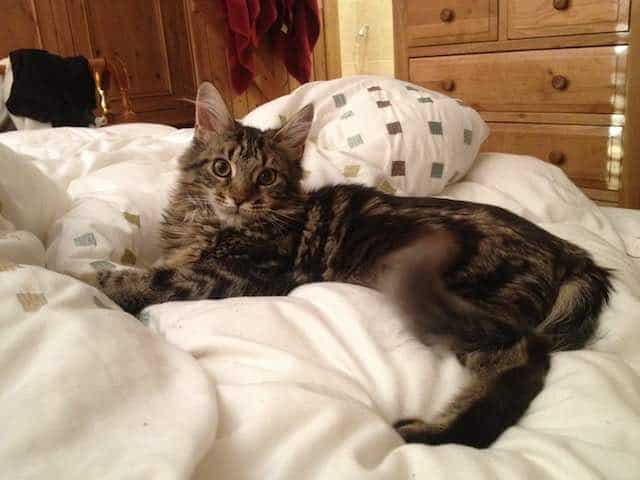


Start Here: Maine Coon Kitten Essentials
If you’re bringing home a kitten, start with these key guides:
- What do you need for a Maine Coon kitten?
- How long should a Maine Coon eat kitten food?
- Maine Coon size and growth guide
- Maine Coon grooming and care guide
- Maine Coon behaviour problems
What Makes Maine Coon Kittens Different?
Maine Coon kittens are not typical kittens. While they are playful and affectionate, they are also:
- Larger and heavier from a young age
- Slower to mature mentally and physically
- More intelligent and curious
- More demanding in terms of stimulation
This combination means they require more structure and engagement than most cats.
Real Owner Experience: Raising A Kitten vs Adopting Adults
From personal experience, raising a Maine Coon kitten is completely different from adopting an adult cat.
Pippin, whom we raised from a kitten, was:
- Extremely confident
- Highly adventurous
- Constantly exploring
- Mischievous, especially around food
From a very young age, he would jump onto kitchen counters and search for anything edible. We quickly learned that nothing could be left out overnight, as he would find it.
We kept him indoors for the first six months to keep him safe while he learned his environment. However, he became quite intense and restless during this time. Once we felt it was safe, we introduced him to the outdoors.
👉 The change was immediate.
He became calmer, more balanced, and far less chaotic. Around the same time, he was neutered, which also contributed to a noticeable improvement in behaviour.
In contrast, Mika and Bali were adopted at four years old. Their personalities were already fully developed. They arrived:
- Nervous
- Timid
- Unsure of their surroundings
Introducing them to Pippin was challenging. The intention had been to give him companionship, but initially, it had the opposite effect. He did not appreciate their arrival, and it took weeks to months for the cats to settle.
👉 The key takeaway:
Kittens adapt quickly, but adult cats require patience and careful introductions.
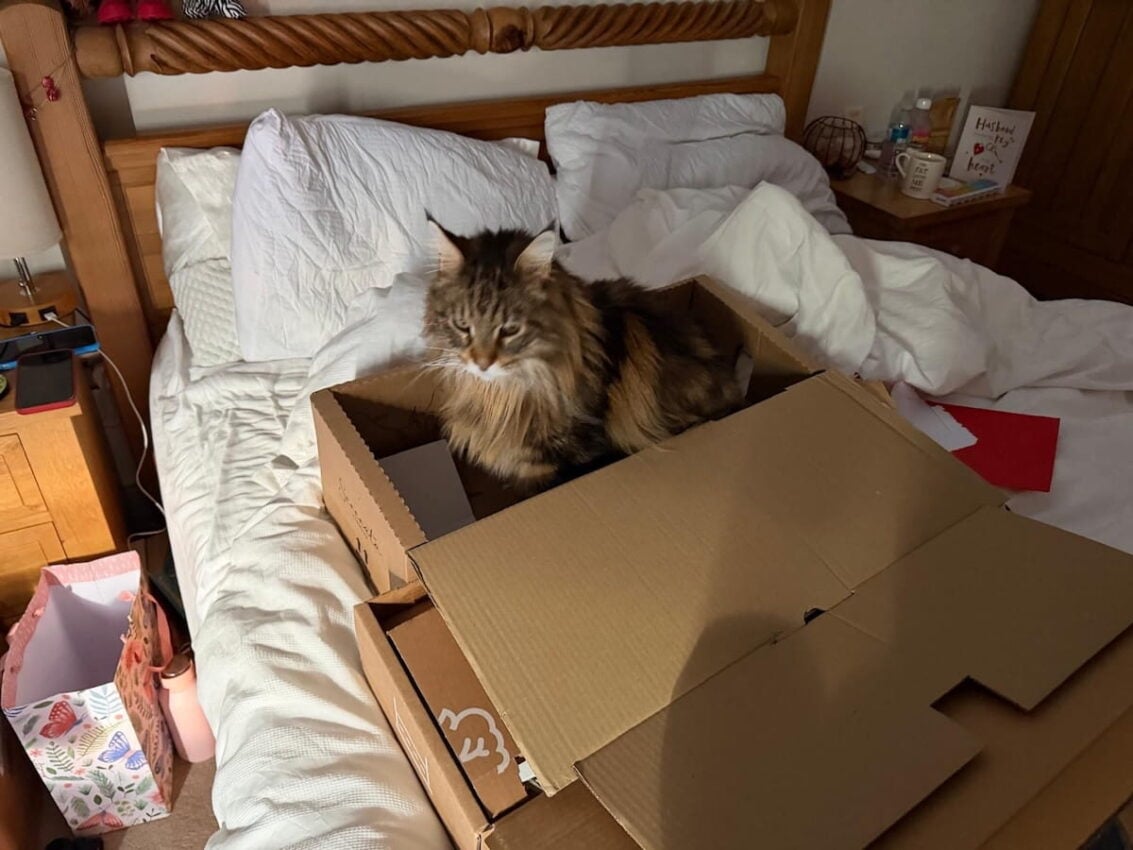
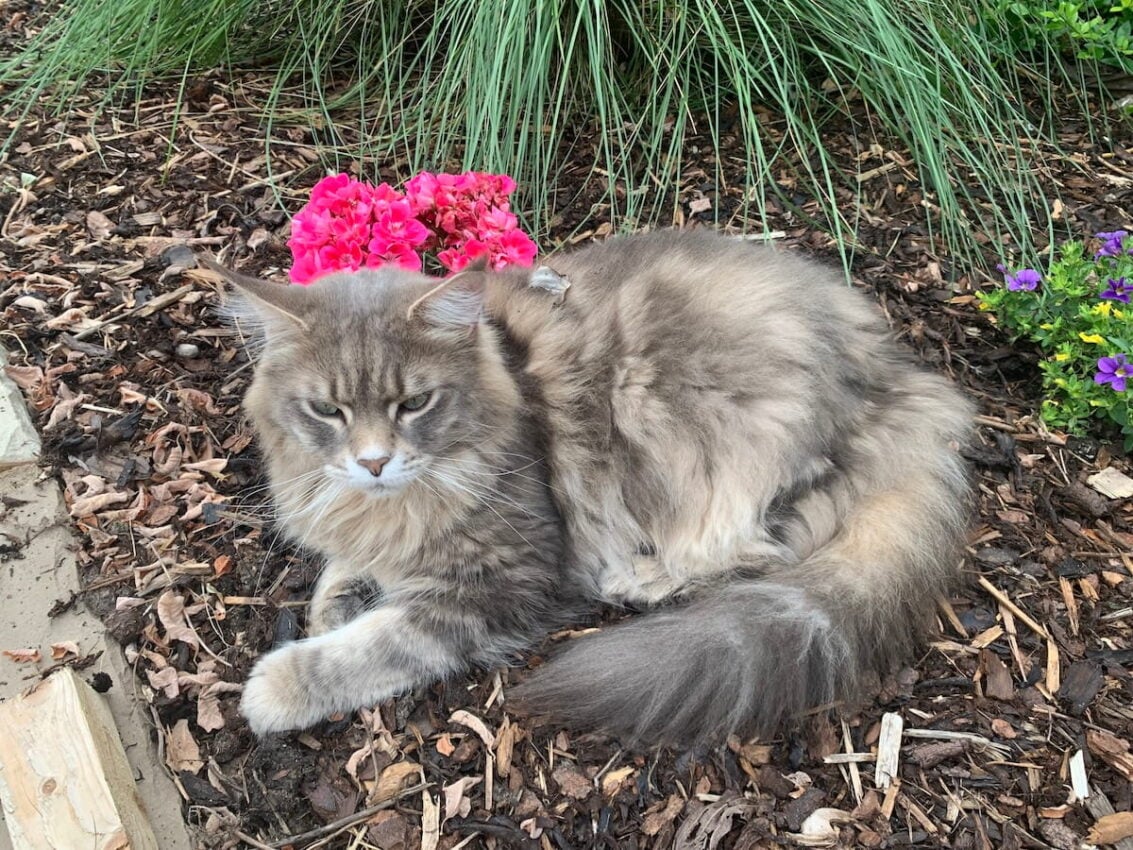
Handling, Holding, And Building Trust
Not every Maine Coon kitten naturally enjoys being picked up or held. Some tolerate it well, while others prefer affection on their own terms.
The best approach is to build trust gradually. Keep handling short, calm, and positive, especially during the first few weeks. Avoid forcing cuddles, as this can make a kitten more resistant over time.
With Pippin, confidence was never the issue. He was bold from the start, but he still needed clear routines and gentle handling so that human interaction felt predictable.
Mika and Bali were very different because they arrived as four-year-old adults. They were nervous and timid at first, which showed us how much early handling and environment can shape confidence.
How To Socialise A Maine Coon Kitten
Socialising a Maine Coon kitten is not about forcing cuddles or constant handling. It is about helping them feel safe, confident, and secure in social situations, household routines, grooming, noise, and everyday life.
The best approach is to expose your kitten gradually to:
- Gentle handling
- Short grooming sessions
- Household sounds
- Different rooms
- Visitors
- Toys and play routines
- Calm interaction with family members
Keep sessions short and positive. A kitten that feels overwhelmed may hide, scratch, bite, or become harder to handle later.
Pippin was naturally confident, but he still benefited from predictable routines. Mika and Bali were very different because they arrived as adults and were initially nervous and timid. Their slower adjustment showed us how important early socialisation can be.
A well-socialised Maine Coon kitten is not necessarily fearless. They are simply more likely to recover quickly from new experiences and trust their environment.
Preparing Your Home For A Maine Coon Kitten
Before bringing your kitten home, preparation is essential.
You’ll need:
- High-quality kitten food
- Wide, shallow food and water bowls
- An open litter tray
- Scratching posts
- Safe sleeping areas
- Grooming tools
Why An Open Litter Tray Works Best
With Pippin, we used an open litter tray from the start.
This helped because:
- He could clearly see where to go
- He never felt enclosed or trapped
- It reduced accidents during early training
Covered trays can make some kittens feel unsafe in a new environment.
Essential Maine Coon Kitten Products
| Item | Why It Matters | What To Look For |
|---|---|---|
| Litter tray | Encourages correct habits | Open, large, easy access |
| Food bowls | Prevents whisker stress | Wide, shallow bowls |
| Kitten food | Supports growth | High protein, quality ingredients |
| Scratching post | Prevents damage | Tall and sturdy |
| Brush/comb | Prevents matting early | Wide-tooth comb + slicker |
| Toys | Prevents destructive behaviour | Interactive, rotating options |
| Bed | Provides security | Soft, warm, quiet location |
What You Really Need Before Bringing Your Kitten Home
Buying supplies for a Maine Coon kitten is not just about choosing cute kitten products. Maine Coons grow quickly, play hard, and often outgrow standard kitten items faster than owners expect.
The most important things to prepare are:
- A large open litter tray
- High-quality kitten food
- Wide, shallow food and water bowls
- Strong scratching posts
- Safe climbing spaces
- Grooming tools
- Interactive toys
- A quiet sleeping area
With Pippin, we quickly learned that basic kitten equipment was not always enough. He was confident, adventurous, and surprisingly determined from the start, so we had to think about safety, routine, and stimulation rather than just buying products.
The open litter tray was one of the best early choices because it made toileting simple and obvious. He could see where to go, did not feel closed in, and quickly built confidence.
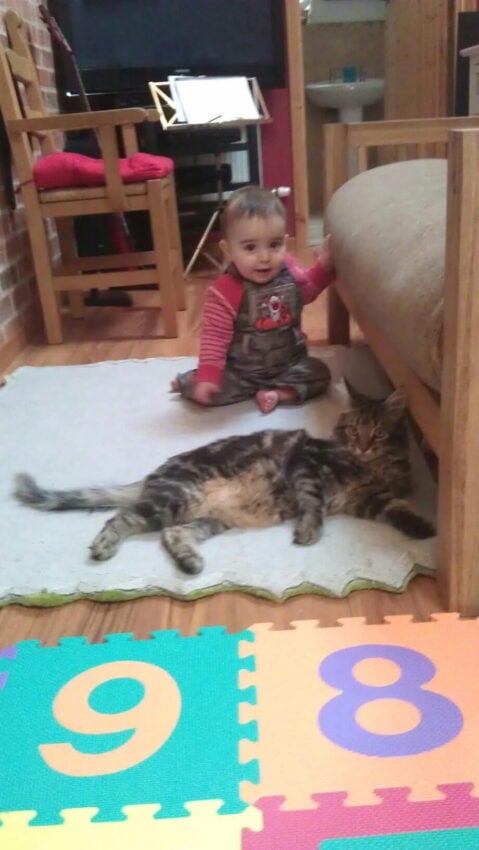
Your First 30 Days With A Maine Coon Kitten
The first month shapes your kitten’s behaviour, confidence, and long-term habits. A simple structure makes a huge difference.
Week 1: Settling In
- Keep your kitten in one safe room initially
- Show them the litter tray, food, and water
- Avoid overwhelming them with too much space
- Expect hiding – this is normal
Week 2: Building Confidence
- Slowly introduce new rooms
- Begin short play sessions (5-10 minutes)
- Start gentle brushing
- Introduce a routine (feeding + sleep times)
Week 3: Establishing Behaviour
- Reinforce litter tray use
- Introduce scratching posts properly
- Begin correcting unwanted behaviour (e.g. counters)
- Increase playtime
Week 4: Routine & Structure
- Set consistent feeding times
- Build longer play sessions
- Introduce more independence
- Assess behaviour patterns
👉 The goal is simple: predictability builds confidence
What We Learned Raising Pippin From Kittenhood
Raising Pippin from kittenhood taught us that Maine Coon kittens are often far more energetic, intelligent, and determined than new owners expect. He was confident, adventurous, and mischievous from the start. He explored constantly, jumped onto kitchen counters, searched for food, and quickly learned household routines.
We kept him indoors for the first six months for safety, but by that point, he had become quite full-on and eager for additional stimulation. When we introduced safe outdoor access, his behaviour changed almost immediately. He became calmer, more balanced, and less chaotic. We neutered him around the same period, which also helped reduce some of his intensity.
This taught us that Maine Coon kittens need more than food, litter, and affection. They need structure, stimulation, safe outlets for energy, and clear routines.
Feeding A Maine Coon Kitten Properly
Maine Coon kittens grow rapidly and need more nutrition than most breeds.
Key points:
- Feed high-protein, high-quality kitten food
- Offer multiple meals per day
- Monitor weight and growth carefully
- Transition food gradually
Maine Coon kittens often seem constantly hungry due to their rapid growth. However, overfeeding poor-quality food can lead to excess fat rather than healthy development.
How Long Should A Maine Coon Eat Kitten Food?
Most Maine Coons should stay on high-quality kitten food until at least 12 months old, and some larger or slower-developing kittens may benefit from staying on it until around 15-18 months. This is because Maine Coons mature more slowly than many breeds. Their bodies continue developing long after they look large, so switching to adult food too early may not support their full growth phase.
Kitten food helps support:
- Muscle development
- Bone growth
- Energy needs
- Brain development
- Coat quality
The transition to adult food should be gradual and based on body condition, growth rate, and veterinary advice rather than age alone.
If you are interested in learning more about the exact timings to switch your Maine Coon kitten from kitten food to adult food, make sure you read my guide:
👉 See: How long should a Maine Coon eat kitten food?
Maine Coon Kitten Feeding Guide
| Age | Meals Per Day | Food Type | Notes |
|---|---|---|---|
| 8-12 weeks | 4 meals | Wet + dry kitten food | Small, frequent meals |
| 3-6 months | 3-4 meals | High-protein kitten food | Rapid growth phase |
| 6-12 months | 3 meals | Kitten food | Appetite remains high |
| 12+ months | 2 meals | Transition to adult food | Gradual switch |
Important Notes:
- Always prioritise high protein content
- Avoid overfeeding low-quality food
- Monitor body condition, not just appetite
👉 For full details, see: How long should a Maine Coon eat kitten food
Growth And Development Timeline
Maine Coons mature slowly compared to other breeds.
- 0-6 months: Rapid growth, high energy
- 6-12 months: Still playful, slightly calmer
- 1-3 years: Continued physical development
- 3-5 years: Full maturity
Maine Coon kittens often grow in uneven stages. They may look long and lanky before filling out across the chest, shoulders, and body. This slow development is normal and is one reason owners should not judge final size too early.
👉 See: Maine Coon size and growth guide
Can You Make A Maine Coon Kitten Grow Bigger?
You cannot force a Maine Coon kitten to grow larger than their genetics allow.
Healthy size comes from:
- Good genetics
- Proper kitten nutrition
- Slow, steady growth
- Good muscle development
- Avoiding obesity
Overfeeding does not create a bigger Maine Coon. It creates extra weight, which can place unnecessary strain on developing joints.
Maine Coon Kitten vs Adult: Key Differences
| Area | Kitten | Adult |
|---|---|---|
| Energy | Extremely high | Moderate |
| Behaviour | Exploratory, chaotic | Predictable |
| Grooming | Easier early | Can become difficult |
| Feeding | High calorie needs | Maintenance diet |
| Adaptability | Very flexible | Slower to adjust |
Behaviour: What To Expect
Maine Coon kittens are:
- Curious
- Energetic
- Intelligent
- Sometimes destructive if bored
Pippin would constantly:
- Jump onto kitchen counters
- Search for food
- Investigate everything
This is not bad behaviour – it is under-stimulated intelligence.
Without enough stimulation, Maine Coons create their own entertainment, which is why counter jumping and food stealing are so common.
When Do Maine Coon Kittens Calm Down?
Maine Coon kittens usually begin to calm down gradually after their first year, but many remain playful, energetic, and mentally busy for several years.
Pippin was extremely confident and adventurous as a kitten. He jumped onto kitchen counters, searched for food, explored constantly, and needed far more stimulation than we expected.
For the first six months, we kept him indoors for safety. This was the right decision, but by that point, he had become quite intense and restless. Once we felt he understood his home territory and would not run away, we introduced safe outdoor access.
The change was immediate. He became calmer, more balanced, and less chaotic. Neutering around the same period also helped reduce his intensity.
Most Maine Coon kittens calm down through a combination of:
- Maturity
- Neutering
- Structured play
- Routine
- Safe outlets for exploration
They do not usually become lazy cats, though. Even adult Maine Coons often remain playful, curious, and socially involved.
The Biggest Mistake New Owners Make
The most common mistake is assuming kittens will “grow out of” behaviour. They don’t.
Maine Coons are highly intelligent. If the following behaviours are not managed early, they quickly become permanent habits:
- Counter jumping
- Food stealing
- Scratching furniture
👉 What starts as “cute kitten behaviour” often becomes difficult to manage in a 9kg adult cat.
Building A Bond With Your Maine Coon Kitten
Bonding with a Maine Coon kitten happens through consistency, not force.
The fastest way to build trust is to become predictable. Feed them at regular times, play with them daily, speak calmly, respect when they need space, and avoid forcing attention when they are tired, frightened, or overstimulated.
Good bonding activities include:
- Short play sessions
- Gentle brushing
- Sitting quietly nearby
- Offering treats after positive handling
- Letting the kitten approach you first
Pippin bonded strongly with us because he was naturally confident and involved in everything from the beginning. But confidence still needed boundaries. He needed structure as much as affection.
A strong bond does not mean your kitten wants to be held all the time. With Maine Coons, bonding often looks like following you around, sitting nearby, joining family routines, or wanting to be involved in whatever you are doing.
How To Manage Kitten Behaviour
To prevent problems:
- Provide daily interactive play
- Rotate toys regularly
- Use scratching posts early
- Keep surfaces clear of food
👉 See: Maine Coon behaviour problems
Indoor vs Outdoor: When Is It Safe?
There is no single rule, but generally:
- Keep kittens indoors initially
- Consider supervised outdoor access around 5-6 months
With Pippin, introducing the outdoors:
- Reduced hyperactivity
- Improved behaviour
- Helped him settle
This depends on your environment and safety risks.
Learn more about the Pros and Cons of letting a Maine Coon cat outside.
Neutering And Behaviour Changes
Neutering often leads to:
- Reduced intensity
- Less restlessness
- More stable behaviour
We saw a clear shift in Pippin after neutering.
Grooming A Maine Coon Kitten
Start grooming early to build tolerance.
Focus on:
- Gentle brushing
- Short sessions
- Positive reinforcement
👉 See: Maine Coon grooming and care guide
Common Maine Coon Kitten Problems (And What They Mean)
- Constant hunger → normal growth
- Biting during play → overstimulation
- Climbing everywhere → boredom
- Litter issues → tray setup
- Hyperactivity → lack of structure
Common Mistakes New Owners Make
- Leaving food accessible
- Skipping early grooming
- Using enclosed litter trays too soon
- Expecting calm behaviour too early
- Rushing introductions with other cats
Introducing A Second Cat (Lessons Learned)
Introducing Mika and Bali to Pippin took time.
Challenges included:
- Territorial behaviour
- Stress and tension
- Slow adjustment period
It took weeks to months for them to settle.
👉 Introductions should always be gradual.
Introducing A Maine Coon Kitten To Other Pets
Introducing a Maine Coon kitten to another cat or dog should always be done gradually. Even confident kittens can become overwhelmed, and resident pets may feel threatened by the sudden change.
Start with scent swapping, then allow controlled visual contact before direct interaction. Keep early meetings short, supervised, and calm.
When Mika and Bali arrived, our intention was to give Pippin companionship, but it backfired at first. Pippin did not appreciate their arrival, and it took weeks to months for all three cats to settle properly.
This is why introductions should never be rushed. Even if your goal is companionship, your existing pet may experience the new arrival as a territorial disruption before they accept them.
Signs Your Kitten Is Settling Well
- Eating consistently
- Using the litter tray
- Exploring confidently
- Playing regularly
- Sleeping comfortably
Final Insight: What Matters Most
Raising a Maine Coon kitten is less about perfection and more about consistency.
From experience, the biggest factors that shape your kitten are:
- Environment
- Routine
- Stimulation
- Early behaviour management
Pippin showed us that:
👉 A confident kitten needs structure
👉 Without it, behaviour escalates quickly
But with the right approach, that same energy becomes:
- Confidence
- Playfulness
- Strong personality