
First 30 Days With A Maine Coon (From Real Experience)

The first 30 days with a Maine Coon kitten are lively, unpredictable, and incredibly revealing. This is when their future size, temperament, and bonding style begin to show, often in ways that surprise new owners!
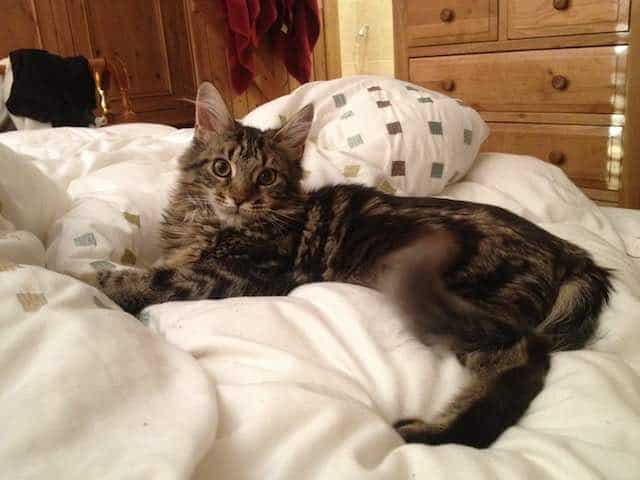
When we brought Pippin home straight from the breeder, he was everything you’d expect from a Maine Coon kitten: bouncy, excitable, affectionate, and completely unable to stay still long enough for a photo.
From the very beginning, it was obvious he was going to be big.

Quick Answer
The first 30 days with a Maine Coon should focus on helping your cat feel safe, settled, and secure in its new home. During this adjustment period, owners should prioritise routine, litter training, feeding consistency, gentle bonding, grooming introduction, safe exploration, and early health checks. The goal is not to rush trust, but to build confidence step by step so your Maine Coon can settle properly and start thriving.
Early Signs Of A Large Adult Maine Coon
Even as a young kitten, Pippin’s ears and paws looked oversized for his body. They always seemed just a little too big for him – a classic early sign in Maine Coons that significant growth is still to come.
As he matured, that early hint proved accurate. Pippin eventually reached 20 lbs as an adult, growing into those paws and ears over time.
Many Maine Coon owners notice this during the first few weeks:
- Disproportionately large paws
- Tall, tufted ears
- Long limbs compared to body size
These traits often signal a slow-growing kitten destined for impressive adult size. Learn more about the Maine Coon Size And Growth Expectations.
Week 1: Skittish, Curious, And Full Of Energy
Pippin was slightly skittish when he first arrived – not fearful, but cautious. New sounds, new smells, and a new home take adjustment, even for confident breeds. That said, his nerves didn’t last long.
Within days, his confidence grew rapidly. He explored everything, bouncing from one place to another and rarely staying still. Taking photos of him during this stage was nearly impossible – he was constantly in motion, launching himself forward with enthusiasm and very little spatial awareness.
This phase often includes:
- Brief nervousness followed by fast confidence growth
- High activity levels
- Clumsy jumps and enthusiastic play
- Accidental scratches caused by excitement, not aggression
Week 2: Bonding Begins (And Preferences Appear)
By the second week, Pippin had clearly decided who his favourite person was. His strongest attachment was always to my husband, who has a calm, grounding presence that animals naturally seem drawn to. Pippin gravitated toward him instinctively – seeking him out, settling near him, and choosing him whenever possible.
That didn’t mean he ignored me, though. Pippin showered both of us with affection, happily sitting on my lap and falling asleep there, but his preference was unmistakable.
Maine Coons often form selective bonds rather than spreading affection evenly, and this usually becomes obvious within the first month.

Week 3: Mischief, Confidence, And Kitten Chaos
This was peak “naughty kitten” territory. By this stage, Pippin was fully confident and actively looking for entertainment – and he often found it alongside our toddler son, Zachary.
If Zachary was emptying the Tupperware cupboard, Pippin was right there beside him, pawing at containers and joining in the mischief. They seemed drawn to each other’s curiosity, forming a quiet partnership in chaos.
Despite his size and energy, Pippin showed an instinctive gentleness around our son. He appeared to understand that Zachary was a baby, learning to stroke him rather than grab, and Pippin tolerated those early, clumsy interactions with remarkable patience.
This is something many Maine Coon owners notice:
- High tolerance with children
- Gentle restraint despite size
- Curiosity rather than irritation
- An apparent awareness of vulnerability
Learn how friendly Maine Coon cats are, and if their temperament makes them trustworthy around young children.

Week 4: Fully Settled And Emotionally Invested
By the end of the first 30 days, Pippin was no longer a “new kitten” – he was part of the household.
He had:
- Established favourite people
- Chosen regular sleeping spots
- Settled into daily routines
- Developed clear preferences and habits
He was affectionate, confident, playful, and deeply integrated into family life. At this point, it became clear that Maine Coons don’t simply adapt to a home; they embed themselves into it.
Common Things New Owners Don’t Expect
If this is your first experience with the breed, understanding what makes a Maine Coon different from other cats helps explain a lot of what you’ll see in those early weeks – the size, the confidence, the sociability, and even the mischief.
If you’re still learning about the breed’s origins, physical traits, and personality, this guide explains it in detail:
👉 What is a Maine Coon?
Knowing the breed standards makes those oversized ears, big paws, and people-focused behaviour feel far less surprising.
Below are some of the key things that new owners (including myself) noticed with our first Maine Coon:
- Oversized features early on: Large ears and paws often signal future growth.
- Confidence grows quickly: Initial skittishness is common, but usually short-lived.
- Mischief is normal: A bored Maine Coon kitten will find entertainment – often in places you’d rather they didn’t!
- Gentle instincts with children: When supervised, many Maine Coons show surprising emotional awareness around babies and toddlers.
How To Take Care Of A Maine Coon
The first 30 days are when good habits are formed – for both you and your kitten. From feeding routines and grooming to sleep patterns and play, proper care in the early weeks sets the foundation for long-term health and behaviour.
If you’re unsure whether you’re doing everything right, this complete care guide walks through daily needs step by step:
👉 How to take care of a Maine Coon
Many common early issues, like excessive energy, clumsiness, or scratching, are simply part of normal development when care is on track.
How To Raise A Maine Coon Kitten
Raising a Maine Coon kitten is slightly different from raising an average cat, especially given how long they take to mature. Socialisation, confidence-building, and gentle boundaries during the first few months matter more than strict training.
If you want to understand how to guide behaviour without suppressing personality, this in-depth kitten guide is worth reading:
👉 How To Raise A Maine Coon Kitten
Those early choices shape whether your Maine Coon grows into a confident, affectionate adult – or a bored, frustrated one.
FAQ: First 30 Days With A Maine Coon
Is it normal for a Maine Coon kitten to be skittish at first?
Yes. Mild caution is common and usually fades quickly as confidence builds.
Do big paws and ears mean a Maine Coon will grow large?
Often, yes. Oversized features in kittens commonly indicate significant adult growth.
Are Maine Coons good with toddlers?
Many are exceptionally tolerant and gentle, especially when properly supervised.
Why is my Maine Coon kitten so naughty?
High intelligence, energy, and curiosity drive mischief – it’s a feature, not a flaw.
When does a Maine Coon start to feel “settled”?
Most feel secure by the end of the first month, with routines forming naturally.
Final Thoughts
The first 30 days with a Maine Coon are fast-moving, slightly chaotic, and incredibly revealing.
Pippin’s oversized paws, boundless energy, growing confidence, and gentle bond with our toddler told us early on exactly the kind of cat he would become. By the end of that first month, he wasn’t just settled – he was family.
Those early weeks pass quickly, but they set the foundation for everything that follows.
