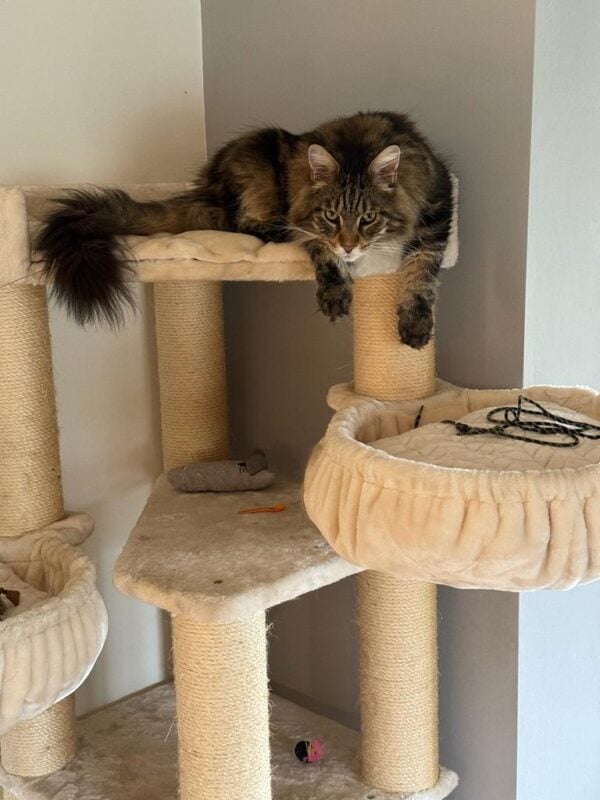
How To Groom A Maine Coon: Simple Weekly Routine For A Tangle-Free Coat
Maine Coon cats are famous for their long, flowing coats and impressive size, but that beautiful fur also comes with a responsibility. Unlike short-haired cats, Maine Coons cannot rely solely on self-grooming to keep their coats in good condition. Without regular brushing and basic hygiene care, their fur can become tangled, greasy, or even painful.
The good news is that keeping a Maine Coon clean does not require complicated routines or professional grooming every few weeks. Most owners can maintain their cat’s coat with a simple, consistent grooming schedule and the right approach.
If you are new to the breed, it helps to first understand the overall grooming requirements in the main Maine Coon Grooming Guide, which explains coat types, tools, and hygiene basics.
Why Maine Coons Need Regular Grooming
Maine Coons have a semi-long coat made up of both a soft undercoat and longer guard hairs. This layered structure is excellent for insulation, especially in cold climates, but it also means the fur can trap dirt, moisture, and debris.
In high-friction areas, such as the belly, armpits, and hind legs, the fur can begin to twist together and form knots. If these knots are left alone, they eventually turn into tight mats that pull on the skin. This can cause discomfort, skin irritation, and even behavioural changes, as the cat becomes sensitive to touch.
Regular grooming prevents these problems before they start. It also gives you the chance to check your cat’s skin, ears, and general condition, which is particularly important as Maine Coons age.
Real-Life Grooming Differences Between Our Three Maine Coons
One of the biggest surprises we discovered after owning three Maine Coons is just how different their coats and personalities can be. Even though they lived in the same home and ate the same food, their grooming needs were completely different.
Pippin: A Coat That Tangled Constantly
Pippin’s fur seemed to tangle almost on its own, particularly when he spent time outside. He loved exploring the courtyard and garden, and the damp UK air made his coat knot up quickly.
As he got older, he developed hip dysplasia and arthritis in his spine. These conditions made grooming very difficult. If we brushed over his lower back or hips, he would sometimes lash out because it hurt, which was upsetting because we were only trying to help him.
In his senior years, he began overgrooming. Small tangles would bother him so much that he would pull at them until he removed his own fur. His coat became a real source of stress during his final months. He was in pain from arthritis, but he still hated being groomed.
At that stage, grooming had to be:
- Short
- Gentle
- A two-person job
One of us would distract or steady him, while the other worked quickly through problem areas. It was never perfect, but it kept him more comfortable.

Mika: Prone To Knots But Manageable
Mika also has a coat that tangles easily, especially around the belly and hind legs. He will lash out if grooming takes too long, but he is much easier to manage than Pippin was.
We discovered that:
- Treats like Dreamies work well as a distraction
- Playing with him before brushing helps
- Confidence and speed make a big difference
If you hesitate, he senses it and becomes defensive. But if you are calm, quick, and consistent, he tolerates grooming surprisingly well.

Bali: The Ideal Grooming Cat
Bali is the complete opposite of the other two. His coat is silky, rarely tangles, and requires far less maintenance. He absolutely loves being brushed and would happily be brushed for ages, enjoying the attention.
Owning all three cats made it clear that coat type and personality vary enormously within the same breed.

How Often Should You Groom A Maine Coon?
Most Maine Coons benefit from brushing at least two to four times per week. Cats with thicker or more tangle-prone coats may need daily brushing, especially during seasonal shedding periods.
Nails should generally be trimmed every two to three weeks (unless you allow your Maine Coon cat to roam freely outside), and ears should be checked weekly for wax or debris. Baths are only needed occasionally, usually every four to eight weeks, or when the coat becomes dirty or greasy.
A simple, consistent routine is far more effective than infrequent, long grooming sessions.
A Simple Weekly Grooming Routine
Keeping a Maine Coon clean does not have to be complicated. A short weekly routine is usually enough to prevent most problems.
- Start by running your hands over your cat’s body. This helps you feel for small tangles or greasy patches. Pay particular attention to the armpits, belly, behind the ears, and the base of the tail, as these areas are the most likely to mat.
- Next, brush the coat gently using a wide-tooth comb or slicker brush. Begin with the neck and shoulders, then move down the back and sides. Leave the belly and hind legs until last, as these are more sensitive areas.
- If you find a small knot, hold the fur near the skin and gently work it apart with your fingers or a comb. Never pull directly on the knot, as this can hurt your cat and make them resistant to future grooming.
- After brushing, check the rear area and paw pads. If needed, use a damp cloth or pet-safe wipe to clean away any dirt or litter.
- Finally, end the session on a positive note. Offer a treat, some praise, or a short play session. This helps your cat associate grooming with positive experiences.
Simple Weekly Grooming Routine
| Task | Frequency | Notes |
|---|---|---|
| Full body brushing | 2-3 times per week | Daily during heavy shedding |
| Check armpits & belly for mats | Weekly | High-risk areas |
| Nail trimming | Every 2-3 weeks | Depends on growth rate |
| Ear check | Weekly | Look for wax or redness |
| Teeth brushing | 2-4 times per week | Prevents dental disease |
| Bath (if needed) | Every few months | Only for grease or contamination |
Do Maine Coons Need Baths?
Most Maine Coons do not need frequent baths. They are generally good at keeping themselves clean. However, baths may be necessary if:
- The coat becomes greasy
- Dirt or debris gets trapped in the fur
- The cat has mobility issues
- There is a medical condition affecting grooming
Many Maine Coons tolerate water better than other breeds, but baths should still be gentle and infrequent.

Signs Your Maine Coon Needs More Grooming
If your cat’s grooming routine needs adjusting, you may notice:
- Small knots are forming in the fur
- Greasy or clumped patches
- Litter sticking to the coat
- Excessive shedding
- Overgrooming or pulling fur
These are early warning signs that grooming frequency should increase.
For more serious matting or coat-removal decisions, see our guides on lion cuts, shaving, and coat regrowth within the main grooming section.
Grooming Tips For Cats That Dislike Brushing
Some Maine Coons simply do not enjoy grooming, especially if they have sensitive areas or past negative experiences. In these cases, shorter sessions work much better than long ones. Grooming for just a few minutes each day is far less stressful than one long weekly session.
Try brushing when your cat is:
- Sleepy
- Relaxed after a meal
- Resting in a favourite spot
Distractions such as treats or toys can also help. With cats like Pippin and Mika, we learned that calm, confident, and consistent grooming was far more effective than hesitant or prolonged attempts.
Common Grooming Mistakes
Many grooming problems start because owners wait too long between brushing sessions. Small knots quickly turn into painful mats.
Other common mistakes include:
- Brushing too aggressively
- Using the wrong tools
- Ignoring sensitive areas
- Forcing long grooming sessions
A gentle routine is always the best approach.
Final Thoughts
Keeping a Maine Coon clean is less about perfection and more about consistency. Some cats, like Bali, have silky coats that rarely tangle. Others, like Pippin and Mika, require much more attention.
Health, age, and coat type all influence how easy or difficult grooming becomes. As Pippin aged and developed joint problems, even gentle brushing became uncomfortable for him. His coat eventually became a source of stress, despite our efforts to keep him comfortable.
The most important thing is to keep sessions short, calm, and regular, adjusting your routine as your Maine Coon ages, sheds, or develops health conditions.
For a full overview of grooming tools, coat types, and hygiene routines, visit the main Maine Coon Grooming and Care guide.