Maine Coon Coat Type & Texture Guide

Maine Coons are famous for their long, luxurious coats, but one of the biggest surprises for new owners is that not all Maine Coon fur behaves the same – my three Maine Coon cats are proof of this!
Two cats can look almost identical in colour and pattern, yet have completely different coat textures, grooming needs, and tolerance to brushing. Some Maine Coons have silky, low-maintenance coats that rarely tangle. Others develop dense, cotton-like fur that mats easily, holds moisture, and requires constant upkeep.
In our own home, we’ve lived with three Maine Coons – Pippin, Mika, and Bali, and each one had an entirely different coat type, despite Mika and Bali being brothers. Their fur differences affected everything from grooming routines and matting risk to how weather, age, and health changed their coats over time.
This guide explains why Maine Coon coat types vary so much, how to identify your cat’s texture early, and what it means for real-world care.
Maine Coon Coat Type Vs Coat Colour
Before going further, it’s important to separate two commonly confused topics:
- Coat colour and pattern (such as tabby, solid, silver, smoke, etc.) are genetic traits.
- Coat type and texture describe how the fur feels, behaves, and ages.
A brown tabby Maine Coon can have:
- Silky fur
- Thick plush fur
- Cotton-like mat-prone fur
Colour does not determine coat behaviour.
This is why two blue tabbies, or even siblings from the same litter, can require completely different grooming routines.


The Three Main Maine Coon Coat Types
Through breeder consensus and long-term ownership experience, most Maine Coon coats can be categorized into three broad texture types.
Many cats sit somewhere between them, but these groupings help explain grooming reality.
1️⃣ Silky, Flowing Coat (Low Maintenance)
This is the coat many people expect when they think of a Maine Coon.
Texture characteristics:
- Smooth and glossy
- Fur separates easily when brushed
- Minimal undercoat density
- Mats are rare
- Water tends to roll off rather than soak in
Cats with this coat type often look effortlessly groomed.
My Experience – Bali
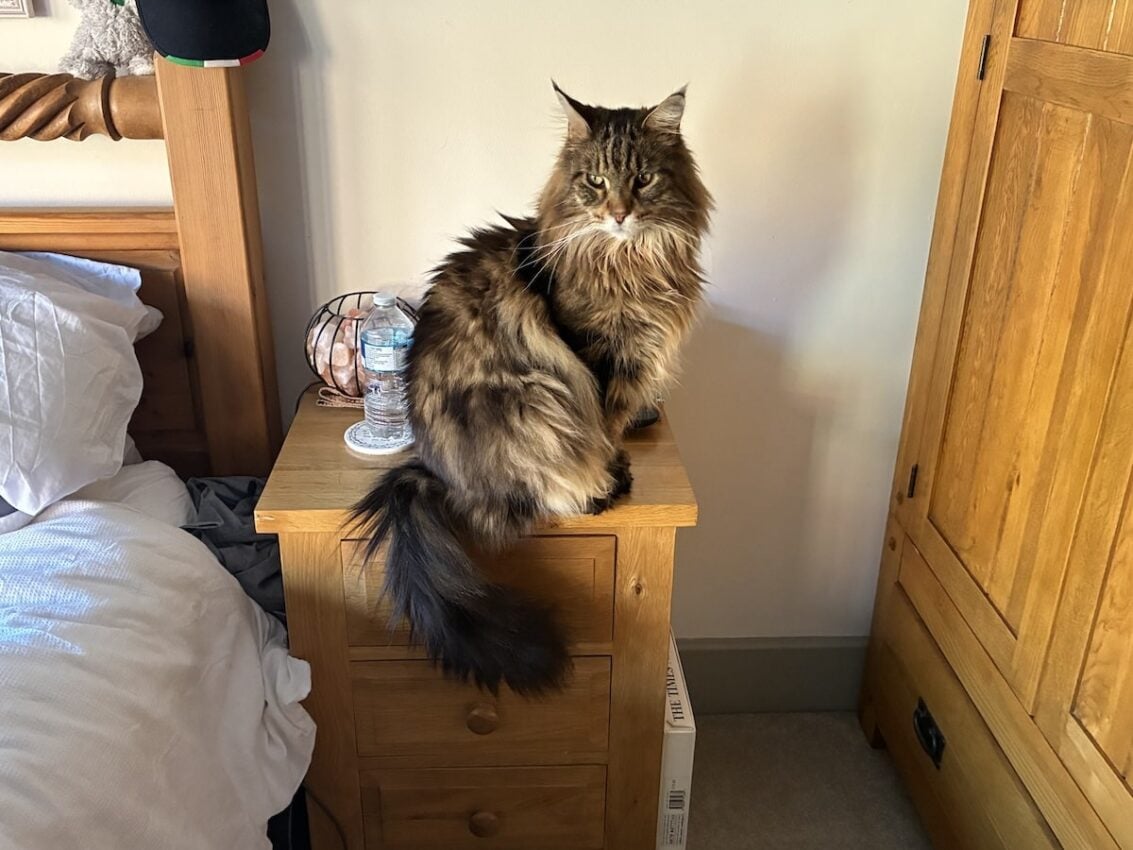
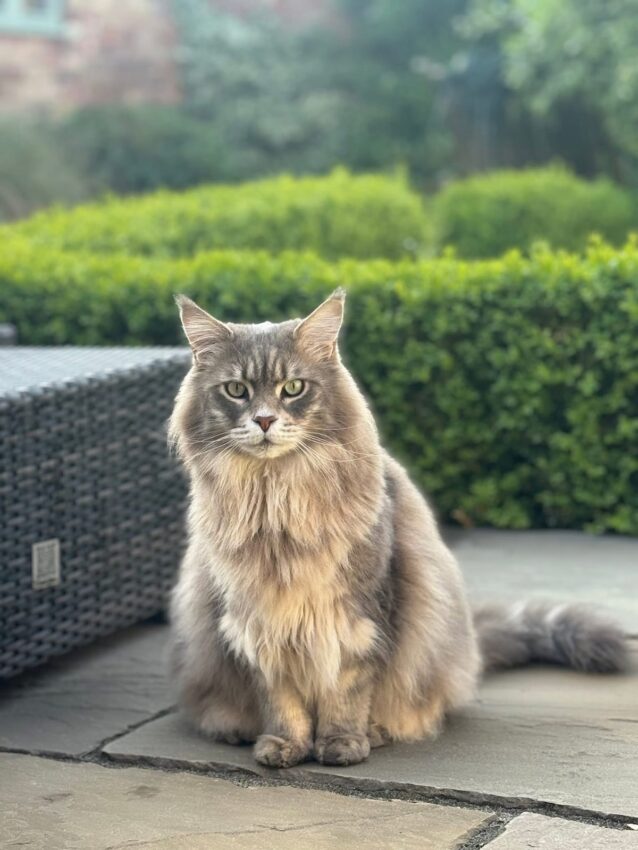
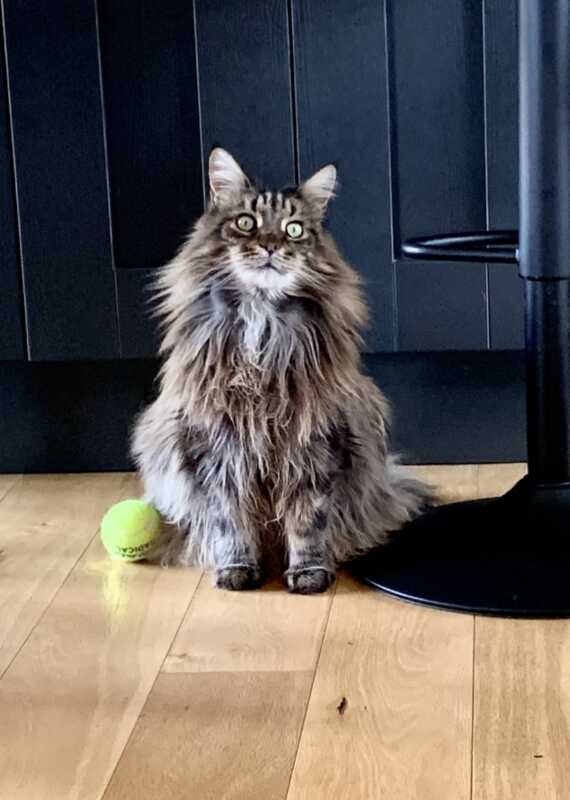
Bali has what we’d describe as a classic silky Maine Coon coat.
- His fur rarely tangles
- The weather makes a minimal difference to his fur
- He can skip brushing for several days without matting
- His coat never feels greasy or heavy
Even during seasonal shedding, his fur remains manageable. He’s what many owners would call a low-maintenance Maine Coon, despite having full-length fur.
If you’re not sure which cat brushes you need for your long-haired beauty, make sure you read this guide: Best Brushes for Maine Coons.
2️⃣ Thick, Plush Coat (Dense & Cuddly)
This coat type feels incredible – soft, deep, and cushion-like, but it comes with trade-offs.
Texture characteristics:
- Extremely thick undercoat
- Plush, fluffy feel
- Fur compresses when sat on
- Tangles form underneath the surface
- Mats often start near the skin
This fur traps warmth exceptionally well, which is why Maine Coons with this coat often love cold weather.
However, it also traps:
- Moisture
- Loose hair
- Static
- Debris
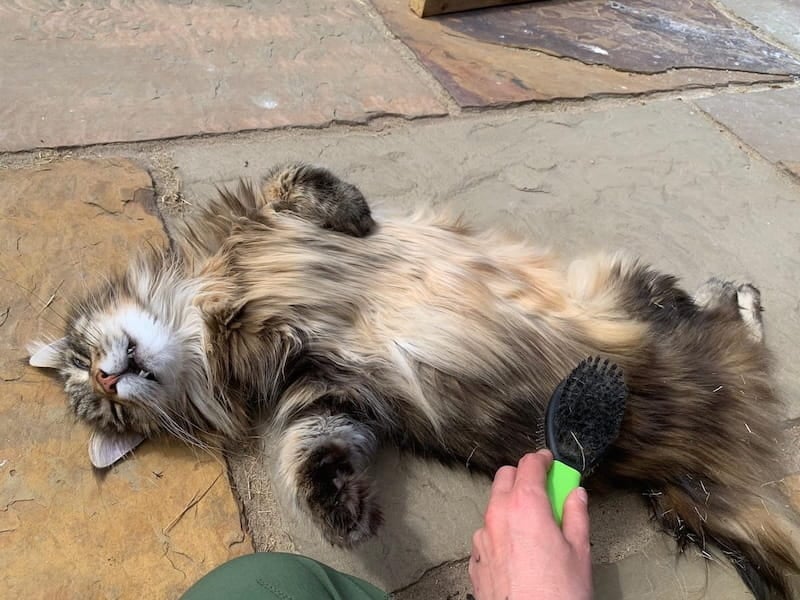
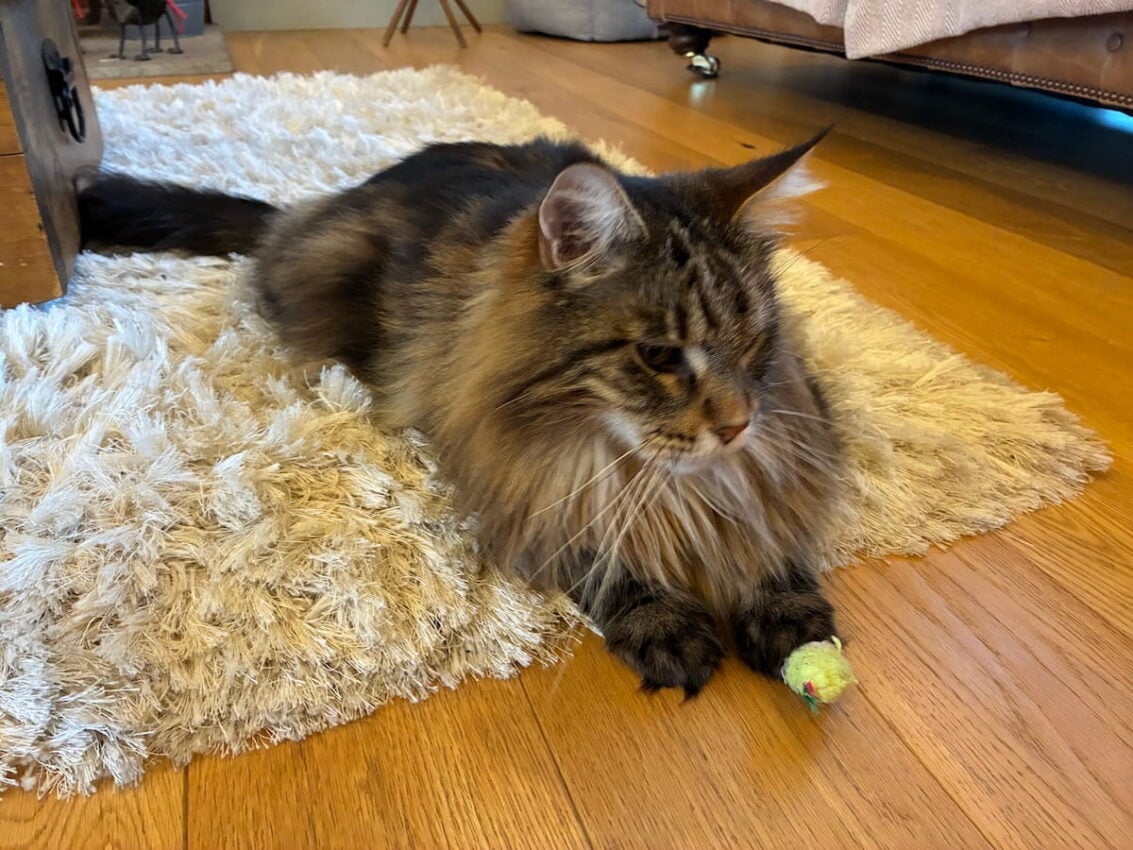
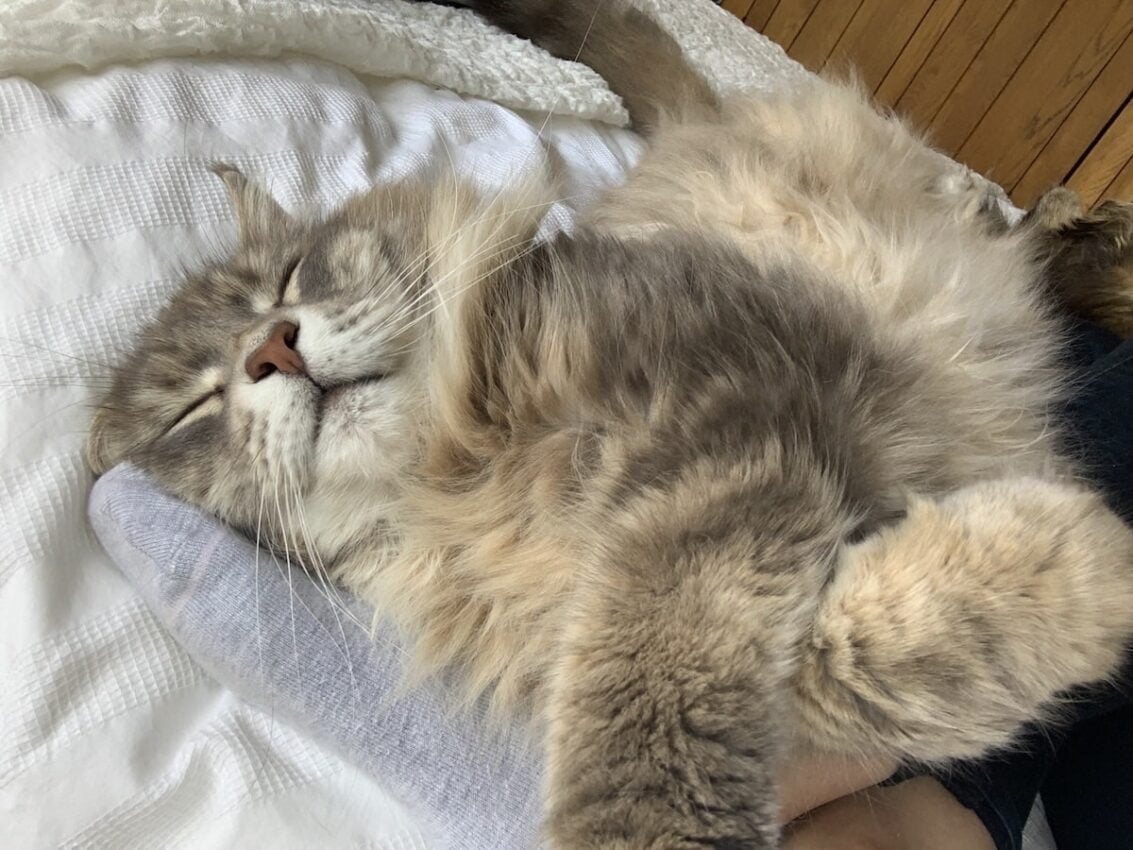
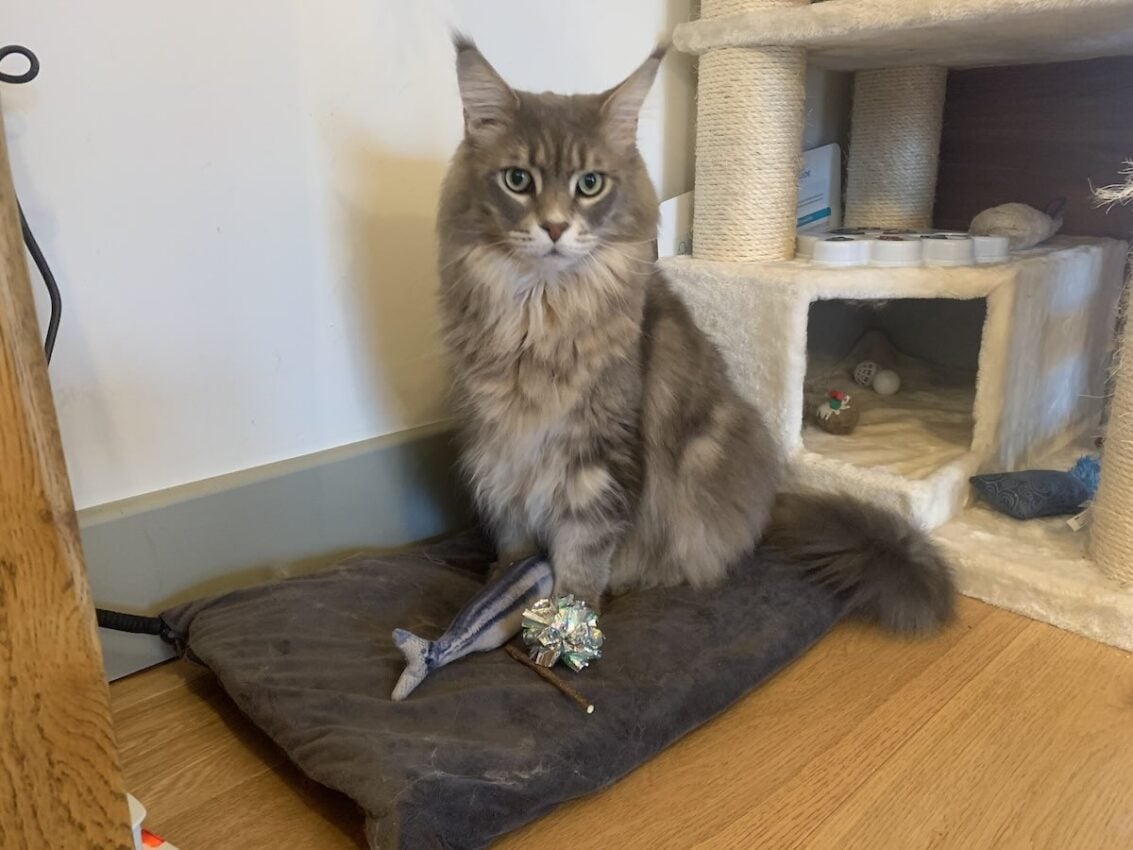
My Experience – Mika
Mika’s coat is thick, plump, and irresistibly soft. It’s the kind of fur you desperately want to cuddle, yet ironically, Mika hates being held.
His coat:
- Mats easily around his rear end
- Compresses where he sits
- Forms dense tangles underneath cushions and thighs
- Requires very regular grooming
Even missing a few brushing sessions can result in compacted knots forming close to the skin.
Despite being Bali’s brother, their coats behave nothing alike.
3️⃣ Cotton-Like Or Mat-Prone Coat (High Maintenance)
This is the most challenging Maine Coon coat type.
Texture characteristics:
- Softer but less slippery hair shafts
- Fur clumps together easily
- Absorbs moisture from the air and rain
- Mats form rapidly
- Brushing often feels ineffective
Owners often say:
“He still looks like he needs brushing… even after brushing”
This coat type is especially affected by humidity and damp weather.
My Experience – Pippin
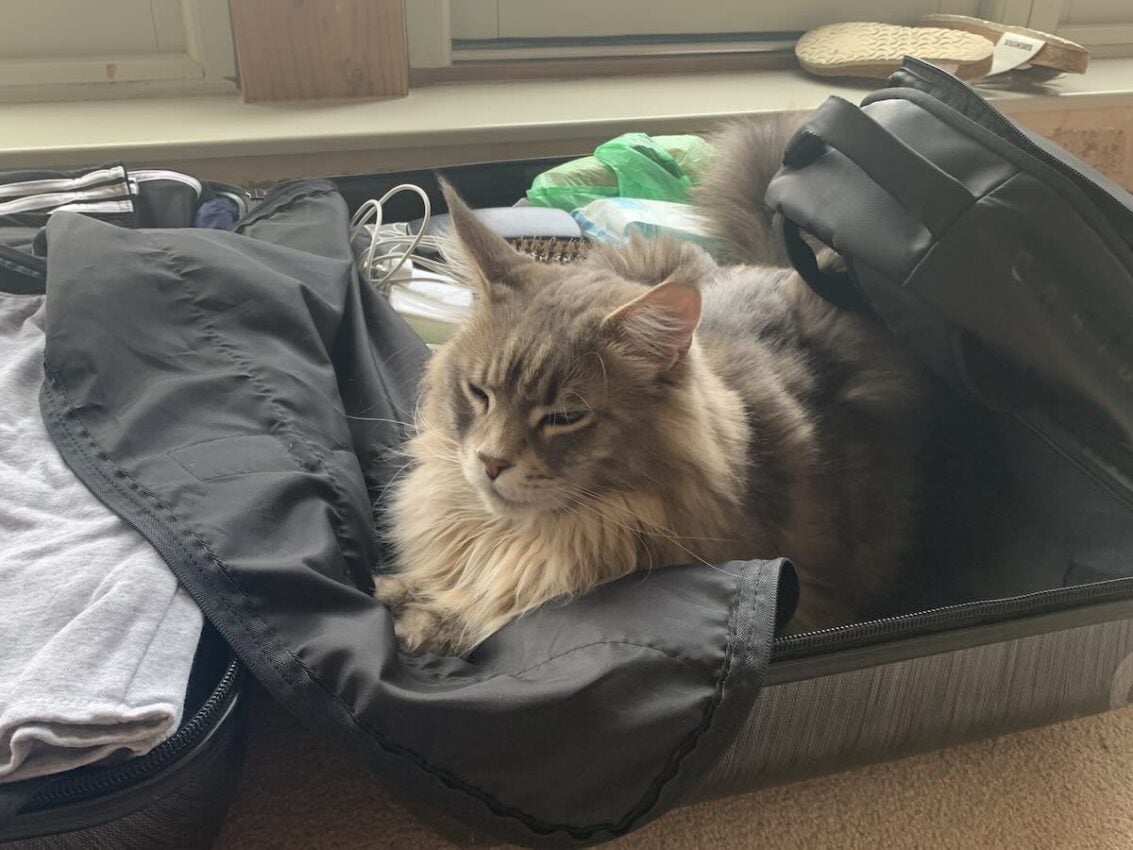
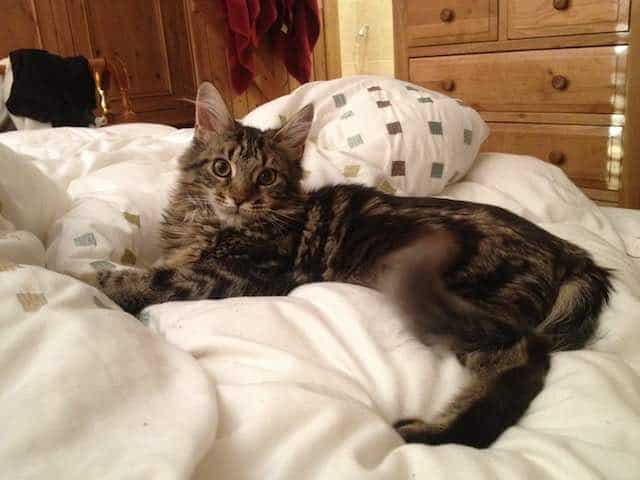
Pippin’s coat was naturally prone to matting from a young age.
As he aged:
- His rear and ruff matted more easily
- Damp UK weather made his coat dramatically worse
- Even light rain caused tangling
- His fur often looked messy within hours
Brushing his backend became extremely difficult, and as he aged, he grew aggressive when we tried to groom his sensitive areas – not from temperament, but discomfort since the mats seemed to appear from nowhere … EVERY SINGLE DAY, and formed close to his skin.
Pippin often pulled at the mats himself, too, which in turn made the areas to be brushed more painful.
We were trying to help him, but he didn’t understand.
Later in life, arthritis and mild hip dysplasia made grooming even more unpleasant for him.
When you have a cat prone to matting and suffering from various health issues, we found the best approach was to make the process quick and packed full of Dreamies! While not all mats were removed during the minute sessions, a few were, and keeping the sessions short and very regular meant we could keep on top of the never-ending knots and tangles.


How Weather Affects Maine Coon Fur
UK weather plays a far bigger role in coat condition than many owners expect.
Damp air can:
- Swell the hair shaft
- Increase friction between hairs
- Collapse fluffy undercoat
- Accelerate mat formation
In our home:
- Pippin’s coat deteriorated quickly in damp weather
- Mika’s coat still tangles when the humidity rises
- Bali’s silky fur is barely affected
This explains why some owners struggle year-round while others barely notice seasonal change.
Why Two Maine Coons Can Have Completely Different Fur
Even siblings can inherit different combinations of:
- Undercoat density genes
- Hair shaft texture genes
- Oil production levels
- Guard hair length
Mika and Bali are biological brothers – yet:
| Trait | Mika | Bali |
|---|---|---|
| Undercoat | Extremely thick | Light |
| Texture | Plush | Silky |
| Matting | Frequent | Rare |
| Weather sensitivity | High | Minimal |
| Grooming needs | High | Low |
Genetics stack in layers, not as single traits, which is why coat behaviour varies so dramatically.
For a detailed overview of how much shedding in Maine Coon cats is realistic, read my guide: Do Maine Coons Shed a Lot?


How Coat Type Changes With Age & Health
Many owners notice their Maine Coon’s fur changing later in life… this is common.
Health-Related Coat Changes May Include:
- Oiliness at the base of the tail
- Greasy ruff area
- Dull or clumped fur
- Reduced self-grooming
Learn more about the realities of dealing with a Maine Coon with oily fur in my guide – Do Maine Coons Have Oily Fur?.
My Experience – Pippin
As Pippin aged and developed underlying health issues, his coat changed noticeably.
- Fur became oily around his ruff and backend
- He struggled to groom himself properly
- Brushing alone no longer helped
- Bathing was not tolerated
We found cat-safe dry shampoo was one of the best solutions to keep his coat comfortable without causing stress.
Even after brushing, he often still looked untidy – a classic sign of coat texture combined with health decline.
For more information about how to handle knots and tangles, read my guide Maine Coon Matted Fur.


What Are Mats – And Why They Form So Easily
Mats are not simply tangled fur. They are compact clusters of loose undercoat that twist tightly together near the skin.
In Maine Coons, mats form when:
- The shed undercoat becomes trapped
- Moisture increases friction
- Dense fur compresses from sitting or sleeping
Once a mat begins forming, surface brushing may make the coat look neat while the knot underneath continues to tighten. This explains why many owners feel their Maine Coon “still looks messy” even after grooming – the problem is often hidden beneath the top layer.
Cats with cotton-like or plush coats are significantly more prone to matting than silky-coated Maine Coons.
Which Areas Tangle First?
Regardless of coat type, Maine Coons most commonly mat in the same areas:
- Behind the ears
- Under the armpits
- Along the belly
- Around the rear end
- Inner thighs
- Base of the tail
Cats with thick or cotton-type coats are especially vulnerable in these zones.
What Your Cat’s Coat Type Means for Grooming
| Coat Type | Thick/Plush | Mat Risk | Difficulty |
|---|---|---|---|
| Silky | 1-2× weekly | Low | Easy |
| Thick / plush | 3-4× weekly | Moderate-High | Medium |
| Cotton / mat-prone | Daily | Very high | High |
Understanding coat texture early prevents frustration and prevents owners from blaming themselves when matting keeps returning. Sometimes, it’s simply the coat.
Maine Coon Coat Structure (Visual Explanation)
                 ┌────────────────────────┐
                 │     Guard Hairs         │
                 │  Long, coarse, shiny    │
                 │  Repel water & dirt     │
                 └─────────▲──────────────┘
                           │
                 ┌─────────┴──────────────┐
                 │     Awn Hairs           │
                 │  Medium length hairs    │
                 │  Provide insulation     │
                 │  Affect coat texture    │
                 └─────────▲──────────────┘
                           │
                 ┌─────────┴──────────────┐
                 │     Undercoat           │
                 │  Soft, dense, fluffy    │
                 │  Traps warmth            │
                 │  Causes matting          │
                 └────────────────────────┘
How these layers affect real-life coat behaviour
- Guard hairs determine shine and weather resistance
- Awn hairs influence softness and flow
- Undercoat density determines matting risk
A Maine Coon with:
- Fewer undercoat hairs → Silky, flowing coat
- Dense undercoat → Plush or cotton-like coat
This explains why:
- Bali’s fur separates easily
- Mika’s fur compresses and tangles underneath
- Pippin’s fur absorbed moisture and matted rapidly
Does Maine Coon Fur Grow Back After Shaving Or Mat Removal?”
Yes – Maine Coon fur does grow back, but the process is slow.
On average:
- Light trims regrow within 8-12 weeks
- Shaved areas may take 6-12 months
- Full coat recovery can take up to 18 months
Regrowth speed depends on:
- Age
- Nutrition
- Health status
- Coat type
Older cats and those with underlying conditions often regrow fur more slowly, and regrowth may initially appear thinner or uneven.
This is normal and usually improves over time.
Why Maine Coon Coats Feel So Different to Touch
Not all cat fur has the same hair shaft structure.
In Maine Coons, the shape of the individual hair shaft plays a major role in texture.
- Round hair shafts slide easily → Silky fur
- Flattened or irregular shafts catch → Mat-prone fur
Cats with flattened hair shafts experience:
- Increased friction
- Hairs gripping together
- Faster knot formation
This is why some Maine Coons mat even when brushed daily. It is not poor grooming; it is biology.
Seasonal Coat Changes: Why Fur Feels Worse At Certain Times Of Year
Maine Coons undergo partial seasonal coat cycling, even indoors.
During spring and autumn:
- Undercoat loosens
- Dead hair becomes trapped
- Mats form faster
- Fur may appear greasy or dull
This is often when owners feel their grooming routine has “suddenly stopped working”. In reality, the coat is shedding internally before releasing.
Thick-coated cats like Mika are especially affected during these transitions.
Why Rear-End Matting Is So Common
The rear end is the most problematic grooming area for nearly all Maine Coons.
Reasons include:
- Friction when sitting
- Moisture retention
- Toilet residue
- Limited self-grooming reach
- Arthritis or stiffness with age
In Pippin’s case, arthritis and mild hip dysplasia made it physically uncomfortable for him to groom properly, accelerating mat formation. This issue is extremely common in senior Maine Coons.
Shedding Vs Hair Loss: Knowing the Difference
Normal shedding involves loose fur falling evenly across the body.
Hair loss, by contrast, may appear as:
- Thinning patches
- Bald spots
- Broken or brittle fur
- Skin irritation
Common causes include:
- Stress
- Allergies
- Parasites
- Hormonal disorders
- Over-grooming
If your cats hair loss appears sudden, patchy, or accompanied by redness or scabs, it is not normal shedding and requires veterinary investigation.
Seasonal Shedding In Maine Coons
Maine Coons are moderate to heavy seasonal shedders.
Most shedding occurs:
- In spring as winter coat drops
- In autumn as undercoat thickens
Indoor cats may shed year-round due to artificial lighting and heating, which disrupt natural coat cycles.
Heavy shedding does not indicate poor health unless accompanied by hair loss, skin changes or lethargy.
Oily Fur: When Coat Texture Meets Health
Some Maine Coons develop oily or greasy fur, most commonly around the ruff, spine, and base of the tail. This occurs when sebaceous glands produce excess oil or when a cat is unable to groom effectively.
Oily fur is often associated with:
- Aging
- Arthritis or reduced mobility
- Dental pain
- Heart disease
- Hormonal imbalance
- Reduced grooming ability
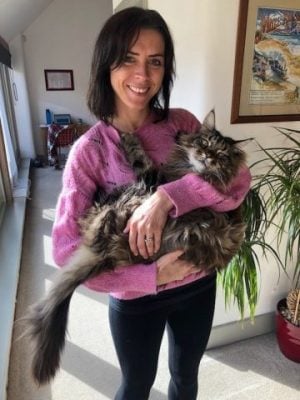
In Pippin’s case, his coat became noticeably greasy as his health declined, particularly around the backend and chest area.
Sudden changes in coat oiliness should always be discussed with a veterinarian, as fur condition is often an early indicator of internal health problems.
Oily fur most often appears:
- Around the ruff
- At the base of the tail
- Along the spine
- Near the backend
Pippin’s greasy coat development later in life aligned closely with his suspected hypertrophic cardiomyopathy and joint disease.
This is why sudden coat changes should never be dismissed as “just fur”.

Dandruff And Dry Skin In Maine Coons
Dandruff in Maine Coons often appears as white flakes on dark fur and is usually linked to dry skin rather than grooming failure.
Common contributing factors include:
- Low humidity
- Winter heating
- Poor hydration
- Diet imbalance
- Reduced grooming ability
Cats with thick coats are more likely to show dandruff simply because flakes become trapped in the fur.
Improving hydration, diet quality, and gentle brushing usually resolves mild dandruff without medical treatment.
Why Brushing Tolerance Varies By Coat Type
Coat texture directly affects brushing comfort.
- Silky fur glides → Brushing feels neutral or pleasant
- Dense fur pulls → Brushing becomes painful
- Matted fur tugs skin → Defensive behaviour appears
This explains why:
- Bali enjoys brushing
- Mika tolerates short sessions only
- Pippin reacted aggressively when his backend was brushed
Behavioural resistance is often physical discomfort, not temperament.
Why Some Maine Coons Have Curly Or Crimped Fur
Many Maine Coon owners notice that their cat’s belly fur appears curly, crimped, or slightly wavy – even when the rest of the coat looks straight.
This is completely normal and is caused by differences in hair shaft thickness and undercoat density. Belly fur tends to be:
- Finer in texture
- Shorter in length
- More densely packed
Because these hairs bend more easily, they can appear curly or rippled, especially after sleeping or grooming.
Curly belly fur is not a Rex gene, nor does it indicate a mixed breed. It is simply a natural variation in coat texture and is especially common in Maine Coons with thick or plush undercoats like Mika.
This area is also one of the first places mats form, as friction and warmth cause the fine hairs to twist together.
There Is No “Perfect” Maine Coon Coat
Each coat type has advantages:
- Silky coats are easy to maintain
- Thick coats are incredibly luxurious
- Cotton coats feel soft and warm
But each comes with challenges, too.
Our three Maine Coons proved one thing very clearly:
You cannot predict coat texture by colour, size or lineage alone.
Living with different coat types has taught us that grooming success isn’t about brushing harder; it’s about understanding the fur you’re working with.
Once you know your Maine Coon’s texture, everything becomes easier. You can work out:
- The tools best suited to your cat
- How often do they need to be groomed
- What expectations are realistic
For a more detailed look at the best ways to groom your Maine Coon, take a look at my guide Maine Coon Grooming and Care. You might also be interested in reading my Maine Coon Colors & Patterns Guide.
