Black Spots On Cat Gums: Normal Or A Vet Concern?
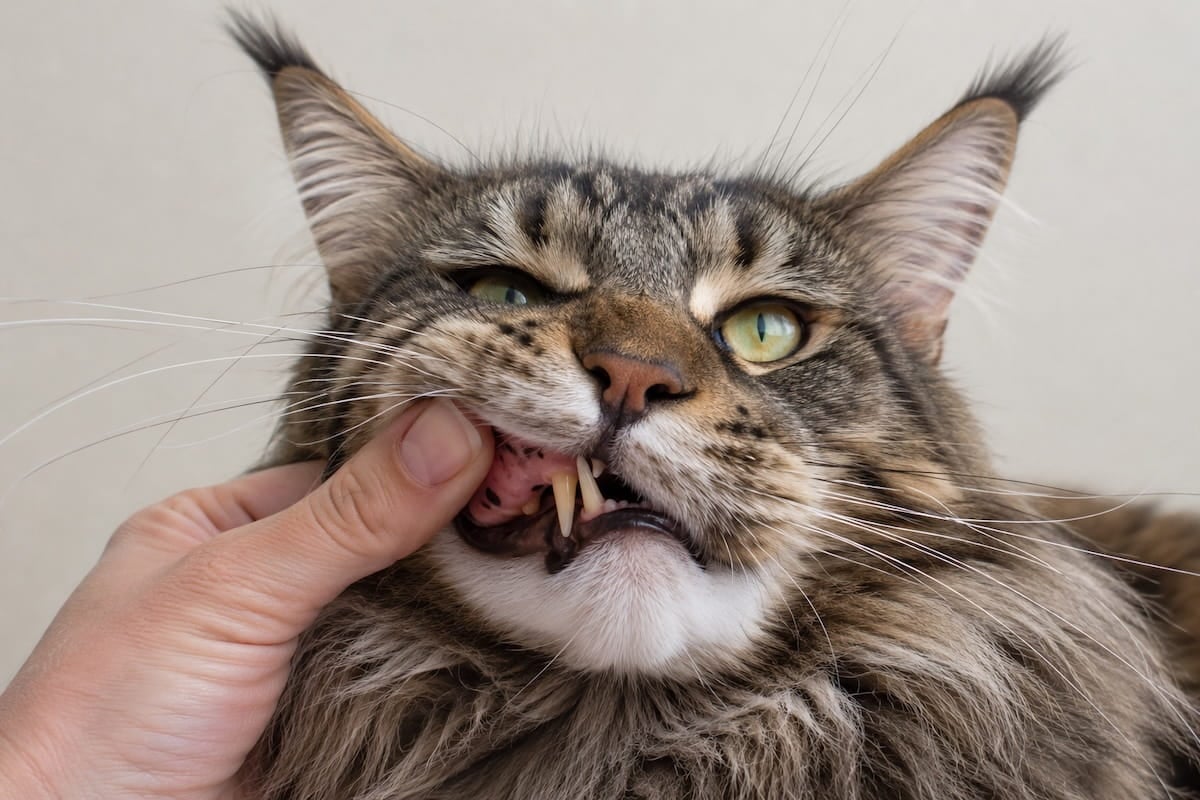
Finding a black spot on your cat’s gums can be worrying, particularly if you have never noticed it before. The reassuring news is that flat brown or black spots inside a cat’s mouth are often harmless pigmentation called lentigo, particularly in orange cats.
However, not every dark mark on the gums is lentigo. The most useful clues are not simply the color of the spot, but whether it is flat or raised, smooth or ulcerated, stable or rapidly changing, and whether your cat is showing signs of mouth pain.
Quick Answer
Black spots on a cat’s gums are often caused by lentigo, a benign pigmentation condition that creates flat brown or black freckle-like spots on the gums, lips, nose, and around the eyes. Genuine lentigo is harmless, does not require treatment, and is not considered precancerous.
A veterinarian should examine a dark area if it is:
Raised or thickened
Growing rapidly
Ulcerated
Bleeding
Painful
Surrounded by red or swollen tissue
Accompanied by drooling or bad breath
Affecting your cat’s appetite
Associated with facial or jaw swelling
If you cannot tell whether a new spot is simple pigmentation, ask your veterinarian to examine it rather than trying to diagnose it from appearance alone.
Black Spots On Cat Gums At A Glance
| What You Notice | Possible Explanation | What To Do |
|---|---|---|
| Flat, smooth brown or black spot | Lentigo or normal pigmentation | Usually harmless; monitor |
| Several flat freckles on gums, lips, or nose | Lentigo | Usually no treatment needed |
| Dark buildup attached to a tooth | Tartar or dental staining | Check dental health |
| Red, swollen, or bleeding gums | Gingivitis or oral inflammation | Veterinary dental examination |
| Raised or thickened lesion | Abnormal tissue requiring investigation | Veterinary examination |
| Ulcerated or bleeding lesion | Oral disease, including possible tumor | Prompt veterinary examination |
| Lesion plus drooling or trouble eating | Painful oral disease | Prompt veterinary examination |
| Lesion plus facial swelling or weight loss | Potentially serious oral disease | Veterinary examination as soon as possible |
What Is Lentigo In Cats?
Lentigo is a benign pigmentation condition that causes small dark areas, known as lentigines, to develop on the skin or mucous membranes. The MSD Veterinary Manual describes feline lentigo as the development of pigmented macules without other clinical signs. A macule is a flat area of altered color rather than a lump.
Lentigo can appear on a cat’s:
- Gums
- Lips
- Nose
- Eyelid margins
The spots may be brown, dark brown, or almost black.
Most importantly, feline lentigines are not precancerous and have no medical consequences. In other words, genuine lentigo is pigmentation rather than a tumor.
What Does Lentigo Look Like?
A typical lentigo spot is:
- Flat
- Smooth
- Brown or black
- Painless
- Not ulcerated
- Not swollen
- Not bleeding
- Surrounded by normal-looking tissue
One of the most helpful clues is texture. A lentigo spot should look as though the pigment is within the gum itself rather than like a lump growing from the tissue. Veterinary images of feline oral macules show flat areas of pigmentation without surrounding inflammation. Lentigo spots may also gradually become larger or more numerous as a cat ages. That is very different from a lesion that suddenly becomes raised, swollen, ulcerated, or rapidly enlarges.
Which Cats Get Lentigo?
Lentigo is particularly associated with orange cats and cats with orange facial coloring. This is why owners of ginger cats sometimes notice dark freckles appearing on the lips, nose, or inside the mouth. Similar pigmentation can occur in cats that have orange within their coat pattern.
Maine Coons can develop lentigo too, particularly red or orange Maine Coons. Coat color is more relevant to classic feline lentigo than breed.
Lentigo is not contagious, and your cat cannot pass it to another animal.
Lentigo Vs A Concerning Gum Lesion
This is the most important distinction in this article.
More Consistent With Lentigo
A spot is more reassuring when it is:
- Completely flat
- Smooth
- Clearly pigmented
- Not bleeding
- Not ulcerated
- Not surrounded by inflammation
- Not causing apparent pain
- Not affecting eating or behavior
Needs Veterinary Assessment
Arrange an examination if you notice:
- A raised lump
- Thickened tissue
- An irregular or rough surface
- Ulceration
- Bleeding
- Rapid enlargement
- Red or swollen surrounding gums
- Persistent bad breath
- Drooling
- Difficulty chewing
- Dropping food
- Reduced appetite
- Pawing at the mouth
- Loose teeth
- Weight loss
- Facial or jaw swelling
A lesion does not have to be black to be serious, and a black spot is not automatically cancer. Color is only one clue. The shape, surface, surrounding tissue, rate of change, and your cat’s symptoms provide much more useful information.
Other Causes Of Dark Areas In A Cat’s Mouth
If a mark does not look like typical lentigo, there are several other possibilities.
1. Normal Pigmentation
Some cats naturally have darker areas inside their mouths. Pigmentation that has been present for a long time, remains flat, and causes no symptoms may simply be part of that cat’s normal coloring.
2. Tartar Or Dental Buildup
Check whether the dark area is actually on the gum or attached to a tooth. Plaque can mineralize into hard tartar, also called calculus, on the teeth.
Dental disease may also cause:
- Bad breath
- Red gums
- Bleeding
- Pain
- Difficulty eating
A dark deposit attached to a tooth is therefore a different problem from a flat patch of pigment within the gum.
3. Gingivitis Or Stomatitis
Gingivitis causes inflammation along the gumline and typically produces redness and swelling rather than neat black freckles. The gums may also bleed. Stomatitis is more extensive inflammation within the mouth and can be extremely painful.
Affected cats may:
- Eat less
- Struggle to eat
- Drool
- Lose weight
- Stop grooming normally
- Develop bad breath
A dark-red or unusual area within inflamed gum tissue should therefore not automatically be assumed to be lentigo.
4. Trauma
An injury inside the mouth can sometimes look dark because of damaged tissue, bruising, dried blood, or a healing sore. If you see obvious injury, persistent bleeding, swelling, or signs of pain, have your veterinarian examine the mouth.
5. An Oral Growth
Cats can develop both benign and malignant growths in the mouth. An abnormal growth may appear as:
- A lump
- Thickened tissue
- Swelling
- An ulcer
- An irregular mass
- Tissue that bleeds easily
Appearance alone cannot reliably identify what type of growth is present.
Can A Black Spot On A Cat’s Gum Be Cancer?
An abnormal oral lesion can be cancerous, but black does not automatically mean melanoma.
Squamous Cell Carcinoma
Squamous cell carcinoma (SCC) is the most common malignant oral tumor in cats. Cornell University’s College of Veterinary Medicine reports that SCC accounts for the majority of feline oral tumors.
Warning signs can include:
- Reduced appetite
- Difficulty eating
- Drooling
- Bad breath
- Facial or jaw swelling
- Weight loss
- Loose teeth
- Oral ulceration
These tumors can invade nearby tissues and the jaw bones. An abnormal gum lesion accompanied by these symptoms therefore deserves veterinary attention.
For more information about feline oral cancer, read my Maine Coon Mouth Cancer guide.
What About Oral Melanoma?
Melanoma understandably worries owners because it is associated with pigment. However, oral melanoma is much less commonly reported in cats than squamous cell carcinoma. Importantly, color cannot reliably identify an oral tumor. Abnormal oral growths may be pigmented or non-pigmented.
The useful rule is therefore not: Black spot = cancer. It is: Abnormal, raised, changing, ulcerated, bleeding, or symptomatic lesion = veterinary examination.
When Should I Take My Cat To The Vet?
If a flat freckle has been present for years, looks completely normal, and your veterinarian has previously identified it as pigmentation, there is usually no reason for an emergency appointment. A new or uncertain lesion, however, is worth mentioning to your veterinarian.
Arrange an examination more promptly if your cat has:
- A raised or rapidly changing lesion
- Bleeding
- Ulceration
- Swelling
- Persistent bad breath
- Excessive drooling
- Trouble eating
- Food falling from the mouth
- Pawing at the mouth
- Reduced appetite
- Weight loss
- A loose tooth
- Facial or jaw swelling
- Obvious mouth pain
Cats can hide oral pain remarkably well. Do not wait until a cat completely stops eating before seeking veterinary advice.
How Will A Vet Check A Black Gum Spot?
Your veterinarian will usually examine the:
- Position of the lesion
- Size
- Shape
- Color
- Surface
- Surrounding gum tissue
- Nearby teeth
- Rest of the mouth
- Face and jaw
A classic flat lentigo spot may be recognizable during a routine oral examination. If a lesion is raised, ulcerated, growing, or otherwise suspicious, additional investigation may be needed. Depending on what your veterinarian finds, this could include:
- A more thorough oral examination under sedation or anesthesia
- Dental X-rays
- Other imaging
- Tissue sampling
- Biopsy
Biopsy allows abnormal tissue to be examined microscopically and may be required to identify an oral tumor accurately.
Does Lentigo Need Treatment?
Confirmed lentigo does not require treatment. There is no benefit in trying to:
- Scrub the pigment away
- Apply creams
- Bleach the area
- Change your cat’s diet
- Surgically remove harmless freckles
The pigmentation itself does not hurt your cat.
Monitoring A Black Gum Spot
If you notice a new flat spot that appears consistent with pigmentation, taking a photograph can be useful. Try to photograph it in good light so that you have a record of:
- Size
- Shape
- Color
- Surrounding tissue
You can then see whether it genuinely changes over time rather than relying on memory. Lentigo spots can gradually expand, and additional freckles may appear as cats age. That does not mean lentigo is spreading like an infection or turning into cancer. However, do not assume that every future lump, ulcer, or mouth lesion must be lentigo simply because your cat already has harmless pigmentation.
FAQ
Why Does My Orange Cat Have Black Spots On Their Gums?
Orange cats commonly develop benign pigmentation called lentigo. The spots are typically flat, brown or black, painless, and may also occur on the lips, nose, and eyelids.
Are Black Gums Normal In Cats?
Some cats naturally have dark oral pigmentation. Flat pigment can be perfectly normal. A raised, bleeding, ulcerated, painful, or rapidly changing area should be examined by a veterinarian.
Can Lentigo Turn Into Cancer?
Feline lentigines are not considered precancerous. A cat with lentigo can still develop an unrelated oral disease; however, do not dismiss a new abnormal lump or ulcer simply because your cat already has freckles.
Do Lentigo Spots Get Bigger?
They can gradually become larger, and additional spots may appear as a cat ages. Slowly expanding flat pigmentation is different from a rapidly enlarging or raised mass.
Should I Photograph A Black Spot On My Cat’s Gums?
A clear photograph can help you notice genuine changes in size, shape, surface, or surrounding tissue. However, a photograph cannot replace a veterinary examination if the lesion looks abnormal or your cat has other symptoms.
Conclusion
A black spot on your cat’s gums is often harmless, particularly when it is a flat, smooth area of pigmentation in an orange cat. Lentigo is essentially feline freckling. It does not require treatment and does not turn into cancer. The important thing is to look beyond color.
A flat, smooth, painless spot surrounded by healthy tissue is very different from a raised, ulcerated, bleeding, rapidly changing lesion accompanied by drooling, bad breath, difficulty eating, weight loss, or swelling.
If you are unsure what you are looking at, have your veterinarian examine it. With mouth problems, it is better to investigate an unusual lesion while your cat is still eating and behaving normally than to wait until obvious pain develops.