Why Are Maine Coons So Expensive? The Real Cost Of Ethical Breeding
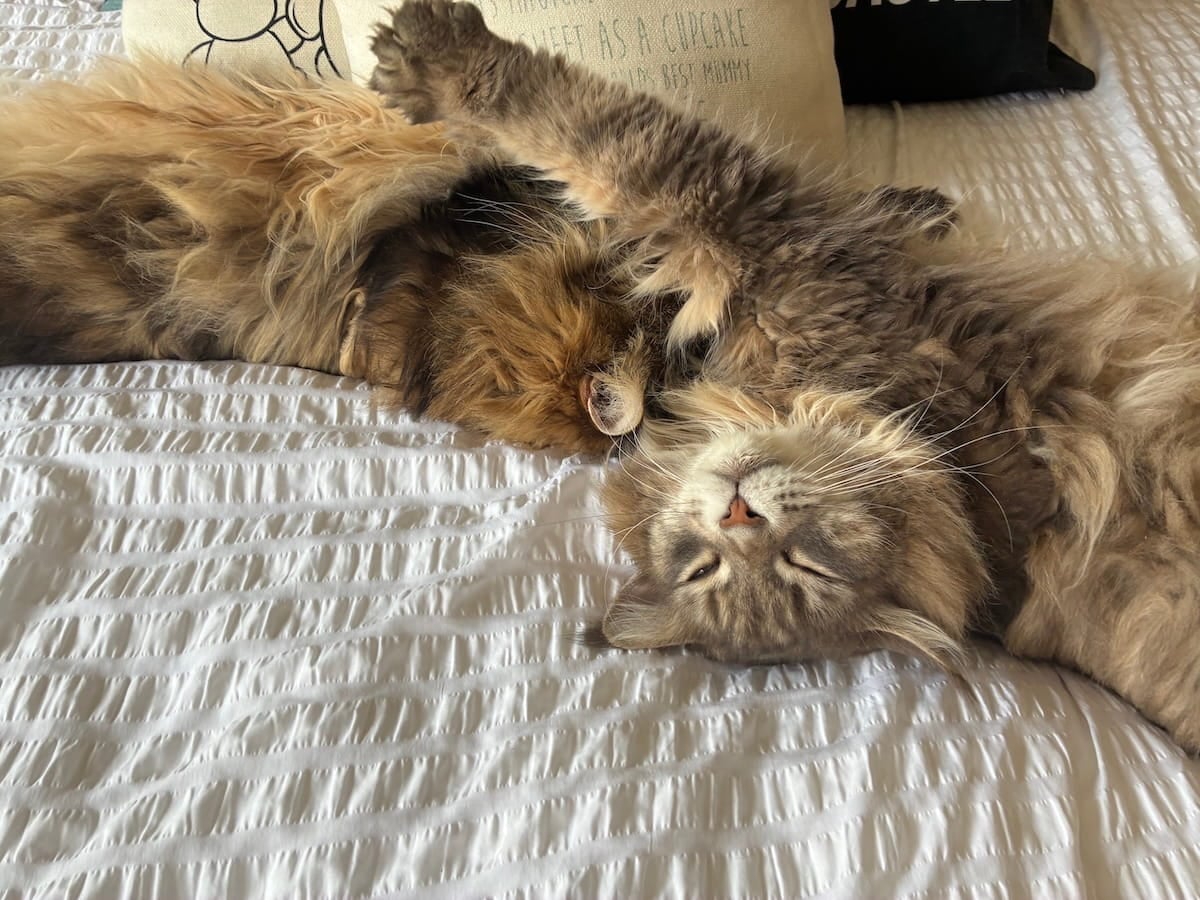
Maine Coons are expensive because responsibly breeding them requires far more than pairing two pedigree cats and selling the kittens. Long before a litter is born, an ethical breeder may have invested in registered breeding cats, genetic testing, heart scans, hip screening, stud fees, veterinary care, specialist equipment, and years of work developing healthy bloodlines.
Once a queen becomes pregnant, the costs continue. She needs appropriate nutrition and monitoring, while the breeder must prepare for possible complications during labor. After birth, the kittens require the following before they are ready to leave:
- Food
- Veterinary examinations
- Vaccinations
- Registration
- Litter training
- Daily handling
- Careful socialization
The purchase price is therefore not simply payment for one kitten. It helps cover the entire breeding program that produced that kitten.
Our own Maine Coons did not come to us at typical breeder prices. We were extremely lucky to adopt our two Maine Coon boys, Bali and Mika, together for £450 in total. Pippin also cost less than the prices more commonly charged because he came from a small hobby breeder in the UK who did not use the same pricing structure as many established catteries. Their stories show that the amount paid does not always reflect the cat’s quality, personality, or importance to its family.
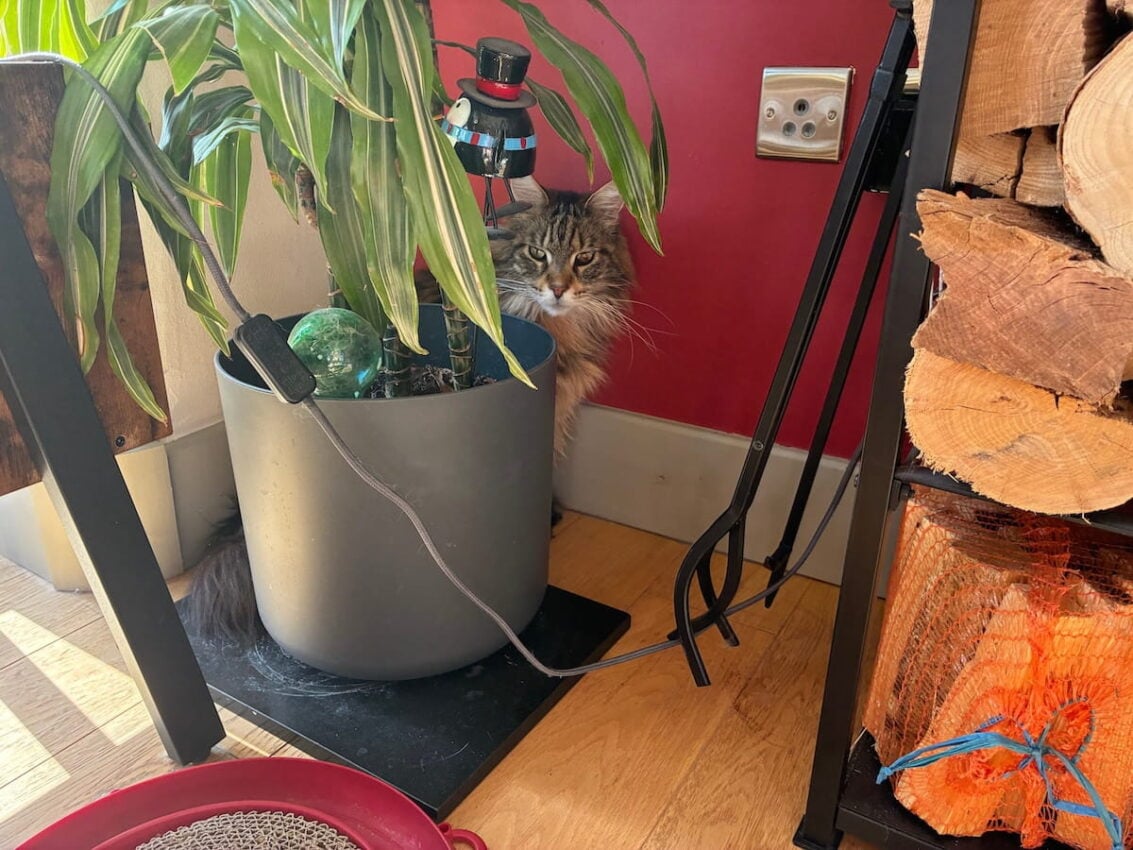


However, our experience should not be treated as a guide to the normal price of a responsibly bred Maine Coon kitten today. Bali and Mika were adopted under very different circumstances. At the same time, Pippin’s breeder charged less than many modern breeders who invest heavily in specialist health screening, registration, imported bloodlines, and extensive kitten care.
For up-to-date figures, see my guide to current Maine Coon kitten prices. Rather than repeating price tables here, this article explains where the money goes – and why an unusually cheap Maine Coon kitten deserves careful investigation.
Why Do Maine Coons Cost So Much?
The cost of a responsibly bred Maine Coon reflects several expenses:
- Health screening for inherited conditions
- Buying and maintaining suitable breeding cats
- External stud fees or the cost of keeping an intact male
- Pregnancy monitoring and emergency veterinary care
- Kitten examinations, vaccinations, microchips, and parasite treatment
- Registration and pedigree administration
- High-quality food for breeding cats, nursing queens, and kittens
- Daily socialization, grooming, and litter training
- Heating, litter, laundry, cleaning, and equipment
- Small or unsuccessful litters
- Continued breeder support after the kitten leaves
Where Does the Price of a Maine Coon Kitten Go?
The costs behind a responsibly bred Maine Coon begin long before the kitten is born and continue after it leaves for its new home. The table below summarizes the main areas covered by the purchase price.
| Breeder expense | What it may include |
|---|---|
| Health screening | HCM DNA testing, heart scans, SMA and PKDef testing, hip X-rays, veterinary examinations, and interpretation of results |
| Breeding cats | Purchasing suitable cats, breeding rights, imports, food, housing, veterinary treatment, and retirement care |
| Mating | Stud fees, travel, accommodation, infectious-disease testing, pedigree checks, and repeat matings |
| Pregnancy and birth | Pregnancy monitoring, specialist nutrition, birthing equipment, scans, emergency treatment, and cesarean sections |
| Kitten veterinary care | Health examinations, vaccinations, microchipping, parasite treatment, and treatment of illness or injury |
| Everyday kitten care | Food, litter, heating, bedding, laundry, cleaning products, toys, scratching equipment, and carriers |
| Registration and administration | Litter registration, pedigree documents, ownership transfers, contracts, and record keeping |
| Time and expertise | Birth monitoring, weighing kittens, supplemental feeding, grooming, litter training, socialization, and communication with buyers |
| Financial risk | Failed matings, pregnancy loss, small litters, sick kittens, emergency surgery, and breeding cats that must retire early |
These expenses are not divided evenly across every kitten. A healthy litter of several kittens may help cover earlier unsuccessful matings, emergency veterinary treatment, or the lifelong care of a breeding cat that produced few or no kittens. This is why the price of one kitten reflects more than the care that particular kitten received.
Some breeders make a profit from successful litters, but the selling price is not pure profit. A failed mating, a small litter, an emergency cesarean section, a sick kitten, or a breeding cat that must be retired unexpectedly can quickly absorb the income from an otherwise successful litter.
1. Responsible Breeders Invest in Health Testing
Health testing is one of the most important reasons a responsibly bred Maine Coon costs more than a kitten from untested parents.
Maine Coons have known inherited health risks, including hypertrophic cardiomyopathy, spinal muscular atrophy, pyruvate kinase deficiency, and hip dysplasia. Ethical breeders use available testing and screening to make better-informed mating decisions and reduce the chance of producing affected kittens.
Under the current GCCF Maine Coon breeding policy, breeding cats registered through its system must be DNA tested or validated as clear for the known Maine Coon HCM mutation, spinal muscular atrophy, and pyruvate kinase deficiency. The policy also supports clinical heart screening and responsible management of genetic diversity.
Hypertrophic Cardiomyopathy
Hypertrophic cardiomyopathy in Maine Coons causes abnormal thickening of the heart muscle and is one of the breed’s most significant inherited health concerns.
A DNA test can identify a known Maine Coon-associated mutation, but it cannot identify every possible cause of HCM. The International Cat Association explains that responsible breeders may use both genetic testing and periodic echocardiograms evaluated by a veterinary cardiologist because not every mutation associated with the disease has been identified.
This distinction is important. A cat testing negative for the known mutation is not guaranteed never to develop heart disease. Responsible breeders may therefore pay for repeated specialist heart scans throughout a breeding cat’s life rather than relying on a single inexpensive DNA test.
Important
A negative DNA result for the known Maine Coon HCM mutation does not guarantee that a cat will never develop hypertrophic cardiomyopathy. Responsible breeders may combine genetic testing with periodic echocardiograms because not every genetic cause of HCM has been identified.
Spinal Muscular Atrophy and PKDef
DNA screening can also identify cats that are clear, carriers, or affected by spinal muscular atrophy and pyruvate kinase deficiency.
These results help breeders avoid pairings that could produce affected kittens. Testing is not simply about excluding every carrier from a breeding program; results must be interpreted alongside pedigree, genetic diversity, temperament, and the health status of the proposed mate.
Hip Dysplasia Screening
Maine Coons can also develop hip dysplasia. Screening requires properly positioned X-rays rather than a cheek-swab test. The Orthopedic Foundation for Animals accepts cats into its hip dysplasia database, with radiographs assessed and graded through its screening system.
Health testing also creates financial losses that buyers rarely see. A breeder may purchase a promising cat, pay for registration, raise it to adulthood, and complete multiple tests – only to discover that the cat should not be used for breeding. That cat still needs a loving home and lifelong care, even though it may never produce a single kitten.
2. Suitable Breeding Cats Are Expensive
A responsible breeder cannot select any two Maine Coons simply because they are large or attractive.
Breeding cats should have documented pedigrees, suitable temperaments, relevant health results, and physical qualities that complement one another. Breeders study ancestry to avoid excessively close matings, investigate health problems in related cats, and maintain genetic diversity within the breed.
A kitten sold with breeding rights usually costs more than one sold as a companion because the buyer may continue the bloodline and produce registered offspring. The original breeder must decide whether the cat is genuinely suitable for breeding and whether the buyer has the knowledge and facilities to care for intact cats responsibly.
Some breeders import cats to introduce new lines or find a suitable match. This may involve:
- A higher purchase price for breeding rights
- Specialist transportation
- Travel to collect the cat
- Vaccinations and veterinary certificates
- Registry transfers
- Import administration
- Additional DNA testing
- Temporary boarding or accommodation
An imported cat is not automatically healthier or better bred, and the phrase “European Maine Coon” should not be treated as a guarantee of quality. What matters is the individual cat’s health, pedigree, temperament, and suitability for the breeding program.
Breeding cats must also be supported throughout their lives. Food, veterinary treatment, housing, enrichment, litter, grooming, and insurance continue before, during, and after their breeding careers.
A responsible breeder must also plan for retirement. A queen or stud may remain in the breeder’s home, be neutered and placed with an approved family, or retire much earlier than expected for health or welfare reasons.
3. Stud Fees and Mating Costs Add Up
Not every breeder owns both the queen and the stud.
Using an external stud can give a breeder access to a carefully selected bloodline without keeping several intact males. However, the arrangement may involve a stud fee, travel, accommodation, infectious-disease testing, health documentation, registration checks, and a repeat visit if the queen does not become pregnant.
Before mating, both breeders should understand the cats’ pedigrees and exchange relevant health-test results. The queen may need to stay away from home temporarily, and the stud fee may still be payable even if the resulting litter is very small.
Keeping a stud cat is not necessarily cheaper. An intact male requires food, veterinary care, screening, suitable housing, and enrichment throughout the year – not only when he is used for mating. Some entire males spray, vocalize, become frustrated, or try to escape, so their environment must be carefully managed without leaving them isolated.
These costs must be spread across a relatively limited number of planned litters.
4. Pregnancy and Birth Are Unpredictable
A successful mating does not guarantee a successful litter. The queen may not conceive, may lose the pregnancy, or may carry only one or two kittens. A breeder can pay for testing, travel, and stud access without having any kittens to sell.
During a Maine Coon pregnancy, the breeder must monitor the queen’s appetite, weight, body condition, behavior, and general health. Veterinary examinations or scans may be recommended depending on the individual cat and how the pregnancy progresses.
Pregnant and nursing queens also need an appropriate, nutritionally complete diet. As pregnancy advances, the breeder must prepare a warm, quiet birthing area and have the equipment and knowledge needed to monitor labor.
Most cats deliver naturally, but complications can occur. A kitten may be incorrectly positioned, labor may stop progressing, or the queen may require an emergency cesarean section. Emergency treatment often happens at night or during weekends, when veterinary fees may be higher.
After surgery, the breeder may need to care for a recovering mother while ensuring that each kitten remains warm and receives enough milk. If the queen cannot nurse, newborn kittens may require supplemental feeding and monitoring around the clock.
Even with prompt veterinary treatment, breeders can lose individual kittens or an entire litter. Successful litters must help absorb the cost of unsuccessful matings, pregnancy losses, and emergencies as well as their own routine care.
Why this affects every kitten’s price: A breeder cannot charge only for what happened during one uncomplicated litter. The income from successful litters must also help cover failed matings, very small litters, emergency treatment, kittens requiring intensive care, and breeding cats that must retire unexpectedly.
5. Kittens Need Veterinary Care Before Leaving
Once the kittens are born, the breeder’s workload and expenses increase.
Newborn kittens must be monitored for weight gain, feeding, temperature, and signs of illness. A kitten that stops gaining weight or becomes unusually quiet can deteriorate quickly and may need immediate veterinary treatment.
Before leaving for their new homes, kittens may receive:
- Veterinary health examinations
- Age-appropriate vaccinations
- Microchipping
- Parasite treatment or testing
- Registration and pedigree documents
- Health records
- Neutering, depending on the breeder and country
- Treatment for any illness or injury
The exact package varies, so buyers should ask what is included rather than assuming every breeder follows the same process.
The GCCF advises that kittens should be at least 13 weeks old before leaving a breeder. Its guidance also states that buyers should receive evidence of the kitten’s full primary vaccination course. TICA similarly notes that knowledgeable breeders generally allow kittens to leave at 12 weeks or older, once they are:
- Weaned
- Litter trained
- Received appropriate vaccinations
Keeping kittens until 12 or 13 weeks means feeding, housing, cleaning, handling, and providing veterinary care for an entire litter for approximately three months.
My Maine Coon vaccination schedule explains the preventive care kittens may need, while my complete Maine Coon kitten care guide covers their wider nutritional, grooming, and developmental requirements.
6. Socialization Requires Daily Work
Good socialization involves much more than allowing kittens to grow up somewhere inside the house. During their first weeks, kittens need regular, positive exposure to normal family life. A responsible breeder gradually introduces them to gentle handling, grooming, household sounds, carriers, toys, scratching surfaces, litter boxes, and different people.
Depending on the household, kittens may also become accustomed to respectful children or suitable pets. These experiences should be managed carefully so that kittens learn without being frightened or overwhelmed.
Socialization is repetitive, hands-on work. Each kitten needs individual attention so the breeder can monitor its temperament and help it become comfortable with being handled, examined, and groomed.
Maine Coons have long coats and grow into powerful cats, so early familiarity with brushing, claw checks, carriers, and veterinary-style handling is particularly valuable.
Good socialization cannot guarantee that every kitten will be fearless or affectionate. Temperament is influenced by genetics, early experience, the new home, and the kitten’s individual personality. However, careful handling gives kittens a stronger foundation for adapting to family life. Owners must continue this process after collection.
My guide to the first 30 days with a Maine Coon explains how to introduce a new kitten to its home without overwhelming it.
7. Food and Everyday Care Are Continual Expenses
A breeder must care for the adult cats every day, whether or not any kittens are available for sale.
Breeding cats need nutritionally complete food, clean water, litter trays, grooming, veterinary treatment, scratching equipment, enrichment, and suitable living space. Pregnant and nursing queens eat more, and a litter of large, fast-growing kittens can consume a considerable amount of food before leaving.
Other recurring costs include:
- Kitten food and feeding equipment
- Litter and additional litter trays
- Washable bedding and laundry
- Heating for newborn kittens
- Cleaning and disinfecting products
- Scales and monitoring equipment
- Toys, tunnels, and scratching posts
- Carriers for veterinary appointments
- Replacement of worn or damaged equipment
Good hygiene is particularly important in a multi-cat home. Bedding, bowls, litter trays, floors, and shared equipment must be cleaned regularly to protect vulnerable kittens and prevent infectious disease from spreading. These everyday costs may seem small individually, but they continue for weeks, months, and years.
8. Registration and Paperwork Have Value
Registration fees alone do not explain why Maine Coons are expensive. Compared with health screening, veterinary emergencies, and months of kitten care, the administrative cost is relatively modest.
However, registration creates a traceable record of parentage through organizations such as the GCCF, TICA, or CFA. Breeders may pay for:
- Cattery registration
- Memberships
- Litter registration
- Individual kitten documents
- Pedigrees
- Ownership transfers
- Participation in breeder programs
Some breeders also show their cats so they can be assessed against the written breed standard. Showing involves entry fees, travel, accommodation, grooming supplies, equipment, and time.
Registration does not guarantee that a breeder is ethical, and a titled cat is not automatically healthy. These should be viewed as parts of a wider breeding program rather than proof on their own.
Buyers should receive clear information about:
- Which registry the breeder uses
- Whether the kitten will be registered
- Whether it is sold for breeding or as a companion
- When the documents will be supplied
- Any neutering conditions
- The names and pedigree details of both parents
- The written sales contract
The CFA advises buyers to ask about breed-specific health testing and to expect documents such as a contract, registration paperwork, microchip information, feeding instructions, and details of follow-up veterinary care.
A seller who promises paperwork at an unspecified later date but cannot clearly explain the process should be investigated carefully.
9. Ethical Breeders Produce Limited Numbers of Kittens
Responsible breeding cannot be expanded indefinitely to meet demand. Queens need time to mature, recover between litters, and eventually retire. Some cats never enter the breeding program because of their health results, temperament, fertility, or development. Others may be retired after only one litter.
Not every mating results in pregnancy, and not every pregnancy produces a large litter. Some kittens may be retained by the breeder or observed for longer before their future home is decided.
The breeder still has to pay for health testing, food, housing, veterinary care, registration, and equipment even when no kittens are born. Those fixed costs must be spread across a relatively small number of successful litters.
Ethical breeders also limit the number of kittens they raise at one time because monitoring and socialization require considerable individual attention. Producing more litters than can be managed properly risks compromising cleanliness, health, and kitten development. This is why reputable breeders often have waiting lists rather than a constant supply of kittens ready for immediate collection.
Common Myths About Why Maine Coons Are Expensive
Several common explanations for Maine Coon prices are incomplete or misleading. Size, popularity, and appearance may influence demand, but they do not fully explain the cost of responsible breeding.
Myth 1: Maine Coons Are Expensive Because They Are Rare
Maine Coons are one of the world’s best-known pedigree cat breeds and are not generally rare. However, kittens from a particular health-tested pairing, breeder, bloodline, color, or sex may be available only in limited numbers. Responsible breeders also restrict how frequently their cats breed, which limits the supply of properly raised kittens.
Myth 2: Maine Coons Cost More Simply Because They Are Large
Their size can increase food, litter, housing, and equipment costs, but size alone does not explain the purchase price. Health screening, breeding-cat care, pregnancy risks, veterinary treatment, registration, and months of socialization are much more significant factors.
Myth 3: A More Expensive Kitten Must Be Healthier
A high price does not prove that a kitten has been responsibly bred. Unscrupulous sellers can charge premium prices without completing appropriate health tests or providing good veterinary care. Buyers should ask to see supporting documents rather than treating price as evidence of quality.
Myth 4: The Selling Price Is Mostly Breeder Profit
Some breeders make a profit from successful litters, but the full selling price should not be viewed as profit. It must help cover the cost of breeding cats, testing, unsuccessful matings, pregnancy care, veterinary emergencies, food, equipment, registration, and the periods when the breeder has no kittens to sell.
The central reason Maine Coons cost so much is not their size, rarity, or appearance. It is the expense and financial risk involved in producing healthy, well-socialized kittens responsibly.
Why Are Some Maine Coons Much Cheaper?
A lower-priced Maine Coon is not automatically unhealthy, poorly bred, or fraudulent. Sometimes the price reflects the cat’s age, circumstances, route into its new home, or the type of breeder involved.
For example, my Bali, Mika, and Pippin are good examples of legitimate reasons why some Maine Coons cost considerably less. The £450 we paid to adopt Bali and Mika was an unusually low combined amount (but the boys were about to turn 5 years old), while Pippin came from a hobby breeder whose prices were below the more common market rate. None of these prices should be used as a benchmark for a newly bred kitten from a registered breeder carrying out comprehensive health testing.
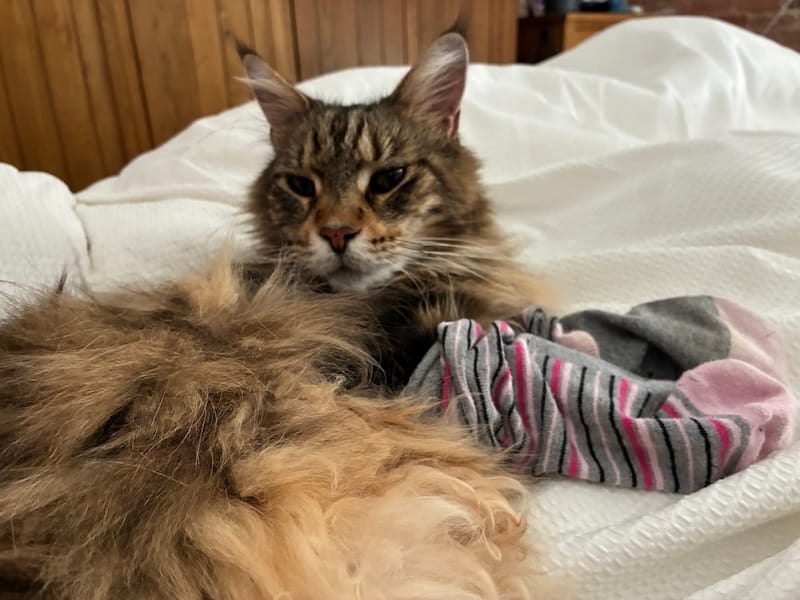
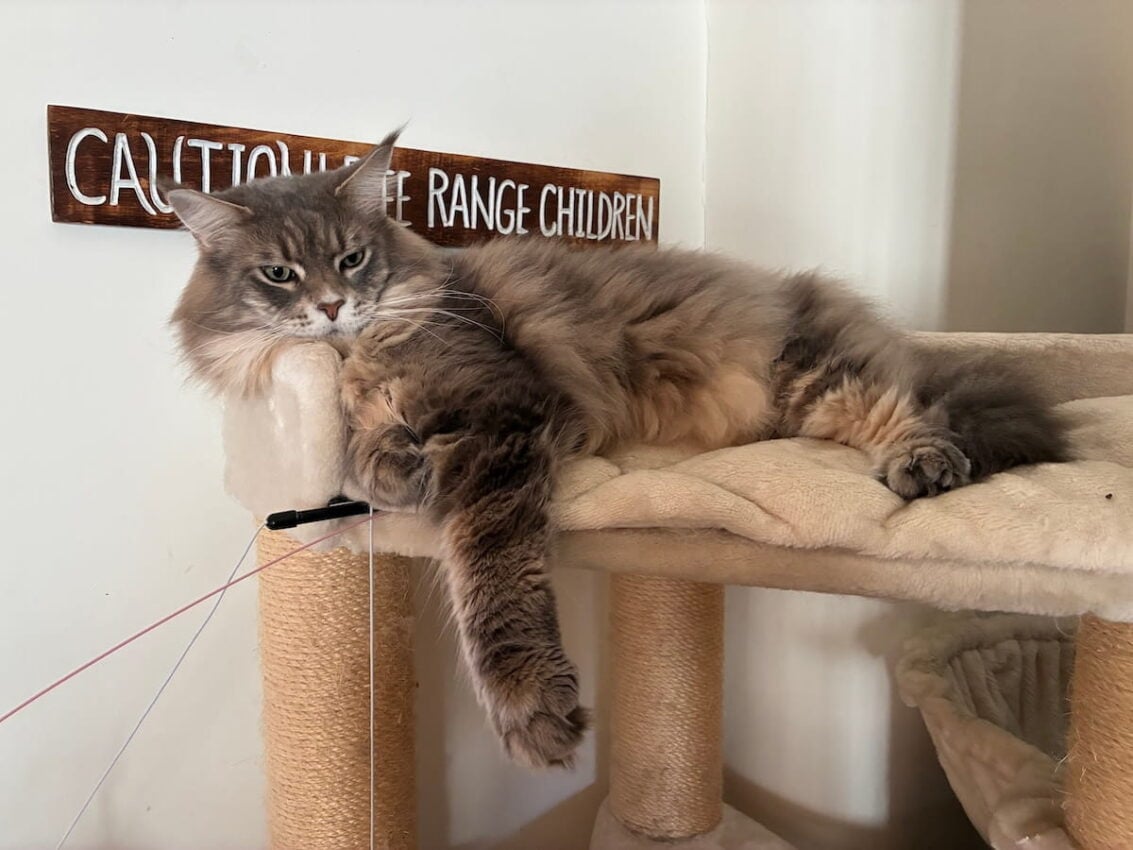
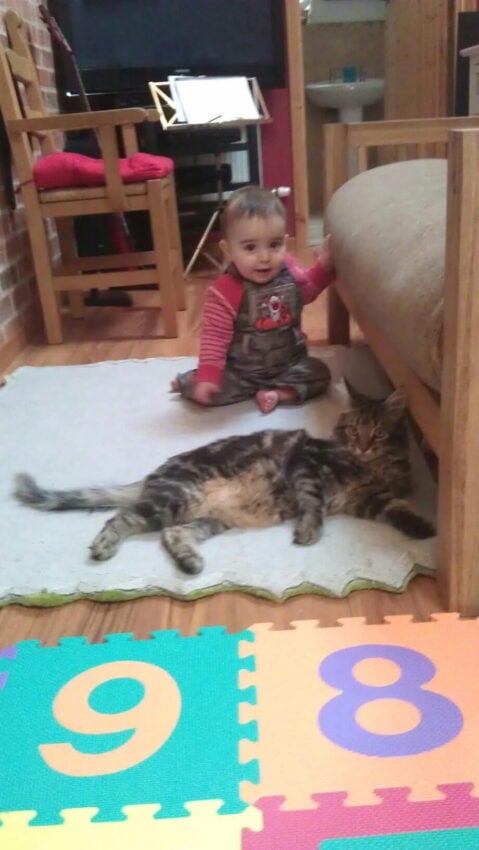
Our cats’ experiences also demonstrate why buyers should investigate the circumstances behind a low price rather than immediately assuming that the cat is either an exceptional bargain or part of a scam. An adult being rehomed, a retired breeding cat, an adoption, or a kitten from a small hobby breeder may all be priced differently from a kitten produced by an established cattery.
Here are some other legitimate reasons why a Maine Coon kitten might be cheaper:
- The cat is an adult rather than a kitten
- A breeder is rehoming a retired queen or stud
- The cat is being privately rehomed
- It is available through a rescue
- The cat has a known medical need
- Its pedigree cannot be documented
- It resembles a Maine Coon but is not a registered pedigree cat
However, an unusually cheap pedigree kitten may mean expensive steps have been skipped. For instance, the parents may not have received appropriate health screening. The kitten may leave too young or without registration, vaccinations, microchipping, veterinary checks, or proper socialization. In the worst cases, the advertised kitten does not exist.
Before sending a deposit, read my warning signs of Maine Coon kitten scams. Be particularly cautious if a seller refuses to:
- Refuses to show relevant health certificates
- Refuses to arrange a live video call
- Pressures you to pay immediately
- Suddenly adds unexpected transport, insurance, or administration charges
My guides to finding a reputable Maine Coon breeder and the questions to ask before buying a kitten will help you evaluate whether a breeder’s price is supported by responsible practices.
Does a High Price Guarantee a Healthy Maine Coon?
No. An expensive kitten is not automatically well bred. Dishonest sellers understand that buyers associate high prices with quality. Some charge premium prices while providing little health testing, poor veterinary care, or misleading claims about unusually large or “rare” bloodlines. Ask what supports the price.
A responsible breeder should be willing to discuss:
- Health tests completed on both parents
- Whether HCM screening includes heart scans as well as DNA testing
- Hip results where available
- The kitten’s registration status
- Veterinary care already completed
- The age at which the kitten can leave
- How the litter has been raised and socialized
- The contract and health terms
- What happens if the owner can no longer keep the cat
Ask to see certificates rather than accepting vague statements such as “genetically clear” or “vet checked.”
No breeder can guarantee that a kitten will never become ill. Responsible breeding reduces avoidable risks and provides transparency, but it cannot eliminate every inherited, infectious, developmental, or accidental health problem.
Frequently Asked Questions
Are Expensive Maine Coons Worth It?
A higher purchase price may be justified when it reflects appropriate health screening, traceable parentage, veterinary care, good socialization, honest paperwork, and continued breeder support.
You are not paying for guaranteed perfect health. You are paying for the breeder to take reasonable, evidence-based steps to protect the parents and kittens.
Are Maine Coons Expensive Because They Are Rare?
Maine Coons are popular rather than exceptionally rare. What may be limited is the availability of kittens from a particular breeder, bloodline, health-tested pairing, color, or sex.
Scarcity can affect price, but it should not replace proper testing and welfare standards.
Do Rare Colors Cost More?
Some breeders charge more for colors or patterns that are fashionable or less commonly available. Color does not make a kitten healthier, friendlier, or better bred.
Health, temperament, socialization, and breeder ethics should always take priority over appearance.
Why Do Breeding Rights Cost More?
A kitten sold with breeding rights may be used to produce registered offspring. The higher price can reflect its pedigree, health results, breeding potential, and the value of allowing another breeder to continue the bloodline.
Pet kittens are often sold with contractual restrictions intended to prevent unplanned or unsuitable breeding.
What Should Be Included in the Price?
Depending on the breeder and country, the purchase may include:
- Registration and pedigree documents
- A written contract
- Veterinary health checks
- Vaccinations
- Microchipping
- Parasite treatment
- Food and care instructions
- Initial insurance
- Neutering in some cases
- Continued breeder support
Confirm exactly what is included in writing before paying a deposit.
Conclusion
Maine Coons are expensive because responsible breeding is expensive.
Ethical breeders invest in health-tested parents, carefully selected pairings, stud arrangements, pregnancy care, veterinary treatment, registration, appropriate nutrition, clean housing, and months of individual socialization. They also carry the financial risk of failed matings, small litters, emergency surgery, sick kittens, and breeding cats that must retire earlier than planned.
The registration certificate itself represents only a small part of the cost. The greatest investment lies in the years of planning, testing, care, and welfare decisions behind each kitten.
However, price is not proof of quality. A responsible breeder should be able to show what has been done, explain health-testing limitations honestly, and provide clear documentation without using pressure or extravagant marketing claims.
For current purchase prices, read my guide to how much Maine Coon kittens cost. Before committing, also review my complete guide to buying a Maine Coon and the full cost of Maine Coon ownership, because the kitten’s purchase price is only the beginning.