Maine Coon Behavior Problems: Causes, Medical Red Flags & Proven Solutions

Maine Coons are known for their friendly and gentle nature, but like all cats, they can develop behaviour issues. Most behaviour problems are not personality flaws. They are communication signals linked to discomfort, stress, overstimulation, or changes in their environment.
Understanding what your Maine Coon is trying to tell you is the key to resolving behaviours like hissing, aggression, excessive vocalisation, or destructive habits.
This guide explains the most common Maine Coon behavior problems, what they mean, when to rule out medical causes, and how to resolve them without damaging trust. It is based on 14+ years of living with Maine Coons, alongside current feline behavior research and AAFP/ISFM guidance.


If you want the fastest answer, start here. Jump to the exact behavior you’re dealing with, then come back to the framework below to understand the cause and prevent repeat episodes.
Key Takeaway
• Most Maine Coon behavior problems are communication, not personality flaws.
• Sudden changes = think medical first.
• Long-standing habits = think reinforcement or environment.
• Punishment almost always makes behavior worse.
Quick Navigation: Jump To The Issue You’re Facing
If your cat is doing one of these right now, start here:
Aggression, hissing, growling, and overstimulation
- Read next: Are Maine Coon Cats Aggressive?
- Related: Why Does My Maine Coon Hiss At Me?
Clinginess, following you, separation anxiety
- Read next: Maine Coon Separation Anxiety
Scratching carpets/furniture
- Read next: How To Stop Maine Coon Scratching Furniture
Peeing/pooping outside the litter tray
- Read next: Why Does My Maine Coon Pee Everywhere?
- Related: Why Is My Maine Coon Pooping Outside The Box?
- Related: Why Your Maine Coon Is Pooping On Your Bed?
- Supporting hub: Maine Coon Litter Care
- Stress link: Maine Coon Stress Symptoms
General “my cat is acting weird” (noises, panting, shaking)
- Read next: Maine Coon Weird Noises
- Related: Why Do Maine Coons Pant?
- Related: Why Does My Maine Coon Shake?
Withdrawal / Hiding / Sudden Personality Change
- Read next: Maine Coon Personality



Common Maine Coon Behavior Problems & What They Mean
Maine Coon behavior problems are rarely random. In most cases, they are signals – responses to instinct, stress, reinforcement history, pain, or unmet needs. Understanding the meaning behind the behavior is the first step toward resolving it calmly and effectively.
Below are the most common behavior concerns seen in Maine Coons and what they typically indicate.
1. Scratching Furniture Or Carpets
Scratching is a completely normal feline behavior. Cats scratch to:
- Remove old claw sheaths
- Stretch muscles
- Mark territory visually and through scent glands in their paws
- Relieve stress
When a Maine Coon scratches furniture or carpets, it usually means appropriate scratching surfaces are either unavailable, unstable, or placed in the wrong location.
The solution is redirection – placing sturdy, tall scratching posts exactly where the unwanted scratching occurs.
2. Jumping On Counters And Tables
Counter surfing is rarely defiance. It is usually curiosity, food-seeking instinct, access-seeking, or a learned behaviour that has been rewarded in the past.
Maine Coons are large, intelligent, and naturally curious, so kitchen counters, tables, sinks, and food-preparation areas can be especially tempting. They may jump up because they smell food, want a better view, are looking for attention, or have learned that counters sometimes contain crumbs, plates, taps, bags, or interesting objects.
To reduce counter jumping, focus on prevention and redirection rather than punishment. Keep counters clear, remove food smells, avoid leaving plates or packaging out, and make sure your Maine Coon has better legal climbing options, such as a tall cat tree, window perch, or shelves.
If your cat jumps up mainly at night, the behaviour may be linked to boredom or excess energy. A short play session before bed, followed by a small meal, can reduce nighttime kitchen exploring.
Avoid shouting, spraying water, or chasing your Maine Coon off the counter. This can make the behaviour more exciting, damage trust, or teach your cat to wait until you are not watching. Instead, calmly remove access, reward use of approved climbing spaces, and make the counter boring.
3. Peeing Outside The Litter Box
Inappropriate urination is one of the most misunderstood feline behaviors. It is frequently linked to:
- Urinary tract infections
- Feline lower urinary tract disease (FLUTD)
- Stress or anxiety
- Litter box aversion (location, cleanliness, or type)
Medical causes must always be ruled out first, especially if the change is sudden. Stress-related litter box issues are common when routines change or when household tension exists.
4. Pooping Outside The Litter Box
Defecating outside the box may indicate:
- Gastrointestinal discomfort
- Constipation
- Stress
- Litter box dissatisfaction
- Territorial marking
As with urination issues, medical causes should be evaluated first. Environmental adjustments often resolve stress-based causes.
5. Excessive Clinginess Or Following
Maine Coons are known for their social, people-oriented temperament. Following owners from room to room is often normal bonding behavior.
However, excessive clinginess may suggest:
- Boredom
- Lack of stimulation
- Mild separation anxiety
- Reinforced attention-seeking behavior
Increasing structured play and maintaining predictable routines often reduces attention-driven behaviors.
Many Maine Coon owners describe their cats as “needy” when they are actually showing normal bonded behaviour. This may include following you from room to room, sitting nearby while you work, watching household routines, chirping when spoken to, or wanting to be involved in daily life.
This behaviour can feel intense compared with more independent cat breeds, but it is not automatically a problem. A relaxed Maine Coon that follows calmly, naps independently, eats normally, and does not panic when left alone is usually bonded rather than anxious.
The difference is important. Healthy attachment usually looks calm and curious. Separation anxiety is more concerning and may involve persistent crying when left alone, pacing, door scratching, destructive behaviour, refusing food, or toileting outside the litter tray.
In other words, the question is not “Is my Maine Coon needy?” but “Is my Maine Coon relaxed, or distressed?” Calm closeness is usually part of the Maine Coon temperament. Distress, panic, or sudden behaviour change needs further investigation.
6. Sudden Or Persistent Meowing
Maine Coons are naturally vocal and often communicate through chirps, trills, and conversational meows. However, a sudden increase in volume, frequency, or intensity usually signals an unmet need.
For a full breakdown of causes, warning signs, and step-by-step solutions, see the dedicated excessive vocalization section later in this guide.
7. Destructive Behavior
Destructive chewing, scratching, or knocking objects over usually reflects:
- Boredom
- Excess energy
- Lack of enrichment
- Curiosity-driven exploration
Daily interactive play significantly reduces destructive behavior.
8. Withdrawal Or Sudden Behavioral Changes
If a normally social Maine Coon becomes withdrawn, hides, or avoids interaction, this may signal:
- Pain
- Illness
- Stress
- Environmental change
Sudden personality shifts should always be taken seriously and evaluated by a veterinarian.
Before trying to interpret meaning, always rule out pain.


When A “Behavior Problem” Is Actually A Medical Problem
A sudden behavior change should always make you think: pain, illness, or discomfort – even if the cat still looks “fine”.
Vet-first warning signs (don’t troubleshoot at home)
Book a vet appointment urgently if you notice any of these alongside the behavior change:
- Peeing little and often, straining, crying, and blood in urine
- Vomiting repeatedly, weight loss, refusing food, and sudden hiding
- Sudden aggression when touched (especially back/hips), limping, reluctance to jump
- Yowling at night in an older cat, confusion, staring spells
- Rapid breathing at rest, open-mouth breathing, and collapse
Even “simple” problems like a urinary tract issue can trigger big behaviour shifts, and in male cats, urinary blockage can be life-threatening.
The AAFP notes that behavioral changes are often an early sign of pain or disease, which is why a veterinary check comes before training plans.
Source: Carney et al., AAFP/ISFM Feline House-Soiling Guidelines, Journal of Feline Medicine and Surgery, 2014.)
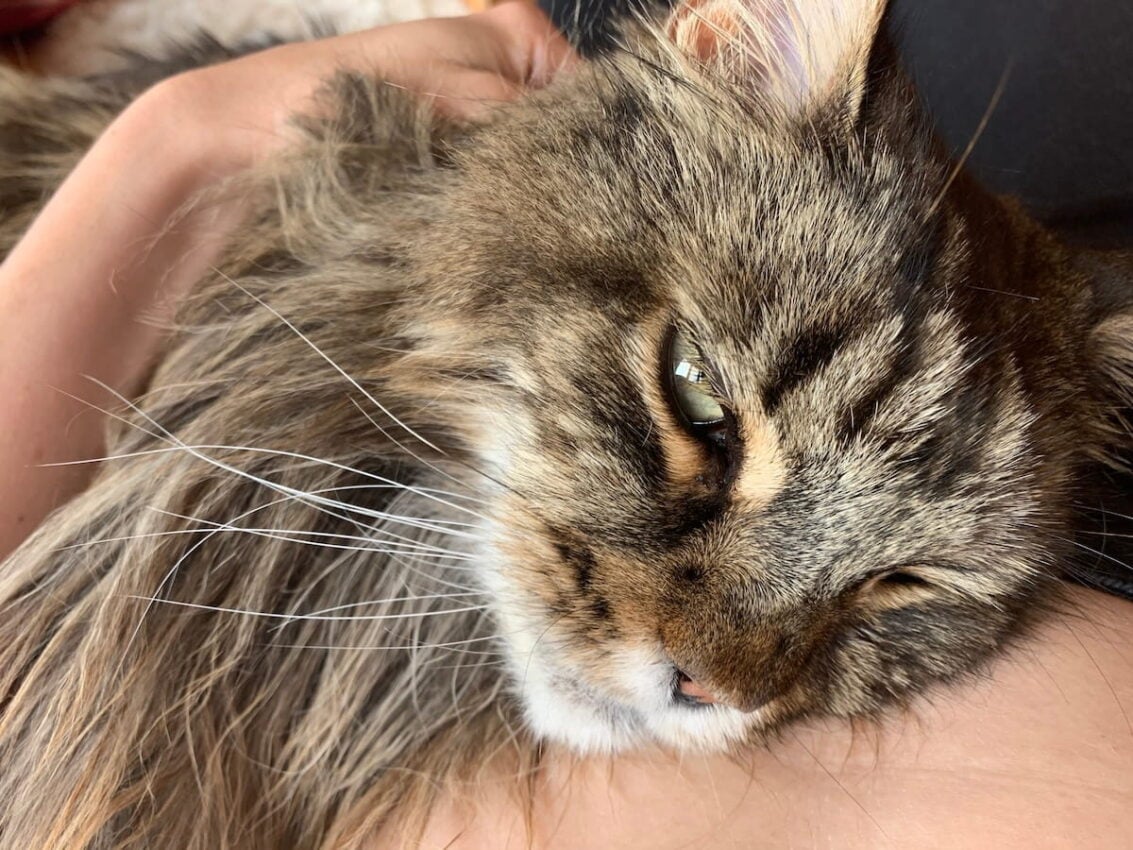
When my Maine Coon cat (Pippin) urinated in the corner of the kitchen, it wasn’t “revenge” or “territorial behavior”. It turned out to be a urinary tract infection that resolved with vet treatment. We kept him stable long-term by switching to a urinary diet (Royal Canin urinary dry food), with fewer flare-ups compared with times we tried to add lots of food variety. That’s exactly how owners should think: medical cause first, then prevention.
Why Maine Coons Develop Behavior Problems (4 Common Root Causes)
Before looking at any individual behavior, it helps to understand this…
Most Maine Coon behavior problems fall into one of four categories:
- Medical discomfort: pain, urinary issues, dental disease, arthritis, digestive upset.
- Stress or environmental instability: changes in routine, multi-cat tension, lack of enrichment, unpredictability.
- Instinct expressed in the wrong place: scratching furniture, climbing counters, and hunting ankles.
- Learned behavior that was accidentally reinforced: door dashing, vocalizing for food, and attention-seeking habits.
This framework is supported by AAFP and ISFM clinical behavioral guidelines, which emphasize medical screening, environmental design, and reinforcement history as primary behavior drivers.
When you identify which category the behavior belongs to, the solution becomes much clearer.
Trying to “train away” a medical issue won’t work.
Trying to punish instinctive behavior usually makes it worse.
Trying to fix stress without changing the environment rarely succeeds.
Behavior is information. The key is diagnosing the driver correctly.
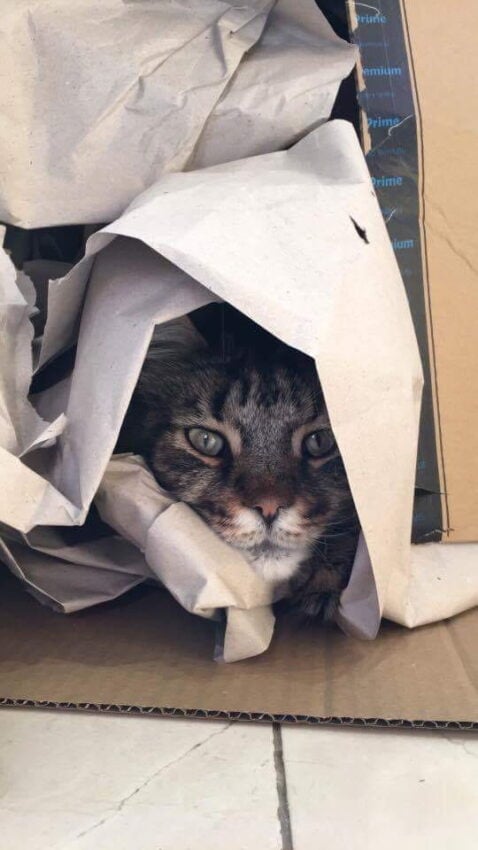
Learned Behavior (Reinforcement) – Quick Guide
Maine Coons quickly learn what gets results. A sound, action, or routine that leads to attention, food, access, or play becomes reinforced. This means the behavior persists not because the cat is “stubborn” but because it worked. The key to change is to remove the reward or offer a better reward.
I have seen this clearly with Mika. I accidentally taught him that if he came and sat next to me while I worked, he would often get a couple of treats. Even when treats were not always given, the behaviour continued because the routine had already been reinforced.
This is a good reminder that Maine Coons are quick learners, and an owner’s habits often shape a cat’s habits without us realising.
Read our detailed training strategy in How To Train A Maine Coon.
Annoying Maine Coon Behaviors Are Usually Normal Cat Instincts
Many of the things owners describe as “annoying” are not bad behavior at all. They are normal feline instincts expressed in ways that don’t always suit a human household.
Living with three Maine Coons – Pippin, Bali, and Mika – taught me that what feels frustrating is often curiosity, bonding, instinct, or reinforcement history playing out in real time.
Understanding the difference changes everything.
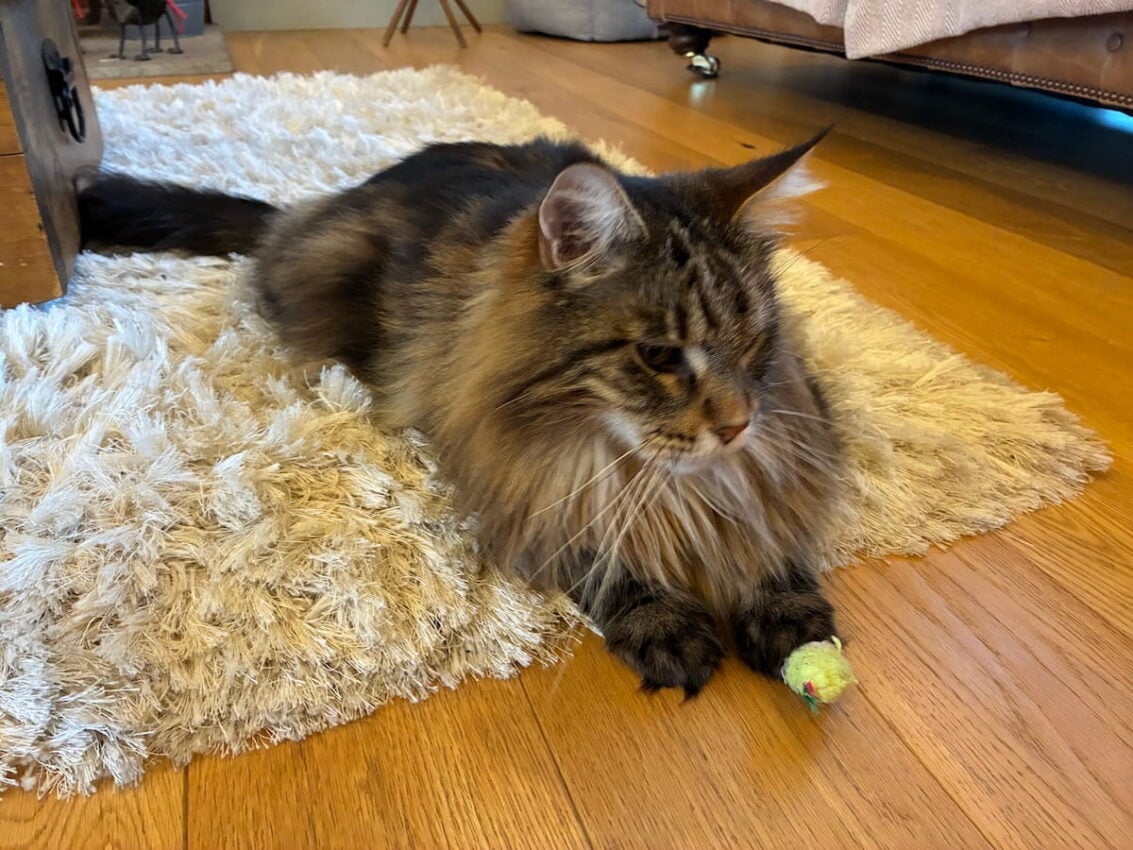
1. Knocking Things Off Tables (Especially Hairbands!)
If you’ve ever placed something on a coffee table only to watch it slowly get patted… and patted again… until it drops to the floor, you are not alone.
All three of my cats were fascinated by objects placed on the coffee table. Hairbands were the ultimate prize. They would sit beside the object, gently tap it, pause, stare at it, tap again, and wait patiently until gravity did the rest.
This behavior isn’t spiteful. It’s:
- Curiosity
- Prey-testing behavior
- Cause-and-effect learning
- Self-rewarding stimulation
When the object falls, the behavior is reinforced.
If your Maine Coon constantly pushes objects off surfaces, increase structured interactive play and remove high-value items from reachable edges. You can also redirect this behavior into puzzle toys or fetch games.
Related reading:

2. Following You Everywhere (The “Shadow Cat” Effect)
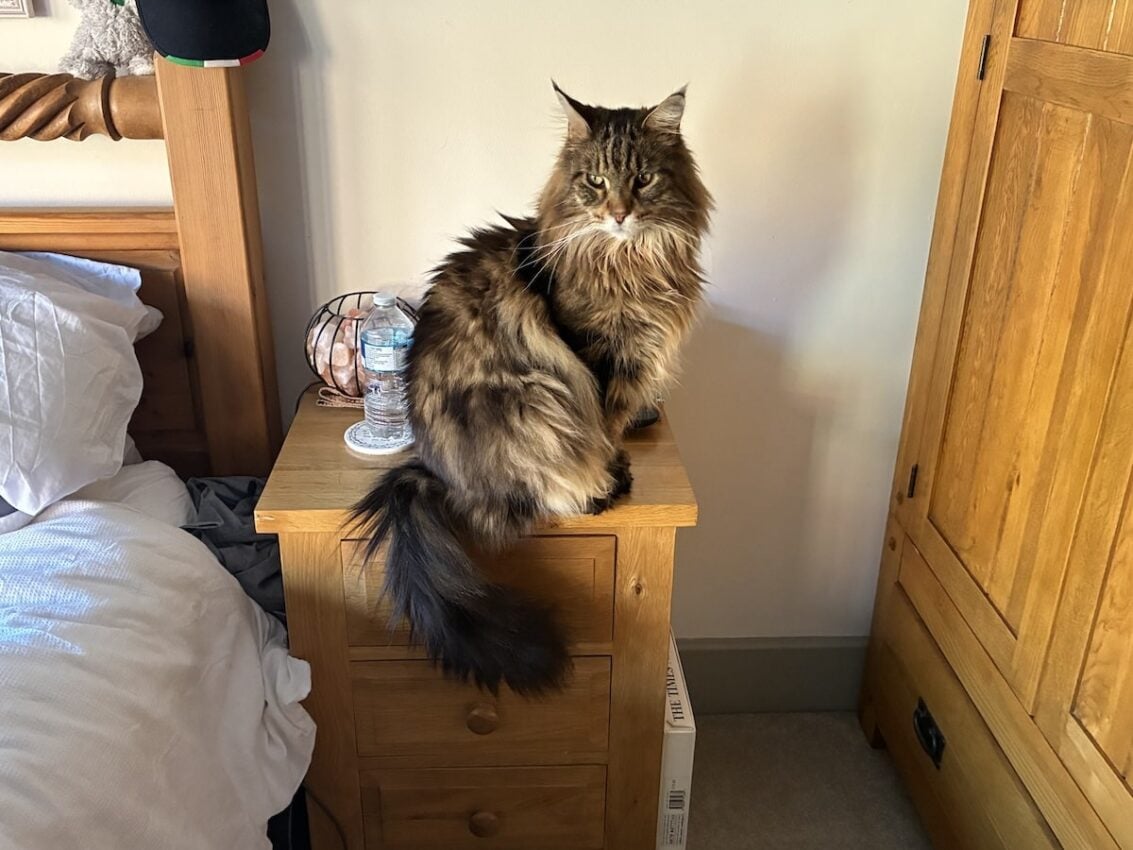
Maine Coons are intensely people-oriented.
Pippin was the clearest example of this in my home. He was rarely more than a few steps away from me, but he was not panicked or demanding. He simply preferred shared space over solitude. Bali shows the same attachment more quietly; he may not demand attention, but he often chooses to be in the same room, watching or sleeping nearby.
That difference matters because proximity is not always anxiety. For many Maine Coons, being near their owner is simply how they bond.
The following behaviour can have several different meanings, so I do not treat it as a problem by default. In my home, Pippin often followed me because he wanted company and shared space. Mika is similar and likes to stay close while I work. Bali is less intense, but he still chooses to be nearby in a quieter way.
This is why context matters. A Maine Coon that follows you calmly may simply be bonded, curious, hungry, thirsty, or hoping for attention. A Maine Coon that follows frantically, cries when separated, scratches doors, refuses food, or becomes destructive may be showing separation-related distress instead.
I have also seen the following behaviour change when a cat is unwell. When Pippin was sick, he became more clingy and sought comfort from us. That is why a sudden increase in following, clinginess, hiding, vocalising, or attention-seeking should always make owners consider pain, illness, or stress before assuming the cat is just being demanding.
This behavior is usually normal bonding and social attachment. However, if it escalates into distress when you leave the house, it may lean toward separation anxiety.
Read more:
If the behavior is calm and confident, it’s affection.
If it becomes anxious or frantic, investigate further.
3. Overstimulation Biting During Grooming
In my experience, Mika can become overstimulated during grooming sessions. He may start relaxed and cooperative, but after a certain point, his tail begins to flick, his skin tightens, and if brushing continues, he may nip. This is not aggression. It is boundary communication.
Maine Coons have dense coats that require regular grooming, but they also have limits. Watch for early signs of overstimulation. This is boundary communication. Stop before escalation.
Related:
If biting appears sudden or extreme, rule out discomfort or skin sensitivity.

4. “Poop Incidents” With Long Fur
Bali has long fur around his back end. Occasionally, feces can catch in the fur and drop off later elsewhere in the house, which is obviously unpleasant and easy to misinterpret as a litter issue.
In reality, this is usually:
- Coat length
- Hygiene trimming needs
- Stool consistency issues
Regular sanitary trims and monitoring stool health solve the problem.
Related:
Normal Maine Coon Quirks That Are Not Behaviour Problems
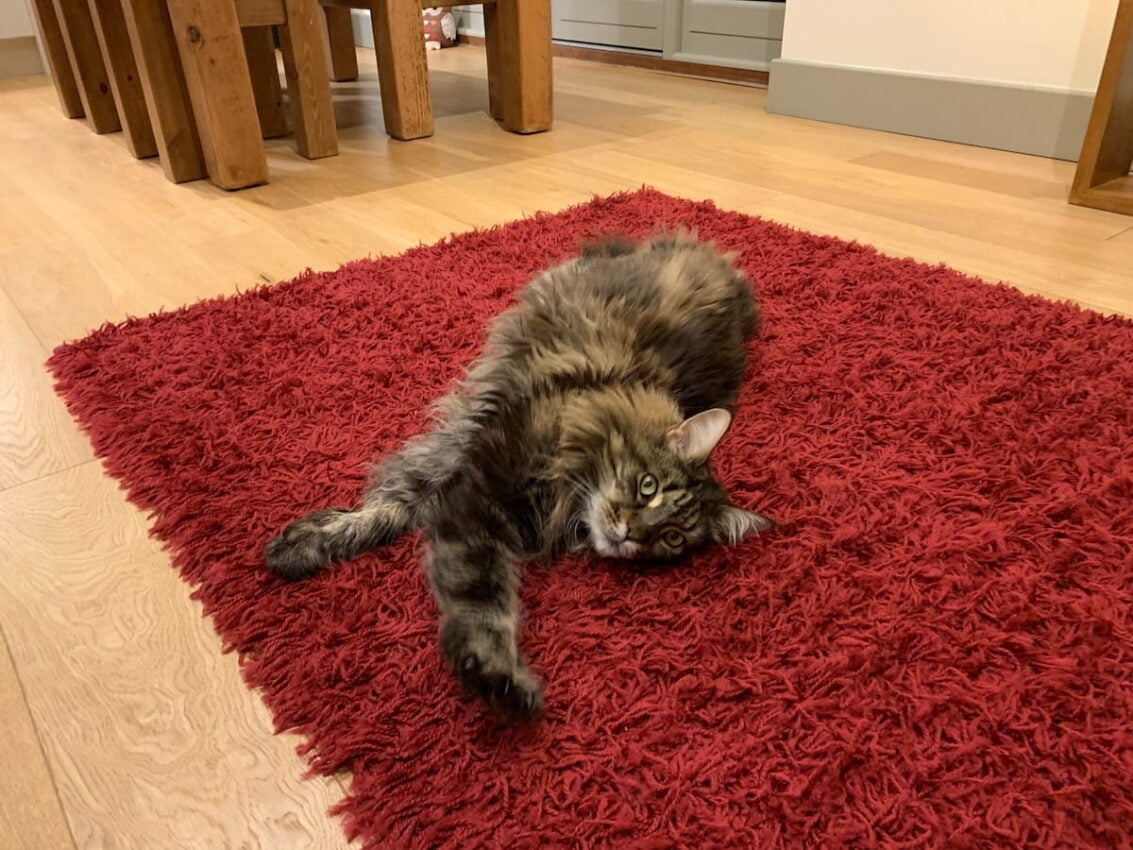
Some Maine Coon behaviours look strange but are completely normal. Chirping at birds, talking back to owners, following people from room to room, headbutting, zoomies, sleeping upside down, and fascination with water are usually signs of instinct, confidence, playfulness, or social bonding.
The key question is whether the behaviour is sudden, distressing, harmful, aggressive, or paired with physical symptoms. Weird behaviour is not automatically a problem. Sudden behaviour change is different and should be taken more seriously.
For more examples, read my guide to Maine Coon weird noises.
Maine Coon Zoomies
Maine Coon zoomies are sudden bursts of running, jumping, skidding, chasing, or racing around the house. They can look chaotic, but they are usually normal feline behaviour rather than a behaviour problem.
Zoomies are often linked to excess energy, play drive, hunting instincts, excitement, or a build-up of stimulation after sleeping for several hours. Many Maine Coons have zoomies in the evening because cats are naturally more active around dawn and dusk.
In my home, Bali often gets evening zoomies across the kitchen floor, especially between 6-9 p.m. He races across the wooden floor, skids dramatically, and then settles again afterwards. It looks wild, but for him, it is a normal energy release rather than distress.
Zoomies are usually nothing to worry about if your Maine Coon seems happy, relaxed, and normal afterwards. They become more concerning if they are sudden, frantic, paired with hiding, aggression, pain, litter box changes, excessive vocalisation, or a major personality change.
To reduce disruptive zoomies, try a short interactive play session before the usual zoomie time. Wand toys, tunnels, chase games, food puzzles, and climbing sessions can help your Maine Coon burn energy in a more controlled way.
Do not punish zoomies. Instead, make the environment safe by removing fragile items, securing rugs, keeping floors clear, and giving your cat legal ways to run, climb, scratch, and play.
Are Maine Coons Destructive?
Maine Coons are not naturally destructive cats, but their size, intelligence, curiosity, and playful instincts can make unwanted behaviour more noticeable when their needs are not being met.
Most destructive behaviour is not deliberate naughtiness. It is usually linked to boredom, stress, loneliness, insufficient scratching outlets, normal feline instincts, or a behaviour that has accidentally been reinforced.
A Maine Coon may appear destructive if they scratch furniture, chew cords, knock items from shelves, pull at carpets, shred paper, over-groom, urinate outside the litter tray, or create night-time chaos when under-stimulated.
The solution is to identify what the behaviour is achieving. Is your cat trying to exercise, relieve stress, mark territory, maintain their claws, get attention, or access something they want?
To reduce destructive behaviour, focus on enrichment, scratching outlets, safe chew options, vertical territory, predictable routines, and rewarding calm behaviour. Avoid punishment, shouting, chasing, or frightening your cat, as this can increase stress and make behaviour worse.
If destructive behaviour is sudden or appears alongside over-grooming, litter tray changes, hiding, aggression, obsessive chewing, or a change in appetite or mobility, speak to a vet before assuming it is behavioural.
How Common Are Behavior Problems In Maine Coons?
Behavior concerns are one of the most frequent reasons cats are taken to veterinarians or rehomed.
According to the ASPCA, the following are common feline behavior complaints in domestic cats:
- Aggression
- House-soiling (litter box avoidance)
- Destructive scratching
- Excessive vocalization
A review published in the Journal of Feline Medicine and Surgery (the official journal of the International Society of Feline Medicine) reports that house-soiling alone affects approximately 10% of cats at some point in their lives. (Source: AAFP/ISFM Feline House-Soiling Guidelines (Journal of Feline Medicine and Surgery)).
This is important because it shows that behavior changes are common and, in most cases, manageable when addressed early.
How To Fix Maine Coon Behavior Problems (Step-By-Step)
Most common behavior issues can be significantly improved using a structured approach grounded in feline behavioral science.
A. Remove The Reward
If a behavior results in food, attention, stimulation, or access to something desirable, it will continue. Eliminating the payoff weakens the habit.
B. Provide An Appropriate Outlet
Every unwanted behavior has an underlying need. Scratching requires scratching posts. Climbing requires vertical space. Hunting requires structured play. Replacing the outlet reduces conflict.
Scratching need → scratching post
Climbing need → tall cat tree/shelves
Hunting needs → short play sessions daily
Chewing needs → chew-safe toys, dental options
Comfort needs → warm beds, quiet zones, predictable routine
C. Reward Desired Behavior Immediately
Positive reinforcement strengthens calm, appropriate responses. Timing matters. Rewards must occur immediately after the correct behavior.
D. Stay Consistent For 2-4 Weeks
Behavior change is not instant. Consistency across all family members is critical. Inconsistent reactions confuse the cat and prolong the issue. Most people quit too early. Behaviour change is usually “two steps forward, one step back”.
Punishment is not recommended. The American Association of Feline Practitioners (AAFP) states that punishment increases fear and anxiety and may worsen aggression or elimination problems.

E. The “Don’t Make It Worse” Rules (The Ones That Protect Trust)
- Don’t punish. It increases fear and can escalate the problem.
- Don’t chase a cat out of a room as a “lesson”. They learn humans are unpredictable.
- Don’t force handling when a cat is already signalling stress.
- Don’t assume it’s behavioral until you’ve considered pain/medical triggers.
Common Owner Mistakes That Reinforce Unwanted Behavior
Many behavior problems aren’t just about the cat; they’re about well-meaning responses that accidentally make the issue worse. Avoiding these common owner mistakes helps stop reinforcement loops and prevents stress-based behaviors:
1. Inconsistent Responses
Reacting sometimes but not always (e.g., feeding, opening doors, giving attention when a cat meows) teaches the cat that persistence works, and it will keep repeating the behavior.
2. Providing Rewards For Noise Or Attention Seeking
If meowing or scratching sometimes results in food, play, or interaction, the behavior strengthens. Decide what you want instead (quiet sitting, waiting) and reward that immediately.
3. Using Punishment Or Harsh Discipline
Punishment increases fear, anxiety, and defensive reactions. Spraying water, yelling, or chasing a cat out of a room damages trust and often makes behavior worse.
4. Misreading Stress Signals
Ignoring early signs (tail flicks, ear rotation, freezing) and continuing interaction can escalate defensive reactions. Respecting boundaries reduces conflict over time.
5. Not Providing Predictable Routines Or Enrichment
Cats thrive on stability and stimulation. Boredom, lack of play, or erratic schedules can lead to scratching, vocalization, attention-seeking, or stress behaviors.
These mistakes are common because owners love their cats and want to help, but the reward becomes what maintains the unwanted behavior.
Real-World Reinforcement Examples
Sometimes the mistake isn’t obvious. For example:
- Opening the door after repeated meowing teaches the cat to escalate.
- Giving food to “quiet them down” strengthens demanding vocalization.
- Picking up a cat after unwanted scratching can function as attention.
- Telling a cat off loudly can still count as interaction.
Environmental Stress And Behavior
Stress is a major contributor to Maine Coon behaviour problems. Changes in routine, household tension, multi-cat competition, lack of safe spaces, and insufficient enrichment can all trigger behaviours such as house-soiling, vocalisation, hiding, over-grooming, or aggression.
The AAFP/ISFM Environmental Needs Guidelines describe five core pillars of feline welfare:
- Safe resting areas
- Multiple and separated key resources
- Opportunities for play and predatory behaviour
- Positive human interaction
- Respect for individual personality
For Maine Coons, this matters because they are large, intelligent, and socially bonded cats. They need vertical space, predictable routines, scratching outlets, daily play, and quiet resting areas.
In multi-cat homes, separate feeding stations, multiple litter boxes, and several resting zones can reduce subtle tension before it becomes a visible behaviour problem.
This was one reason we adopted Mika and Bali together as brothers. They already had each other for company, play, and reassurance, which helped reduce the risk of loneliness when the house was busy or when we were not constantly available.
A second cat is not the right solution for every home, and introductions still matter, but compatible feline companionship can help some sociable Maine Coons cope better with time alone.
(Source: Ellis et al., AAFP/ISFM Feline Environmental Needs Guidelines, Journal of Feline Medicine and Surgery, 2013.)

Overstimulation: The Behavior Owners Misinterpret Most Often
Many owners mistake sudden biting, swatting, hissing, or defensive reactions for aggression. In Maine Coons, these behaviours are often caused by overstimulation rather than hostility.
Overstimulation happens when a cat is petted, handled, or groomed beyond their tolerance level. The warning signs usually appear before the reaction, but they are easy to miss.
Common early signs include:
• Tail flicking or lashing
• Ears rotating sideways or flattening
• Sudden grooming licks
• Visible tension in the shoulders or back
• Skin rippling along the spine
• Brief freezing before moving away
Stop interaction at the first sign of tension. In large, long-haired breeds such as Maine Coons, overstimulation can happen faster during grooming, especially if the cat has sensitive skin, knot-prone fur, hip discomfort, or lower-back sensitivity.
Territorial Behavior And Multi-Cat Tension
Territorial stress is one of the most underestimated causes of behavior problems in cats.
Even in homes where cats appear to “get along,” subtle tension may manifest as:
- Blocking access to litter boxes
- Staring contests
- Swatting without physical contact
- Increased marking behavior
- Grooming overuse
The AAFP and International Society of Feline Medicine (ISFM) Intercat Tension Guidelines emphasize that resource distribution is critical in multi-cat households.
They recommend:
- One litter box per cat, plus one extra
- Multiple feeding stations
- Separate resting zones
- Vertical escape routes
Common Triggers For Territorial Behaviour
Territorial behaviour is more likely when a Maine Coon experiences:
- A new cat, dog, baby, visitor, or regular delivery person
- A new home or rearranged furniture
- Unfamiliar outdoor scents near doors, windows, or gardens
- Competition over food, litter trays, beds, scratching posts, or owner attention
- Lack of vertical escape routes
- Stress, pain, or reduced confidence
- Hormonal behaviour in unneutered cats
Mika, for example, has sprayed in the front garden where I suspect he can smell a local fox. That kind of scent-marking is different from a litter tray problem indoors, because it can be linked to outdoor territorial communication.
The 2024 AAFP Intercat Tension Guidelines emphasize that many “behavior problems” in multi-cat homes are actually manifestations of chronic social stress. Subtle resource guarding, blocking, and vertical space competition can occur even when overt fighting is absent.
(Source: Rodan et al., 2024 AAFP Intercat Tension Guidelines, Journal of Feline Medicine and Surgery.)
Maine Coons are generally social, but their large size and confidence can unintentionally create pressure in smaller cats sharing the home.
Environmental design prevents conflict far more effectively than discipline.
What Territorial Behaviour Can Look Like
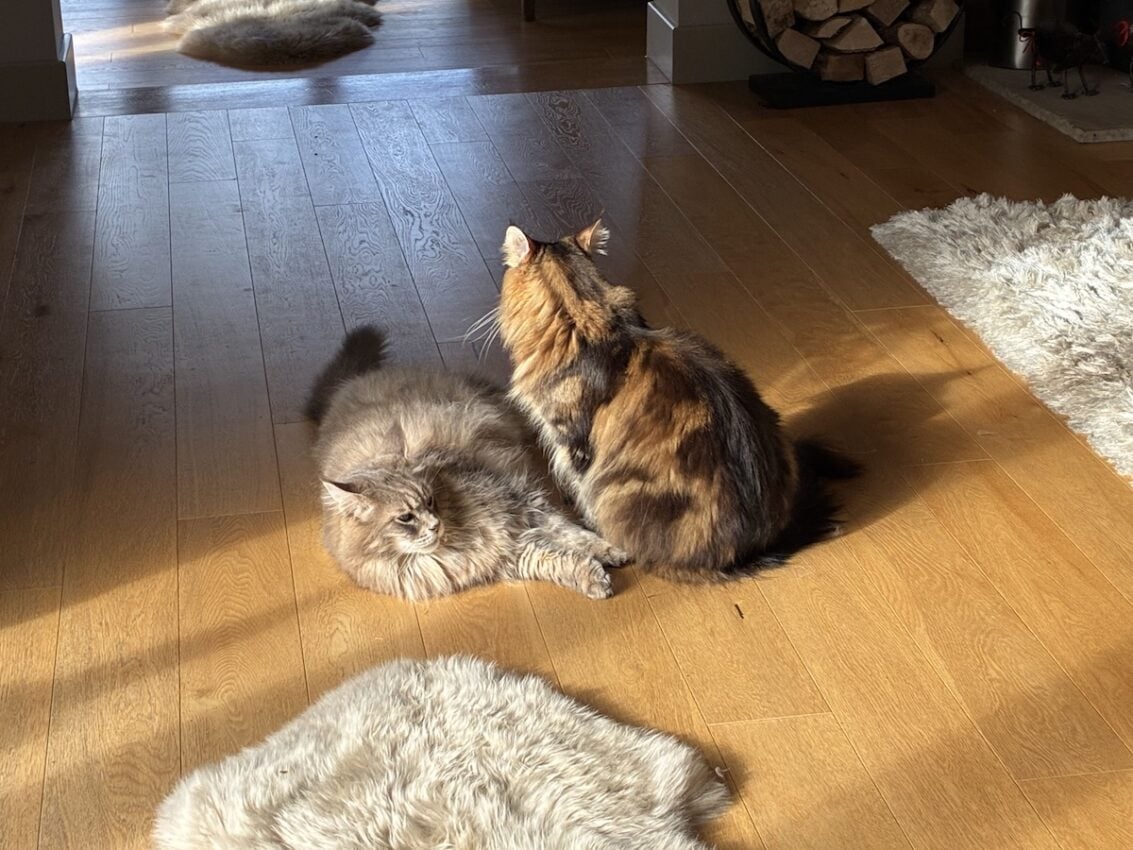
Territorial behaviour in Maine Coons can include urine spraying, scratching, hissing, growling, blocking access to resources, defensive posturing, vocalising, staring, puffing up, or becoming unsettled when another animal, person, or unfamiliar scent enters their space.
In my home, I saw this most clearly when we adopted Mika and Bali. Pippin was already the resident cat, and when the two adopted brothers arrived, he hissed, growled, and postured at them repeatedly. It looked worrying at first, but it reduced as they adjusted to each other’s presence.
Within about a month, the three cats were living together much more peacefully, with Pippin clearly established as the boss.
Mika also shows territorial or defensive behaviour differently. He may growl when delivery drivers come to the door, but he does it from a distance and then retreats to another room. That is not “dominance.” It is a mixture of alertness, uncertainty, and self-protection.
I have also seen Pippin puff himself up dramatically when he first met a dog. His fur stood up, and he looked twice his normal size. I only saw him do that once in 10 years, which shows how strongly some cats can react when they suddenly feel threatened.
Territorial behaviour is not always aggression. Often, it is a cat trying to feel safe, protect access to resources, or create distance from something they do not trust.
Fear-Based Behavior Vs. True Aggression
Not all defensive behavior is aggression.
Fear-based reactions often include:
- Retreating before swatting
- Dilated pupils
- Low crouched posture
- Rapid tail flicking
- Ears flattened tightly back
Aggression without warning is uncommon. Most cats display a sequence of escalating signals before resorting to physical action. Understanding this sequence prevents unnecessary punishment and helps owners intervene earlier.
The ASPCA identifies fear, pain, redirected aggression, overstimulation, and misinterpreted play as the most common causes of feline aggression, emphasizing that true unprovoked aggression is uncommon in domestic cats.
(Source: ASPCA, Common Cat Behavior Issues).
Why Is My Maine Coon So Scared?
Maine Coons are often described as confident, sociable cats, but some can be cautious, reactive, or easily startled. A scared Maine Coon is not being difficult or badly behaved. Fear is a survival response that appears when something feels unfamiliar, threatening, painful, or overwhelming.
A Maine Coon may seem scared because of:
- Poor early socialisation
- A cautious personality
- Genetics
- Past negative experiences
- Loud noises
- New people or pets
- Changes in routine
- Unfamiliar objects
- Pain, illness, hearing changes, or reduced mobility
Fear can look different from cat to cat. Some Maine Coons hide. Others freeze, run away, crouch low, flatten their ears, tuck their tail, hiss, growl, avoid eye contact, or refuse to explore.
In my home, Mika is more reactive to unexpected outside noises and may growl when delivery drivers come to the door. Bali is more likely to hide from the hoover or sudden household noise. Pippin was much more confident, which may be partly because we had him from 10 weeks old and he experienced our home, routines, noises, and people from kittenhood.
This difference between my cats is a useful reminder that fear is not always caused by poor ownership. Early experiences, personality, environment, and health can all shape how safe a Maine Coon feels.
To help a scared Maine Coon, focus on safety and gradual confidence-building rather than forcing interaction. Provide safe hiding places, high resting spots, predictable routines, calm handling, and controlled exposure to scary triggers.
For example, if your cat is scared of the hoover, delivery drivers, loud sounds, or unfamiliar objects, start at a distance where they can notice the trigger without panicking. Pair that exposure with something positive, such as treats, food, play, or calm praise. Over time, the trigger can become less threatening.
Do not drag a scared Maine Coon out of hiding, chase them, shout, punish, or force them to “face” the fear. This usually makes fear worse. Confidence builds when the cat learns they can retreat, observe, and approach at their own pace.
A vet check is important if fear appears suddenly, worsens quickly, or appears alongside hiding, aggression, appetite changes, toileting changes, reduced jumping, vocalising, weight loss, or sensitivity when touched. Pain and illness can make cats feel more vulnerable and reactive.
Why Does My Maine Coon Hiss At Me?
If your Maine Coon hisses at you, it does not mean they are aggressive or badly behaved. In most cases, hissing is a defensive warning signal that means your cat feels uncomfortable, overstimulated, frightened, or physically sore.
A hiss is your Maine Coon’s way of saying, “Stop. I need space.” It is usually used to avoid conflict, not start it.
Common Reasons Maine Coons Hiss
The most common causes include:
- Overstimulation: Too much petting, brushing, or handling can push your cat past their tolerance level
- Pain or discomfort: Hissing during grooming or when touched in a specific area may indicate soreness, matting, or sensitivity
- Fear: A startled or cornered cat may hiss because they feel threatened
- Boundary setting: Some Maine Coons hiss simply because they want interaction to stop
- Stress: Changes in routine, noise, or other pets can lower tolerance and increase defensive behaviour
Real Owner Experience: Pippin, Mika, and Bali
From my own experience owning three male Maine Coons – Pippin, Mika, and Bali – hissing is most likely to occur during grooming. Pippin and Mika both hiss when brushing goes on too long, particularly around their rear end, where matting tends to occur. If I try to remove a knot in that area, they will hiss immediately.
This is not aggression. It is a clear signal that the area is sensitive and the grooming has become uncomfortable.
With Mika, the trigger is usually overstimulation. He tolerates brushing for a while, but once he reaches his limit, his body language changes, and he may hiss or try to move away.
Pippin was more sensitive around his lower back and rear, which made those areas harder to groom without resistance.
Bali, by contrast, has a silkier coat and is far less prone to matting, and he rarely hisses during grooming.
Once I adjusted by keeping grooming sessions shorter and avoiding forcing mat removal, the hissing reduced significantly.
What You Should Do If Your Maine Coon Hisses
The most important response is to stop immediately and give your cat space. Do not continue touching, restrain them, or punish the behaviour. Hissing is a warning designed to prevent escalation. If ignored, it can lead to scratching or biting.
If hissing increases suddenly or is linked to a specific area of the body, it is important to rule out pain or injury with a vet check.
Why Do Maine Coons Growl?
Maine Coon growling is usually a warning signal, not bad behaviour. A growl means your cat feels uncomfortable, threatened, overwhelmed, protective, or physically sore and wants more space.
Growling is often your cat’s way of saying, “Stop. Do not come closer.” If that warning is ignored, the behaviour may escalate into hissing, swatting, biting, or scratching.
Common causes of growling in Maine Coons include:
- Fear or feeling cornered
- Pain or sensitivity when touched
- Overstimulation during grooming or handling
- Resource guarding around food, beds, toys, or resting spaces
- Territorial stress in multi-cat homes
- Redirected frustration after seeing another cat or animal outside
- Sudden changes in the home
- Rough play or unwanted interaction from people or other pets
If your Maine Coon growls, stop what you are doing and give them space. Do not punish, shout, spray water, chase, or force contact. Growling is a useful early warning that helps prevent escalation.
A vet check is important if the growling is sudden, intense, linked to touch, or appears alongside hiding, reduced jumping, appetite changes, litter tray changes, aggression, stiffness, limping, or vocalising when handled.
For Maine Coons, growling during grooming deserves special attention because dense coats, mats, hip discomfort, spine sensitivity, or lower-back pain can make brushing uncomfortable. In my home, Pippin and Mika were more likely to become defensive around sensitive grooming areas, especially near the rear end or lower back.
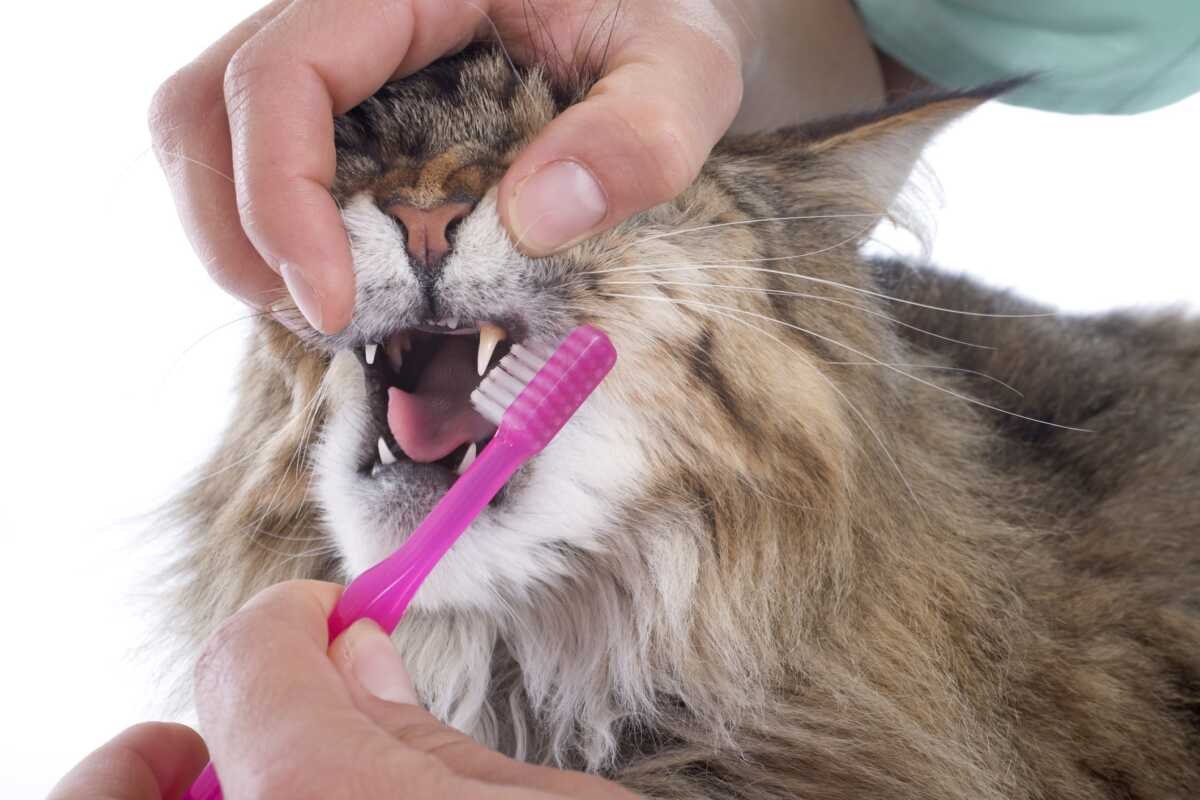
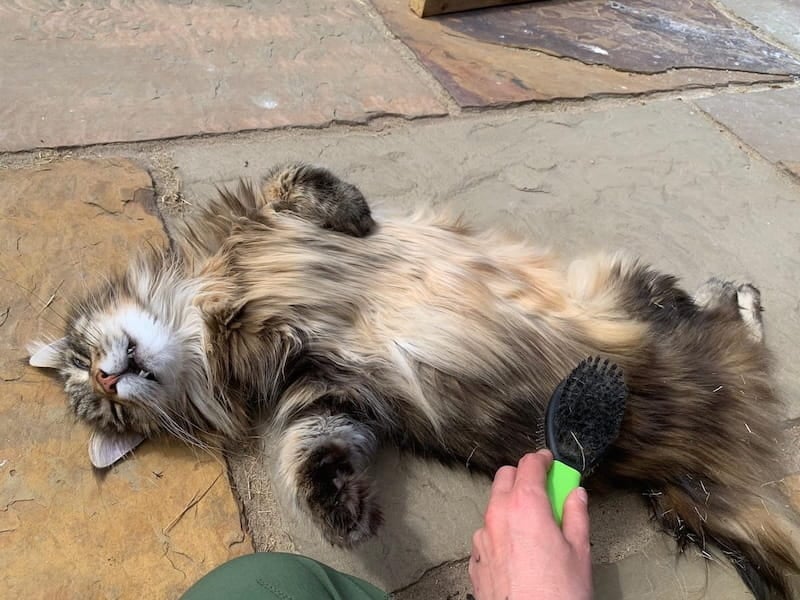
Grooming Sensitivity In Large Breeds
Maine Coons are more prone to grooming-related behaviour problems because their long, dense coats can mat, pull on the skin, and trap debris around sensitive areas.
Common grooming triggers include:
• Matting around the rear end, belly, armpits, or chest
• Skin pulling during brushing
• Static or dry coat sensitivity
• Hip, spine, or lower-back discomfort
• Grooming sessions that last too long
Short, calm grooming sessions with clear stopping points reduce defensive reactions. If your Maine Coon stiffens, flicks their tail, turns their head sharply, hisses, growls, or tries to leave, stop before the behaviour escalates.
For a full grooming guide, see:
👉 How to groom a Maine Coon

Do Maine Coons Have A Temper?
Maine Coons are not known for having a bad temper. They are generally sociable, steady, and people-oriented, but they are still cats with boundaries.
When owners describe a Maine Coon as having a “temper,” they are usually noticing defensive behaviours such as swatting, growling, hissing, nipping, or irritability during handling.
These reactions are usually linked to discomfort, stress, fear, rough play, or overstimulation rather than a bad personality. The important question is not “Does my Maine Coon have a temper?” but “What is triggering this reaction?”
If the reaction is sudden, intense, or linked to being touched in a specific area, rule out pain first.
Related reading:
Maine Coon Health And Wellness
Maine Coon Stress Symptoms
Excessive Vocalization: When Meowing Becomes A Concern
Maine Coons are naturally vocal. Chirps, trills, and conversational meows are part of their social temperament.
But sudden, persistent, loud, or distressed-sounding vocalization is different. When meowing feels new, excessive, or disruptive, it usually points to one of three drivers:
- A medical issue
- Reinforced behavior
- Environmental stress
The goal isn’t to silence your cat. It’s to identify the cause.
Owners often describe persistent vocalisation as “crying,” but the underlying drivers are the same: medical discomfort, reinforcement, or stress.
1. Normal Talking Vs. Red Flag Behavior
Normal vocal behavior often includes:
- Greeting chirps
- Meows are tied to predictable routines
- “Conversational” responses when you speak first
- Excited sounds during play or bird watching
More concerning signs include:
- A sudden increase in intensity or frequency
- Long, loud yowling
- Night vocalization in an older cat
- Meowing paired with hiding, pacing, litter box changes, clinginess, or aggression
- Vocalizing during touch, grooming, jumping, or toileting
If the change is sudden, treat it as medical-first until proven otherwise.
2. Medical Causes That Commonly Present As Meowing
Cats frequently show discomfort through behavior before obvious physical symptoms appear.
Discuss veterinary screening if you notice:
- Night yowling + restlessness (senior cats)
Possible cognitive decline, hypertension, thyroid disease, hearing loss, or pain. - Meowing during litter box use
Think urinary irritation or constipation. - Meowing when jumping, being brushed, or picked up
Consider arthritis, spine discomfort, dental pain, or skin sensitivity. - Increased hunger + weight loss + hyperactivity
In older cats, this pattern can suggest hyperthyroidism.
New vocalization paired with appetite, weight, or mobility changes warrants medical evaluation.
3. Reinforced Attention Or Food-Seeking
Many cats vocalize because it works.
If meowing has ever resulted in:
- Food
- Treats
- A door opening
- Being picked up
- Any attention (even negative attention)
…the behavior may become stronger.
What helps:
- Decide what calm behavior you want instead
- Reward quiet sitting before the meowing begins
- Remove the payoff for demanding vocalization
- Keep feeding and interaction routines predictable
If it works sometimes, it persists.
4. Stress-Driven Vocalization
Some vocalization reflects frustration or environmental instability.
Common triggers:
- Changes in routine
- New pets, visitors, or noise
- Multi-cat tension (even subtle blocking or staring)
- Insufficient enrichment
- Limited vertical space or escape routes
Stress-based vocalization often appears alongside pacing, clinginess, overgrooming, scanning windows, or litter box changes.
If stress is suspected:
- Add short daily interactive play
- Increase vertical resting areas and hiding spots
- Separate key resources in multi-cat homes
- Stabilize routines where possible
Ignoring stress without changing the environment rarely resolves the behavior.
5. Night-Time Meowing
Night vocalization is common in:
- Cats who have learned nighttime attention work
- Under-stimulated cats
- Senior cats with discomfort or cognitive changes
Helpful steps:
- Structured evening play
- Feed the main meal later
- Reduce outdoor visual triggers
- Provide a warm, consistent sleep zone
- Keep night responses calm and predictable
If night yowling is new in an older cat, treat it as a veterinary-first scenario.
Common Mistakes That Make Vocalization Worse
Avoid:
- Inconsistent responses
- Feeding “to stop the noise”
- Punishment or spraying water
- Engaging in prolonged correction
Instead, focus on:
- Predictable routine
- Enrichment
- Medical clearance when needed
- Reinforcing calm behavior early
Maine Coon Jealousy And Attention-Seeking
Maine Coons can display behaviours that look like jealousy, especially in multi-cat homes. This is usually attention-seeking, resource guarding, or social competition rather than human-style jealousy.
Signs include pushing between you and another pet, interrupting grooming or petting, vocalising for attention, blocking another cat, or sitting directly on you when another pet is nearby.
In my home, Bali is the clearest example. If Mika is being groomed or stroked, Bali often rushes over and physically places himself between us. He is not being aggressive; he is redirecting attention onto himself.
Over time, it became obvious that this was triggered specifically by uneven attention, rather than general temperament. Mika has always naturally been my cat, and he likes to sit next to me whilst I work. By comparison, my husband has always been Bali’s favorite human.
How To Manage Jealous Behaviour In Maine Coons
The goal is not to punish the behaviour, but to manage attention fairly and reduce competition.
Effective strategies include:
- Giving each cat individual attention daily
- Avoiding obvious favouritism
- Using structured routines for interaction and play
- Rewarding calm behaviour around other pets
- Redirecting attention-seeking before it escalates
Consistency is key. When attention becomes predictable and balanced, jealous behaviour usually reduces.
Maine Coon Behavior Traits That Influence Problem Patterns
Maine Coons are not behaviorally unstable, but they are:
- Highly intelligent
- Large and physically powerful
- Socially bonded to their families
- Slow to mature (3-5 years)
Because of this:
• Boredom escalates faster.
• Inadequate scratching options cause more damage.
• Pain in the hips or spine may present as grooming aggression.
• Attachment behaviors may look like separation anxiety.
Their size also means that physical discomfort (for example, hip dysplasia or arthritis) can manifest as:
- Avoiding jumps
- Irritability when brushed
- Swatting during grooming
- Sudden defensive behavior
My experience with Pippin’s lower back sensitivity and Mika’s grooming threshold are textbook examples of this.
Real-Life Maine Coon Behavior Case Studies (What Worked For Us)
I’ve lived with three Maine Coons, and they’ve taught me something important: the same “problem behavior” can look totally different depending on the cat’s:
- Coat type
- Temperament
- Pain level
- Early socialisation
1. Carpet scratching that stopped when we placed posts “where the crime happens”
Bali and Mika were scratching carpets in specific areas of the house. Instead of fighting them in the moment, I bought additional heavy-duty scratching posts and placed them exactly where the worst scratching happened. That single change almost completely removed the problem because it redirected the instinct to a better outlet – without turning it into a daily battle.
I purchased our heavy-duty cat scratching posts from Amazon to stop the carpet from being scratched, and now have three big posts in my house in addition to the large cat tree!

If scratching is your issue, go straight to my article How To Stop Maine Coon Scratching Furniture.
2. Grooming aggression that wasn’t “mean” – it was discomfort + boundaries
Pippin and Mika could both become defensive if we tried to remove knots around the rear end. With Pippin, I believe pain and lower-back sensitivity played a role, so we had to keep sessions short, pick calm moments, and accept that forcing the issue would only escalate stress.
With Mika, the reaction is more closely linked to overstimulation and early handling. He will tolerate grooming for a while, but I need to be confident, quick, and stop before he tips into hissing, nipping, or trying to escape. He also responds better if I play with him first, before any grooming tool appears.
3. Overstimulation: the behaviour looks like “aggression” but it’s actually a warning system
None of our cats has been naturally aggressive, but Mika can get overstimulated quickly. The key is learning to spot the early signals before a swat. The early signals are explained in the Overstimulation section above. Once you learn to spot stage one, escalation rarely happens.
When you stop early, the cat learns humans respect boundaries, and the behavior often improves.
Recognizing the Escalation Pattern
Most defensive reactions follow a predictable sequence:
- Subtle tension (tail movement, ear rotation)
- Displacement grooming or freezing
- Brief warning signals (hissing or swatting without contact)
- Escalation if interaction continues
Intervening during stage one or two prevents escalation to stage three or four. Respecting these signals consistently reduces defensive behavior over time.
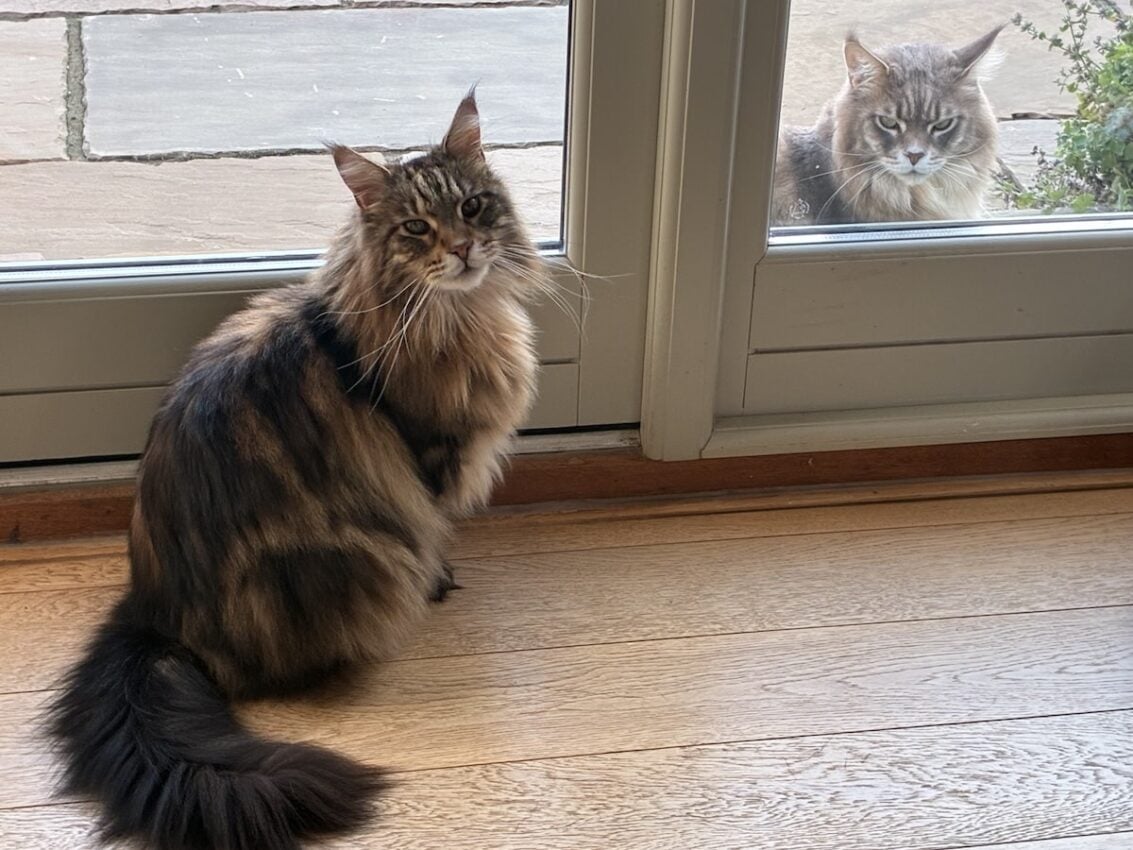
4. Counter-surfing: we trained it out by controlling the environment, not by arguing with the cat
Bali and Mika used to jump on kitchen counters, but the behavior faded once we changed the environment:
- Leaving nothing interesting out overnight
- Tiring the cats with play before bedtime
- Using foil as a short-term deterrent while the habit weakened
Pippin never really did it, and I do think having him from kitten age helped us set rules early.

When To Seek Professional Help
Most Maine Coon behavior problems improve with medical evaluation, environmental adjustments, enrichment, and consistent training. However, some situations require professional support to prevent escalation or protect the cat’s long-term well-being.
Emergency Veterinary Red Flags (Don’t Wait)
- Straining in the litter box
- Blood in the urine
- Frequent trips to the litter box with little output
- Sudden refusal to eat
- Rapid or open-mouth breathing
- Collapse, weakness, or disorientation
- Sudden, severe aggression in a previously stable cat
These signs may indicate urgent medical conditions such as urinary blockage, infection, pain, endocrine disease, or neurological issues.
The American Association of Feline Practitioners (AAFP) emphasizes that sudden behavioral changes are often the first indicator of underlying illness. Behavior should never be treated purely as a training issue until medical causes are ruled out.
Clinical behavior guidelines consistently advise ruling out pain, endocrine disease, urinary conditions, and neurological disorders before labeling a behavior as purely psychological. Early intervention improves prognosis and reduces the risk of chronic stress patterns developing. (Source: AAFP/ISFM Clinical Practice Guidelines, Journal of Feline Medicine and Surgery.)
Consider Professional Behavioral Support If:
- Aggression is escalating or causing injury
- Litter box problems persist after medical clearance
- Anxiety or fear responses are intensifying
- Behavior modification efforts show no improvement after 4-6 weeks of consistent implementation
- Multi-cat tension is creating chronic stress
In these cases, your veterinarian may recommend working with a board-certified veterinary behaviorist or a qualified feline behavior consultant.
Behavioral intervention is often most effective when addressed early, before patterns become deeply reinforced.
Why Early Intervention Matters
The longer a behavior continues, the more ingrained it becomes. Repetition strengthens neural pathways. What begins as mild anxiety, occasional house-soiling, or overstimulation can evolve into chronic stress responses if not addressed appropriately.
Professional guidance protects your cat’s physical and emotional health.
FAQ
Are Maine Coons more aggressive than other breeds?
No. Maine Coons are widely described by breed organizations as sociable, intelligent, and people-oriented. When aggression appears, it is usually linked to pain, overstimulation, fear, or environmental stress.
Why did my Maine Coon suddenly start acting differently?
Sudden behavior changes often indicate pain or illness. Review the Medical-First section above and seek veterinary advice if physical symptoms are present.
Can stress cause litter box issues?
Yes. Environmental stress is strongly associated with house-soiling and urinary flare-ups. Changes in routine, household tension, or multi-cat conflict can trigger elimination outside the litter box.
Why is my Maine Coon suddenly aggressive?
Sudden aggression is often linked to pain, fear, overstimulation, redirected frustration, or stress. If your Maine Coon has suddenly become aggressive, rule out medical causes first, especially if the behaviour appears during grooming, handling, jumping, toileting, or movement.
How do I stop unwanted Maine Coon behaviour?
Start by identifying the cause. Remove accidental rewards, provide a better outlet, reward the behaviour you want, and stay consistent. Punishment, shouting, spraying water, or chasing usually increases fear and can make the problem worse.
Are Maine Coons difficult cats?
Maine Coons are not usually difficult cats, but they are intelligent, social, large, and slow to mature. They need enrichment, routine, grooming, space, and attention. Behaviour issues are more likely when their physical, social, or environmental needs are not being met.
Why is my Maine Coon so needy?
Many Maine Coons seem needy because they are highly social, people-focused cats that enjoy being near their owners. Following you around, sitting nearby, chirping, watching routines, or wanting to be involved in daily life is usually normal bonded behaviour. It becomes more concerning if your Maine Coon shows distress when alone, such as persistent crying, pacing, destructive behaviour, refusing food, or toileting outside the litter tray.
Why is my Maine Coon suddenly scared?
A Maine Coon may suddenly act scared because of a stressful event, loud noise, new person, new pet, change in routine, unfamiliar object, pain, illness, or reduced confidence. Sudden fear should be taken seriously, especially if it appears alongside hiding, aggression, appetite changes, litter tray problems, reduced jumping, or sensitivity when touched.
Are Maine Coons territorial?
Maine Coons are not usually highly territorial compared with some more reactive cats, but they can show territorial behaviour if they feel insecure, stressed, threatened, or if resources are limited. Signs may include urine spraying, scratching, hissing, growling, blocking access, defensive body language, or tension with other pets. Sudden territorial behaviour should also make owners consider pain, illness, stress, or changes in the home.
Why does my Maine Coon growl at me?
A Maine Coon usually growls because they feel uncomfortable, threatened, overstimulated, protective, or physically sore. Growling is a warning signal that means “give me space.” Stop what you are doing, avoid punishment, and look for the trigger. Sudden growling, growling during touch, or growling with hiding, appetite changes, litter tray issues, limping, or reduced jumping should be checked by a vet.
Final Thoughts: Behavior Is Communication
Most Maine Coon behavior problems are not personality flaws. They are signals that something needs attention, whether that is pain, stress, boredom, overstimulation, or an accidentally reinforced habit.
Across Pippin, Bali, and Mika, every behaviour challenge made more sense once I looked at the cause rather than the symptom. Pain, coat discomfort, stress, reinforcement history, and environment all played roles at different times.
Sometimes that cause was simple bonding. Sometimes it was learned reinforcement. Sometimes, as with Pippin becoming more clingy when unwell, it was a sign that something physical needed attention.
The best results came from ruling out medical issues first, adjusting the environment, respecting boundaries, and reinforcing the behaviour I wanted to see more often.