Skip to content
Best Buys: Awesome Cat Products!
Facebook Twitter Linkedin Instagram YouTube Reddit
Meet My Cats!
MCC Cats Extra Large Logo April 2024 Dark Blue - 468 x 60 LARGE - Dark
  • Breed BasicsExpand
    • What Is a Maine Coon? A Complete Beginner’s Guide To The Breed
    • Maine Coon Size & Growth: Height, Weight, Length & Development Stages
    • Maine Coon Personality: Temperament & Behavior Traits
    • Maine Coon Coat, Color & Pattern
    • Maine Coon Grooming: Coat Care, Bathing, Nails & More
    • Maine Coon Diet & Nutrition Guide: What To Feed & How Much
  • Maine Coon CareExpand
    • Maine Coon Diet & Nutrition Guide: What To Feed, How Much, And Full Feeding Routine
    • Maine Coon Grooming Guide: Coat Care, Bathing, Nails & More
    • Maine Coon Litter Care: Trays, Litter, Training & Troubleshooting
    • Maine Coon Health & Wellness: Ultimate Owner’s Guide
  • Personality & BehaviorExpand
    • How To Identify A Maine Coon
    • Personality Traits
  • Products & GearExpand
    • Best Cat Shampoo
    • Best Cat Collars
    • Best Cat Beds
    • Best Cat Trees
    • Best Cat Litter Trays
    • Cat Toys
Recommended Cat Products
MCC Cats Extra Large Logo April 2024 Dark Blue - 468 x 60 LARGE - Dark
Home / Breed / How To Identify A Maine Coon Kitten

How To Identify A Maine Coon Kitten

ByKatrina Stewardson Posted on06/08/202405/11/2025 Last Updated05/11/2025
Maine Coon Central: About Me Page
5
(4)

Maine Coon cats are one of the most popular and sought-after cat breeds, known best for their giant size, lynx-like tufted ears, fluffy paws, and friendly nature.

While they might be well known, this doesn’t mean identifying a purebred kitten is easy. To make things worse, scammers try to pass their kittens off as expensive purebreds, when they’re not, making identification even more difficult!

If you’re wondering how to identify a Maine Coon kitten my comprehensive guide will enable you to spot key characteristics of the breed, helping you purchase in confidence.


Meet The Breed!

Before diving into the specifics of identifying a Maine Coon kitten, it’s essential to understand where the breed came from, and what they’re like as cats.

For starters, did you know that Maine Coons are one of the oldest natural breeds in North America, with a rich history and traits that set them apart from other cats?

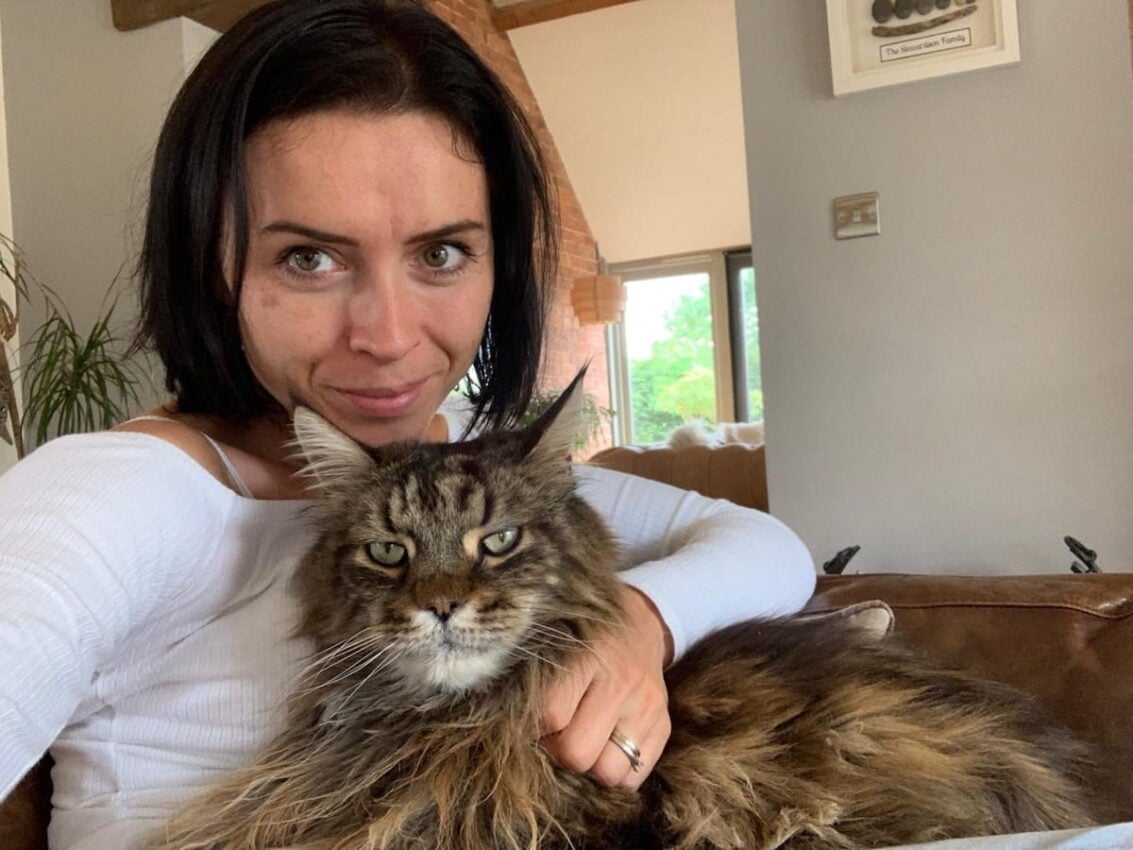
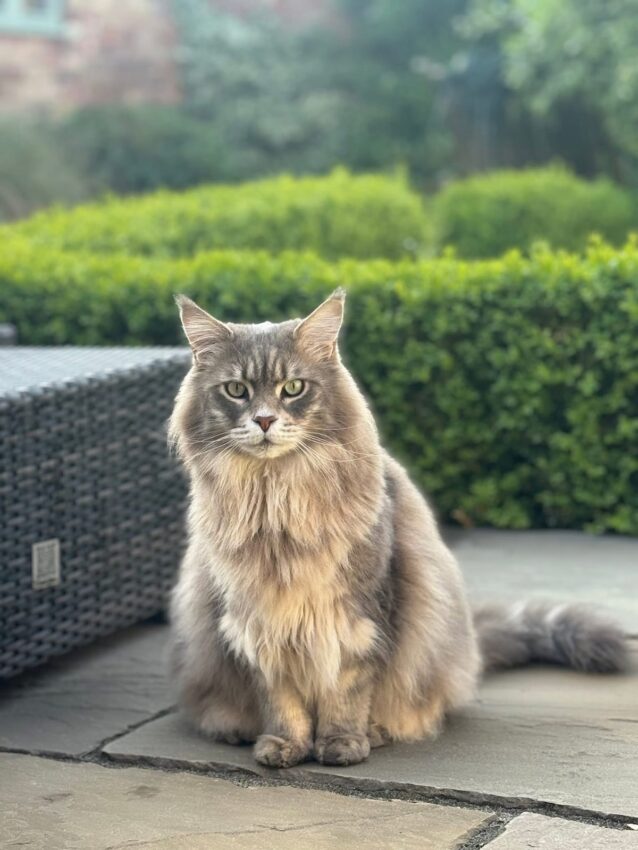
Here are some adorable pictures of my three Maine Coons, Pippin, Mika and Bali:

  • Video Thumbnail: SMARTEST Cat In The World COMPLETES Tricky DOG TREAT Toy!!
  • Pippin playing with hit interactive fish cat toy
  • Maine Coon Cat Breed: Personality, Traits and Characteristics.My Maine Coon Cats Sat On The Rug - Mika and Bali
  • Here are 50 Facts About Maine Coon Cats to get you started!


    History and Origin

    Maine Coon cats originated in the Northeastern United States, in the state of Maine.

    Several theories surround their origin, but one popular legend suggests they are descendants of Marie Antoinette’s long-haired Angora cats, whom she attempted to escape France with during the French Revolution.

    While this story is romantic, it’s more likely this cat breed developed through natural selection:

    • Adaptation to Climate: Maine Coons have a dense, semi-water-repellent coat and a long bushy tail that enables them to stay warm during the harsh, cold winters of Maine. Their large, tufted paws also functioned like snowshoes, allowing them to walk on top of the snow.
    • Hunting Skills: Farmers noticed that Maine Coons were great hunters, and kept them as farm cats to control the mice population.
    • Breed Enthusiasts: In the late 19th century, Maine Coons were showcased at cat shows, and in 1985, they were declared the official state cat of Maine.

    For more facts on this beautiful cat’s history, read my “Complete Guide To Maine Coon Origins“.

    Facts about Maine Coon cats
    Facts about Maine Coon cats

    Personality And Behavior

    Maine Coons are often referred to as “gentle giants” due to their large size and friendly demeanor.

    1. Gentle And Friendly

    Maine Coons are known for their easygoing and affectionate temperament. They enjoy human companionship and are often described as dog-like in their loyalty and behavior.

    They form strong bonds with their owners and love being part of family activities.

    Characterized by an extremely laid-back and non-aggressive nature, this particular cat breed is an ideal family pet, especially for households with young children.

    Here’s a picture of my daughter cuddling Pippin, our first Maine Coon cat:

    Our Maine Coon cat named Pippin, is affectionate to our daughter.

    2. Playful

    Maine Coon kittens are well known for their hugely playful nature, a trait they retain well into adulthood. They are more active than many other breeds and require regular engagement to keep them happy and healthy.

    They enjoy interactive play sessions with their owners, e.g. chasing feather toys, playing fetch, or puzzle feeders. Here are some of my cat’s favorite toys.

    Mika sat next to tower of tracks toy
    Best Cat Toys 2024

    3. Curious

    These curious kittens love exploring their environment. Look for a kitten who enjoys investigating every nook and cranny of the breeder’s home, climbing furniture, and perching in high places.

    4. Intelligence

    Maine Coons are intelligent cats that enjoy problem-solving activities and games that challenge their minds. You can teach them tricks or use interactive toys that require them to think and strategize.

    5. Children And Pets

    Maine Coons are generally very tolerant and get along well with children, making them excellent family pets. Find out why, in this cat guide.

    They typically get along well with other cats and dogs, making them a good choice for multi-pet households. Early socialization helps them develop positive relationships with other pets.

    Are Maine Coon Cats Good With Babies?

    6. Vocal

    While they are more vocal than some breeds, Maine Coons are not typically loud or incessant talkers. Instead, their vocalizations are moderate and usually occur in response to interaction or specific situations.

    These large cats communicate with the following sounds but never meow:

    • Trills
    • Chirps
    • Chattering (they make this sound when talking to birds)

    These sounds are endearing and often used to express affection or curiosity. If you’ve not heard a Maine Coon cat talking, listen to this video I uploaded to YouTube of Mika, my Maine Coon chatting away to me!

    7. Sociable

    Maine Coon kittens are known for their sociable nature and thrive on human interaction. They enjoy following their owners around the home to see what’s happening.

    Female Maine Coons are more reserved than their male counterparts, so are less likely to approach a stranger immediately.

    8. Affectionate

    Maine Coons are affectionate without being overly demanding. Some enjoy sitting on your lap, though most prefer to sit next to, or near you.

    They enjoy being petted, and cuddled, but they are also content to relax nearby if you are busy.

    9. Love Water

    This beautiful cat breed is obsessed with water and can often be found patting and playing with their water bowl. One of my Maine Coons loves to stick his entire face into his water fountain!

    Watch the kitten’s interaction with water, closely.


    Physical Characteristics

    Maine Coon kittens have several distinctive physical traits that set them apart from other breeds, even at a young age.

    Here are the main features to look for:

    Size And Build

    Maine Coon kittens are typically larger than average kittens. Use my Maine Coon sizing table to identify if the kitten you are viewing is an expected weight.

    Maine Coon Growth Chart

    Look for a kitten with a sturdy and muscular build that is in proportion (apart from their paws and ears):

    • Sturdy Build: Maine Coon kittens have a well-developed musculature that gives them a solid, robust appearance. When you pick them up, they should feel heavier and more substantial than other kittens of the same age.
    • Body Shape: Kittens have a long rectangular body shape, a long torso, and a broad chest. They appear more slender than a ‘normal’ cat. Maine Coon kitten’s legs will also be strong, a trait noticeable when they jump.

    My 6-year-old Maine Coon often makes spectacular jumps. Watch Mika fly through the air in this video on the Maine Coon Central YouTube channel:

    Video Thumbnail: Spectacular Cat Jump Caught On Film!

    Ears

    One of the most noticeable features of Maine Coon kittens is their large, wide-set, tufted ears that sit on top of their head, making these cuteys look super alert!

    If you’re viewing a kitten with overly large ears that appear out of proportion to the rest of their body, you might just have found a purebred Maine Coon kitten.

    Not all Maine Coon kittens have tufted ears though, but lynx-like ear tufts that extend from the top of the cat’s ears are a common physical feature of the breed.

    Finally, look at the kitten’s ears to see if they have ear furnishings. These long hairs extend outward and help protect the ear from debris and cold weather.

    Do all Maine Coons have ear tufts? Learn about feline ear tufts and more!

    Fur

    Maine Coons have dense, semi-water-repellent fur with a silky texture, that grows to full length once the cat is fully-grown (between 3-5 years of age).

    They have medium-long thick hair, that is not of even length across their bodies.

    • Silky Texture: A Maine Coon kitten’s fur feels soft, not coarse.
    • Dense Undercoat: Although the kitten’s fur is shorter than an adult Maine Coons, their undercoat should still feel dense. Gently part the cat’s fur to see how thick the fur is.
    • Color and Pattern: Maine Coons come in almost every color and pattern imaginable. Don’t rely on color alone to identify a Maine Coon kitten.

    One of the key physical features of an adult Maine Coon is the ruff of long hair around their neckline. This ruff is thought to resemble that of a lion’s mane.

    BEWARE: Kittens will not have developed a full thick mane by the time you visit them, so take a peek at the kitten’s parents to ensure they have a mane.

    Tail

    The Maine Coons tail is a defining feature of the breed. Check the kitten has a larger-than-average, extra bushy tail that is as long as their body, or longer!

    If you’re curious to discover why the Maine Coons tail is longer than the average cat, make sure you check out this guide.

    A lesser-known tip is to observe how the kitten uses their tail. Maine Coons often wrap their tails around themselves when resting, a behavior developed for warmth and comfort.

    Another physical feature to look out for is a black-colored ring around the end of the kitten’s tail. Although not present in all Maine Coons, this coloring is common amongst tabby Maine Coons.

    Eyes

    Maine Coons have large, expressive eyes that can come in a variety of colors.

    • Large Eyes: Purebred kittens have large, rounded eyes.
    • Eye Colors: All Maine Coon kittens are born with blue eyes – this coloring will change as they age. Look for green, gold, copper eyes, or blue if you are viewing a white Maine Coon.

    Paws

    Adult Maine Coons have large paws with tufts of fur sticking out of them. These big paws enable these stunning felines to walk across the snow, without sinking!

    One rather amusing, and overly cute feature of Maine Coon kittens is that their paws always look out of proportion! Don’t worry, they grow into their paws by 3-5 years.

    The kitten you view should have extra large (and fluffy) paws.

    How To Avoid Maine Coon Scam Artists

    When looking to purchase a Maine Coon kitten, it’s crucial to ensure you’re dealing with a reputable breeder to avoid scams and ensure you’re getting a healthy, purebred kitten.

    Here are some ways you can start verifying a breeder’s legitimacy. For a full guide explaining 24 different scams, make sure you read my Maine Coon Scam guide.

    1. Research the Breeder

    Start by researching the breeder’s online presence. Reputable breeders often have professional websites, social media pages, and listings on reputable cat breeding directories, i.e. TICA.org or CFA.org.

    Look for detailed information about their breeding practices, philosophy, and the cats they breed.

    Check for recent reviews and testimonials from previous buyers. Websites like Google Reviews, Facebook, and specialized cat breeding forums can provide insights into other buyers’ experiences.

    Positive reviews indicate a trustworthy breeder, while negative reviews or a lack of reviews could be a red flag.

    2. Verify Breeder’s Credentials

    Reputable breeders are often affiliated with recognized cat breeding associations, such as:

    • The Governing Council of the Cat Fancy (GCCF) in the UK
    • The International Cat Association (TICA)
    • Cat Fanciers’ Association (CFA)

    These organizations have strict standards for breeders, ensuring ethical practices and healthy breeding.

    Check the breeder’s membership status with these associations. This can usually be done through the association’s website or by contacting them directly. A legitimate breeder will have no problem providing proof of their affiliations.

    3. Visit Breeder’s Facility

    If possible, visit the breeder’s facility in person. This allows you to see the environment where the kittens are raised.

    The facility should be clean, spacious, and well-maintained, with plenty of enrichment activities for the cats.

    Observe the health and behavior of the kittens and their parents. They should appear well-cared for, with clean fur, clear eyes, and active behavior.

    Healthy kittens are typically curious and playful, while a neglected environment can lead to lethargic or sickly cats.

    If an in-person visit is not possible, request a video call. This allows you to see the facilities and interact with the breeder remotely. During the call, ask to see the living conditions, the kittens, and their parents.

    4. Ask For Documentation

    Genuine breeders will provide pedigree papers that detail the kitten’s lineage, proving it is a purebred Maine Coon.

    These papers should be from recognized cat breeding associations and will include information about the kitten’s parents and grandparents.

    Ask for detailed health records, including vaccination history, deworming treatments, and any health checks the kitten has undergone.

    Reputable breeders will ensure their kittens have received all necessary vaccinations and veterinary care before going to their new homes.

    5. Meet The Kitten’s Parents

    Seeing the kitten’s parents can give you a good idea of what the kitten will look like as an adult. Maine Coon parents should exhibit the breed’s distinctive traits, such as large size, tufted ears, and bushy tails.

    Observing the parents’ behavior can give you insight into the kitten’s potential temperament. Friendly, sociable parents are more likely to produce kittens with similar traits.

    Meeting the parents helps confirm the kitten’s lineage and the breeder’s credibility. It’s a strong indicator that the breeder is not operating a kitten mill or engaging in unethical breeding practices.

    6. Watch For Red Flags

    Reluctance to Provide Information

    Be wary of breeders who are unwilling to provide detailed information, pedigree papers, or health records. Transparency is key in ensuring the breeder is reputable.

    Denial of Visits

    If a breeder refuses to allow visits or video calls to their facility, this could indicate they have something to hide.

    Immediate Payment Demands

    Avoid breeders who push for immediate payment without giving you adequate time to consider your decision or who offer significantly lower prices than other breeders.

    Scammers often lure buyers with low prices and pressure them to act quickly.

    Contracts and Guarantees

    Reputable breeders often provide a sales contract that includes health guarantees and a return policy. This indicates they stand behind the health and quality of their kittens.

    Communication

    Good breeders are willing to communicate openly and answer all your questions thoroughly. They are interested in ensuring their kittens go to good homes and will ask you questions to ensure you are a suitable owner.

    How useful was this post?

    Click on a star to rate it!

    Average rating 5 / 5. Vote count: 4

    No votes so far! Be the first to rate this post.

    We are sorry that this post was not useful for you!

    Let us improve this post!

    Tell us how we can improve this post?

    Author

    • Katrina Stewardson

      A Maine Coon cat enthusiast with 13+ years of experience owning three Maine Coon cats. I have first-hand experience with many Maine Coon health issues, e.g., hip dysplasia, bent tail canal, and arthritis. I have experience in training Maine Coons, registered breeders, adopting Maine Coons, and caring for a Maine Coon. I currently own two male Maine Coon cats, named Mika and Bali.

      View all posts Director

    Post navigation

    Previous Previous
    Indoor Vs Outdoor Maine Coons
    NextContinue
    Are Maine Coon Cats Hypoallergenic?
    • YouTube
    • Facebook
    • Pinterest
    • LinkedIn
    • Instagram

    Maine Coon Central is reader-supported. As an Amazon Associate, I earn from qualifying purchases. When you buy through links on our site, we may earn a small commission at no extra cost to you.

    • About Us
    • Contact
    • Terms And Conditions
    • Privacy Policy
    • Accessibility Statement
    • Disclaimer
    • Cat Age Calculator

    © 2025 Maine Coon Central

    Scroll to top
    • Breed Basics
      • What Is a Maine Coon? A Complete Beginner’s Guide To The Breed
      • Maine Coon Size & Growth: Height, Weight, Length & Development Stages
      • Maine Coon Personality: Temperament & Behavior Traits
      • Maine Coon Coat, Color & Pattern
      • Maine Coon Grooming: Coat Care, Bathing, Nails & More
      • Maine Coon Diet & Nutrition Guide: What To Feed & How Much
    • Maine Coon Care
      • Maine Coon Diet & Nutrition Guide: What To Feed, How Much, And Full Feeding Routine
      • Maine Coon Grooming Guide: Coat Care, Bathing, Nails & More
      • Maine Coon Litter Care: Trays, Litter, Training & Troubleshooting
      • Maine Coon Health & Wellness: Ultimate Owner’s Guide
    • Personality & Behavior
      • How To Identify A Maine Coon
      • Personality Traits
    • Products & Gear
      • Best Cat Shampoo
      • Best Cat Collars
      • Best Cat Beds
      • Best Cat Trees
      • Best Cat Litter Trays
      • Cat Toys
    Facebook YouTube Pinterest Reddit
    Search