
Maine Coon Grooming Guide: Coat Care, Bathing, Nails & More
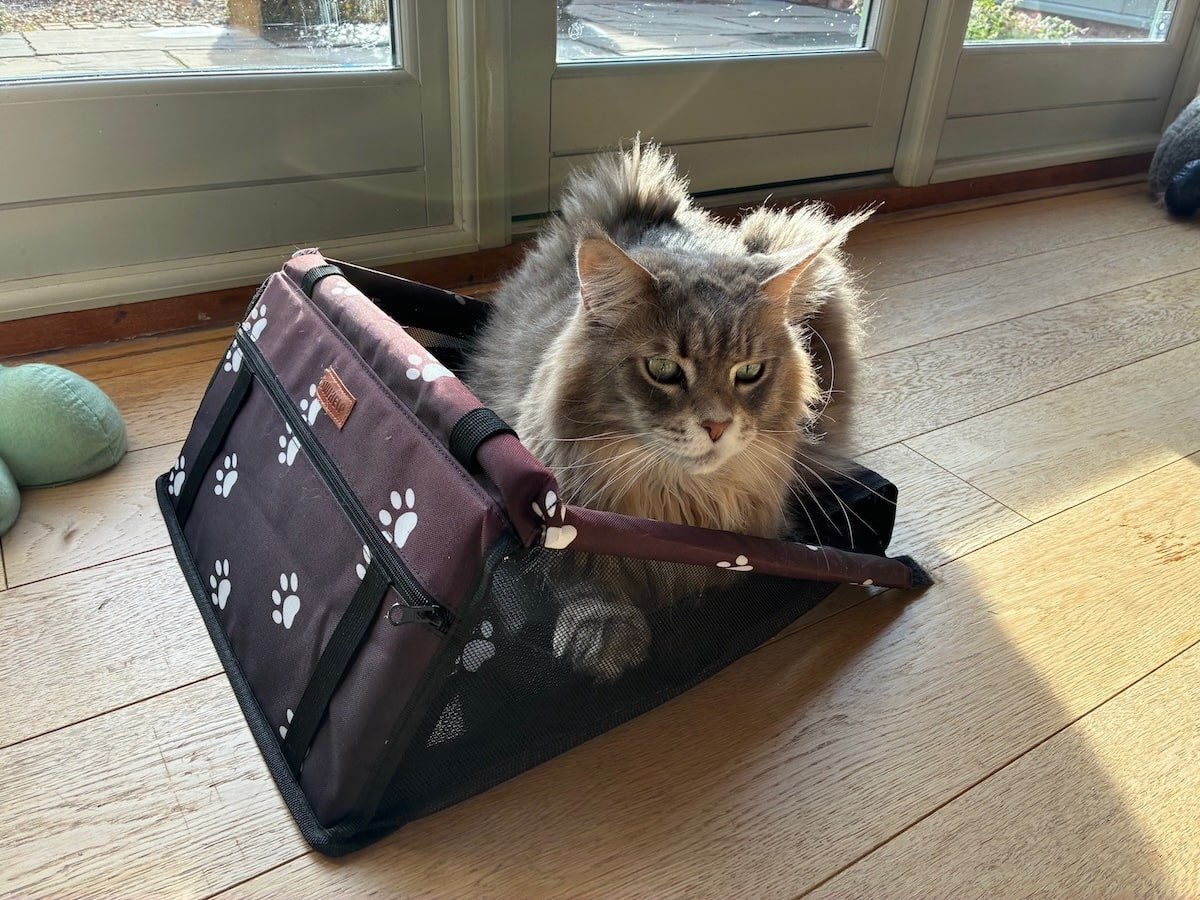
Maine Coons require more grooming than most cats, but understanding their coat, shedding cycle, and basic hygiene needs makes caring for them simple.
Start young and make grooming a positive part of their life. Introducing brushing and handling to kittens when they are small helps them learn that grooming is normal and safe. When grooming became part of my cats’ routine, it made a huge difference.
My Maine Coon, Bali, adapted quickly to brushing. He was introduced to it early, whereas Pippin needed more gentle encouragement because he was fussier as a kitten. In his defence, his fur matted quickly, so he wasn’t a fan of being brushed.
This guide provides a comprehensive overview of everything owners need to know about brushing, bathing, mats, nail trimming, paw tufts, ear care, and overall cleanliness. Each section includes a brief introduction, followed by helpful links to in-depth Maine Coon Central articles for owners who want a deeper dive.


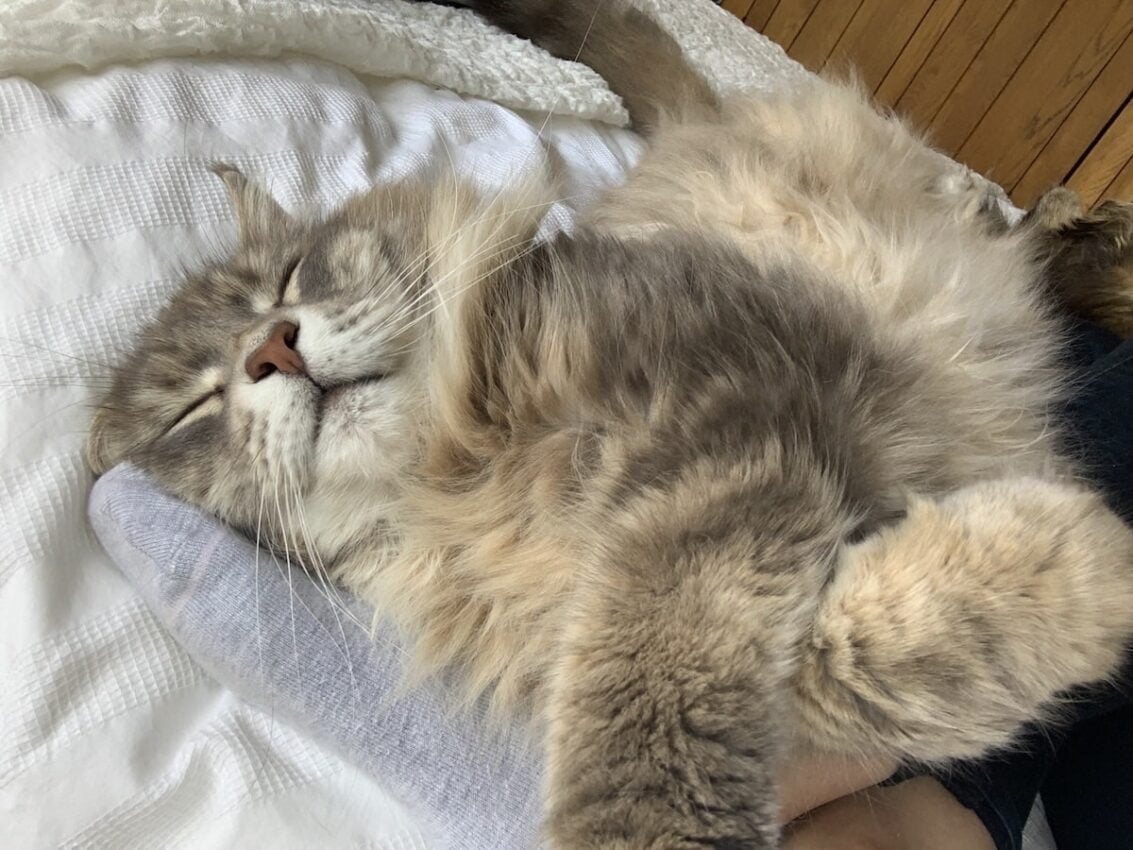
Maine Coon Coat Type And Grooming Needs
Maine Coons have a semi-long, water-resistant coat made up of longer guard hairs and a softer undercoat. While this coat protects them from cold and damp conditions, it also makes them more prone to tangling than short-haired cats.
Areas such as the cat’s armpits, belly, and behind the ears are especially vulnerable to matting due to friction and movement. This is why grooming is a necessary part of Maine Coon care rather than a cosmetic choice.
In practice, this means Maine Coons are far more sensitive to inconsistent grooming than many owners expect. Skipping brushing for even a short period can allow the loose undercoat to compact, especially in areas where the cat twists or curls while sleeping. Once this happens, mats can form surprisingly quickly and are often difficult to remove without causing discomfort.
Owners are often surprised to find mats developing even in cats that appear clean and well cared for, particularly during seasonal coat changes or periods of reduced activity. I know I personally was! It was particularly apparent that Bali, with his silky fur, suffered from mats far less than his brother Mika’s fur, which just loves to tangle on his backend.
In the case of our first Maine Coon kitten, sadly, Pippin became exceptionally hard to groom after he developed mild hip dysplasia and arthritis in his spine when he reached 9 years old (senior feline). To make matters worse, he bent his tail canal when making a bad jump, so he would often lash out with force at us when we tried to groom his fur, which was prone to tangles.
If I’m honest, I was scared of grooming his problem areas as it was clearly painful for him and he hated it, and his claws hurt! But, between my husband and I, we found the best approach was to do super short, speedy grooming sessions together to limit Pippin’s distress. Whilst rushing the brushing is usually less advisable, in Pippin’s case, it was essential.
Now that we understand the coat, let’s talk about brushing frequency…


How Often Should I Brush My Maine Coon?
Maine Coons have a dense, semi-long double coat designed for harsh winters. This means they shed year-round, with heavier seasonal moults in spring and autumn. This seasonal shedding is normal and does not usually indicate a health problem.
Most Maine Coons benefit from brushing 2-3 times per week under normal conditions. During seasonal coat changes, more frequent (daily) brushing can help manage loose fur and prevent knots from forming.
A good routine is to increase to daily brushing during heavy shedding phases in Spring and Autumn, check mat-prone areas (armpits, belly, behind ears) every few days, and do quick hygiene checks weekly (ears, eyes, claws).
Brushing frequency will ultimately depend on the individual cat’s coat texture and lifestyle. Maine Coons with very dense undercoats or those that spend more time resting indoors often require more frequent grooming than cats with lighter coats or higher activity levels.
A good rule of thumb is to increase brushing temporarily if you notice more fur collecting on bedding, furniture, or in the brush itself. This usually signals the start of a shed rather than a grooming failure.
If your Maine Coon spends time outdoors or has a thicker ruff and undercoat, you may need a slightly more intensive routine. Owners often underestimate how quickly tiny knots form behind the armpits, around the chest, or along the trousers.
An additional benefit of regular grooming is that it prevents matting, keeps natural oils balanced, and helps owners spot skin conditions early.
The most important tip I can give you is that consistent, gentle grooming is far more effective than occasional intensive sessions and is usually better tolerated by the cat. All owners should pay particular attention to their cats’ high-friction areas, such as the belly, armpits, and behind the ears.
If you keep the routine light and consistent, you prevent the “sudden matting crisis” that often happens when grooming is skipped for a short period.
Two out of three of our Maine Coons have had fur prone to tangles, so I would also recommend extra brushing around the base of your cat’s tail and their britches/pantaloons.
And, most importantly, creating a calm and positive grooming environment builds trust. To achieve this, owners should set aside time when they are feeling relaxed, then use gentle motions, and always observe their cat’s body language.
If your Maine Coon shows stress, pause and try again later. Offering a treat or affection at the end of a session helps them associate grooming with good things rather than forceful handling.
In our home, grooming needs vary by cat: Bali’s silky coat resists mats and often needs less intensive brushing, whereas Pippin’s undercoat matted easily if brushing was missed even one day. Mika falls between the two; his backend fur especially benefits from focused attention during hygiene checks. Adapting routines to each cat’s coat makes grooming more predictable and less stressful.
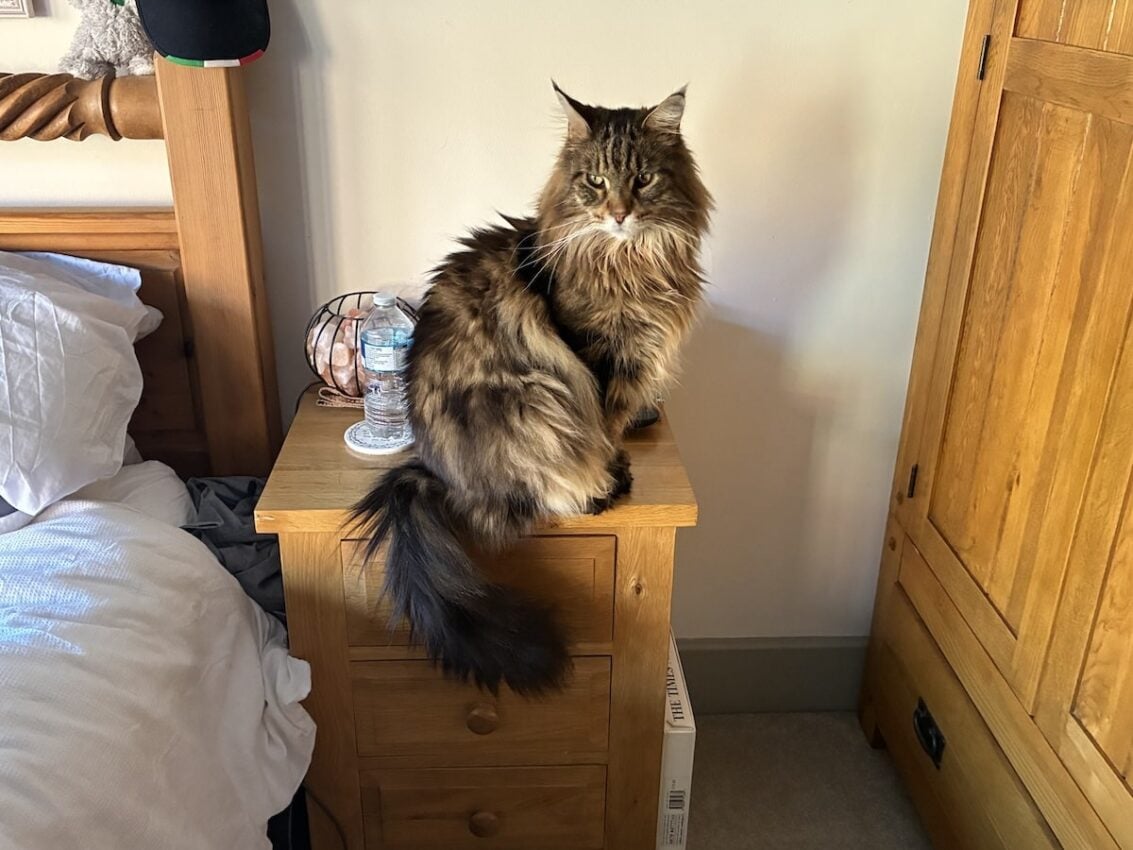
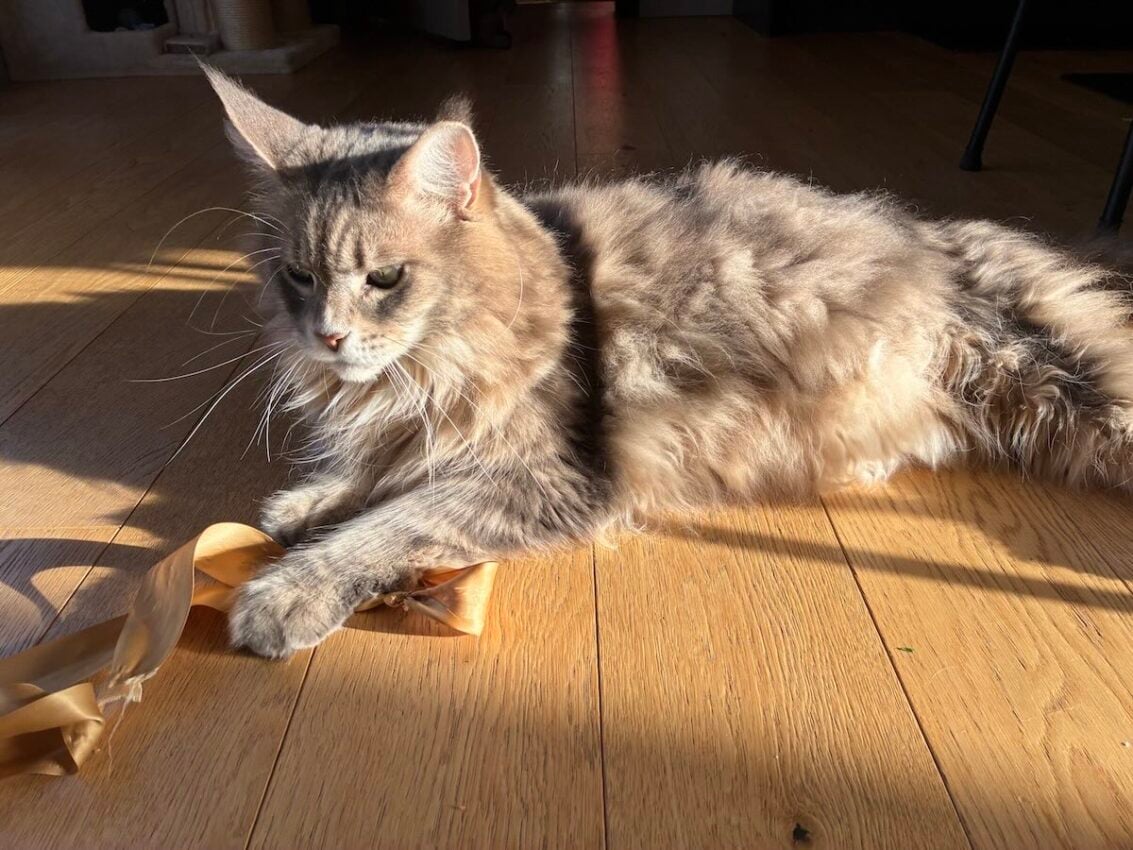

Please note that shedding that is sudden, excessive, or accompanied by bald patches, skin irritation, or behavioural changes should not be dismissed as routine and may warrant further investigation.
Normal shedding tends to be even across the body and does not usually affect the skin beneath. The coat may feel lighter, but the skin should remain healthy and unbroken.
Shedding becomes more concerning when it is patchy, accompanied by redness, scabbing, excessive scratching, or behavioural changes such as over-grooming. In those cases, grooming alone is unlikely to resolve the issue, and underlying causes should be considered.
How To Brush A Maine Coon (Beginner Step-By-Step)
Brushing a Maine Coon doesn’t need to be complicated or time-consuming. The goal is to keep the coat comfortable and mat-free while building a routine your cat will tolerate.
- Start with the right moment: Choose a time when your cat is relaxed, such as after a meal or play. A non-slip surface, like a sofa, bed, or towel on a table, helps them feel secure. Keep early sessions short – even two to five minutes is enough.
- Do a quick mat check: Before brushing, run your fingers through your cat’s coat and feel for knots in the areas most likely to tangle – behind the ears, under the armpits, around the chest ruff, along the belly, and around the backend. If you find a tight knot close to the skin, avoid brushing straight over it.
- Begin with the easy areas: Start brushing the cat’s back and sides using slow, gentle strokes in the direction of hair growth. These areas are usually well tolerated and help your cat relax before you move to more sensitive spots.
- Move to high-friction zones: Once your cat is comfortable, brush smaller sections such as the chest, behind the ears, and armpits. Use shorter strokes and support the fur with your free hand so you’re not pulling the skin. Only brush the belly if your cat allows it.
- Deal with small tangles carefully: For minor tangles, hold the fur close to the skin and work from the ends of the hair inward, loosening the knot gradually. If a tangle tightens, stop and return to it later. Never force a brush through a tight mat.
- End on a positive note: Finish with a few gentle strokes in an easy area, then stop before your cat becomes irritated. Treats, praise, or play help reinforce grooming as a positive experience.
A simple routine most beginners can follow:
Brush two to three times per week during most of the year, increasing to daily brushing during heavy shedding periods. Check the backend every few days, especially in cats prone to matting in that area.
For deeper guidance on coat care and which tools work best, visit:
• 5 Brushes For Maine Coons That Work!
• 7 Proven Strategies To Prevent Matted Fur In Maine Coons
• Causes Of Crazy Maine Coon Shedding & How To STOP It!


Grooming Tools For Maine Coons: What You Actually Need
Since Maine Coons have a dense, semi-long coat with both guard hairs and undercoat, no single grooming tool can do the entire job properly. Using the right combination of tools makes grooming faster, more comfortable for your cat, and far more effective at preventing mats.
1. Wide-Toothed Combs
Wide-toothed combs are among the most essential tools for Maine Coons. They allow you to gently separate the fur and check for tangles close to the skin, especially in high-risk areas such as the:
- Armpits
- Chest ruff
- Behind the ears
- Along the belly
Combs are particularly useful before brushing, as they help identify knots without pulling or tearing the coat.
2. Slicker Brushes
Slicker brushes are excellent for removing loose undercoat and preventing mat formation when used correctly. Their fine, flexible pins reach into the thicker layers of fur and lift out dead hair that would otherwise compact and tangle.
Slickers work best when used with light pressure and short strokes, rather than dragging them through the coat.
3. Soft Bristle Brushes
Soft bristle brushes are ideal for finishing and maintenance. They don’t remove heavy undercoat, but they smooth the fur, distribute natural skin oils, and improve coat shine.
Many Maine Coons tolerate these brushes very well, making them useful for quick grooming sessions or for cats that are sensitive to heavier tools.
4. Dematting Tools Or Mat Splitters
Dematting Tools or Mat Splitters can be helpful for stubborn tangles, but they should be used cautiously. These tools are designed to break mats apart gradually rather than pulling them free.
They are most effective on small, developing mats and should never be forced through tight knots close to the skin. If a mat is dense or causes discomfort, professional help is safer than aggressive home removal.
5. Nail Clippers
Nail clippers are also part of a complete grooming toolkit.
Maine Coons have large, strong claws that can grow quickly, particularly in indoor cats. Regular trimming every few weeks helps prevent snagging, discomfort, and accidental scratches during play or handling.
Because tool choice makes such a difference to both results and comfort, it’s worth selecting brushes designed specifically for long-haired breeds. My guide to the best brushes for Maine Coons explains which tools work best for different coat textures and grooming needs, and how to choose brushes that suit your individual cat.
Using the right tools, and using them gently and consistently often makes the difference between grooming feeling like a struggle and becoming a calm, manageable routine.
A thoughtful brushing routine uses a few complementary tools. Start with a wide-toothed comb to gently detangle the undercoat, then follow with a slicker brush to remove loose fur and prevent mats. Soft-bristled brushes are excellent for finishing touches and improving shine.
In our home, Mika enjoys the gentle pressure of a soft bristle brush and a comb, whereas Pippin tolerated the slicker brush better because it moved through his thicker fur more efficiently. We used a Furminator (de-matting rake) and mat splitter to help break up Pippin’s stubborn tangles before they tightened into painful mats. By comparison, Bali’s fur is so silky that he only needs a soft bristle brush to keep his fur tangle-free.
To learn more about the best brushes for the long-haired Maine Coon cat breed, read my article:
Do Maine Coons Need Baths?
Most Maine Coons do not need regular baths. Bathing should be used as a tool for specific situations, not as part of routine grooming.
When Bathing Is Appropriate
A bath may be helpful if:
- The coat feels sticky or waxy due to grease buildup that brushing can’t manage
- If there is a persistent odour
- If long fur has become heavily soiled around the rear from fecal contamination
- When a cat gets into something that can’t be spot-cleaned
- When a veterinarian recommends medicated bathing
When bathing is necessary, use a gentle, cat-safe shampoo. Drying your cat’s coat thoroughly helps protect both their coat and skin.
Never use human shampoos or products containing fragrances, alcohols, or essential oils.
When Bathing Is Usually Unnecessary
Normal shedding, mild oiliness, or small dirty areas can almost always be managed with brushing and spot-cleaning.
Additionally, bathing is not a solution for mats since water can tighten the mats and make them harder to remove.
Frequency Rule
If you feel your Maine Coon “needs a bath” more often than every six to eight weeks, it usually means grooming routines need adjusting, or there may be an underlying coat or skin issue. Increasing bath frequency rarely fixes the root problem.
After-Bath Care Matters
If you do bathe your cat, thorough drying is essential. Leaving your Maine Coon with a damp undercoat can quickly lead to matting and skin irritation.
Once the coat is completely dry, a gentle brush helps prevent tangles from forming.
When To Seek Professional Help
If bathing causes significant stress, if mats are close to the skin, or if you notice redness, scabs, or ongoing greasy changes, it’s safer to involve a professional groomer or your veterinarian rather than continuing at home.
Many Maine Coon cat owners worry that they should be bathing their Maine Coon regularly to keep the coat healthy, but this is rarely necessary. Over-bathing can strip natural oils and lead to dryness, irritation, or increased oil production as the skin tries to compensate.
If bathing becomes a recurring need rather than an occasional intervention, it’s worth reassessing grooming routines, coat condition, and overall health rather than increasing bath frequency.
If your Maine Coon’s fur feels sticky, develops an odour, or accumulates debris that regular grooming can’t handle, a bath may be appropriate. However, if the coat is clean and well-brushed, frequent bathing can strip natural oils and lead to irritation.
Below are two images – one is of Bali, our Maine Coon, sitting next to the bath. The other is a screenshot from my Maine Coon Central YouTube channel of Pippin’s first experience taking a bath. I’ve made a YouTube video about it here, and it’s safe to say the process was an EPIC fail!!


Hands up, we didn’t realise in the beginning that we needed to bathe our Maine Coon. So, as you will see in my YouTube video, Pippin is not in agreement that he should START having baths! Can you blame him?!!
Maine Coon Central’s Independent Cat Research
To better understand real-world grooming habits, I ran an independent poll within the Maine Coon Central YouTube community, which is home to over 20,000 followers.
My “Do you bathe your Maine Coon cat?” poll study was conducted in November 2023 and reflects responses from experienced Maine Coon owners rather than theoretical advice.
The results clearly showed that the majority of owners do not bathe their Maine Coons regularly (71%), reinforcing the idea that routine bathing is rarely necessary when proper brushing and coat maintenance are in place.

Trimming Maine Coon Cat Claws
Claw trimming is an important part of grooming for many Maine Coons, but how often it’s needed depends heavily on lifestyle.
Maine Coons have large, strong claws that can grow quickly, particularly in indoor or minimally active cats. If claws become too long, they can catch on fabrics, curl toward the paw pad, or cause accidental scratches during play or handling.
For most indoor Maine Coons, claws typically need trimming every two to four weeks. The goal is not to remove the claw entirely, but to blunt the sharp tip so the claw stays comfortable and functional without becoming problematic.
Claw trimming is usually needed when:
- Claws are catching on carpets, furniture, or blankets
- You hear claws clicking on hard floors
- Claws appear long or curved when the cat is relaxed
- Playtime results in frequent accidental scratches
When trimming, only the clear tip of the claw should be clipped. The pink area inside the claw (the quick) contains nerves and blood vessels and should never be cut. If you’re unsure, trimming less rather than more is always safer.
Outdoor Access Makes A Difference
For Maine Coons with regular outdoor access, claw trimming may be needed far less often – or not at all. Cats that climb, walk on varied surfaces, and dig naturally wear their claws down over time. In these cases, claws tend to blunt gradually rather than grow long and sharp.
In my personal experience, we’re fortunate to be able to allow our Maine Coons to roam freely within our land. Though, to be honest, Mika really doesn’t like roaming more than 30 yards from the back door! We live in the countryside, and the nearest road is well beyond our Maine Coon cats’ roaming distance.
I’ve never trimmed any of my Maine Coons claws as it hasn’t been necessary since they naturally maintain their claws through outdoor activity; however, this hasn’t prevented our hardwood floor panels from suffering from trillions of cat scratching marks during their play and zoomies sessions, but hey ho … that’s life with Maine Coon cats!
That said, even outdoor cats benefit from occasional checks. Older cats, less active cats, or those that climb less may still develop overgrown claws that need attention.
When To Trim – And When Not To
You should consider trimming your Maine Coons claws if they are clearly overgrown or causing issues, regardless of whether your cat goes outdoors. However, if your Maine Coon is active outside and its claws appear naturally worn and comfortable, routine trimming may not be necessary.
If your cat becomes stressed during nail trims, or if you’re unsure about technique, a groomer or veterinarian can demonstrate safe trimming and help you decide whether it’s needed at all. However, never assume all veterinarians agree to trimming a cat’s nails, as ours certainly doesn’t agree with it.
Like most grooming tasks, claw care is about observation rather than rigid rules. Checking claws regularly and responding only when needed is often more effective, and far less stressful, than trimming on a fixed schedule.
For tools help, visit:
• 4 Nail Clippers Maine Coon Owners Swear By…
When Maine Coon Paw Tuft Trimming Is (And Isn’t) Needed
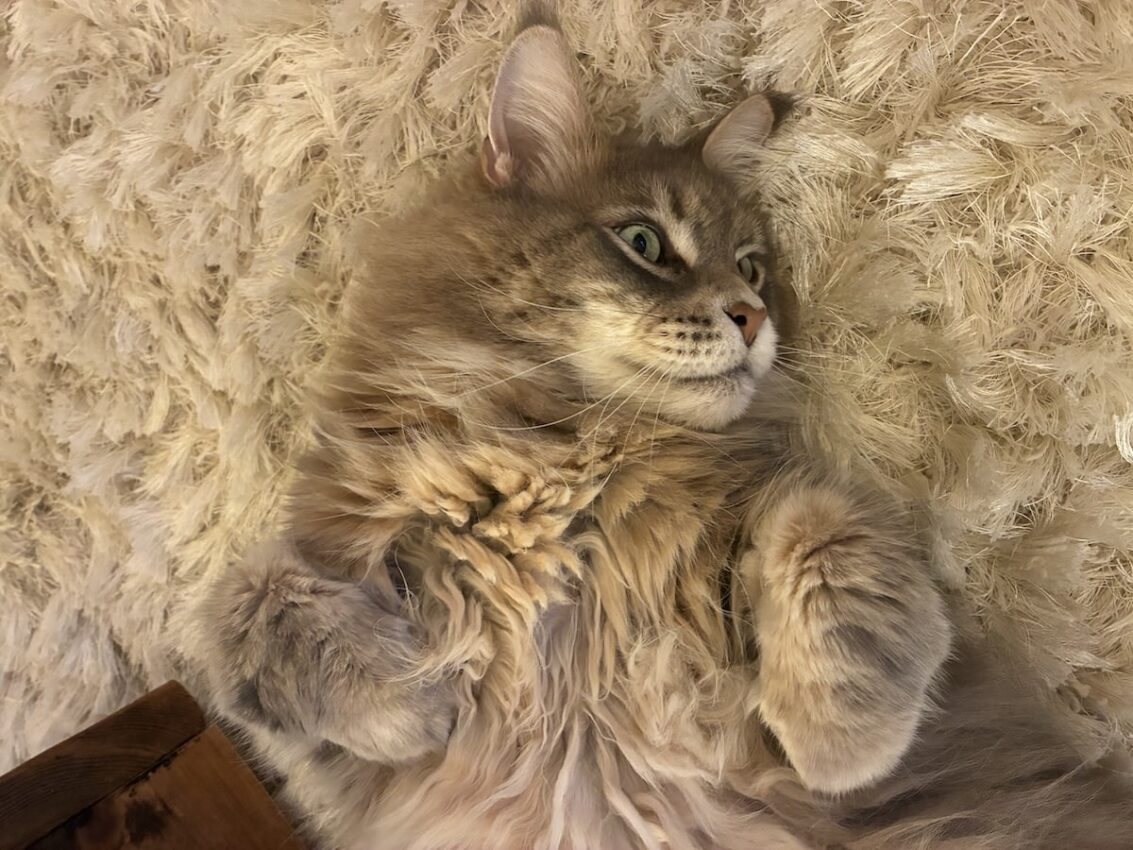
Maine Coons are well known for the long tufts of fur that grow between their toes. These paw tufts are a natural part of the breed and help protect the feet in cold or rough conditions. In many cases, they don’t cause any problems at all and can be left completely untouched.
Paw tuft trimming is only necessary when the fur between the toes begins to interfere with movement or hygiene. This can happen if tufts grow long enough to reduce traction on smooth floors, collect litter, or trap debris after outdoor exploration. When this occurs, light trimming can improve comfort and prevent slipping.
Trimming paw tufts is not a routine requirement for every Maine Coon.
In our experience, we’ve never needed to trim paw tufts on any of our Maine Coons (Pippin, Bali, and Mika). None of our cats has developed paw fur that caused slipping, discomfort, or hygiene issues, even with regular outdoor access. For many Maine Coons, paw tufts remain manageable on their own and don’t require any intervention.
If trimming is needed, it should be done conservatively. The goal is simply to tidy excess fur that protrudes beyond the pads, not to remove the tufts entirely. Using small, blunt-ended scissors and trimming only what is clearly causing an issue helps avoid accidental cuts or stress.
As with most grooming tasks, paw tuft care should be guided by observation rather than routine. If your Maine Coon moves comfortably, maintains good grip, and doesn’t track litter or debris excessively, there’s usually no reason to trim paw tufts at all.
Dealing With Mats & Tangles
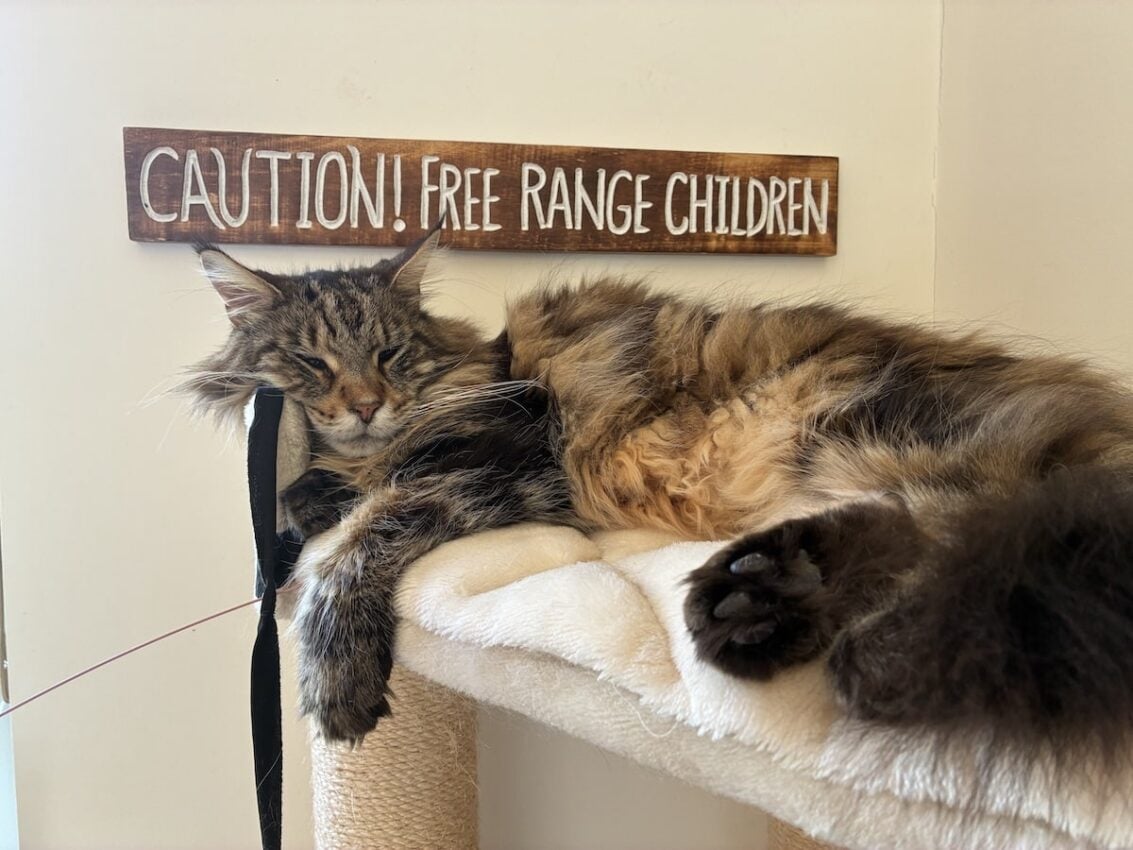
Mats occur when knots bind tightly against the skin. If ignored, they become painful to your cat and may require professional grooming or partial shaving.
Maine Coons commonly develop mats:
- Behind their armpits
- Under their collar area
- Along their trousers
To remove small tangles, use a detangling comb or gently work through the knot with your fingers. Never use scissors near the skin – they can cause serious injury.
For severe or densely packed mats, a professional groomer may recommend a lion cut or partial shave to prevent skin trauma.
For full guidance on mat removal and shaving options, take a look at:
• 7 Proven Strategies To Prevent Matted Fur In Maine Coons
• Shaving Maine Coon Cats | Advice, Risks & Tips
• Maine Coon Lion Cuts: Dangers & Benefits
Cleaning Ears, Eyes, And Teeth
Basic hygiene goes beyond coat care since Maine Coons can be prone to:
- Wax buildup
- Tear staining
- Dental issues
Weekly ear checks help detect mites, inflammation, or excessive wax.
Clean only the visible outer ear flap – never insert anything into the ear canal. For eye care, gently remove debris using a damp cotton pad.
Dental care is essential for preventing gum disease, tartar, and tooth loss. Brush your Maine Coon’s teeth several times a week using cat-safe toothpaste, and provide dental treats or chews to support oral hygiene.
For deeper help on hygiene care:
• 4 Best Cat Ear Drops | Infection, Wax & Mites
• Maine Coon Teeth Problems
• Maine Coon Tooth Loss
When we adopted Mika and Bali at four years old, both already had significant gingivitis, and restoring their dental health has been an ongoing challenge. Bali had already lost six teeth before coming to us, and since then, we’ve paid £690 (≈ $870) for a further tooth extraction along with a full scale and polish. Mika later required one tooth to be removed, costing £720 (≈ $910). Their experience highlighted just how common dental disease can be in Maine Coons, and how quickly costs can escalate once problems are established, even with regular grooming and care elsewhere.


Oily Or Greasy Fur In Maine Coons
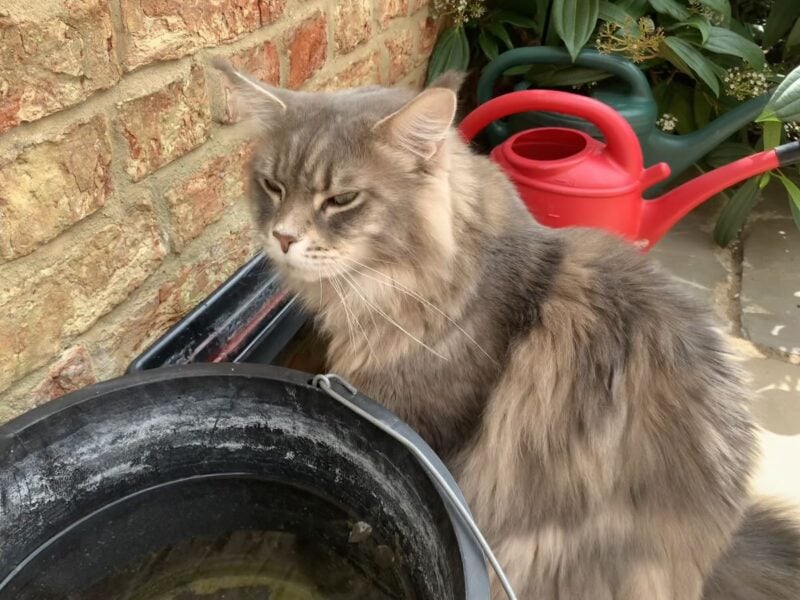
Some Maine Coons naturally produce more skin oils than other breeds, which can cause the coat to feel greasy, particularly along the spine or at the base of the tail. This is more common in intact males but can occur in females and neutered cats as well.
A mildly oily coat does not automatically mean a cat is dirty or unhealthy. Regular brushing helps distribute oils evenly through the fur, often improving texture without the need for frequent bathing.
Sudden or extreme oiliness, especially when paired with skin changes or odour, should be assessed further rather than managed with repeated bathing.
Mild oiliness is often most noticeable along the spine, tail base, and chest, where natural oils accumulate more easily. In many Maine Coons, this oiliness fluctuates over time and may become more noticeable during hormonal changes, stress, or periods of reduced grooming.
Repeated bathing is rarely the solution and can actually worsen the problem by stimulating increased oil production. In most cases, improving brushing consistency and coat airflow is more effective than washing.
In my experience, coat oiliness can vary significantly between individual Maine Coons. Pippin regularly developed oily, greasy fur around his ruff, the base of his tail, and his backend, while Mika and Bali have never shown signs of oiliness at all.
In hindsight, this difference would make sense. We suspect Pippin suffered from hypertrophic cardiomyopathy, and he sadly passed away at the age of ten, which suggests an underlying health issue may have contributed to his coat condition. His strong dislike of being brushed also compounded the problem, making it harder to distribute natural oils through the coat and manage buildup effectively.
This experience reinforced for us that persistent oiliness can sometimes reflect deeper factors beyond grooming alone, and that individual temperament plays a significant role in how manageable a cat’s coat is day to day.


Diets’ Impact On Coat’s Health
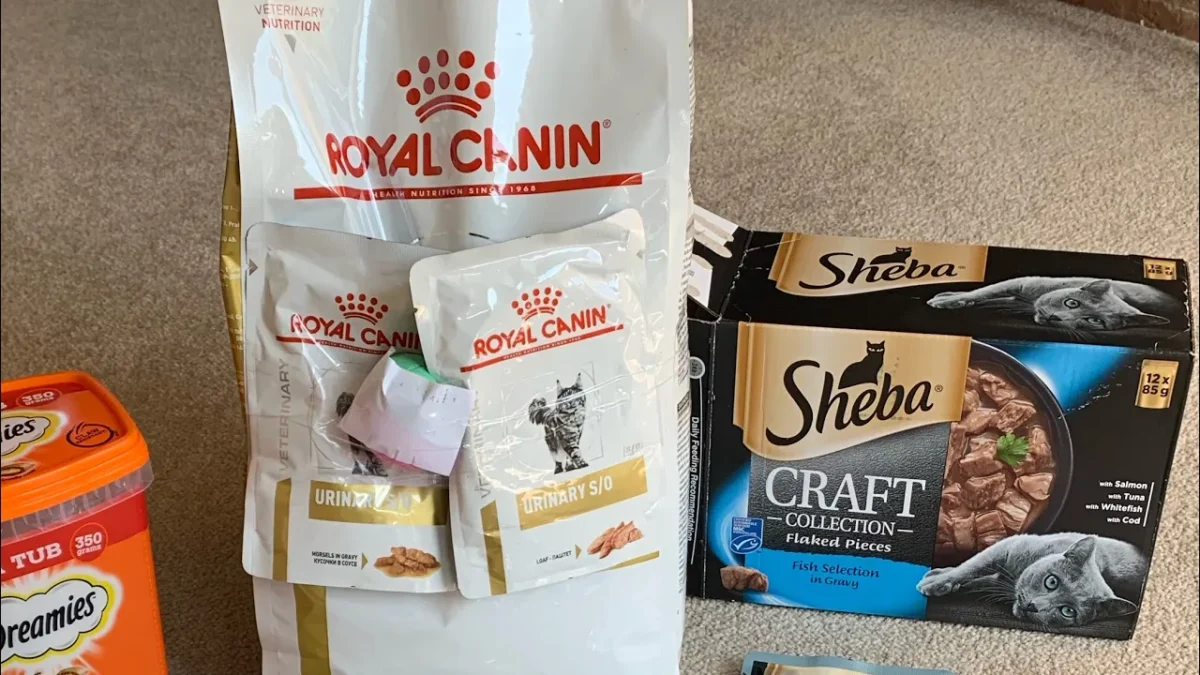
A balanced diet plays a surprisingly big role in coat quality. Maine Coons need high-quality protein and essential fatty acids to support healthy skin and a glossy coat.
If a coat becomes dull, brittle, or sheds excessively despite good grooming, evaluating diet together with your vet often reveals nutritional factors that improve coat condition alongside brushing and care.
Learn more about what to (and what not to) feed your cat:
- 18 Deadly Foods To NEVER Feed Your Maine Coon
- 5 Best Cat Foods For Maine Coons
- Wet Food For Maine Coon Kittens
- Cat Foods That Reduce Shedding In Maine Coons
- 7 Sneaky Maine Coon Food Allergies
- Human Foods That Maine Coon Cats Can Eat
- Homemade Cat Food Suitable For Maine Coons
- How Long A Maine Coon Cat Can Go Without Food


How To Keep A Maine Coon Clean Day-To-Day
Keeping a Maine Coon clean is usually about consistent, small habits rather than frequent bathing. Regular brushing removes loose fur and surface dirt, while spot-cleaning muddy paws, food residue, or the rear after litter use helps prevent hygiene issues from building up.
Backend tangles are one of the most common “real-life” grooming problems with Maine Coons. With our Maine Coon Mika, the fur around his rear gets matted more easily than the rest of his body, so a quick check after litter use (and keeping that area lightly maintained) prevents bigger issues later. This type of targeted routine is often more effective than bathing more often.
Long-haired cats are more prone to hygiene challenges simply because fur can trap debris more easily. Even well-groomed Maine Coons may occasionally need help after using the litter tray or exploring outdoors.
Addressing these issues early, before fur becomes soiled or compacted, is far easier and less stressful than dealing with dried mess or matting later.
1. Claw And Nail Trimming
Nail trimming is part of grooming, too. Maine Coons have strong, retractable claws that grow quickly, especially in indoor cats that don’t wear them down naturally.
Trim claws every 2-3 weeks, on indoor Maine Coons, clipping only the clear tip to avoid the sensitive quick. If trimming yourself feels intimidating, ask a groomer or vet to show you the safest technique.
2. Backend Hygiene
Long fur around the cat’s rear can trap litter and moisture more than you expect. Regularly checking and lightly trimming this zone reduces matting and keeps your cat more comfortable.
And, beware!! Because this part is SUPER gross and disgusting. If your Maine Coon has a sensitive stomach and gets diarrhea, you’ll need to wash their bum if runny poo goes down their pantyloons. This is gag-worthy, but your cat needs your help!
I recommend you use multiple lukewarm, damp wet cloths to clean your cat’s bottom, or spray their backend in the shower with lukewarm water (provided the shower doesn’t scare them). Whichever option you choose, make sure you clean your cat in a small contained room, i.e., a bathroom or utility room with the door closed, as in my case, Bali is NEVER a fan!! Can you blame him?!!
In my experience, I’ve found Bali, my Maine Coon has such super fluffy britches/pantyloons that we find dangleberries/cling-ons attached to him roughly once a month. I know this is gross, but as a part of being a responsible Maine Coon owner you need to remove these to keep your cat’s bottom clean. It’s not like they are trying to take poop around your home!
Preventing Maine Coon Matting
Mats are tight clumps of fur that form when loose hair becomes tangled and compacted. In Maine Coons, mats usually develop from the shed undercoat that gets trapped beneath longer guard hairs. Once this undercoat twists and tightens, it can pull on the skin, trap moisture, and become uncomfortable very quickly.
Maine Coons are particularly prone to matting because of their dense, semi-long coats and the amount of friction their fur experiences during everyday movement.
Mats most commonly form in high-friction areas such as behind the ears, under the armpits, along the chest ruff, on the belly, between the hind legs, and around the backend. Seasonal shedding, reduced activity, illness, or missed grooming sessions can all accelerate mat formation.
Why Mats Can Become A Problem
Small tangles can tighten into firm mats surprisingly fast. Once established, mats restrict airflow to the skin, trap dirt and moisture, and may cause irritation or soreness. Left untreated, severe mats can even hide skin infections or wounds beneath them, which is why early prevention is far easier than removal.
How To Prevent Matting In Maine Coons
Preventing mats is largely about consistency and early detection, rather than intensive grooming:
- Brush regularly, focusing on high-risk areas rather than just visible fur
- Use your fingers during quick daily checks to feel for small tangles before they tighten
- Increase grooming frequency during seasonal sheds when loose undercoat builds up quickly
- Address hygiene promptly, particularly around the backend, where moisture and debris can collect
- Keep sessions short and calm, as stressed or resistant cats are harder to groom thoroughly
If a small tangle is caught early, it can usually be loosened gently without discomfort. Once mats become tight, sit close to the skin, cover a large area, smell musty, or your cat becomes distressed when you try to work on them, home removal becomes more difficult, and it’s safer to stop and involve a professional groomer or your vet.
Severe mats can trap moisture and irritate skin, and removing them incorrectly can cause pain or injury.
Understanding how and why mats form helps owners focus on prevention rather than reacting to problems once they’ve already become uncomfortable.
Many Maine Coon owners find that grooming needs change over time. Kittens and young adults often require less maintenance, while grooming demands increase as the coat fully develops and activity levels change. Paying attention to these shifts helps owners adapt routines before problems develop rather than reacting after they appear.
If you have a Maine Coon cat like our Pippin, who mats easily, early action matters more than intensity. The goal isn’t aggressive brushing – it’s catching tiny tangles before they tighten. If your cat is more like Bali with a silky coat, you may find you can maintain the coat with fewer sessions, but you still need to increase grooming during seasonal sheds.
Maine Coons can have sensitive skin, and harsh brushing or inappropriate tools can irritate it. Always use brushes designed for long coats and move in the direction of hair growth to minimize pulling.
Pay attention to places like the belly, behind the ears, and legs, where the skin is more delicate. Positive reinforcement and gentle handling reduce stress and help cats tolerate grooming better over time.
Before I go, remember that grooming needs can change over time as a Maine Coon’s coat develops, activity levels shift, or health changes. Adjusting routines gradually rather than reacting to problems usually leads to the best outcomes.
Maine Coon Grooming & Care FAQs
How often should you groom a Maine Coon?
Most need brushing 2-3 times weekly, increasing to daily during shedding seasons.
Do Maine Coons need regular baths?
Bathing is optional but helpful for shedding, oil control, or allergies.
How do I remove mats safely?
Use a detangling comb or fingers; severe mats require a groomer.
Do Maine Coons need their nails trimmed?
Yes, usually every 2-3 weeks to prevent overgrowth and splitting.
How do you clean a Maine Coon’s ears?
Wipe only the outer ear with a vet-approved ear solution – never go deeper.
