How To Identify A Maine Coon Kitten

Maine Coon kittens are often easy to recognise once you know what to look for. They tend to have oversized paws, tall ears, long bodies, and a slower, more extended growth pattern than most other breeds.
However, many fluffy kittens can look similar at first glance. The real clues appear when you look at how the kitten’s body proportions, coat, and features change over time.
From our own experience raising and owning three Maine Coons, the biggest signs were never just their appearance at one moment. Instead, it was their growth pace, oversized features, and gradual coat development that revealed their breed characteristics.
All three of our Maine Coons reached full size at around four years old, which is typical for the breed and much slower than most domestic cats.
If you’re new to Maine Coons, our breed overview in What is a Maine Coon explains their origin, traits, and characteristics.

Quick Signs Of A Maine Coon Kitten
Most Maine Coon kittens show these early clues:
- Oversized paws for their body
- Tall, upright ears
- Long, rectangular body shape
- Slow, extended growth pattern
- Gradually developing ear tufts
- A coat that thickens over time
If several of these traits appear together, the kitten likely has Maine Coon characteristics.
Quick Maine Coon History Snapshot (And Why It Matters For Kittens)
The Maine Coon is widely linked with the state of Maine in the United States, where these cats became known for their rugged build, thick coats, and practical “working cat” traits.
Over time, breeders refined and preserved these features, which is why Maine Coon kittens often look a little “wild” compared with many other fluffy kittens.
This history matters because many of the clues owners use to identify a Maine Coon kitten are functional traits that developed for a reason – not just “cute features.”
Big, wide paws help with stability, tall ears and ear furnishings are common in colder-climate longhaired lines, and the breed’s famously slow growth pattern is part of why Maine Coons keep changing shape for years.
If you want the full breed origin story and defining traits, read: What is a Maine Coon.
The Only Guaranteed Way To Confirm A Maine Coon Kitten
A kitten is only a purebred Maine Coon if it comes with:
- Official pedigree papers
- Registered breeder documentation
- A traceable bloodline
Without paperwork, you can only say the kitten has Maine Coon traits or may be a mix.
When we adopted our two brothers, Bali and Mika, their previous owner had kept the breeder documentation and original contract. That paperwork confirmed their lineage, which removed any doubt about their breed.
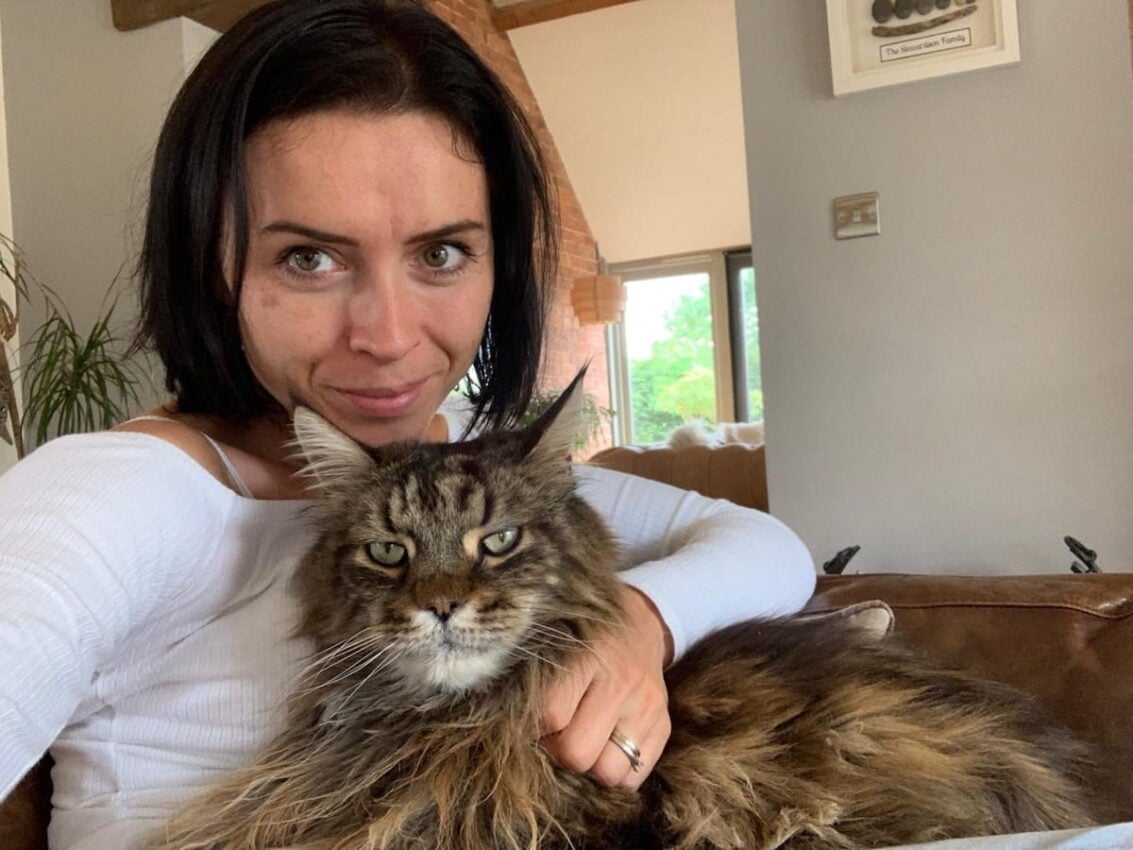
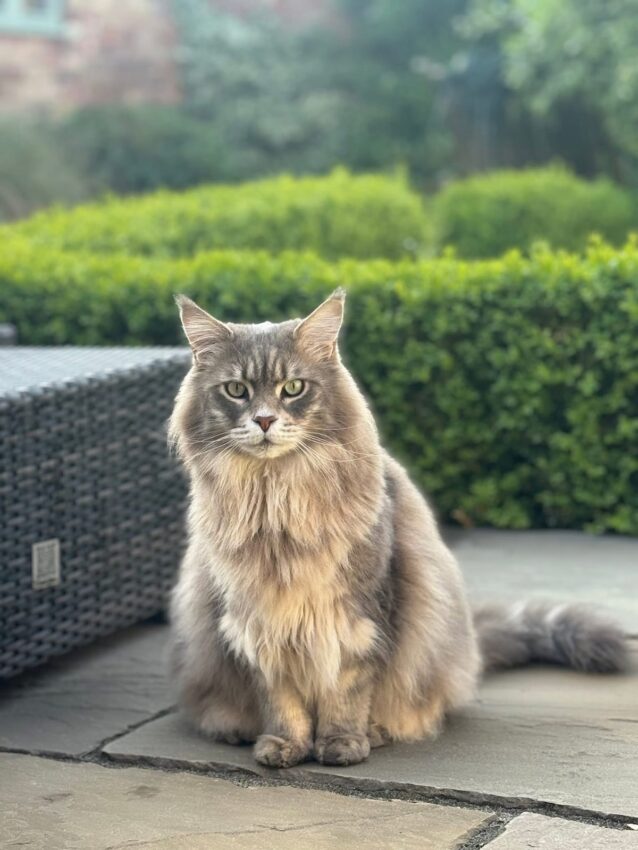
Here are some adorable pictures of my three Maine Coons, Pippin, Mika, and Bali:


The Most Obvious Physical Clues In Maine Coon Kittens
1. Oversized Paws That Look Out Of Proportion
One of the earliest and most reliable signs is large, wide paws.
Maine Coon kitten paws:
- Look too big for their body
- Appear clumsy or oversized
- Often have early toe tufts
- Suggest future bone structure and size
When Pippin was a kitten, his paws always looked too large for him. At the time, it simply made him look adorable and slightly awkward, but those big, wide-set paws were an early sign of his future size.
He eventually grew into a 20-pound adult, and those paws finally looked proportionate.

2. Large, Upright Ears
Maine Coon kittens typically have:
- Upright, high-set ears
- Wide ear bases
- Ears that look slightly too large for their head
This gives them a more alert or wild appearance, even at a young age.
All three of our Maine Coons had noticeably large ears as kittens, but their ear tufts developed differently over time.
3. Ear Tufts That Develop Gradually
Many people expect dramatic lynx tips from day one, but this is not always how Maine Coons develop.
In many kittens:
- Ear tufts start as soft fluff
- Become more noticeable between 10 and 16 weeks
- Continue developing into adolescence
Mika and Bali both developed very defined ear tufts, which became more prominent as they grew. Pippin, however, had much more subtle ear tufts throughout his life. This shows that tuft size can vary between individuals, even within the same breed.
4. A Long, Lean Body Shape
Even as kittens, Maine Coons often look:
- Longer than other kittens
- Less compact and round
- Slightly awkward or stretched out
Instead of a short, stocky build, they tend to have:
- Long legs
- A rectangular body
- A more athletic frame
This is because they are built for slow, extended growth, rather than rapid early development.
For a detailed guide to the Maine Coon body shape, read this guide.
5. Slower, Longer Growth Compared To Other Kittens
One of the strongest indicators is the kitten’s growth pace.
Most domestic cats:
- Reach full size by 10-12 months
Maine Coons:
- Continue growing for 3-5 years
- Reach full maturity around 4 years
- Stay in a lanky teenage stage longer
All three of our Maine Coons reached their full size at around four years old, which is completely normal for the breed.
Between 5 and 12 months, many Maine Coon kittens appear:
- Long-limbed
- Slightly skinny
- Not filled out
This is often mistaken for underfeeding, but it is simply part of their growth cycle.
If you’re interested in learning more about the growth rate of the Maine Coon cat breed, read our guide Maine Coon Size & Growth.
6. Coat Changes In Maine Coon Kittens
Maine Coon coats develop in stages.
Young kittens usually have:
- Soft, fluffy baby fur
- Less defined texture
- Shorter guard hairs
As they grow:
- The coat thickens
- The tail becomes fuller
- A mane begins to develop
- The coat becomes layered and more weather-resistant
These changes typically occur between:
- 6 months and 2 years of age
A kitten without a dramatic mane is completely normal, especially in the first year.
Learn more about the Maine Coon cat coat types and texture in our fact-filled guide.
What Typically Changes First (So You Don’t Judge Too Early)
If you’re trying to identify a Maine Coon kitten, it helps to know which traits appear early versus later.
In many kittens, the first clues are structural (paws, ear size, body length). Coat drama often comes later, and some features, like a fuller mane and heavier muscle, may not show properly until adolescence or even early adulthood.
A useful rule of thumb is: structure first, fluff second. This is why some Maine Coon kittens look “ordinary” at 10-12 weeks, then suddenly look unmistakably Maine Coon by 6-12 months as their body stretches out and their furnishings catch up.
Maine Coon Kitten Growth Stages
| Age | Typical Maine Coon Kitten Traits |
|---|---|
| 8-10 weeks | Oversized paws, tall ears, fluffy coat |
| 3-4 months | Longer body, early ear tufts |
| 5-6 months | Noticeable size difference vs other kittens |
| 7-12 months | Lanky teenage stage |
| 1-2 years | Coat thickens, mane begins |
| 3-4 years | Full size and mature body structure |
Personality Clues In Maine Coon Kittens
Personality alone cannot confirm breed, but many Maine Coon kittens are:
- Curious and adventurous
- Highly social
- Gentle with children
- Playful and interactive
Pippin was extremely energetic as a kitten. He bounced around constantly and rarely stayed still long enough for a photograph. His oversized paws and ears made him look slightly uncoordinated, but that was simply part of his rapid growth.
He was slightly skittish at first, but his confidence grew quickly. He also showed a natural gentleness with our toddler son. The two were often found getting into harmless mischief together, with Pippin following Zachary as he explored cupboards, as if he were part of the plan.
If you are interested in learning more about the common Maine Coon cat personality traits, make sure you read our guide.
Common Situations Where Owners Question Breed
Most people search this topic because:
- They adopted a fluffy kitten
- The kitten looks unusually large
- The ears or paws seem different
- The breeder did not provide paperwork
In these cases, the kitten may be:
- A Maine Coon mix
- A domestic longhair
- Another long-haired breed
Signs A Kitten Is Probably Not A Maine Coon
A kitten is less likely to be a Maine Coon if it:
- Has small, delicate paws
- Has a very round, compact body
- Stops growing early
- Has short, fine fur without layering
- Comes with no breeder documentation
The Simple Rule To Remember
If you remember only one thing, it should be this:
A kitten is only a purebred Maine Coon if it has official pedigree papers.
Without pedigree papers, a kitten may still have Maine Coon traits or ancestry, but it should be considered a Maine Coon mix or domestic longhair rather than a confirmed purebred.
FAQ
At what age can you identify a Maine Coon kitten?
You can usually see early clues by 10-12 weeks, especially oversized paws and tall ears. Full confirmation requires pedigree papers.
Do Maine Coon kittens always have ear tufts?
No. Some develop dramatic lynx tips, while others have more subtle ear tufts, even as adults.
How long do Maine Coon kittens grow?
Most Maine Coons continue growing until around 4 years of age, which is much longer than typical cats.
Can a vet confirm a Maine Coon kitten?
No. Vets can assess traits, but only pedigree documentation confirms breed status.