15 Reasons To Get A Maine Coon Cat: Why Owners Love This Breed
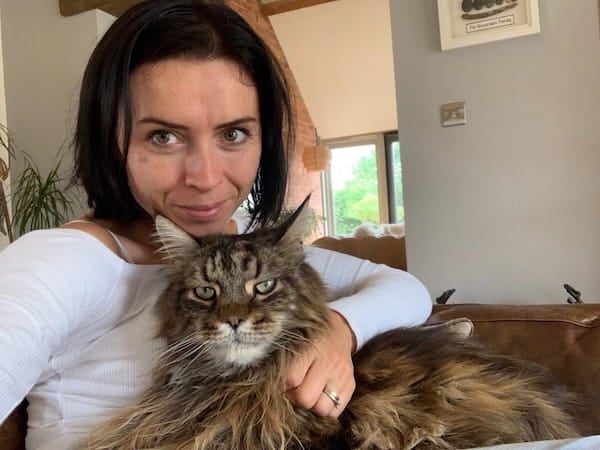
From their giant size and shaggy coats to their chirps, trills, water obsession, and dog-like loyalty, Maine Coons are unlike most cats. They are beautiful, intelligent, sociable, playful, affectionate, and full of personality. Many owners describe them as the best cats in the world because they feel less like background pets and more like interactive family companions.
After living with Maine Coons for more than 14 years, including Pippin, Mika, and Bali, I understand why this breed captures so many hearts.
Pippin and Mika are big, impressive Maine Coons and very true to the breed’s powerful image. Pippin was especially friendly and loved introducing himself to strangers. Bali was adopted at four years old, so he started friendly but cautious, yet over the years, he has grown in confidence and now willingly greets cat sitters and visitors at the door, even though he is still a bit of a scaredy cat. Mika, on the other hand, is scared of his own shadow but clever, funny, and very food-motivated!


However, Maine Coons are not perfect for every home. Their size, coat, intelligence, appetite, and social nature mean they need grooming, enrichment, space, good nutrition, large equipment, and owners who understand their needs.
This guide explains the best reasons to get a Maine Coon, while also being honest about what makes them hard work.
Quick Answer
Maine Coons are popular because they are large, gentle, intelligent, playful, loyal, sociable, and often dog-like in their behaviour. They are known for following their owners, chirping and trilling, playing fetch, enjoying water, getting along with families, and staying kittenish well into adulthood.
The best reasons to get a Maine Coon include their affectionate nature, impressive size, trainability, funny personality, family-friendly temperament, and ability to form strong bonds with their owners. However, they are not low-maintenance cats. They need regular grooming, large cat furniture, mental stimulation, good food, and lifelong veterinary care.
Why Many Owners Think Maine Coons Are The Best Cats
Many Maine Coon owners describe this breed as the “best cat” because they combine several rare traits in one animal: impressive size, a gentle temperament, intelligence, loyalty, playfulness, affection, and a sociable nature.
They are not just big, fluffy cats. They are observant, interactive, funny, and often deeply involved in everyday family life.
Pippin taught me how friendly and emotionally present a Maine Coon can be. He was raised from a kitten and grew into an extremely sociable cat who loved meeting new people. Mika shows the clever, routine-driven, slightly mischievous side of the breed, while Bali shows how a cautious Maine Coon can become more confident with age, trust, and familiarity.
That is what makes Maine Coons so special. Their appearance gets your attention, but their personality is what makes them unforgettable.
1. They Are Giant Cats With Gentle Personalities
Maine Coons are one of the largest domesticated cat breeds, and their size is one of the first things people notice.
According to TICA breed information, male Maine Coons are large, substantial cats, and many males weigh around 18-22 lbs (8.2-10 kg), while females are often smaller at around 12-15 lbs (5.4-6.8 kg). Some individuals are lighter or heavier, depending on genetics, sex, body condition, and frame size.
Pippin and Mika are both big Maine Coons and very true to the breed’s image. They have the large bodies, powerful build, thick coats, and impressive presence that many people picture when they imagine a Maine Coon.
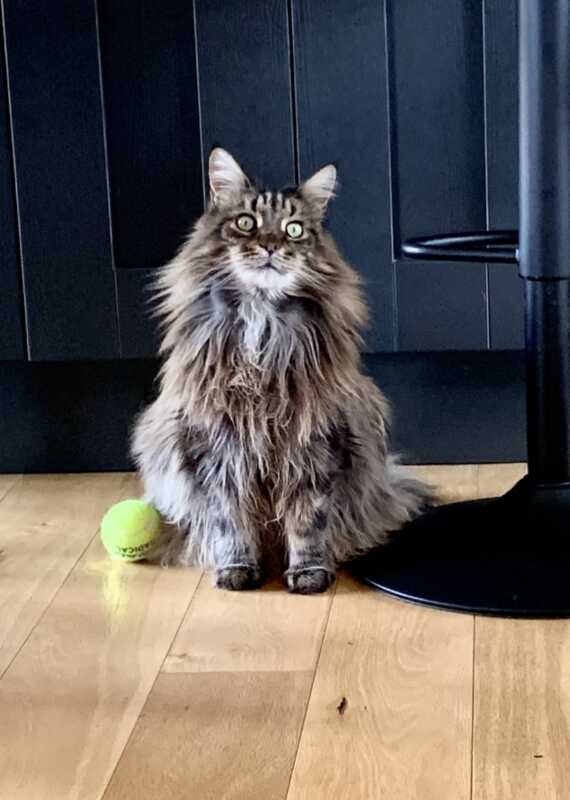


Despite their size, Maine Coons are often called “gentle giants” because many are calm, tolerant, and affectionate. Their size can make them look dramatic or even wild, but their temperament is usually much softer than their appearance suggests.
That said, their size affects daily ownership. A Maine Coon usually needs:
- A large litter tray
- A strong cat tree
- XL carriers
- Bigger beds
- Strong scratching posts
- Larger grooming tools
- More space to stretch and climb
A Maine Coon’s size is one of its best features, but it also means ordinary cat equipment may not be big or sturdy enough.
2. They Are Friendly And People-Focused
Maine Coons are known for being sociable, people-focused cats.
They often like to be near their owners, follow them from room to room, and involve themselves in whatever is happening. They may greet you at the door, sit nearby while you work, watch you cook, or follow you into the bathroom like a furry supervisor.
Pippin was particularly friendly. Because we raised him from a kitten, he grew up very comfortable around people and loved introducing himself to strangers. He was the kind of Maine Coon who made visitors feel as if they had come to see him personally.
Bali was different. He started out friendly but cautious, and for a long time, he was less confident with unfamiliar people. Over the years, though, he has grown in confidence and now willingly greets cat sitters and visitors at the door. He is still a scaredy cat underneath, but his willingness to come forward shows how trust and familiarity can build over time.
Mika is the most cautious of the three. He is scared of his own shadow, which is a good reminder that breed traits are not guarantees. Maine Coons are often sociable, but every cat still has an individual personality.

3. They Are Dog-Like Without Being Dogs
Maine Coons are often described as dog-like because they are loyal, interactive, and interested in family life.
Many Maine Coons:
- Follow their owners around
- Come when called
- Learn routines quickly
- Greet people at the door
- Play fetch
- Enjoy interactive games
- Stay close without always needing to sit on your lap
This dog-like quality is one of the biggest reasons people fall in love with the breed. A Maine Coon often feels like a companion who wants to be part of the household, rather than a cat who only appears at mealtimes.
Bali is a good example of this. He loves playing fetch, which is one of those behaviours that makes Maine Coons feel very different from more aloof cats. Fetch is not just cute; it also shows how interactive, trainable, and engaged this breed can be when they enjoy a game.
This does not mean every Maine Coon will fetch, follow commands, or act like a dog. But many have a level of social curiosity and owner-focus that makes them feel unusually connected.
The Maine Coon cat’s dog-like loyalty is one of the biggest reasons owners fall in love with the breed. Learn more in my guide to whether Maine Coons are like dogs.
4. They Are Intelligent And Trainable
Maine Coons are clever cats.
They are often quick to learn routines, solve problems, and work out how to get what they want. Some learn to open doors, paw at cupboards, use puzzle toys, respond to their names, walk on a harness, or play fetch.
Mika is a perfect example of the breed’s intelligence. He can complete challenging dog treat toys, especially when food is involved. He is motivated by treats, which makes training and puzzle games easier, but it also means I have to watch his weight carefully.
This is one of the realities of owning an intelligent, food-motivated Maine Coon. Puzzle feeders and treat toys are brilliant enrichment tools, but they still add calories. If your Maine Coon is very food-driven, use part of their daily food allowance rather than endless extra treats.
Good enrichment options include:
- Puzzle feeders
- Treat-dispensing toys
- Clicker training
- Fetch games
- Harness training
- Wand toys
- Hide-and-seek games
- Climbing spaces
- Food puzzles using measured portions
A clever Maine Coon is wonderful, but a bored clever Maine Coon can become mischievous. Without enough stimulation, they may jump on counters, open cupboards, demand attention, knock things over, or create their own entertainment.

5. They Stay Playful Well Into Adulthood
Maine Coons are slow-maturing cats and often keep a kittenish personality for years.
Many enjoy chasing, pouncing, fetching, climbing, stalking toys, and carrying objects around like trophies. They are not usually the sort of cat that plays hard for a few months as a kitten and then becomes completely inactive.
All three of my Maine Coons enjoy playing with thick, long ribbons. If you plan the game carefully, two cats can play with the same piece of ribbon at the same time, each attacking a different end. It is funny, energetic, and a good way to get them both moving together.
However, ribbon play should always be supervised. Long ribbons, string, wool, and similar toys can be dangerous if swallowed, so they should be put away safely after playtime.
This playful nature is one of the breed’s best qualities. Maine Coons can be goofy, dramatic, athletic, and hilarious, especially when they are chasing something they really want.
6. They Are Funny And Full Of Personality
Maine Coons are not just beautiful. They are entertaining. They chirp, trill, flop in odd positions, watch everything you do, carry toys around, investigate bags, supervise chores, and insert themselves into family life.
Mika’s water habit is one of the funniest examples in our home. He will lie with his paws wrapped around the pet water fountain and stick his entire face into the flow of water, soaking the front of his face. It is ridiculous, but completely Maine Coon-like: curious, sensory, funny, and slightly messy.

Maine Coons often make you laugh because they are so expressive. They can look serious and majestic one minute, then do something completely silly the next.
This is one of the reasons the breed is so popular online. Their size and dramatic appearance make them eye-catching, but their behaviour makes them memorable.
7. They Often Love Water
Many Maine Coons are fascinated by water.
Not every Maine Coon wants to swim or be bathed, but plenty enjoy pawing at water bowls, watching taps, playing near sinks, sitting in baths, or drinking from fountains.
Mika’s relationship with the water fountain is a perfect example. He does not just drink politely. He wraps his paws around it and pushes his face into the running water until the front of his face is soaked.
This water interest can be charming, but it can also be messy. Maine Coon owners may need:
- A stable water fountain
- A waterproof mat
- Heavy bowls that do not tip
- Regular cleaning around the water area
- Extra towels if their cat is a splashy drinker
A fountain can be useful because it encourages some cats to drink more, but it is also enrichment for water-obsessed Maine Coons.
8. They Are Affectionate Without Always Being Clingy
Many Maine Coons are affectionate, but not all are lap cats. Some like cuddles, some prefer lying beside you, and others show affection by following you, head-butting, chirping, slow blinking, sleeping near you, or staying in the same room.
This is one of the reasons Maine Coons suit many families. They can be loving and connected without necessarily demanding constant physical contact.
Bali often wants to be close to what is happening, especially now that he has grown in confidence. Pippin was naturally sociable and people-loving – he loved to sit on our laps! Mika is more nervous, but even cautious cats can show attachment in quieter ways.
The key is to respect the individual cat. A Maine Coon does not have to enjoy being picked up or cuddled to be affectionate. Choosing to stay near you is often one of the clearest signs of trust.
Most reasons people fall in love with Maine Coons come back to temperament. They are usually affectionate, sociable, curious, and involved cats, but they are not all identical. Some are confident and outgoing, while others are cautious, sensitive, or more independent. For a more balanced view of the breed’s behaviour, read my full guide to Maine Coon personality.
9. They Can Be Good Family Cats
Maine Coons are often patient, gentle, and sociable, which is why they are popular with families.
They can do well with children, but children still need to be taught how to behave around cats. A Maine Coon’s large size does not mean they should tolerate rough handling.
Children should be taught not to:
- Pull fur
- Grab tails
- Chase the cat
- Force cuddles
- Pick the cat up awkwardly
- Disturb them while sleeping
- Trap them in a room
- Dress them up
- Ignore signs of irritation
The best family homes are the ones where children learn to read feline body language and give the cat space when needed. Maine Coons may be gentle, but they are still animals with boundaries.

10. They Can Get Along With Other Pets
Maine Coons often do well in multi-pet homes, especially when introductions are handled properly.
Their confident, sociable nature can make them more accepting of other cats or cat-friendly dogs than some more nervous breeds. However, introductions should still be slow and controlled.
Good introductions include:
- Separate rooms at first
- Scent swapping
- Feeding near opposite sides of a door
- Short supervised meetings
- Safe escape routes
- No forced contact
- Plenty of resources for each pet
Do not assume a Maine Coon will automatically love every new animal. Even sociable cats can become stressed if a new pet is introduced too quickly.
11. They Are Beautiful In A Majestic, Wild-Looking Way
Maine Coons are stunning cats. Their long bodies, broad chests, square muzzles, lynx-like ear tufts, shaggy coats, large paws, and bushy tails give them a wild, powerful appearance. Pippin and Mika both have that big, classic Maine Coon presence that matches the breed’s image perfectly.
Their coats also come in a wide range of colours and patterns, including tabby, solid, smoke, shaded, tortie, silver, bicolour, and more. Brown tabby is one of the most familiar looks, but the breed is far more varied than many people realise.
Their tails are especially impressive. A Maine Coon tail is long, thick, expressive, and practical. These cats can wrap their tails around themselves for warmth, use them for balance, and flick them dramatically when they are interested, annoyed, or excited.
However, beautiful coats require care. A Maine Coon’s fur may be easier than a Persian’s, but it is not maintenance-free.
12. Their Coats Are Manageable, But Not Low-Maintenance
Some people describe Maine Coons as low-maintenance for long-haired cats, but I would be careful with that claim.
Their coats can be more manageable than some other long-haired breeds, but they still need regular grooming. Mika is more prone to coat issues and needs closer attention, while Bali’s silkier coat tends to tangle less. Pippin had a dense coat that became more challenging as he aged, especially when grooming tolerance and mobility changed.
A Maine Coon’s grooming needs depend on:
- Coat texture
- Undercoat density
- Age
- Weight
- Health
- Activity level
- Season
- Whether they tolerate brushing
- Whether they get mats around the backend, armpits, belly, or tail base
Most Maine Coons need brushing several times a week, and some need daily checks during shedding seasons or if they are prone to mats.
Useful grooming tools include:
- Wide-tooth comb
- Slicker brush
- Pin brush
- Undercoat rake
- Detangling comb
- Nail clippers
- Grooming wipes for greasy areas
Their coats are one of the reasons they are so beautiful, but they are also one of the reasons owners need to be realistic before getting one.

13. They Can Live Happily Indoors With Enough Enrichment
Maine Coons can make good indoor cats if their environment is set up properly. They do not need to roam freely outdoors to be happy, but they do need space, stimulation, climbing opportunities, and daily interaction.
Indoor Maine Coons benefit from:
- Tall cat trees
- Window views
- Scratching posts
- Puzzle feeders
- Wand toys
- Fetch games
- Safe ribbon play
- Large litter trays
- Places to climb and perch
- Daily play sessions
Because they are large and intelligent, a plain indoor environment can become boring. A bored Maine Coon may become destructive, noisy, clingy, or food-obsessed.
Harness training can be a good compromise for some cats, allowing them to experience the outdoors more safely than free roaming.
14. They Are Generally Hardy, But Not Risk-Free
Maine Coons are often described as hardy, naturally developed cats, but they are not free from health problems.
Responsible breeders screen breeding cats because Maine Coons can be prone to inherited or breed-associated conditions, including:
- Hypertrophic cardiomyopathy
- Hip dysplasia
- Spinal muscular atrophy
- Polycystic kidney disease
- Patella luxation
- Dental disease
- Obesity-related joint strain
This does not mean Maine Coons are unhealthy cats. It simply means buyers should choose breeders carefully, ask about health testing, and budget for lifelong veterinary care.
A well-bred, well-cared-for Maine Coon can be a strong, active, healthy companion, but owners should not assume that size or natural origins make the breed immune to illness.
15. They Make Everyday Life More Entertaining
One of the best things about Maine Coons is how much character they bring into a home. They can be majestic, ridiculous, affectionate, demanding, cautious, brave, clever, messy, playful, and dramatic, sometimes all in the same day.
Pippin’s friendliness, Mika’s water-fountain obsession, and Bali’s love of fetch all show different sides of the breed. None of them is identical, but all of them have that unmistakable Maine Coon presence.
They are not just cats you own. They become part of the rhythm of the house.
Are Maine Coons The Best Cats For Everyone?
Maine Coons are wonderful cats, but they are not the best choice for every owner.
They may not suit someone who wants a very low-maintenance pet. Their coats need grooming, their bodies need large equipment, and their intelligent minds need enrichment. Their food, litter trays, cat trees, carriers, insurance, and veterinary costs can also be higher than expected because of their size.
They are best suited to owners who want an interactive, affectionate, intelligent cat and are willing to invest time in grooming, play, training, and proper care.
For the right home, a Maine Coon can be an extraordinary companion. For the wrong home, their coat size, energy, and social needs can become overwhelming.
Quick Pros And Cons Of Getting A Maine Coon
| Pros | Cons |
|---|---|
| Friendly and sociable | Needs regular grooming |
| Large and impressive | Large equipment costs more |
| Intelligent and trainable | Can become bored without enrichment |
| Often good with families | Not all are confident or cuddly |
| Playful into adulthood | Food-motivated cats can gain weight |
| Often dog-like | Needs time and attention |
| Beautiful coat and tail | Mats can form if neglected |
| Can live indoors with enrichment | Needs space to climb and stretch |
Mainecooncentral.com
FAQs About Getting A Maine Coon
Why Do People Love Maine Coons So Much?
People love Maine Coons because they are large, beautiful, friendly, intelligent, playful, and often very loyal. They tend to be more interactive than many cats and often enjoy being involved in family life.
Are Maine Coons Good Family Cats?
Yes, many Maine Coons make excellent family cats because they are often gentle, patient, and sociable. However, children should still be taught to respect the cat’s boundaries and handle them gently.
Are Maine Coons Dog-Like?
Maine Coons are often described as dog-like because many follow their owners, come when called, play fetch, learn routines, and greet people at the door. Bali loves playing fetch, which is one of the most dog-like behaviours I have seen in my own cats.
Are Maine Coons Intelligent?
Yes, Maine Coons are intelligent cats. They often learn routines quickly and may enjoy puzzle feeders, fetch, harness training, clicker training, and interactive games. Mika can complete challenging dog treat toys, although his treat motivation means I have to watch his weight.
Do Maine Coons Like Water?
Many Maine Coons are fascinated by water. Some paw at bowls, watch taps, play with fountains, or get their faces wet while drinking. Mika will wrap his paws around the pet water fountain and stick his face into the flow, soaking the front of his face.
Are Maine Coons Low-Maintenance?
No, Maine Coons are not truly low-maintenance cats. Their coats, size, intelligence, and social nature mean they need regular grooming, large equipment, enrichment, attention, and proper care.
Can Maine Coons Live Indoors?
Yes, Maine Coons can live happily indoors if they have enough space, climbing areas, scratching posts, toys, window views, puzzle feeders, and daily interaction. Harness training can also provide safe outdoor enrichment.
Are Maine Coons Good With Visitors?
Many Maine Coons are sociable with visitors, but personality varies. Pippin loved introducing himself to strangers. Bali became more confident over time and now greets cat sitters and visitors at the door. Mika is much more nervous and is scared of his own shadow.
Do Maine Coons Get Along With Other Cats?
Many Maine Coons can get along with other cats, especially if introductions are done slowly. However, they still need gradual introductions, separate resources, and time to adjust.
Should I Get A Maine Coon?
You should consider a Maine Coon if you want a large, affectionate, intelligent, interactive cat and are prepared for grooming, enrichment, costs, and lifelong care. If you want a very low-maintenance pet, a Maine Coon may not be the best fit.
Conclusion: Why Get A Maine Coon?
Maine Coons are popular for good reason. They are big, beautiful, friendly, intelligent, playful, loyal, and often wonderfully funny.
They can greet visitors, play fetch, chirp for attention, follow you around the house, splash in water, solve puzzle toys, and make everyday life more entertaining. Pippin, Mika, and Bali have all shown me different sides of the breed, from Pippin’s friendliness to Bali’s fetch games and Mika’s clever but cautious personality.
However, the same traits that make Maine Coons special also make them a serious commitment. They need grooming, space, enrichment, good food, large equipment, and owners who understand that a giant, intelligent cat is not the same as a low-maintenance pet.
For the right owner, a Maine Coon is not just a beautiful cat. They are a loyal, funny, affectionate companion who becomes part of the family.