Are Maine Coon Cats Aggressive? Understanding Behaviour, Overstimulation & Real-Life Triggers

Maine Coon cats are widely known for their gentle personalities, affectionate nature, and strong bonds with their families. Often described as “gentle giants”, aggression is not something most people associate with the breed.
Yet many owners eventually find themselves asking the same worried question: Can Maine Coon cats be aggressive?
After more than fourteen years of living with Maine Coons, and sharing my home with Pippin, Mika, and Bali, I’ve learned that what people often label as aggression is usually something very different.
In most cases, aggressive behaviour in Maine Coons is not about temperament at all – it’s about:
- Communication
- Overstimulation
- Fear
- Pain
This article explains what aggression really looks like in Maine Coons, why it happens, how to recognise the warning signs, and how individual personality and health can dramatically affect behaviour.
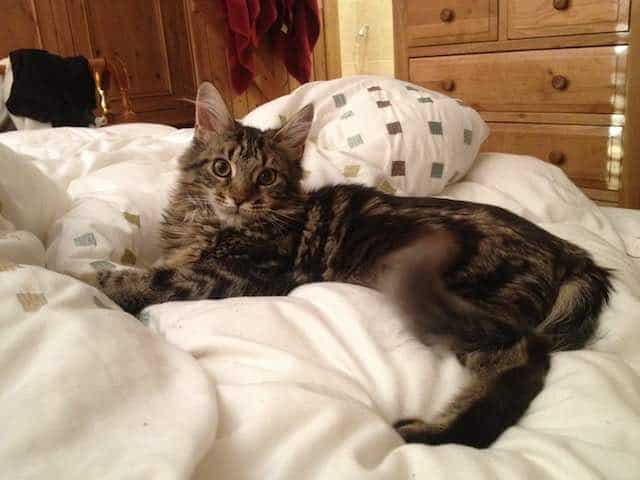

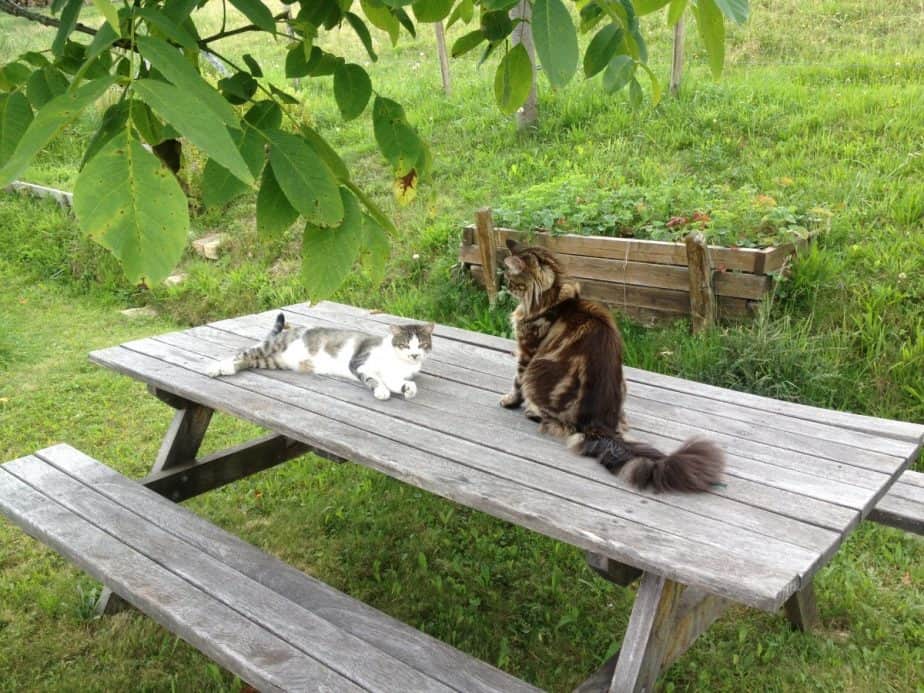
Quick Answer
Maine Coon cats are not usually aggressive by nature. The breed is generally known for being gentle, sociable, and affectionate, but any Maine Coon can show aggression if it feels frightened, overstimulated, territorial, frustrated, or unwell. Sudden or unusual aggression should never be ignored, because pain, stress, or illness is often part of the cause.
Is Aggression Normal In Maine Coons?
True aggression is not considered a typical Maine Coon trait.
As a breed, Maine Coons are known for being:
- Sociable
- People-orientated
- Emotionally intelligent
- Tolerant of handling
- Slow to anger
When aggressive behaviour does occur, it is almost always situational, not personality-based. In other words, Maine Coons are not aggressive cats by nature.
Instead, reactive behaviour is usually a response to:
- Fear
- Stress
- Overstimulation
- Pain or illness
- Environmental pressure
Aggression should be viewed as communication, not bad behaviour or a difficult personality.
Common Causes Of Aggressive Behaviour
Aggression in Maine Coons almost always has an identifiable trigger. Understanding these triggers is essential to resolving the behaviour safely.
The most common causes include:
- Pain or illness
- Fear or anxiety
- Redirected aggression
- Overstimulation during petting or play
- Territorial stress
- Lack of enrichment or mental stimulation
- Sudden environmental changes
Often, multiple factors overlap, particularly in indoor Maine Coon cats with high intelligence and social needs.
Overstimulation: One Of The Most Common Triggers
Overstimulation occurs when a cat’s nervous system becomes overwhelmed by physical contact or excitement.
This can happen during:
- Extended stroking
- High-energy play sessions
- Brushing or grooming
- Touching sensitive areas
Mika – Overstimulates Quickly
Mika is affectionate and seeks interaction, but he reaches his limit far faster than most cats.
Sometimes overstimulation occurs:
- During energetic play
- During prolonged petting
- Without much warning
One moment, he appears relaxed – the next, he becomes reactive. This doesn’t mean Mika is aggressive. It means his sensory threshold is low. Some cats simply struggle to regulate stimulation once arousal increases.
With time, learning his early warning signs, e.g. tail flicking, muscle tension, rapid ear movement, made a significant difference in preventing escalation.
Bali – Extremely High Tolerance
Bali is Mika’s brother, yet he sits at the opposite end of the spectrum. He can be brushed for long periods, often far longer than most cats, before showing any signs of discomfort.
His tolerance for physical contact is exceptionally high, and when he does reach his limit, the signals are subtle and calm.
This contrast highlights something important:
Different Maine Coons have vastly different stimulation thresholds.
Neither response is abnormal – they are simply individual nervous system differences.
Pain-Related Aggression: Often Misunderstood
Pain is one of the most overlooked causes of sudden behavioural change in cats.
Pippin – Arthritis And Defensive Behaviour
In his later years, Pippin developed arthritis and mild hip dysplasia. When his rear end or hips were brushed, he would lash out with his claws. This behaviour was not emotional aggression; it was a protective pain response.
Touching an inflamed joint caused discomfort, and Pippin reacted instinctively to stop it. Once the painful areas were avoided or managed appropriately, the behaviour reduced dramatically.
This is why pain should always be considered when a cat’s temperament changes.
When Aggression Appears Suddenly
Sudden aggression in an otherwise gentle Maine Coon should always prompt a veterinary check. Behavioural changes are often the earliest sign of medical discomfort.
Conditions that can significantly affect behaviour include:
- Dental disease
- Arthritis or joint degeneration
- Urinary tract discomfort
- Gastrointestinal pain
- Thyroid disease
- Neurological disorders
Cats instinctively hide pain. Behaviour is often the only outward clue that something is wrong.
If aggression appears suddenly, worsens rapidly, or occurs during handling of specific areas, medical causes must be ruled out first.
Aggression Vs Play Behaviour
Many Maine Coon owners worry their cat is aggressive when they are actually witnessing normal rough play.
Play Behaviour Typically Includes:
- Inhibited biting
- Loose or bouncy body posture
- Quick pauses between movements
- Rapid recovery once play stops
- No intent to injure
Play aggression may look dramatic, but it does not escalate emotionally.
True Aggression Usually Includes:
- Flattened ears
- Dilated pupils
- Stiff or crouched posture
- Growling or hissing
- Lunging or prolonged arousal
- Difficulty calming down
Understanding the difference is crucial, especially in large, powerful breeds like the Maine Coon.
How To Reduce Aggression Safely
Managing aggressive behaviour safely requires understanding, not punishment.
1. Avoid Punishment Or Shouting
Punishment increases fear and anxiety, often worsening the behaviour.
2. Identify And Remove Triggers
Note whether episodes occur during grooming, play, petting, or environmental stress.
3. Increase Structured Play
Short, predictable play sessions help regulate arousal and release energy safely.
4. Provide Vertical Space
Cat trees, shelves, and elevated areas reduce stress and improve confidence.
5. Offer Safe Retreats
Covered beds and hiding areas allow decompression.
6. Maintain Predictable Routines
Routine reduces anxiety in sensitive cats.
7. Seek Professional Help If Needed
If aggression escalates or becomes frequent, consult a veterinarian or certified feline behaviourist.
Related Behaviour Guides
For deeper insight into common behavioural signals, see:
- Why Your Maine Coon Cat Bites You
- Why Do Maine Coons Growl?
- Why Does My Maine Coon Hiss at Me?
- Maine Coon Separation Anxiety Explained
Final Thoughts: Aggression Is A Signal, Not A Personality
From Mika’s quick overstimulation to Bali’s extraordinary tolerance, to Pippin’s pain-driven reactions – one truth stands out clearly: Maine Coon aggression is rarely about temperament.
It is communication. A message that something feels wrong, uncomfortable, overwhelming, or painful.
When owners understand this, the fear surrounding “aggression” fades, replaced by awareness, empathy, and better solutions.
Maine Coons remain one of the most affectionate and emotionally connected cat breeds in the world, but like all animals, they rely on us to listen when their behaviour speaks.
FAQ
Are Maine Coon cats aggressive?
No, Maine Coon cats are not usually aggressive. The breed is generally known for being gentle, social, and affectionate. However, a Maine Coon can become aggressive if it feels scared, overstimulated, frustrated, territorial, or unwell.
Why is my Maine Coon acting aggressively?
A Maine Coon may act aggressively because of pain, fear, stress, overstimulation, redirected frustration, or illness. Sudden aggression is especially important to take seriously because it can be linked to an underlying medical problem.
Are male Maine Coons more aggressive?
No, male Maine Coons are not automatically more aggressive than females. Hormones, neuter status, personality, socialisation, health, and environment usually matter far more than sex alone.
Are Maine Coons aggressive with children?
Maine Coons are usually good with respectful children, but any cat may hiss, swat, or bite if it feels cornered, overwhelmed, or handled too roughly. Even gentle cats have limits.
Are Maine Coons aggressive with other cats?
They can be. Maine Coons are often sociable, but they may show aggression toward other cats if introductions are rushed, territory feels threatened, or resources such as food, litter trays, or sleeping areas are limited.
Why did my Maine Coon suddenly become aggressive?
Sudden aggression often points to pain, illness, fear, or a stressful change in the cat’s environment. A Maine Coon that becomes aggressive out of character should be checked by a vet.
Can Maine Coons become aggressive with age?
Yes, older Maine Coons can become more irritable if they develop arthritis, dental pain, reduced mobility, or other age-related health problems. Behaviour changes in older cats should never be dismissed.
How do I calm an aggressive Maine Coon?
The best way to calm an aggressive Maine Coon is to stop the interaction, give the cat space, and identify the trigger. Do not punish, chase, or force contact. If the aggression is new or worsening, rule out pain or illness.
Do Maine Coons bite their owners?
Yes, they can, but biting does not always mean true aggression. A Maine Coon may bite because of fear, petting overstimulation, pain, frustration, or because it wants the interaction to stop.
Is aggression normal in a Maine Coon kitten?
Maine Coon kittens are usually playful rather than truly aggressive, but they may bite, pounce, and swat roughly if they are overstimulated or have not learned boundaries yet. Consistent play and gentle handling usually help.
What causes aggression in Maine Coons?
Common causes include fear, pain, overstimulation, territorial behaviour, redirected frustration, poor socialisation, stress, and underlying illness. In many cases, aggression is a reaction, not a personality trait.
When should I worry about aggression in my Maine Coon?
You should worry if the aggression is sudden, intense, frequent, worsening, or paired with signs such as hiding, limping, reduced appetite, litter tray changes, or unusual vocalisation. That combination may suggest pain or illness.