Maine Coon Health & Lifespan: What Owners Need To Know
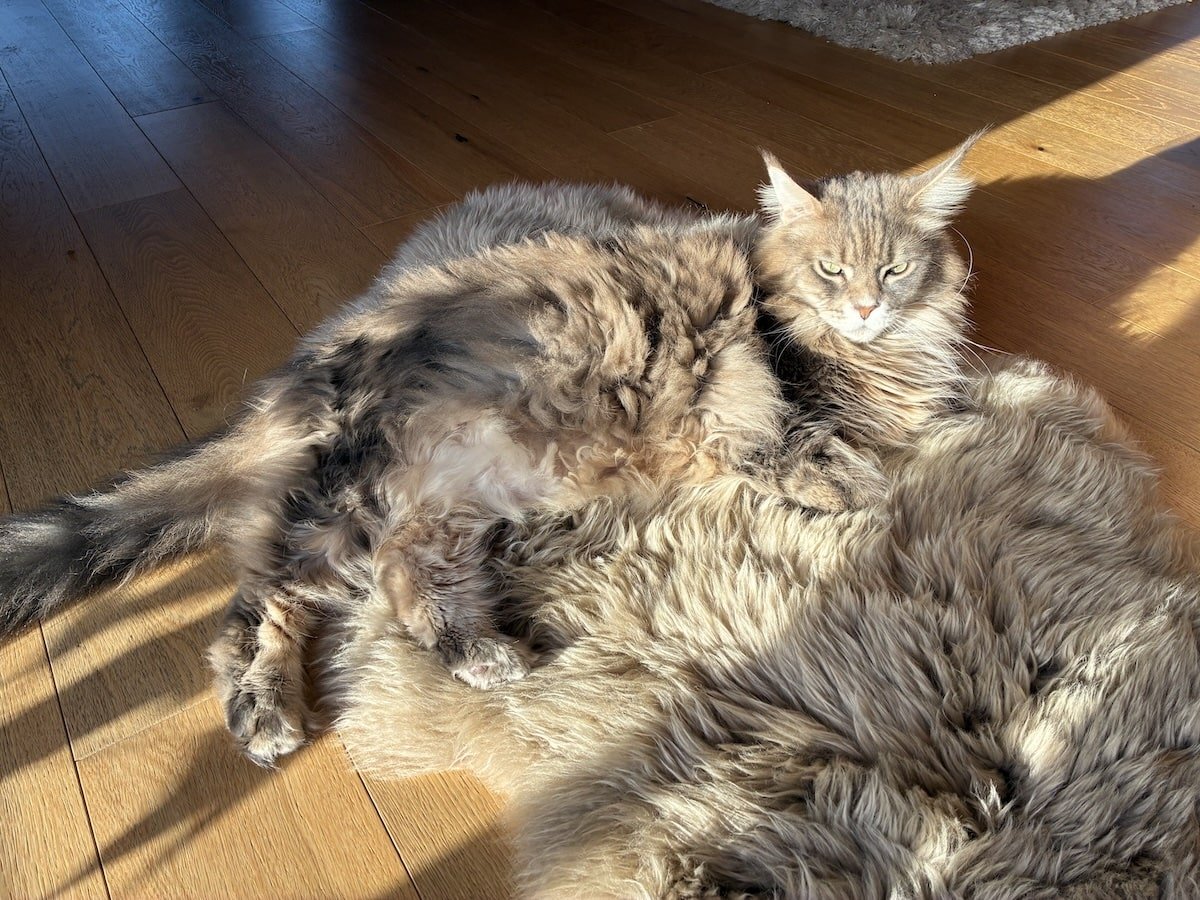
Maine Coons are often described as gentle giants, and in many ways, they truly are. Most live long, happy lives and cope well with family life, but like all pedigree breeds, Maine Coons are associated with certain health patterns that owners should understand from the beginning.
The purpose of this guide is not to alarm you, but to give you a clear, realistic picture of what to expect, what matters most, and how to support your Maine Coon’s health over time without falling into fear or over-intervention.
For most Maine Coons, long-term well-being comes down to a few consistent foundations:
- Maintaining a healthy weight
- Taking dental care seriously
- Staying alert to subtle changes
- Working with a vet you trust


A Note for Long-Time Readers
If you’ve arrived here from our former “Maine Coon Health Issues” page, this guide now brings together everything that article covered, and more, in one place. We’ve combined our most important health information into this single resource so owners can find clear, reliable guidance without jumping between multiple pages.
How Long Do Maine Coons Live?
Many Maine Coons live between 12 and 15 years, and some reach their late teens.
The National Library of Medicine details a Swedish study that found a median lifespan of >12.5 years for Maine Coons; where 74% lived to age 10 or more, and 54% to 12.5 years.
When people ask how long Maine Coons live, they often expect a simple number. In practice, lifespan is better understood as a trajectory of health rather than a countdown of years. Many Maine Coons live well into their teens, but what matters more is how comfortably they live during those years.
Cats that remain active, maintain good dental health, and stay lean tend to age more slowly and experience fewer complications. Conversely, silent issues like untreated dental disease, creeping weight gain, or unmanaged joint stiffness can quietly shorten both lifespan and quality of life.
Thinking in terms of trajectory helps owners focus less on fear of numbers and more on protecting comfort and function over time – which is where the real gains in longevity are found.
Lifespan is influenced far more by daily care than by breed alone. Cats that stay lean, receive regular dental attention, and have health concerns addressed early often enjoy longer, more comfortable lives than those whose problems develop silently.
Cats that receive regular veterinary checks, maintain a healthy body condition, and have problems addressed early often enjoy longer, more comfortable lives than those who appear healthy but miss early signs of disease.
Learn more:
Are Maine Coons A Healthy Breed?
Maine Coons are often described as a healthy breed, but that description can be misleading if it’s taken to mean “problem-free.” In reality, Maine Coons are best understood as a generally robust breed with a few specific vulnerabilities – particularly around:
- Heart Health
- Joints
- Dental care
Most Maine Coons will never face serious illness, but the cats that do often show subtle early signs that are easy to miss if owners are only looking for dramatic symptoms.
This is why good health in a Maine Coon is usually the result of awareness rather than luck. Owners who stay alert to small changes in behaviour, weight, or movement tend to catch problems earlier and achieve far better outcomes than those who wait for clear distress signals.
This perspective keeps the idea of “healthy breed” grounded in reality: Maine Coons are resilient, but they still benefit enormously from informed, observant care.
Make sure you take out pet insurance for your precious feline, in the sad case that they get sick:
The Maine Coon Health Issues Owners Should Understand
While Maine Coons are often perceived as robust, several health conditions occur at a higher frequency in this breed than in the general cat population. Understanding these helps owners act early rather than react late.
Knowing about these conditions does not mean your cat will develop them. It simply means you are better prepared to recognise early signs and make informed decisions if concerns arise.
1. Hypertrophic Cardiomyopathy (HCM)
Hypertrophic cardiomyopathy is the heart condition most commonly associated with Maine Coons. It causes thickening of the heart muscle, which can interfere with normal circulation and heart function.
What makes this condition especially difficult is that it can progress quietly. Some cats show subtle changes such as reduced stamina or breathing differences, while others appear completely normal until the disease is advanced.
This is why unexplained fatigue, breathing changes, fainting, or sudden weakness should always be taken seriously, even if they seem to pass.
Routine veterinary checks matter, and in some cases, a vet may recommend heart screening or referral for a cardiac ultrasound, particularly where there is a known family history.
Learn more about Maine Coon heart issues:
👉 Take a deeper look at the following subjects:
In hindsight, it seems obvious to spot, but when you’re living through it, you cannot always see what’s staring you right in your face. In fact, it’s only from my experience and the creation of this website that I know so much about this condition.
For us, no vet picked up on Pippin’s various conditions – tierdness, getting up like he was an old feline, intermittent tail issues, mild hip dysplasia, greasy/oily fur that wouldn’t go, etc. While we never had a definitive diagnosis, in retrospect, we strongly suspect that Pippin suffered from hypertrophic cardiomyopathy. The speed and severity of his final decline left a lasting impression on us, teaching us how quietly heart disease can exist in cats.
He was sadly put to sleep at ten years old when we woke up and found his hind legs/backend paralysed. It was frightening, I’m not going to deny that. From that moment, he wasn’t the affectionate, gentle feline we knew; he was a scared, wild animal in pain. He desperately tried to flee, dragging his backend along the wooden floor somewhat unsuccessfully – he literally became a different Maine Coon overnight. The odds of a successful operation were slim.


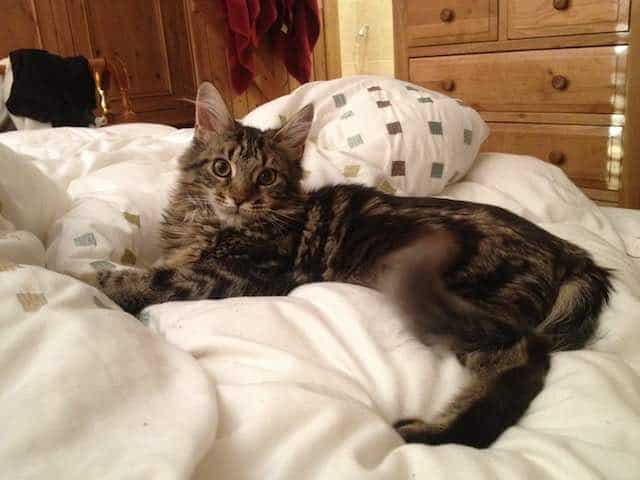
Many cardiologists suggest discussing heart screening with your vet around 1-2 years of age for cats with a family history of HCM, and then at intervals your vet recommends – especially before breeding or if you notice subtle changes such as persistent breath changes or reduced play stamina.
Want To Understand HCM In More Depth?
Hypertrophic cardiomyopathy can feel overwhelming when you first hear the diagnosis. If you’d like a clearer explanation of how HCM develops, how it’s diagnosed, and what treatment and long-term management really look like, we’ve written a dedicated HCM guide that walks through the condition in plain language – from early warning signs to quality-of-life decisions.
2. Hip Dysplasia, Arthritis, And Long-Term Mobility
Since Maine Coons are a large breed, joint and mobility issues deserve special attention. Hip dysplasia can affect Maine Coons and often leads to stiffness, reduced confidence in jumping, and arthritis as cats age. Spinal arthritis is also common and frequently overlooked because cats hide pain extremely well.
Mobility problems often appear as behaviour changes rather than obvious limping. A cat may stop jumping, move more cautiously after resting, or take longer to stand up.
👉 Take a deeper look at the following subjects:
- Maine Coon Hip Dysplasia: Everything You Need To Know
- Painful Maine Coon Joint Problems Explained
- 9 Signs Of Maine Coon Arthritis
- How to help an arthritic cat at home (article coming soon)
Our Experience With Pippin
We discovered the cause of Pippin’s mobility issues after a frightening accident. He made a bad jump, bent his tail canal, and his tail began dragging along the floor.
We took him to the PDSA Pet Hospital in Leeds, UK, for assessment and support. The vet diagnosed mild hip dysplasia and arthritis of the spine, and explained that if his hips deteriorated further, he would need a hip replacement costing around £7,500 (9,525 USD) for a single hip. This was in 2001, so the true cost today would likely be far higher.
Pippin was an affectionate soul, but for many years, he would rise from lying down like an old person, moving slowly and stiffly despite not being “old” in age. The biggest game changer came when one vet suggested we add YouMove Joint Care to his food. It was remarkable – it was as though he was a kitten again!
We also made practical changes around our home to support him:
- We bought a cat tree with lower levels he could reach
- Placed multiple cat beds around the house at floor level
- Lifted him onto furniture when he needed help
- Tried a heated pad for joint comfort, although he wasn’t particularly interested in it
He recovered from the bent tail canal, but then came the event that still haunts us. One morning, we woke to find Pippin’s backend paralysed. It was terrifying. Pippin taught us that mobility issues can often be managed well, but also that cats can decline suddenly – and compassion matters most when quality of life is slipping.
Here’s a YouTube from my Maine Coon Central YouTube channel, talking about Pippin’s journey through poor health:
Mobility Changes Are Often The First Clue
Joint problems in Maine Coons rarely announce themselves dramatically. More often, they appear as quiet behavioural shifts: a cat that used to leap now hesitates, one who once climbed now chooses lower routes, or a playful kitten grows into a cautious adult.
These changes are sometimes mistaken for laziness or ageing, when in reality they can signal developing joint discomfort. Early recognition allows owners to adapt the environment – adding lower platforms, softer resting areas, and easier access to favourite spots – long before pain becomes obvious.
Mobility support is not about turning your home into a clinic. It’s about removing unnecessary strain so your Maine Coon can move confidently for as long as possible.
3. Spinal Muscular Atrophy (SMA)
Spinal muscular atrophy is a genetic neuromuscular condition identified in Maine Coons. It affects the nerves that control muscle movement, typically leading to weakness in hind-limb muscles that can become noticeable when cats are still young. Kittens often show the first signs by 3-4 months.
Owners may notice:
- An unusual hind-leg gait
- Difficulty jumping
- Reduced muscle tone, or progressive weakness
The most important point for new owners is perspective. SMA is a known condition, but it is not inevitable. Reputable breeders can reduce risk by testing and breeding responsibly. For owners, awareness is useful because it explains why certain symptoms should prompt veterinary investigation rather than being dismissed as clumsiness or laziness.
👉 Take a look: Spinal Muscular Atrophy: Unveiling The Secrets
4. Dental Disease (Gingivitis, Ulcers, And Tooth Loss)
Dental disease is one of the most underestimated health challenges in Maine Coons. Gingivitis and periodontal disease often develop quietly, and cats continue eating while inflammation worsens beneath the gumline. By the time owners notice pain, the damage is often advanced.
Dental issues aren’t just about bad breath or tartar. Chronic oral inflammation can affect overall comfort and may have wider health implications, which is why dental checks matter even when a cat appears well.
We adopted Mika and Bali at four years old, and both came with gingivitis. It has been a long road getting their teeth back into good condition, but Bali definitely has a fine set of pearly white teeth now! So nice in fact, that we’re tempted to get the vet to scale and polish our teeth!! haha
Bali had already had six teeth removed before he even came to us. Since adopting him, we paid £690 (≈ $870) in December 2025 for one further tooth to be removed plus a scale and polish, and £720 (≈ $910) for Mika to have one tooth removed in 2024. Bali also dealt with an ulcer.
This experience taught us something new owners rarely realise: once dental disease is established, treatment can become expensive, invasive, and emotionally draining – which is why early prevention and regular checks are so valuable. And in our case, since we adopted both cats with the issue, our pet insurance provider reduced coverage to cover ANY dental costs. Ouch!

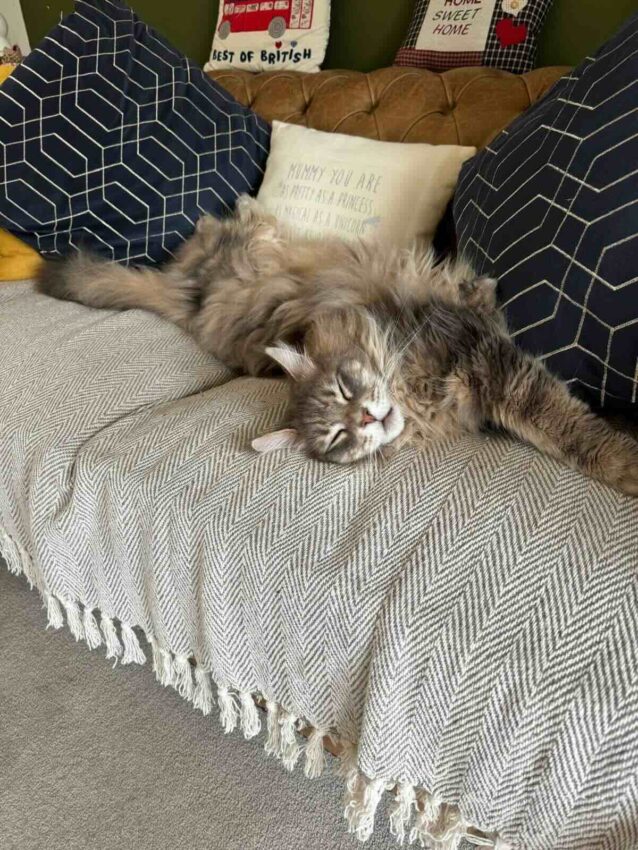

Larger breeds like Maine Coons can face higher veterinary costs over a lifetime, particularly for dental and joint care. Knowing this early isn’t about expecting problems – it simply helps owners plan realistically, whether through insurance, savings, or lifestyle choices.
5. Weight Management In A Naturally Large Breed
Maine Coons are big cats by nature, which makes it easy to underestimate weight gain. Excess weight increases strain on joints, reduces mobility, and can worsen other health conditions over time.
None of our Maine Coons have struggled with obesity, but Mika began gaining extra weight on Royal Canin Urinary dry food, so we moved him to Royal Canin Moderate Calorie Urinary. At nearly 22 lbs in 2026, he has never been a small male Maine Coon – but maintaining healthy body condition matters far more than chasing a low number on the scale.


6. Kidney And Age-Related Health Changes
As Maine Coons age, they face many of the same issues as other cats, including kidney disease and age-related metabolic changes.
Owners often first notice:
- Increased thirst
- Changes in litter tray habits
- Weight loss
- Coat changes
These issues are not unique to Maine Coons, but the earlier they are caught, the more options you tend to have.
Early trends in thirst, litter tray use, or appetite – even before obvious symptoms – are often the first signs vets see on yearly check-ups.
This is one of the reasons routine checks become more valuable as cats reach middle age and senior years. Cats rarely show pain clearly, so trend changes in appetite, behaviour, and weight can be more informative than waiting for dramatic symptoms.
One inherited kidney risk to be aware of is polycystic kidney disease (PKD), which causes fluid-filled cysts to form and worsen over time; responsible breeders typically screen breeding cats for this condition, but if you’re adopting from elsewhere, asking about PKD testing adds another layer of protection. Early detection helps prevent progression.
TIP: Breeders are advised to DNA test all their breeding cats for PKD. If you’re buying a Maine Coon kitten, you must check that the breeder has tested for this feline health issue. Request testing certification.
Polycystic kidney disease (PKD) is one inherited condition that breeders commonly test for because it can progressively damage kidney tissue over time. While DNA screening can reveal PKD risk, regular veterinary monitoring – especially of hydration, appetite, and litter tray habits – helps detect early signs of kidney stress before clinical disease appears.
Ask your vet when bloodwork and urine testing might be beneficial for your cat’s age and risk profile.
👉 Learn more: 8 Symptoms Of Polycystic Kidney Disease In Cats

Many owners hear about genetic testing and heart screening and aren’t sure what is truly necessary. Screening is about reducing risk, not guaranteeing outcomes. Reputable breeders lower the chances of inherited disease, and owners reduce risk by staying observant and working with a vet they trust.
No test replaces long-term care, and no lack of testing means a problem is inevitable.
Lifespan: How Long Maine Coons Typically Live
Maine Coon cats have a moderately long life expectancy for a large breed. On average, most Maine Coons live about 12 to 15 years with good care, though many will reach their late teens with:
- Proper Nutrition
- Enrichment
- Regular Veterinary Monitoring
In a small Maine Coon Central community survey (on the YouTube Maine Coon Central Community Page), nearly a third of respondents reported their cats living 15-16 years, and over a quarter reported their Maine Coon cat lived 17 years or more – showing that lifespan can extend significantly when health, diet, and environment are well supported.

Breed-specific studies of insured cats also suggest that over half live past about 12½ years, and a large majority survive to at least 10 years of age, further supporting this typical range.
The record-breaking Maine Coon “Corduroy” lived at least 26 years, which highlights how far some individuals can surpass averages when genetics, diet, and veterinary care align.
What Influences How Long A Maine Coon Lives
A Maine Coon’s lifespan isn’t fixed by breed alone – several factors play a role:
- Genetics: Hereditary health conditions such as hypertrophic cardiomyopathy (HCM) or hip dysplasia can shorten lifespan if they emerge early or are unmanaged.
- Diet & Weight Management: Feeding balanced, high-quality food and avoiding obesity helps reduce the risk of diabetes, joint strain, and other chronic conditions that can affect longevity.
- Veterinary Care: Routine vaccinations, parasite control, dental care, and early intervention for health issues support a longer, healthier life.
- Environment & Activity: Enrichment, play, safe indoor environments, and reduced exposure to outdoor hazards can improve lifespan.
Health Screening Vs Real-Life Health
Genetic and health screening play an important role in understanding a Maine Coon’s risk for inherited conditions, but they do not define a cat’s entire health journey.
DNA tests can indicate whether a cat carries genes linked to conditions such as hypertrophic cardiomyopathy, spinal muscular atrophy, or polycystic kidney disease, and responsible breeders use this information to reduce risk in future generations.
What screening cannot predict is how a cat will age day to day. Many of the health challenges owners manage – joint stiffness, dental disease, digestive sensitivity, weight changes, and age-related arthritis – are shaped far more by lifestyle, diet, environment, and veterinary care than by genetics alone.
In our experience, this difference matters. Pippin’s mobility problems were not something any test could have forecast, yet they became one of the most important factors in his quality of life as he grew older. What made the biggest difference was not a result on paper, but adapting his environment, supporting his joints, and responding early when his comfort changed.
The most realistic approach to Maine Coon health is therefore a balance: use screening for awareness, but rely on observation and everyday care for long-term wellbeing.
Why Owners Choose DNA Health Tests
Most people buy DNA tests for one of three reasons.
- First, to get a clearer picture of their Maine Coon’s inherited risks, especially for conditions that may not show symptoms until later in life.
- Second, to verify that a breeder’s cats have genuinely been tested (particularly if paperwork is vague or missing).
- Third, to ensure cats used for breeding are negative for inherited disorders so future kittens aren’t put at avoidable risk.
The Key DNA Tests That Protect Maine Coons
If you want to focus on the tests most relevant to Maine Coons, several widely used options can be done with a simple cheek swab sent to a lab. These don’t replace veterinary checks, but they can provide early warning for specific inherited diseases.
- Hypertrophic Cardiomyopathy (HCM): A serious inherited heart condition where the heart walls thicken over time. One reason owners test early is that symptoms often don’t appear until later, even though the risk can be present from much earlier. If you want the full explanation, read our dedicated guide on Maine Coon Hypertrophic Cardiomyopathy.
- Spinal Muscular Atrophy (SMA): A degenerative condition that typically appears during kittenhood and affects strength and mobility, especially in the back legs. It isn’t considered painful, and it isn’t usually fatal, but affected cats can need practical support (ramps, low steps, fewer big jumps) to stay confident and mobile. Discover the warning signs to watch out for in our fact-filled guide on Maine Coon Spinal Muscular Atrophy.
- Polycystic Kidney Disease (PKD1): An inherited condition where cysts develop on the kidneys. Severity can vary widely, but in faster-progressing cases, it can contribute to kidney failure earlier in life. Treatment focuses on symptom relief and supportive care rather than a cure. Learn more about Maine Coon Polycystic Kidney Disease in our detailed guide.
- Pyruvate Kinase Deficiency (PK Deficiency): An inherited red blood cell disorder where cells break down too quickly, potentially causing weakness, lethargy, pale gums, and related symptoms. Management depends on severity, and the prognosis can vary.
A Quick Note On Hip Dysplasia
Not everything important is revealed by a DNA test. Hip dysplasia is a good example: it can run in families, but it’s complex and can’t be confirmed with a simple genetic swab test.
Instead, owners tend to notice it through changes in movement:
- Reduced jumping
- Stiffness
- Reluctance to climb
- An “off” gait
Diagnosis is typically veterinary-led (often imaging). Early support can make a real difference to long-term comfort, especially in large, active breeds like Maine Coons.
What Testing Typically Costs
If you’re budgeting, many single-condition cheek-swab tests (such as HCM or SMA) are typically priced around $40-$45, while some kidney testing (PKD1) may range from $32-$40, depending on the lab and test type.
More comprehensive “breed + health” style kits can be higher, and some companies also offer full genome sequencing at a much higher price point.
Can You Ever Get DNA Testing For Free?
Occasionally, labs may offer free testing in specific circumstances – typically when a cat has already been diagnosed with a condition, and the lab is collecting samples to support research. These offers aren’t always available, but it may be worth asking if you have a confirmed diagnosis.
If you’re reading this because you’re worried about a specific diagnosis (heart disease, joint pain, kidney disease, seizures), use the links in this hub to jump to our deeper condition guides – those pages go into far more practical detail than an overview page reasonably can.
What Actually Protects Maine Coon Health
There is no single product or supplement that guarantees good health. In real life, Maine Coons thrive when owners focus on a few consistent fundamentals:
- Keeping weight in a healthy range
- Prioritising dental care early
- Attending routine veterinary checks
- Noticing subtle behavioural changes
- Adapting the home as cats age
These simple habits protect more cats than any extreme intervention ever could.
Essential Routine Care Articles
Below are some articles that explain more about each preventative care option:
- Annual vet check-up routine
- Maine Coon Vaccine Guide: EXACT Shots Your Cat Needs
👉 Maine Coon Vaccination Schedule - Parasite control (fleas, ticks, worms)
- Spay/neuter timing
👉 Best Age To Neuter A Maine Coon Cat
⭐ Preventive Care Table
| Age Group | Vet Frequency | Focus Of Assessment | Linked Articles |
|---|---|---|---|
| Kittens | Every 1-3 months | Growth, bone alignment, vaccines, parasites | How big is a Maine Coon kitten |
| Adults (1-7 yrs) | Once yearly | Teeth, weight, heart & joint health | Maine Coon Teeth |
| Seniors (7+ yrs) | Twice yearly | Kidney function, heart checks, arthritis | Maine Coon Arthritis |
When To Worry – And What To Watch
Cats rarely tell us they are unwell in obvious ways. Instead, they communicate through small behavioural changes:
- Sleeping more
- Grooming less
- Eating differently
- Hiding
- Becoming unusually clingy or irritable
None of these signs automatically means serious illness, but patterns matter. A single quiet day is rarely cause for alarm. A cluster of small changes over time deserves attention.
Learning to read these signals does not make you an anxious owner – it makes you an informed one. The goal is not constant vigilance, but gentle awareness.
Concern becomes more justified when changes persist, worsen, or appear together – such as:
- Weight loss with lethargy
- Breathing changes with reduced appetite
- Stiffness paired with hiding
Trust your instincts. It is always reasonable to seek veterinary advice if something feels off, especially in a breed where certain conditions can progress quietly.
Learn more:
- Signs of pain in cats (article coming soon)
- When to take a cat to the vets (article coming soon)
What Living With Maine Coon Health Conditions Looks Like
Living with Maine Coons has taught us that health is rarely black and white. Some conditions can be managed beautifully with the right support. Others arrive suddenly and remind us how fragile life can be.
Pippin, Mika, and Bali all taught us different lessons. Pippin taught us about mobility support and compassion when quality of life declines. Mika and Bali taught us that dental disease can exist even in relatively young cats – and that restoring oral health takes time, money, and patience.
The most important message for new owners is not fear. It’s awareness. You don’t need to expect disaster. You simply need to stay observant, keep the basics strong, and respond early when something changes.
Key Takeaways For New Maine Coon Owners
If you want the simplest possible approach, focus on these:
- Keep your Maine Coon lean and muscular, not “big and soft.”
- Treat dental health as a priority, not an afterthought.
- Notice subtle mobility changes early and adapt the home where needed.
- Take breathing changes and sudden weakness seriously.
- Choose reputable breeders when possible and ask about screening for known conditions like HCM and SMA.
- Most importantly: Build a relationship with a vet you trust and don’t hesitate to ask questions early.
When Health Changes Suddenly
Some of the most distressing stories owners encounter involve Maine Coons who seem well and then decline rapidly. While these cases are not common, they are deeply unsettling because they challenge the idea that illness always gives a clear warning.
Sudden decline can be linked to heart disease, blood clots, or acute neurological events. In many cases, owners did nothing wrong; the condition simply progressed silently. What these stories really teach is not fear, but humility: cats are remarkably good at hiding illness, and even the most attentive owners cannot prevent every outcome.
The healthiest way to approach this reality is to stay observant without becoming anxious. Notice changes, act when something feels wrong, and understand that sometimes the most compassionate care comes in moments of crisis rather than prevention.
Weight And Nutrition In Maine Coons
Maine Coons are naturally large cats, which can make it difficult to judge when weight becomes an issue. A heavy Maine Coon is not automatically overweight, but excess body fat can quietly increase the risk of:
- Joint strain
- Reduced mobility
- Long-term health complications
Because Maine Coons are large by nature, scales can be misleading; assessing body condition visually and by feel (ribs, waist, belly tuck) offers a clearer picture of true health. Even modest weight gain can have a bigger impact on comfort and movement than it would in smaller breeds.
Healthy weight in a Maine Coon is best judged by body condition, not the number on the scale alone. You should be able to feel the ribs easily under a light layer of fat, see a waistline from above, and notice a gentle tuck behind the ribs when viewed from the side. When these features disappear, it’s often a sign that small adjustments to diet or activity are needed.
Nutrition plays a central role in maintaining this balance. Maine Coons benefit from diets that provide:
- High-quality protein to support muscle mass
- Controlled fat levels to avoid unnecessary weight gain
- Appropriate calories for their age and activity level
Neutered adults, indoor cats, and less active seniors often need fewer calories than owners expect.
In our own experience, none of our Maine Coons have struggled with obesity, but we did see how easily weight creep can happen. Mika began getting noticeably chunkier while eating Royal Canin Urinary dry food, so we switched him to Royal Canin Moderate Calorie Urinary to better suit his needs. At nearly 22 lbs in 2026, he has never been a small male Maine Coon, but maintaining the right body condition for his frame has helped protect his joints and overall health.
For most owners, the most effective approach is simple:
- Measure food rather than free-feeding
- Adjust portions as activity levels change
- Review weight regularly with your vet
Long-term health is shaped far more by steady habits than by dramatic dieting later in life.
Weight & Nutrition Supportive Links
Core Nutrition Articles
- Feeding schedules
👉 How Much Do Maine Coon Kittens Eat? - Food allergies
👉 7 Sneaky Maine Coon Food Allergy Triggers That Make Your Cat Suffer - Raw feeding
👉 Include THESE Ingredients In Maine Coon Raw Food Diet
Senior Wellness: Supporting Maine Coons As They Age
For most Maine Coons, the senior life stage begins around 7-8 years of age. During this time, subtle changes in weight, mobility, dental condition, kidney function, and heart performance may become more evident.
Early and routine checks – at least twice per year for cats over 8 – help vets spot trends before they become advanced problems, which is especially important in a breed that can mask discomfort.
Maine Coons often age gracefully, but like all cats, their needs change as they age. What worked well in their younger years may need adjusting as they move into middle age and senior life. Understanding these changes helps owners support comfort, mobility, and well-being rather than reacting only when problems become obvious.
One of the earliest signs of ageing in Maine Coons is reduced mobility. Cats may jump less, hesitate before climbing, or take longer to stand after resting. These changes are often subtle and gradual, which makes them easy to miss.
Adapting The Home
Adapting the home early, with lower climbing options, beds at floor level, and easy access to favourite resting spots, can make a huge difference to a senior cat’s confidence and independence.
Routine Veterinary Care
Routine veterinary care becomes especially valuable as Maine Coons age. Regular checks allow your vet to monitor weight trends, kidney function, heart health, dental condition, and mobility before issues become advanced. Many age-related conditions respond far better to early support than to late-stage treatment.
Mental And Emotional Well-Being
Mental and emotional well-being also matters. Senior Maine Coons may sleep more, become less tolerant of noise or change, and seek quiet companionship rather than constant activity. Respecting these shifts and adjusting expectations helps maintain a strong bond while reducing stress.
Our experience with Pippin showed us just how important these adjustments can be. As his joint and spinal issues developed, simple changes, such as providing lower platforms, placing beds in easy-to-reach areas, and offering gentle help with jumping, allowed him to stay comfortable and engaged long after his movement had changed. Senior wellness is rarely about dramatic interventions. It’s about thoughtful, everyday support that protects dignity and quality of life.
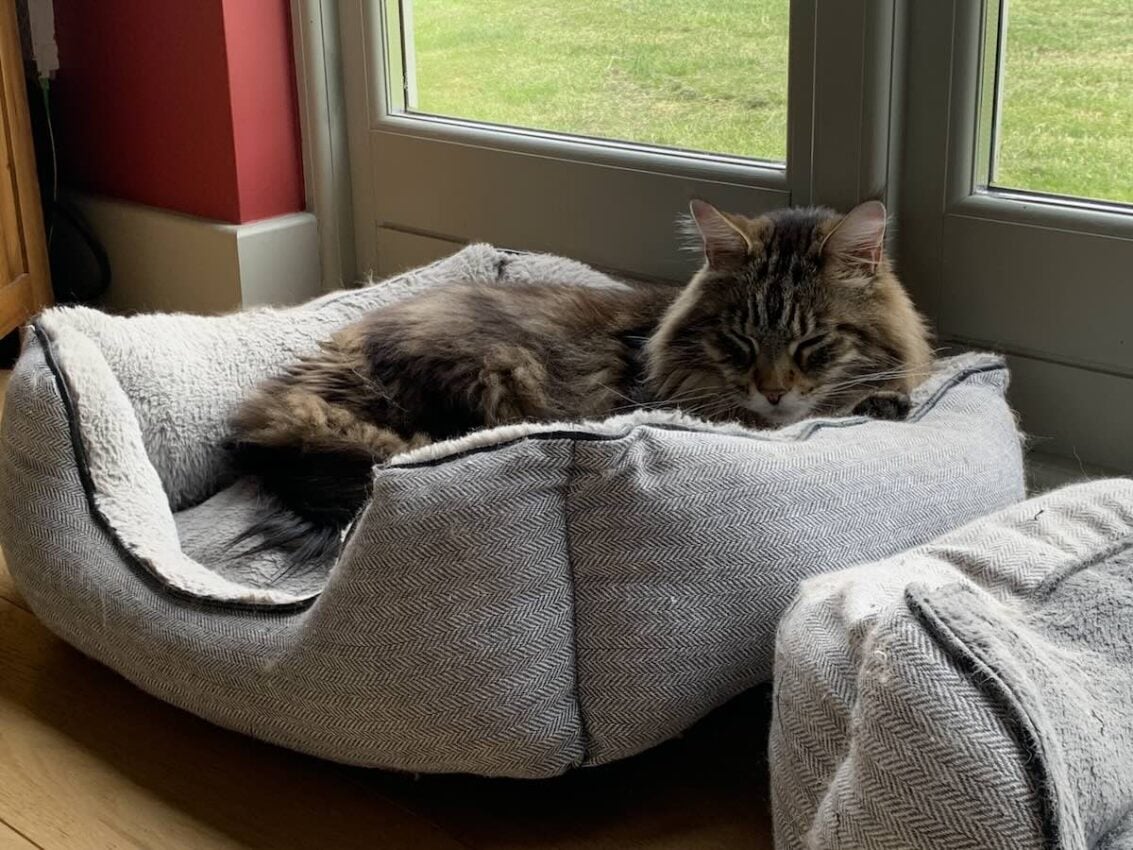


Senior Care / Screening Support
Dental Care In Maine Coons: Why It Deserves Priority
Dental disease is one of the most common health challenges in Maine Coons, yet it is often underestimated by owners because cats rarely show obvious signs of mouth pain.
Gingivitis and periodontal disease can develop quietly beneath the gumline while cats continue to eat and behave normally. By the time discomfort becomes clear, significant damage may already have occurred.
Poor dental health doesn’t just affect the mouth. Chronic inflammation can impact overall well-being and may place additional strain on the heart, kidneys, and immune system. This is why dental care should be viewed as a core part of long-term health, not an optional extra.
Our own experience brought this reality home. When we adopted Mika and Bali at four years old, both already had gingivitis. Bali had lost six teeth before coming to us, and since then, we’ve invested heavily in restoring his oral health. We paid £690 (≈ $870) for one further tooth to be removed along with a full scale and polish, and £720 (≈ $910) for Mika to have one tooth removed. Bali also dealt with a painful ulcer that took time and persistence to resolve. Their journey showed us how quickly dental problems can escalate – and how costly and invasive treatment becomes once disease is established rather than prevented.
For new owners, the most important takeaway is that early attention matters. Regular mouth checks, professional dental assessments when recommended, and discussing preventative options with your vet can spare both your cat and your wallet a great deal of hardship later on.
Dental care may not feel urgent when everything looks fine, but it is one of the most powerful tools you have for protecting your Maine Coon’s long-term comfort and health.
Full guides:
• Maine Coon Dental Care Guide
• Maine Coon Tooth Loss
⭐ FAQ SECTION
Frequently asked questions about Maine Coon health & wellness:
Are Maine Coons a healthy breed overall?
Yes. Maine Coons are generally robust cats, but they have several breed-specific genetic conditions. With proper care, nutrition, and routine vet checks, they live long lives.
What is the biggest health threat to Maine Coons?
HCM (Hypertrophic Cardiomyopathy) is the most significant risk. Early screening and monitoring breathing rates can help catch it early.
How often should a Maine Coon go to the vet?
Adults need annual checks; seniors need bi-annual checks. Kittens require regular appointments during their first year.
How can I keep my Maine Coon’s joints healthy?
Weight management, daily exercise, and joint supplements are the most effective strategies.
What age is considered “senior” for a Maine Coon?
Around 7 years old. At this stage, kidney, heart, mobility, and dental monitoring become more important.