What Is a Maine Coon? A Complete Beginner’s Guide To The Breed
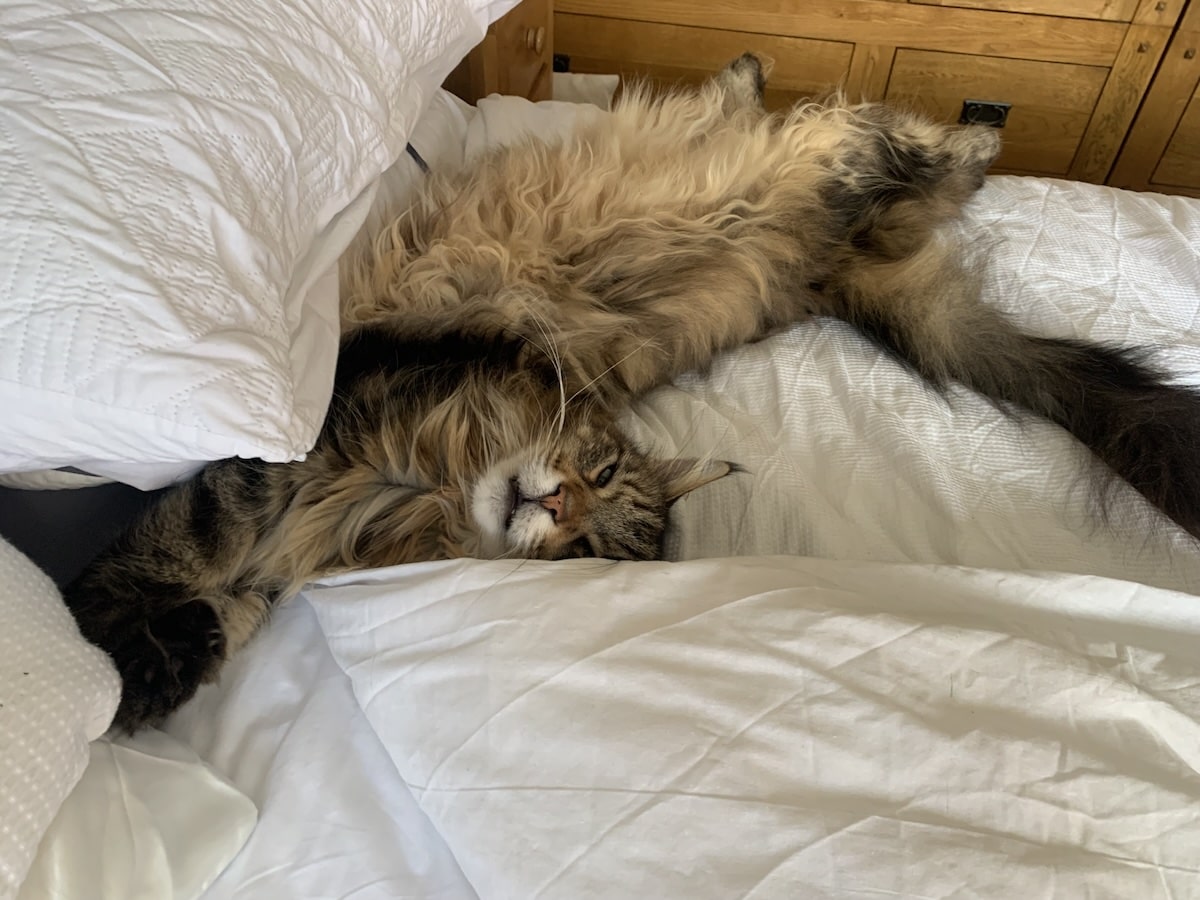
The Maine Coon is one of the largest domesticated cat breeds in the world, well known for its impressive size, gentle personality, and distinctive physical features.
This hub page introduces everything new and prospective owners need to know, from appearance and behaviour to size, growth, coat types, colours, and care requirements – with links to detailed Maine Coon Central guides throughout.
Whether you’re researching the breed for the first time, preparing to adopt a kitten, or wanting a clearer understanding of what makes Maine Coons unique, this page provides a structured overview of the breed’s defining traits and characteristics.
Maine Coon Overview
The Maine Coon is a natural breed originating in North America, known for its:
- Muscular body
- Thick coat
- Bushy tail
- Large ears
- Friendly temperament
They are often described as “dog-like” because of their loyalty, trainability, and tendency to follow their owners around the home.
Maine Coons are slow-maturing, reaching full size between 3-5 years. Their dense, semi-water-resistant coat is built for cold climates and comes in over 75 colours and pattern combinations.
Learn more:
- What Are Maine Coons Related To
- Reality Of Life With A Maine Coon Cat
- 9 Ways Maine Coons Are Like Dogs
Key Physical Characteristics
Maine Coons are easily recognised by their powerful build, large bone structure, long bushy tail, tufted paws, prominent lynx-tipped ears, and a ruff of fur around the neck.
Their semi-longhaired double or triple coat varies in texture across the body, being shorter on the shoulders and longer on the belly and flanks.
Typical features:
- Long, rectangular body shape
- Heavy bone structure
- Large, expressive eyes
- Prominent ear tufts and furnishings
- Thick, weather-resistant coat
Explore deeper:
- Maine Coon Characteristics & Behaviors
- Maine Coon Lynx Tips
- True Physique Of A Maine Coon: What Their Shape Tells You
- How Big Do Maine Coons Get?
Size And Growth
Maine Coons are one of the largest domestic cat breeds. Adult males typically weigh 18-21 lbs (8.2-9.5 kg), while females average 12-15 lbs (5.4-6.8 kg). They grow slowly compared to other breeds, reaching full physical maturity around age 3-5 years.
Their long growth timeline can make kittens appear slender or unevenly proportioned during adolescence – this is normal for the breed.
Learn more:
Maine Coons are one of the largest domestic cat breeds, with a much slower growth rate than most cats — something we explain in detail in our Maine Coon size and growth guide.
Coat, Colour & Pattern
Maine Coons come in a wide range of colours and patterns, from classic Maine Coon tabby to shaded, smoke, solid, and bi-colour, with more variation than almost any other pedigree breed.
Their coat requires regular grooming due to seasonal shedding and naturally thicker areas around the:
- Neck
- Belly
- Hind legs
Some of these cats also have Maine Coon Heterochromia, a condition where your cat has one blue eye and the other eye is a completely different color!
Explore:
- Rare Maine Coon Colors
- Decode Your Maine Coon’s Coat: The Hidden Color Codes Breeders Use
- Gray Maine Coon Cat Guide
- Life With An Orange Maine Coon
Their long, semi-water-repellent coat also requires specific maintenance, which we explain in our Maine Coon grooming and care guide.
Personality & Temperament
Maine Coons are sociable, gentle cats known for their intelligence and affectionate nature. They enjoy interacting with people, often follow their owners from room to room, and communicate using chirps, trills, and soft meows.
Typical traits include:
- Friendly with children and pets
- Highly intelligent and trainable
- Loyal but not overly demanding
- Curious and playful throughout adulthood
Despite their size, Maine Coons are affectionate, people-oriented cats often described as having “dog-like” behaviour. They are rarely clingy; however, if yours is, I recommend you read my guide ‘7 Hidden Reasons Your Maine Coon Is Clingy (And What To Do About It!)‘.
Detailed behaviour guides:
- Are Maine Coons Vocal?
- Are Maine Coons Friendly?
- Are Maine Coon Cats Smart?
- Why Maine Coons Follow Their Owners
Beyond their size, Maine Coons are known for their affectionate, social temperament, which is explored fully in our Maine Coon personality guide.
Health & Common Conditions
Maine Coons are generally robust but genetically predisposed to several heritable conditions, including HCM (hypertrophic cardiomyopathy) and hip dysplasia. Routine veterinary checks and early screening help reduce risks.
Maintaining a healthy weight is also important due to their large size.
Learn more:
Like all pedigree breeds, Maine Coons are predisposed to certain medical conditions, which are covered in our Maine Coon health and wellness guide.
Living With A Maine Coon Cat
Living with a Maine Coon is very different from living with an average domestic cat.
Often described as “the dogs of the cat world”, Maine Coons are highly social, intelligent, and emotionally attached to their families. While their gentle nature makes them wonderful companions, their size, personality, and care needs mean they are not a low-effort breed.
Understanding what daily life with a Maine Coon truly involves helps owners avoid common problems such as:
Maine Coons Are Extremely Social Cats
Unlike many independent cat breeds, Maine Coons thrive on companionship. They prefer being close to their humans and often follow family members from room to room.
Many owners are surprised to learn that Maine Coons:
- Greet you at the door
- Sit beside you rather than on your lap
- Sleep near their humans at night
- Become distressed if left alone too often
This strong attachment explains why Maine Coons are not ideal for homes where they will be left alone all day without stimulation.
If you’re unsure whether your lifestyle suits this level of interaction, this guide explains it in detail:
👉 Do Maine Coons Like Being Alone?
To find out more about the Maine Coon Personality and what you can expect, make sure to read this guide.
Space Requirements Inside The Home
Despite their relaxed temperament, Maine Coons are one of the largest domesticated cat breeds in the world. Adult males commonly reach 18-21 lbs (8.2-9.5 kg), with long bodies and heavy bone structure.
Because of this, they need more physical space than most cats, including:
- Wide cat trees with reinforced platforms
- Large litter trays
- Open floor areas for movement
- Tall vertical climbing options
Standard cat furniture is often too small or unstable.
A full breakdown of suitable setups can be found here:
👉 Best Cat Trees for Maine Coons

Grooming Is Part Of Daily Life
Living with a Maine Coon means accepting that grooming is not optional.
Their semi-long, water-resistant coat contains:
- A dense undercoat
- Long guard hairs
- Heavy feathering around the chest, legs, and tail
Without regular maintenance, mats can form quickly – particularly behind the ears, under the arms, and along the belly.
Most Maine Coon households follow:
- General brushing 2-3 times per week
- Full grooming sessions once or twice weekly
- Seasonal coat management during shedding periods
You can find a complete routine here:
👉 How to Keep a Maine Coon Clean
If you’re not sure what cat brushes work best on the long-haired Maine Coon breed, take a look at my guide, Best Brushes For Maine Coon Cats.
Shedding And Hair Management
Maine Coons shed year-round, with heavier moults in spring and autumn. Their fur is lighter and silkier than that of many long-haired breeds, but the volume of hair is significant.
Owners should expect:
- Fur on furniture and bedding
- Regular vacuuming
- Increased grooming during seasonal sheds
If shedding is a concern, this article explains what is normal and what is not:
👉 Do Maine Coons Shed a Lot?
To learn more about the Maine Coons coat, take a look at my guide “Maine Coon Coat Types and Texture“.
Noise Levels And Communication
Maine Coons are famously talkative – but not in the way many people expect.
Instead of loud meowing, they communicate using:
- Chirps
- Trills
- Soft conversational sounds
They often “talk back” when spoken to and may vocalise when excited, hungry, or greeting their owners.
If noise sensitivity matters in your household, this guide explains their behaviour clearly:
👉 Are Maine Coon Cats Vocal?
If you’re still curious as to what a Maine Coon cat sounds like, then take a peek at my YouTube video below. Mika is one of my Maine Coons, and he loves to follow me around and talk lots as we walk around the house:
Intelligence And Daily Stimulation Needs
Maine Coons are highly intelligent cats that require mental stimulation to remain happy.
Without enrichment, they may develop:
- Destructive scratching
- Food obsession
- Excessive vocalisation
- Attention-seeking behaviours
Many owners find success with:
- Puzzle feeders
- Clicker training
- Interactive play
- Cat wheels
- Rotating toys
You can explore their intelligence level here:
👉 Are Maine Coons the Smartest Cats?
👉 How to entertain a Maine Coon cat
Exercise And Weight Management
Due to their large frame, Maine Coons can appear overweight even when they are not. However, obesity is a genuine risk if diet and exercise are not carefully managed.
A healthy Maine Coon lifestyle includes:
- Daily interactive play
- Controlled portion feeding
- High-protein nutrition
- Regular body condition checks
This complete guide explains how much activity they truly need:
👉 How Much Exercise Does a Maine Coon Need?
Because of their size and extended growth period, Maine Coons also have unique nutritional needs, covered in our Maine Coon diet and nutrition guide.
Living With Children And Other Pets
Maine Coons are known for their patient, tolerant nature. When properly socialised, they often live very happily with:
- Children
- Dogs
- Other cats
They are not aggressive by nature and usually walk away rather than react negatively; therefore, if you’ve noticed your cat acting aggressively its likely due to one of these 12 Maine Coon Aggression Triggers.
That said, their size means supervision with young children is still important.
Is A Maine Coon The Right Cat For Your Lifestyle?
Living with a Maine Coon is deeply rewarding, but it is not effortless.
They are best suited to owners who can provide:
- Daily interaction
- Adequate space
- Regular grooming
- Mental stimulation
- Long-term financial commitment
If you are considering ownership, this article offers a realistic overview:
👉 Are Maine Coons High Maintenance?
Care & Ownership Essentials
Maine Coons require:
- Regular brushing (2-3 times per week)
- High-quality, high-protein diet
- Enrichment, toys, and climbing opportunities
- Nail trimming, dental care, and routine hygiene
- Mental stimulation to prevent boredom
The diet you feed your Maine Coon cat has a direct link to their health – to learn more, check out my Maine Coon Diet and Nutrition guide.
Explore care topics:
- Caring For A Maine Coon
- Maine Coons Need THIS Much Exercise: Don’t FAIL Them!
- How To Groom A Maine Coon Cat
- Maine Coon Grooming Secrets Vets Won’t Tell You!
Adoption & Buying A Maine Coon
Finding a reputable breeder or rescue is essential. Ensure kittens are well-socialised, health-tested, and appropriately weaned.
Avoid online scams and “backyard breeders” who cannot provide pedigree documents or health screening.
Learn more:
- Buying A Maine Coon Cat: A-Z Guide
- 30 Maine Coon Cat Scams: How Fraudsters Steal Your Money (And How To Stop Them)
- 25 Questions You Must Ask Before Buying A Maine Coon Kitten: #13 Will Shock You!
Related Breed Basics Guides
These pages expand on the fundamentals introduced in this hub:
- Size & Growth Hub
- Coat, Colour & Pattern Hub
- Personality & Temperament Hub
- Grooming & Care Hub
- Health Hub
- Maine Coon Diet & Nutrition Hub
FAQ: What Is A Maine Coon?
1. What makes a Maine Coon different from other cat breeds?
Maine Coons stand out because of their large size, rectangular body, long bushy tail, lynx-style ear tufts, and semi-long waterproof coat. They also have a uniquely dog-like personality – following owners from room to room, greeting visitors, and learning commands more easily than most breeds.
2. Are Maine Coons a natural breed?
Yes. The Maine Coon is one of the few naturally occurring cat breeds, meaning their physical traits developed through natural selection in the cold climate of the northeastern United States. Unlike designer mixes, they were not created through artificial crossbreeding.
3. How big do Maine Coons get?
Most adult males weigh 18-21 lbs (8.2-9.5 kg) and females 12-15 lbs (5.4-6.8 kg).
They are slow maturing and continue growing until 3-5 years old, much longer than typical domestic cats.
4. What is the personality of a Maine Coon like?
Maine Coons are known for being gentle, affectionate, intelligent, and social. They form strong bonds with their families but are not overly demanding. Many enjoy learning tricks, walking on a harness, playing fetch, and “talking” using chirps and trills.
5. Do Maine Coons get along with children and other pets?
Yes. Maine Coons are widely considered one of the best breeds for families, dogs, and multi-cat households. Their calm, tolerant nature makes them excellent companions for children when properly introduced.
6. What coat patterns and colours do Maine Coons come in?
They appear in over 74 color and pattern combinations, including classic tabby, solid, smoke, shaded, tortie, and bi-color variations. The only excluded patterns are pointed (e.g., Siamese-style).
7. How can I tell if my cat is part Maine Coon?
Look for traits such as:
- long rectangular body
- thick ruff around the neck
- large tufted paws
- long, flowing tail
- M-shaped forehead marking (common in many tabbies, not breed-specific)
DNA tests can suggest ancestry, but only pedigree papers confirm a purebred Maine Coon.
8. Are Maine Coons hypoallergenic?
No. Maine Coons produce the same Fel d 1 allergen as other cats, although their coat type sometimes distributes allergens differently. Some allergy sufferers tolerate them better, but the breed is not hypoallergenic.
9. What health problems are Maine Coons prone to?
The breed has a higher risk for:
- Hypertrophic Cardiomyopathy (HCM)
- Hip Dysplasia
- Spinal Muscular Atrophy (SMA)
- Polycystic Kidney Disease (PKD)
Reputable breeders health-test breeding cats to reduce disease risk.
10. How long do Maine Coons live?
Most live 12-15 years, though many reach their late teens with good veterinary care, high-quality nutrition, and an indoor lifestyle.
11. Do Maine Coons need special grooming?
Their semi-long coat requires brushing 2-3 times per week and more during shedding seasons. They tend to stay clean naturally, but regular ear cleaning, nail trimming, and occasional bathing help maintain coat and skin health.
12. Are Maine Coons expensive?
Yes. Pedigree Maine Coon kittens typically cost £900-£2,000 in the UK and $1,000-$3,000 in the US, depending on pedigree, breeder reputation, coat colour, and demand.
13. Why are they called Maine Coons?
They were named after the US state of Maine, where the breed developed, and the myth (incorrect but charming) that they were descended from raccoons – something genetically impossible, but the resemblance stuck.
14. Do Maine Coons meow?
They do, but Maine Coons are more known for their chirps, trills, and soft vocalisations. They rarely have the classic “meow” associated with other breeds.
15. Are Maine Coons indoor or outdoor cats?
They adapt well to both, but indoor or supervised outdoor time is recommended to reduce risks such as theft, traffic, disease, and injury due to their high value and friendly nature.